
Those Who Control the Scene Control AI: A Data Player to Watch Is Emerging in Mobility Services
Supporting rapid iteration of large AI models with data from every scene and services across the entire workflow
Jessica / Ofei Temple
Quantum Bit | QbitAI Official Account
In the AI industry, the scarcest and most sought-after resource has changed.
Since Fei-Fei Li proposed “spatial intelligence,” a clearer trend has emerged across the industry. After large models, world models and embodied intelligence have become the new focus of capital and industry alike.
But as AI begins moving toward understanding and acting on the real physical world, an uncomfortable reality is also becoming apparent.
The real-world interaction data needed to train these models is in extremely short supply. Some in the industry even estimate that the gap between supply and demand is nearly 100,000x.
Traditional large models could achieve language understanding and generation with massive amounts of text and images. But what embodied intelligence needs is a complete chain of decision → action → feedback. Static data with little causality or interaction can no longer meet the requirements.
What the industry urgently needs is a completely new kind of data: interaction data that comes from the real physical world, contains causal logic, and can be generated continuously.

As a result, high-quality physical-world data has become a strategic scarce resource. And players capable of producing physical-world data continuously, at low cost, and at scale are quickly moving into the spotlight.
Interestingly, industry insiders told QbitAI that one of the largest entry points for physical-world data in the AI era may come from an industry few would expect: mobility service platforms.
It turns out that the mobility platforms people use every day are not only providing ride-hailing services, but also making “side income” from new data-driven businesses.
Is “Side Income” from Data Becoming Trendy on Mobility Platforms?
Recently, a new kind of business has quietly been expanding in the mobility services industry. Platforms with massive amounts of real-world driving data are opening up a second growth curve through data assetization and data services.
Among them, some players have already achieved commercialization and have preliminarily proven that this business model is viable.
The first platform to disclose concrete data was Ruqi Mobility, a mobility service platform under Guangzhou Automobile Group.

In its 2025 financial results, Ruqi Mobility disclosed that its technology services segment, whose main revenue source is AI data business, had become the company’s fastest-growing segment.
This AI data business refers to Ruqi Mobility’s data business division, hereafter “Ruqi Data,” which dates back to 2023.
At the time, Ruqi Mobility obtained approval for Level-B surveying and mapping qualifications in May 2023 and began regular operation of autonomous driving data collection vehicles equipped with LiDAR, high-precision IMUs, surround-view cameras, and other sensors.
While providing mobility services, these vehicles also collect real driving and road data in compliance with regulations. Ruqi Data has continued expanding its data service capabilities throughout the data collection process.
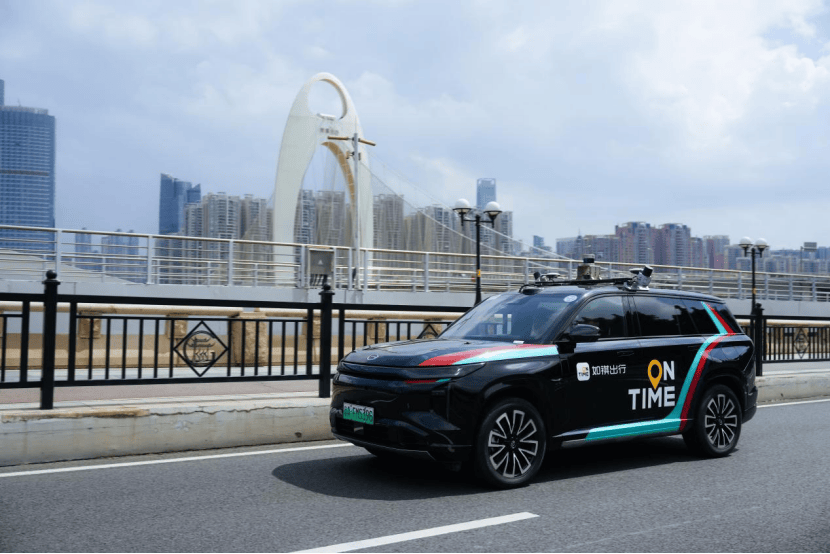
Recently, Ruqi Data publicly revealed its full AI data asset and capability portfolio for the first time.
According to public information, its data assets cover four major categories: annotated data, behavioral data, synthetic data, and multimodal training datasets, spanning the full workflow from raw collection to processing and delivery.
Among them, annotated data serves as the foundation. Behavioral data records drivers’ operational decisions in real road environments. Synthetic data is used to supplement long-tail scenarios, while multimodal training datasets include images, text, audio, and video, and can be directly used for domain-specific fine-tuning of large models.
In terms of scale, Ruqi Data has built a fairly extensive data collection network.
As of May 2026, the company had deployed more than 300 autonomous driving data collection vehicles in cities including Guangzhou, Shanghai, Chongqing, and Shenyang.
After nearly three years of regular operation, these vehicles now generate 1,600 hours and 130 TB of data per day. Across the platform, tens of millions of high-value driving scene fragments have already been accumulated.
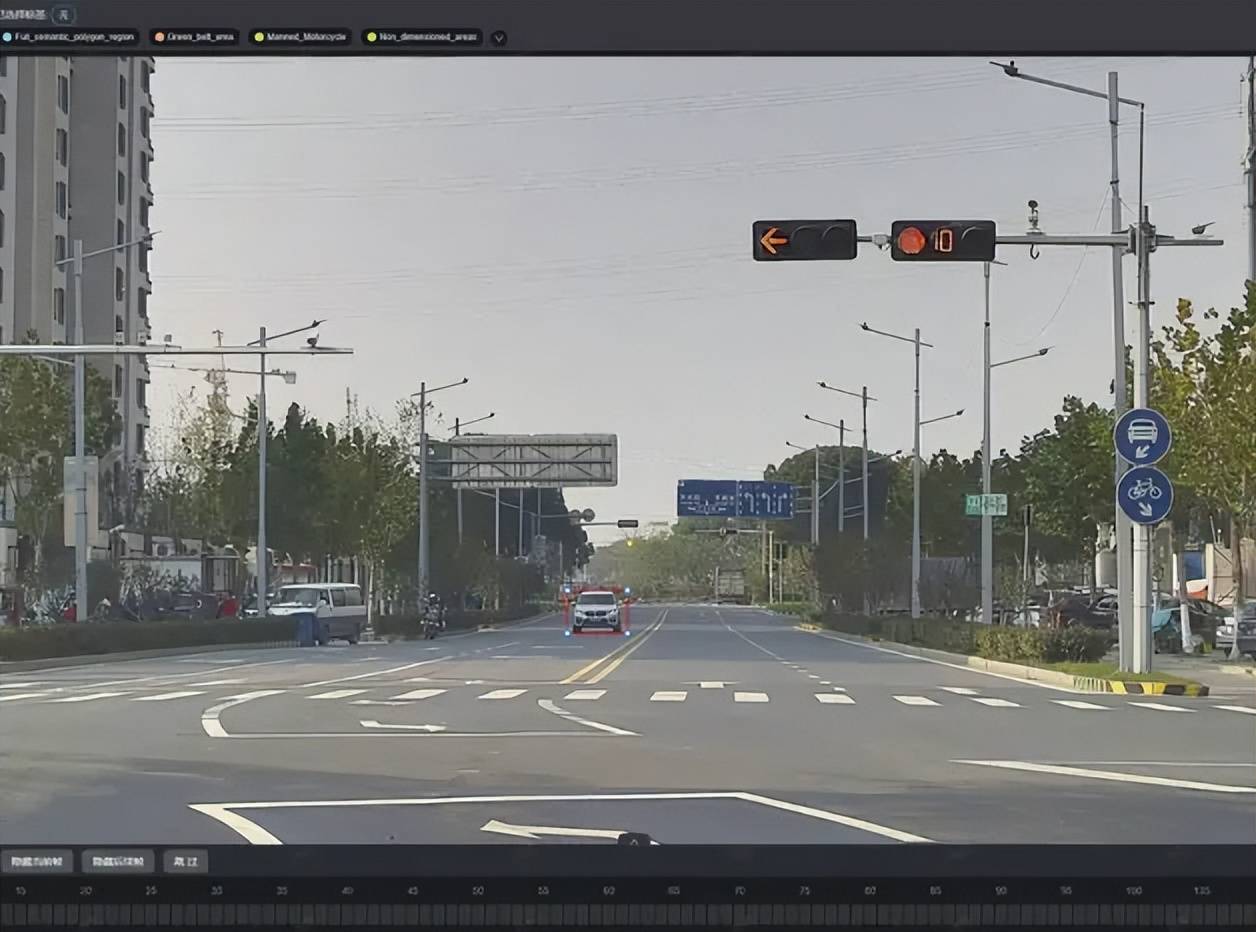
Behind these fragments is, in fact, a complete real-world interaction process. Seen this way, the platform is effectively continuously producing “fragments” of the physical world.
And beyond scale, the real test of whether this model works lies in how well it can be commercialized.
According to Ruqi’s financial report, in 2025 the technology services segment, whose main revenue source is AI data services, generated RMB 160 million in revenue, up 487.4% year over year.
This growth shows that demand for high-quality physical-world data is being rapidly unleashed.
Ruqi Data’s customer mix further supports this conclusion. Its services now cover autonomous driving, embodied intelligence, large models, consumer electronics, healthcare, and more, with major clients including Tencent, Pony.ai, Li Auto, Volcano Engine, Baidu Smart Cloud, and GAC Group.

In other words, data services derived from mobility services already have the ability to meet real demand across industries, and have entered a stage where they can operate a complete closed loop from data collection and processing to commercial delivery.
As this shift takes place, the outside world’s perception of mobility platforms like Ruqi is also being updated.
With end-to-end data service capabilities, Ruqi is no longer just a mobility service operator, nor a traditional data annotation company. It is evolving into a comprehensive service provider with “datasets + full-stack capabilities.”
And this closed-loop capability of “datasets + full-stack capabilities” is likely to become one of the essential infrastructure layers for the next generation of AI.
Why Did a Mobility Platform Suddenly Become an AI Infrastructure Provider?
To better understand the transformation of mobility platforms, it can actually be broken down into two core questions:
Why does the AI industry need physical-world data so badly?
And why are mobility platforms uniquely positioned to fill that gap?
It all starts with Fei-Fei Li’s definition of world models. She believes current mainstream large language models have a fatal flaw: they lack “spatial intelligence” — the ability to perceive, reason about, and act in the three-dimensional physical world.
That is why Fei-Fei Li has advocated building a completely new kind of AI system that can understand and interact with the rules of the three-dimensional physical world like humans do.
This system is what she calls a “world model.” And world models must satisfy three key criteria: generativeness, multimodality, and interactivity.

In other words, the data needed to train next-generation AI must satisfy all three characteristics at once. Most important of all is interactivity: the data cannot be merely passive visual information; it must contain a complete causal chain with a closed loop of action and feedback.
The problem, however, is that the physical-world interaction data currently available in the industry is nowhere near enough to meet training demand.
There are mainly three traditional ways of supplying data, but each has its limitations:
- The first is crawling public images and videos from the internet, but such data is static and lacks interaction information.
- The second is manually constructing scenes in labs or simulation environments, which tends to be costly and limited in scale.
- The third is crowdsourced collection, which can make data quality and consistency difficult to guarantee.
In the short term, none of these methods can continuously produce interaction data with causal logic at scale.
This is the core bottleneck the industry is facing now: an extreme shortage of high-quality, high-fidelity physical-world data with interaction labels, and a massive gap between supply and demand.
Against this backdrop, mobility services have a natural advantage in producing and accumulating such high-value data.
Unlike traditional data supply methods, the data collection logic of mobility platforms is embedded directly into real-world operations.
Each data collection vehicle is essentially a mobile sensing terminal. While providing everyday ride-hailing services, it is also recording a complete interaction chain of driver decision-making → vehicle response → environmental feedback.
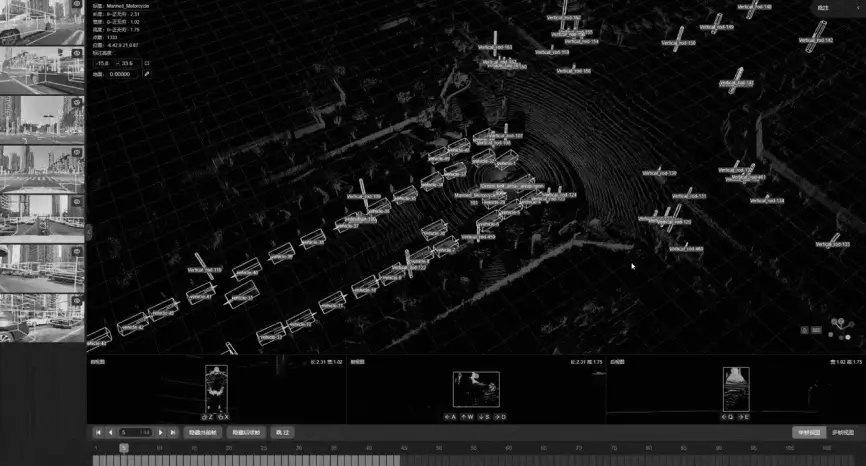
This closed-loop data naturally comes with multimodal consistency, temporal continuity, and causal logic.
Take Ruqi’s published parking scenarios as an example.
Ruqi Data not only records 3D obstacle positions, but also simultaneously collects CAN signals from the vehicle, such as steering angle, accelerator, and brake inputs, as well as millimeter-wave radar reflections, LiDAR point clouds, and camera footage.
Centered on parking scenarios, this multimodal data forms an integrated dataset of “actions (driver operations) - state (vehicle response) - environment (surrounding feedback).”
For AI training, this kind of data enables a model to understand not only what happened, but also why. For example, why an avoidance maneuver was necessary, or how to judge whether a parking space is usable — tasks that require physical commonsense and causal reasoning.
Analysts who have long studied large-model training say that data with this complete chain of reasoning, judgment, and feedback is the “gold mine” for training spatial intelligence models.
Based on this unique data source, Ruqi Data has systematically built full-workflow service capabilities.
On the technical side, Ruqi Data’s in-house OCC automatic annotation algorithm uses a shared base map and automated algorithms, reducing manual annotation time by 90% and achieving delivery accuracy above 98%.
Its synthetic data module can generate long-tail scenarios such as rain, fog, snow, and night with one click, filling the blind spots left by real-world data collection. Its multimodal datasets cover images, text, audio, and video, and can directly support domain-specific fine-tuning of large models.

The essence of this capability is to package the data engineering experience proven in the autonomous driving sector — compliant collection, scalable cleaning, precise annotation, and synthetic augmentation — into standardized products.
Customers can use them out of the box and directly obtain deeply processed, standardized datasets and toolchains without having to build foundational collection and processing capabilities from scratch.
In this sense, Ruqi Data’s logic is somewhat similar to Scale AI.
It not only provides data, but also tools and methodologies that help customers “understand data better and use it more efficiently,” lowering the barrier to using high-quality physical data and improving customers’ model iteration efficiency.
As a result, the barrier to using real physical data has been lowered to some extent, and its application scenarios have expanded beyond autonomous driving into embodied intelligence, large models, consumer electronics, healthcare, and more.
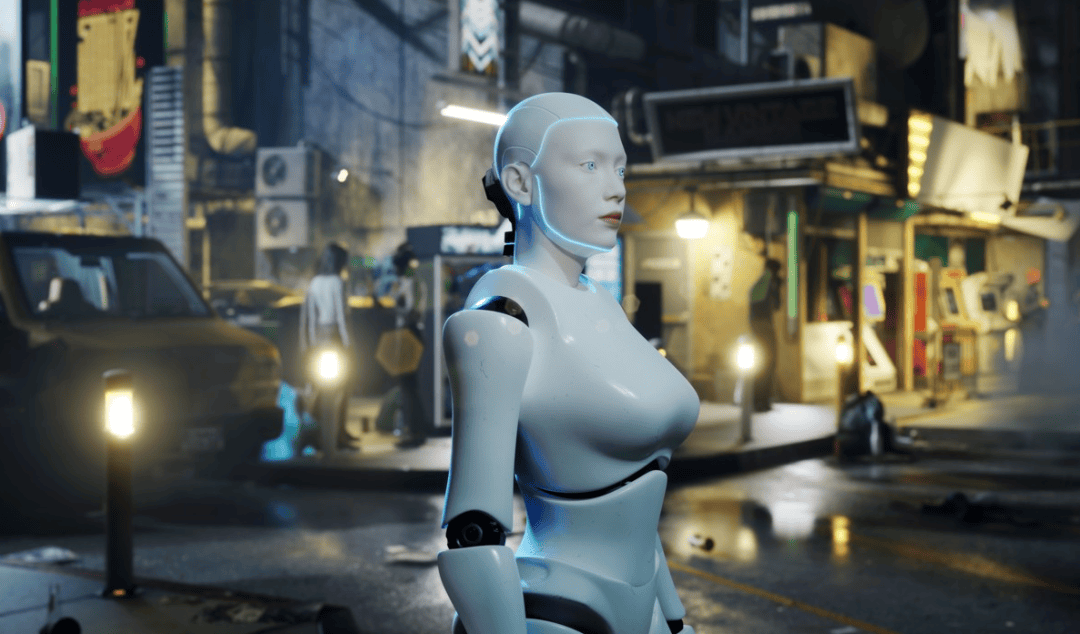
In other words, scale and capability are only the foundation. The real imagination for mobility platforms lies in their ability to generalize from one scene to many more physical-world scenarios.
This is also a conclusion repeatedly validated throughout the history of AI development: whoever controls the scene controls the world.
Whoever Controls the Scene Controls the World
As AI moves into the physical world, the industry’s underlying logic is changing. The axis of competition is shifting from algorithms to scenes.
Just as mobile internet created the data gold mine of location-based services (LBS), and cloud computing became the common infrastructure of the digital economy,
as AI moves toward spatial intelligence, the most important infrastructure of the new era is becoming the “scene” that can continuously generate real-world physical interaction data at low cost.
Against this backdrop, more and more people are beginning to realize that scenes may be scarcer than algorithms.
That is because while algorithms can be replicated, physical scenes that are real, high-frequency, and capable of generating closed-loop interaction data are extremely difficult to copy or transplant.
And the essence of data is, in fact, nothing more than what spills out of scenes. Owning scenes means having the potential to continuously generate a data flywheel.
Mobility platforms are such near-perfect “meta-scenes.” They cover massive public road spaces, involve constant decision-making in human-vehicle cooperative driving, and generate interaction events on the scale of hundreds of millions every day.
Together, these elements form a natural data production system.

What’s more, the “collection happens as part of the business itself” model used by mobility platforms has a clear cost advantage.
Traditional professional data collection requires dedicated collection vehicles, dedicated drivers, and dedicated locations. It is costly and hard to scale.
But if data collection is done alongside normal ride-hailing operations, as with Ruqi Mobility’s collection vehicles, marginal costs can be drastically reduced.
Even more importantly, this data capability can expand from driving scenarios into the broader physical world.
According to people familiar with Ruqi Mobility, the company is trying to generalize its “human-vehicle-environment” interaction data capabilities to more application domains. For example, in embodied intelligence vehicle-after-service scenarios, this includes car washing, battery swapping, maintenance inspections, cleaning, and more.
Vehicle-after-service scenarios are part of mobility scenarios — the very area where Ruqi Mobility has the strongest expertise and deepest data accumulation. They are naturally embedded in its operations and can form a real service closed loop.
And the core logic that robots need to understand in these scenarios — obstacle avoidance, path planning, precise manipulation — is highly homologous to the data used in autonomous driving.
Once this low-cost, high-interaction data production model succeeds in a vertical scenario, it has the potential to become an industry standard.
Looking further ahead, the core asset of companies with deep physical-scene operational experience will likely be not just the service itself, but the high-value scene data continuously generated throughout the business process.
Once systematically governed and productized, such data can be fed back into the AI industry — and may even help reshape it.
Just like a massive physical-world interface such as a mobility platform: on the consumer side, it is still a service provider that moves people around. But on the B-side, its role has evolved into a critical physical data gateway for AI to understand and enter the real world.
Copyright reserved. Reproduction and unauthorized use are strictly prohibited. Violators will be subject to legal action.