
Su Zixu Delivers a Speech in Shanghai: AI Is Redefining Every Layer of Computing
AMD continues to deepen its commitment to building China’s developer ecosystem
Craycie, Shanghai
Quantum Bit | QbitAI Official Account
“AI is redefining every layer of computing.”
That was AMD Chair and CEO Su Zixu’s latest take on the AI industry when the AMD AI Developer Summit was held in Shanghai for the first time today.
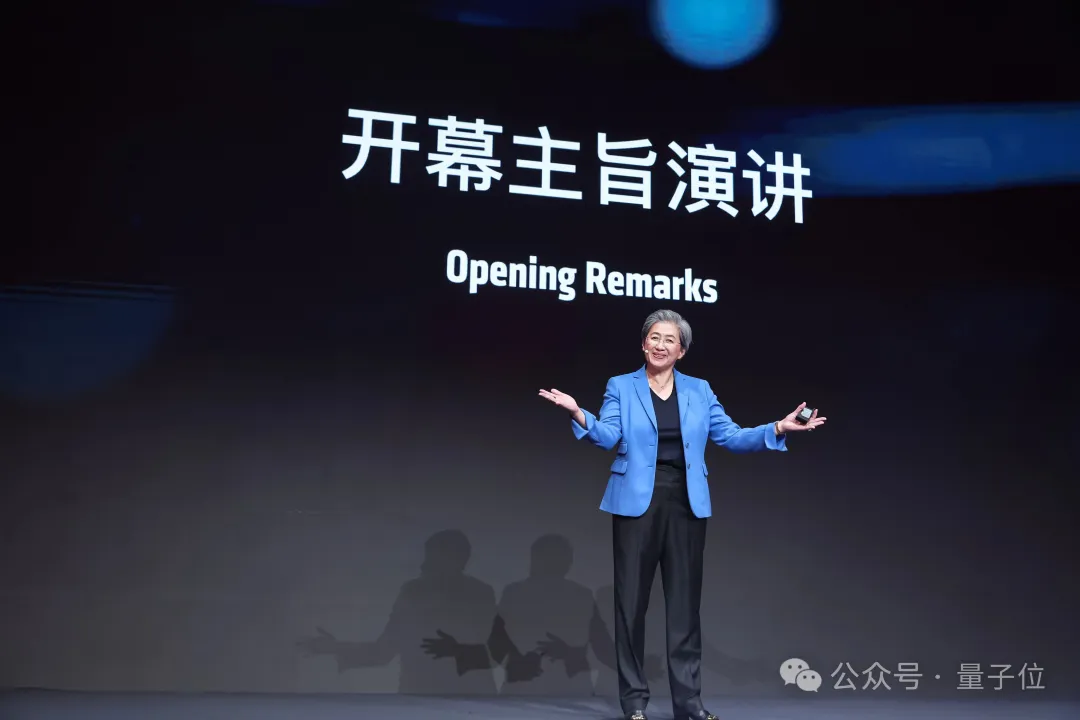
At AMD’s invitation, Quantum Bit attended the event on site to cover and observe it.
After spending the full day there, it was clear that from Su Zixu’s assessment to the summit’s overall agenda and speaker lineup, the AI industry is changing at an accelerating pace.
The focus of competition is shifting from model performance to systems engineering and full-stack optimization capabilities.
Inference, training, fine-tuning — the challenges developers face at each stage are becoming more concrete and more engineering-oriented.
What developers truly need is an engineering framework that can be implemented, optimized, and continuously evolved.
This is especially true in China.
DeepSeek, Qwen… over the past two years, Chinese presence has been impossible to miss in many of the world’s most active AI engineering projects.
Chinese developers have never been — and will not be — mere consumers of AI applications; they are also builders of infrastructure.
What AMD presented today was a systematic answer to this trend.
AI developers need a new engineering framework
The issue of cost in bringing AI into real-world production has now become a core question the entire industry can no longer avoid.
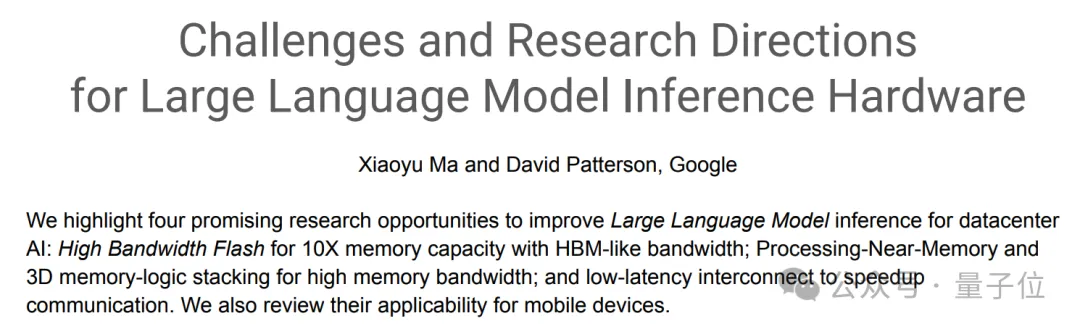
In early 2026, Turing Award winner and renowned Google engineer David Patterson sounded the alarm, pointing out that large-scale AI deployment is facing a cost crisis.
At first glance, this crisis appears paradoxical: token prices keep falling, yet enterprise AI budgets are rising.
The reason lies in the fact that the way AI work is done is fundamentally changing.
Agent frameworks such as OpenClaw and Hermes became the most closely watched foundations in the developer community within just a few months, signaling a shift from one-off Q&A to Agent workflows.
In the new workflow, completing a single task requires multiple rounds of planning, multiple tool calls, and repeated verification — all of which consume compute at every step.
Even if the cost of a single call goes down, the total cost is no longer something that shows up as a single line item on a bill. Instead, it accumulates across the entire system in a far less visible way.
System-level problems naturally require system-level solutions. This is a sign that AI competition has entered a new stage.
At this stage, the real question is whether the whole system can still run stably, at low cost, and continuously as it scales.
This challenge can be broken down into three layers.
First, on the cost side, the larger the usage scale, the more pronounced the cumulative effect of token consumption becomes.
Whether a team runs 10 Agents in parallel or 1,000, the issue is not just the difference in tokens consumed. The entire system has to be redesigned, from scheduling and fault tolerance to resource allocation, and the cost structure shifts from linear to exponential.
A single question in a chat box is just one call, but completing a task through an Agent workflow involves a full pipeline behind the scenes: multiple rounds of planning, multiple tool calls, and repeated verification. Each stage consumes compute resources.
As usage scales up, this cumulative effect becomes increasingly obvious, and the cost structure changes from linear to exponential.
Second, on the complexity side, the jump in engineering difficulty comes from the fundamental change in the shape of AI applications.
In the traditional chat paradigm, one model maps to one capability, and the boundaries are clear. But in the Agent era, AI is expected to “do the work.” Within a single system, multiple models, multiple modalities, distributed computing, and tool calls often run simultaneously. If any one part slows down or fails, the entire pipeline is affected.
Engineers are now faced with the challenge of maintaining production systems that can keep evolving and remain scalable at all times.
Finally, on the deployment side, fragmented scenarios have become a new engineering burden.
Cloud inference alone cannot cover every use case. There are scenarios where data cannot leave the local environment, scenarios where ultra-low latency is critical, and scenarios where there is no stable network at all.
These requirements push developers toward edge devices and on-device deployment, but every time the hardware platform changes, toolchains, optimization strategies, and debugging environments often have to be rebuilt from scratch. The hidden costs brought by fragmentation quietly accumulate.
The conclusion drawn from these three layers of pressure is clear: what developers truly need is an engineering framework that can be implemented, optimized, and continuously evolved.
Su Zixu: China is leading the open ecosystem
At this AI Developer Summit, AMD Chair and CEO Su Zixu laid out AMD’s response to this need.
In the Agent era, everyone may have 5, 10, or even 100 Agents, and the pattern of compute consumption changes fundamentally. Simply adding more GPUs is not enough; what is truly required is complete end-to-end compute capability, combining GPUs and CPUs.
AMD’s solution is to provide a full-stack computing foundation covering everything from the cloud to edge devices, with the open-source software platform ROCm at its core, so developers can use the right tools in every deployment scenario.
This approach has a broader context.
At the global strategy level, AMD has a consistent view of the larger trend toward AI becoming more engineering-driven.
At CES 2026 earlier this year, Su Zixu had already made the direction clear: an open ecosystem is the infrastructure that will support the next stage of AI.
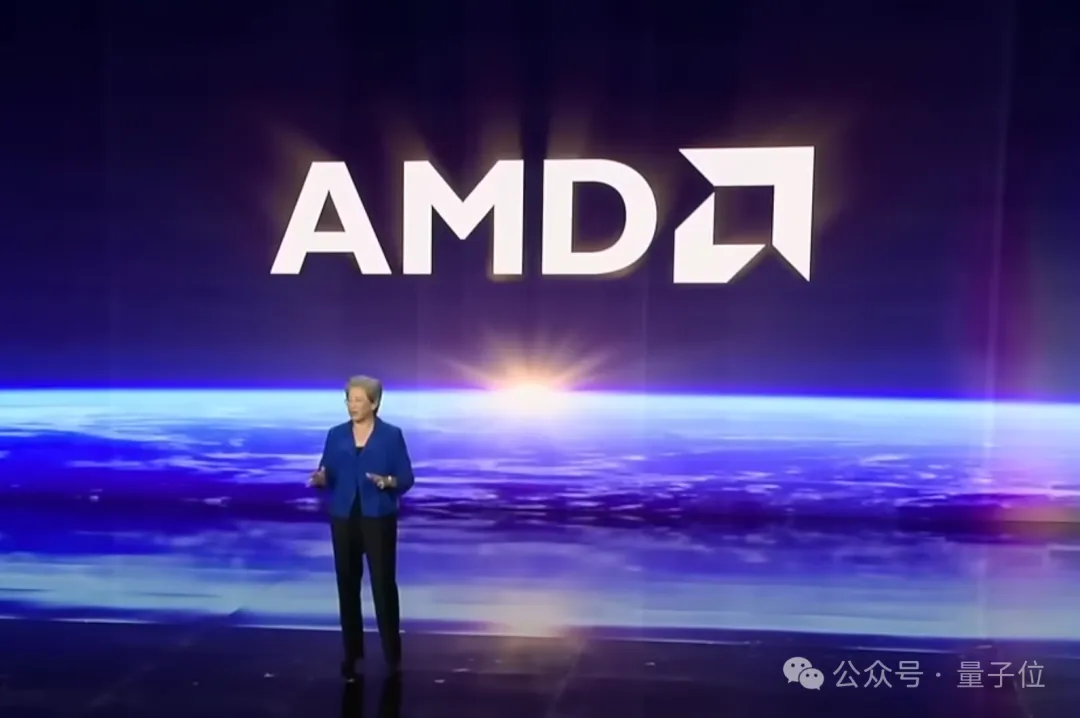
Innovation accelerates only when the industry comes together around open foundations and shared standards.
Infrastructure does not belong to any single company. It is the foundation that the entire industry relies on, builds together, and benefits from together.
AMD’s use of the term “open ecosystem” reflects its belief that the future of AI should not be tied to any closed system.
That stance is also helping redefine AMD’s own role.
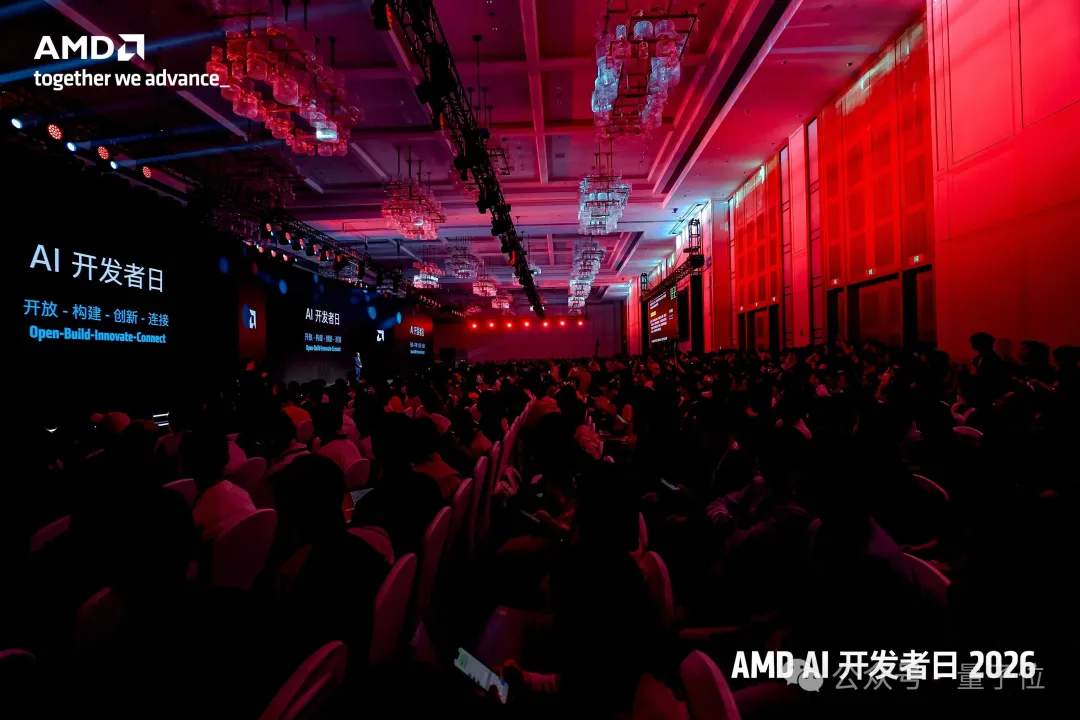
From a chip vendor to a platform provider, AMD’s goal is to become a long-term, reliable software platform that developers can continue using across hardware generations.
The path to that goal is software-hardware co-design and an open ecosystem.
Openness at the software layer allows developers to avoid being locked into a specific hardware generation, while continuous progress at the hardware layer gives the software ecosystem a stronger foundation.
Together, these two forces complement each other and create a framework that a large developer community will want to stay with over the long term.
Looking at the Chinese market, AMD has been deepening its presence in Greater China for more than 30 years, and its Shanghai R&D center is one of AMD’s largest R&D hubs in the world.
In Su Zixu’s view, China is not only an important market for AMD, but also a crucial part of AMD’s global roadmap. From chips to AI software to platform engineering, AMD’s investment in China spans the entire technology stack.
At the same time, when discussing the open-source ecosystem, Su Zixu spoke candidly: China is leading the open ecosystem. This kind of openness is what drives the entire AI ecosystem to evolve as quickly as possible, and it aligns closely with AMD’s strategy.
Holding the summit in Shanghai this time is a sign that this strategy is taking shape and continuing to advance in the Chinese market.
What this strategy means in practical terms for China is as follows:
- Continue investing in the local developer community so Chinese developers can truly use and master AMD tools in their day-to-day engineering work.
- Work in coordination with the local open-source ecosystem to eliminate the hassle of developers having to adapt things on their own.
- Ultimately, lower the barriers to AI development and deployment, so more teams can turn ideas into production-ready systems.
AI is beginning to enter a systematized engineering practice
Competition around the engineering transformation of AI has now become an infrastructure-building challenge that the entire developer community must tackle together.
At this AMD AI Developer Summit, there were hands-on workshops and technical sessions, and the distribution of topics itself reflected the current state of AI engineering practice.
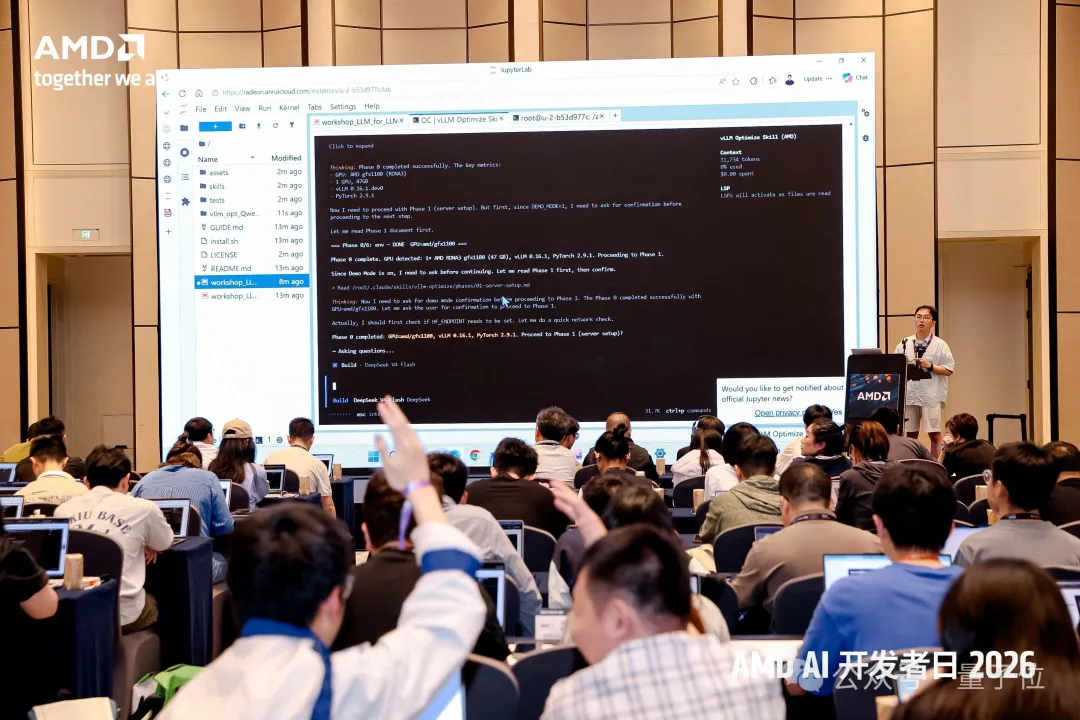
The inference-track topics focused on the new challenges brought by the Agent era.
In the era of one-shot Q&A, inference cost could be measured by the price of a single call. But Agent workflows complete tasks through multiple rounds of planning, tool calls, and verification, so the consumption pattern is completely different.
How to keep token costs under control in the new paradigm, how to maintain high throughput for inference engines in highly parallel scenarios, and how to automate inference optimization itself — these are industry-wide pain points, and they were also the core themes of this inference session.
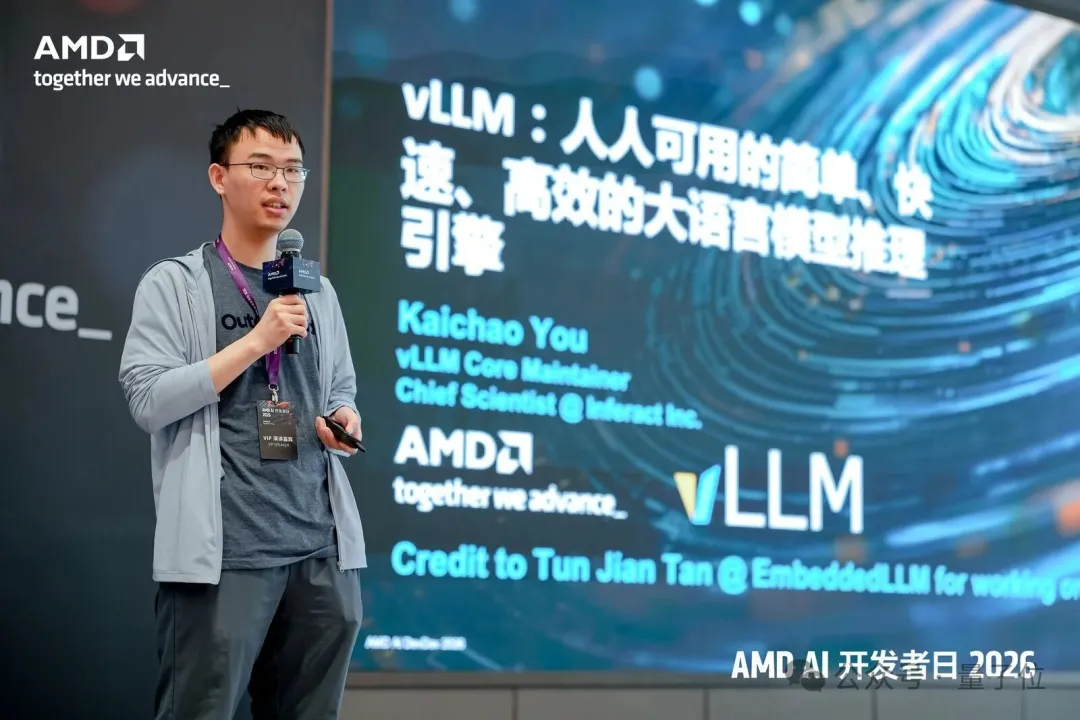
Notably, the training-track topics reflected the engineering pressures that arise as AI applications move into a deeper stage.
RLHF has moved from research papers into the standard workflow of every team, and how to efficiently run end-to-end alignment training on a single GPU has become a practical challenge.
MoE architectures are being commercialized at scale, making the stability and efficiency of ultra-large-scale training a daily engineering task.
And the edge-device track is where the changes are most visible.
Fully offline AI desktop robots, personal Agents running on local large models, and vibe coding across the entire development flow on local hardware — these scenarios are already possible on specific AMD on-device hardware.
Edge AI is no longer just a degraded version of cloud AI. In scenarios such as privacy protection, low latency, and offline use, it has its own engineering logic and requires comprehensive support, including model quantization and local inference acceleration.
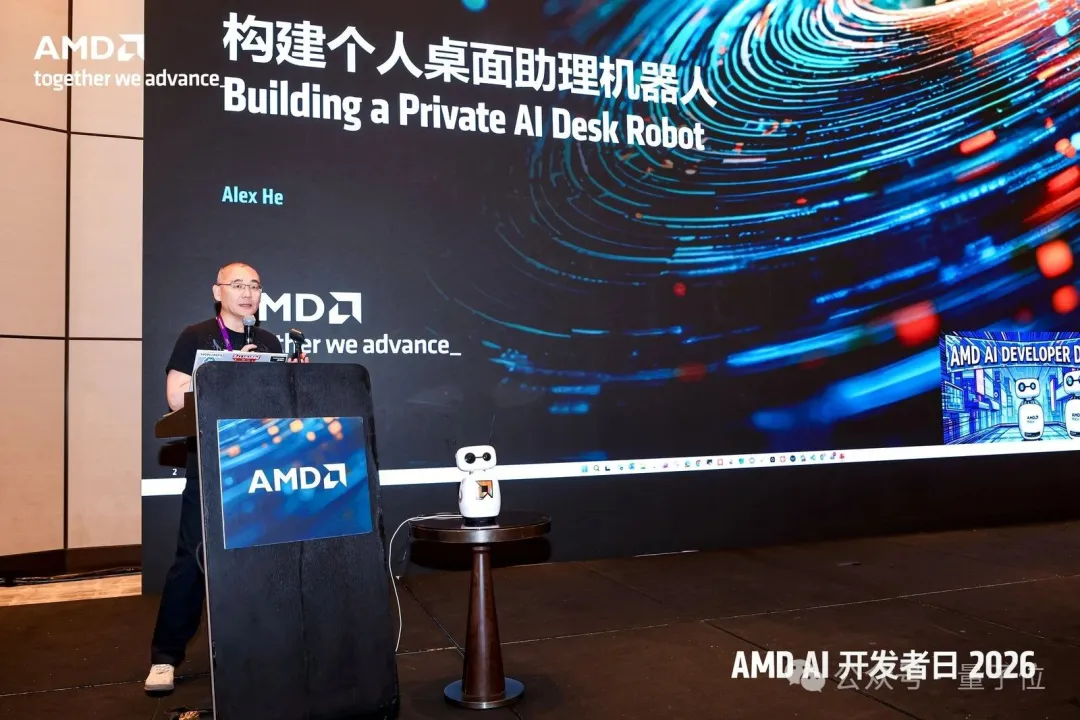
There were also topics aimed at deeper foundational layers.
AI kernel development, compiler optimization, GPU kernel AI agents, AMD GPU support for the PyTorch distributed training framework — all of these involve infrastructure layers that determine how far the ecosystem can go.
Through hands-on workshops, open-source toolchains, and real-world engineering settings, AMD is strengthening its long-term connection with the developer community and pushing AI development from model usage toward system construction.
What emerges from these topics is that AMD is aiming to build a complete flywheel that takes developers from understanding, to building, and then to continuously evolving.
It is also worth noting that the AMD AI Developer Program China officially launched today.
This is a membership-based ecosystem designed by AMD for AI developers. Through multi-dimensional support such as technical resources, development courses, community engagement, and developer events, it helps developers work more efficiently on AI applications and large-model-related development.
Developers who join the program can connect with the broader Chinese developer community and participate in technical exchanges and workshops supported by AMD AI experts and ecosystem partners.
Even after the event, AMD will continue to provide resources through this program, including updated technical content, community engagement, and future developer events.
Continuously strengthening the Chinese developer ecosystem
Building a developer ecosystem is a long-term investment. It requires ongoing improvements to the toolchain, sustained community operations, continuous localization efforts, and trust built through repeated real-world engineering practice by developers.
Once that trust is established, switching costs become very high, because the engineering inertia of the entire team, accumulated optimization know-how, and debugged workflows are already deeply embedded.
Clearly, that trust is already in AMD’s hands.
Today in Shanghai, AMD brought together leading figures from nearly every key area of China’s AI engineering ecosystem in the same venue.
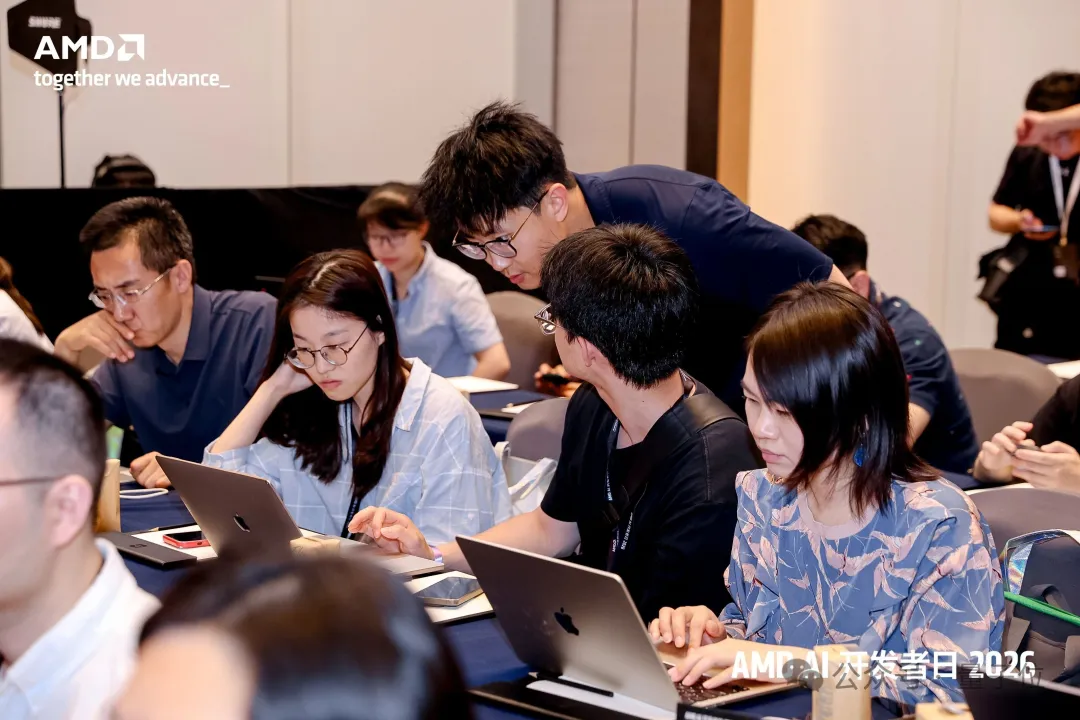
This density is the result of years of accumulation, and it is also a snapshot of AMD’s long-term roots in China’s developer community.
From immediate support for major Chinese open-source models such as DeepSeek and Qwen to the continuous building of local developer communities, AMD’s efforts follow a consistent logic.
That logic is to ensure Chinese developers can truly use and master AMD tools in their daily engineering practice.
Behind this logic lies AMD’s core understanding of China’s AI market: China is not only a consumer market for AI applications, but also an important builder of AI infrastructure.
China’s open-source community has made major contributions in areas such as training frameworks, inference engines, and model quantization, and these achievements are widely adopted by the global developer community.
AMD’s deep investment in China’s developer ecosystem at this moment is both an acknowledgment of this reality and a bet on the future. Through open-source collaboration, toolchain building, and connection with local developers, AMD is further strengthening its long-term investment in China’s AI developer ecosystem.
In the AI era, the deepest moat is having developers build on your platform and not want to leave.
What AMD is doing is precisely making that a reality in the Chinese market, step by step.