Accelerating Research and Reversing Cellular Aging with Genetic Clues
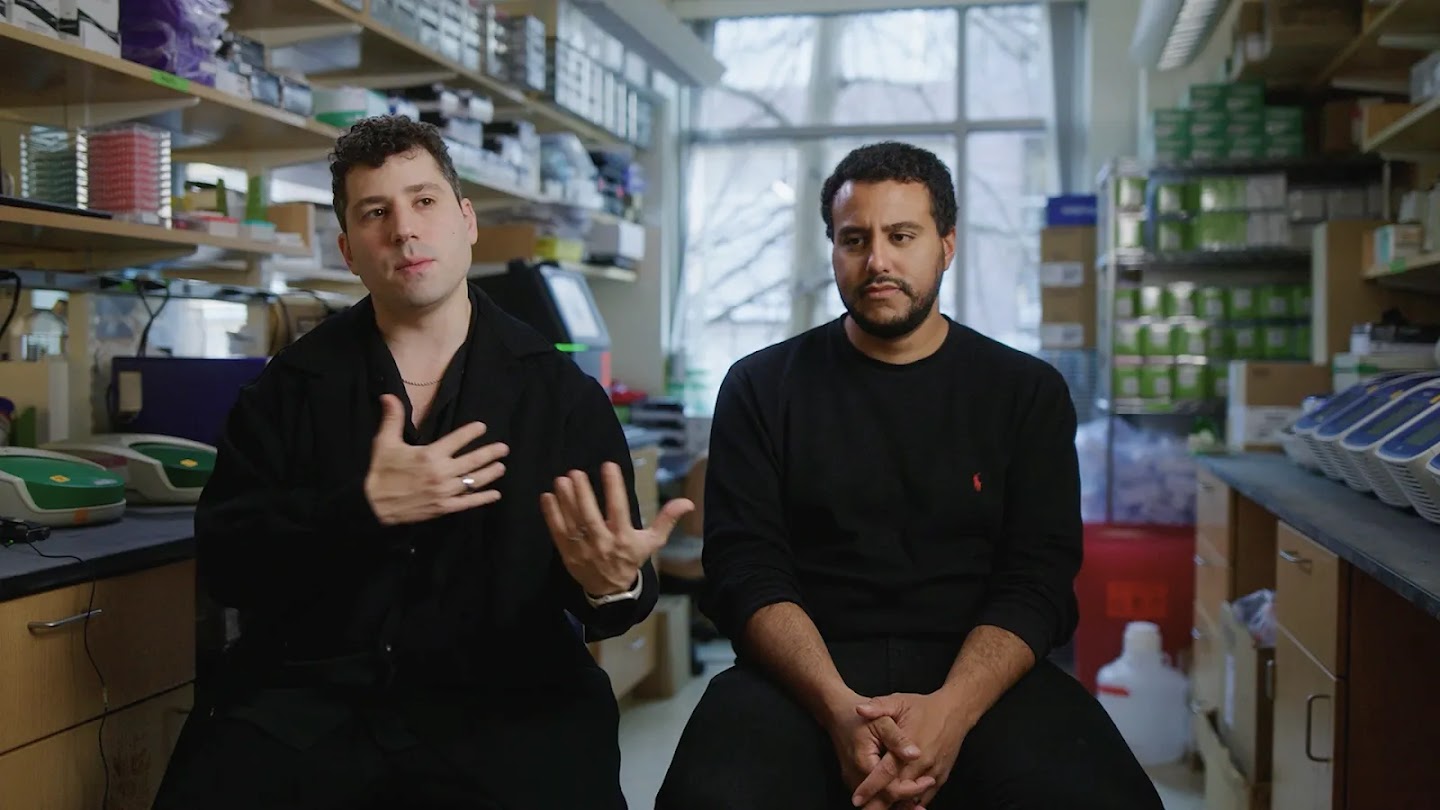
One of the biggest bottlenecks in aging research is deciding which genetic pathways to test, and another is figuring out how to interpret the massive amount of data those experiments produce. Biologists Omar Abudayyeh and Jonathan Gootenberg are using Co-Scientist to tackle both challenges at once.
In their lab, they run large-scale genetic screens, turning thousands of genes on or off and observing how cells respond. The goal is to identify factors that can steer cells away from senescence — a damaged state associated with aging — and toward a younger state, with potential applications in tissues such as skin, hair, and muscle.
Co-Scientist is helping in two ways. First, it can generate research leads. When the team asked it to sift through scientific literature for factors that might reverse aging, it reviewed tens of thousands of papers, considered an enormous number of hypotheses, and proposed more than 20 new, promising genetic factors worth testing. In lab validation, some of Co-Scientist’s hypotheses were confirmed, and the recommended factors helped push cells toward a younger state while improving overall function.
Second, Co-Scientist speeds up the downstream analysis. After the team completes a large screen, they still need to determine what the vast dataset means and which direction to pursue next. That analysis — connecting test results with years of scattered scientific literature — can take a researcher as long as six months. By having Co-Scientist analyze the screening data alongside the literature, the process was reduced to just a few days.
Slide 1/2
Using Co-Scientist feels like having a team of 50 people on call at all times, and they’re able to do things that would never fit into a single day otherwise. In our lab, that’s simply impossible.
Omar Abudayyeh, Principal Investigator
The Abudayyeh–Gootenberg Lab
Biology still has so many unanswered questions. We’re looking for things that are paradigm-shifting — real breakthroughs — and we think Co-Scientist can help us get there.
Jonathan Gootenberg, Principal Investigator
The Abudayyeh–Gootenberg Lab
Related Articles
Co-Scientist: A multi-agent AI partner for accelerating research
May 2026 Science
Discovering repurposable drugs to fight liver fibrosis
May 2026 Science
Unifying biology’s toolbox to open new paths for ALS research
May 2026 Science
Accelerating discoveries in liver disease
May 2026 Science
Opening new paths in aging research
May 2026 Science
Exploring the molecular switches behind emerging infectious diseases
May 2026 Science