
At the AI Engineer Code Summit, Jev creator Diogo Almeida called on developers to automate everything. Meanwhile, Glean and other companies showed how they are using Jev.
November 12 · 4 min read
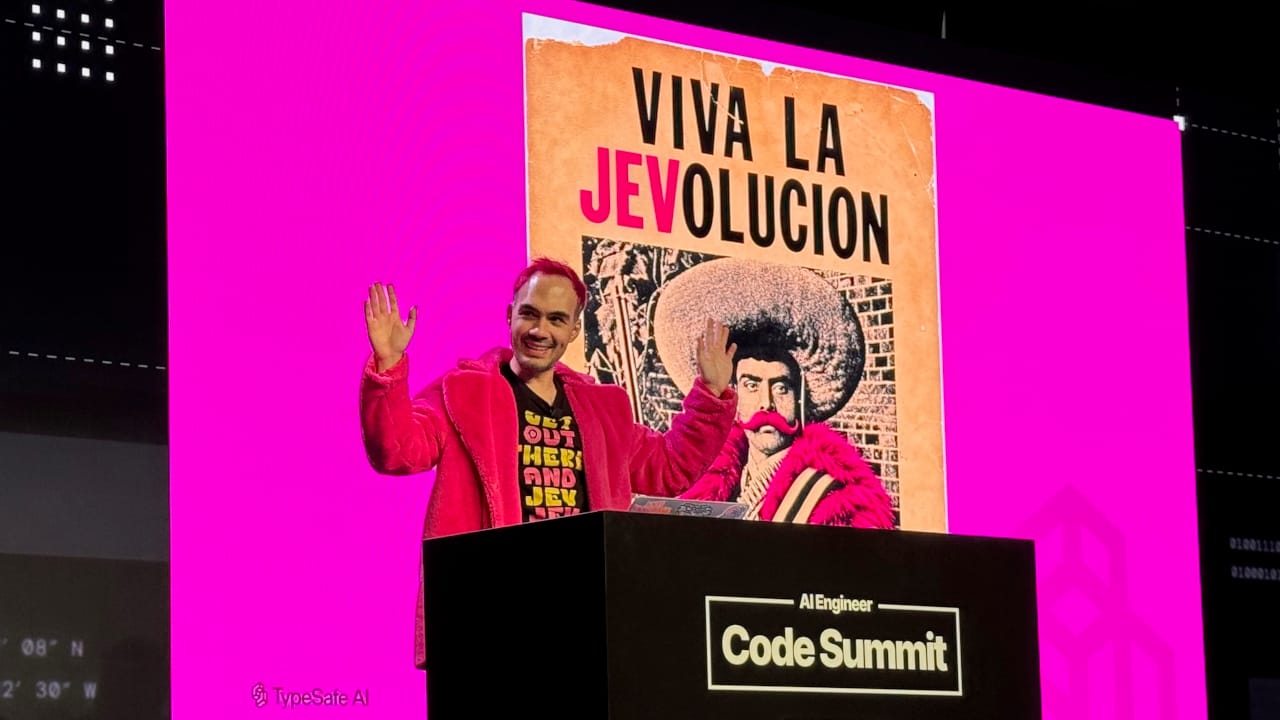
At today’s AI Engineer Code Summit, the central theme was System One models—non-generative models that return structured choices, scores, or probabilities. Compared to reasoning LLMs (System Two models), they are generally faster and cheaper.
There is no one better suited to issue a rallying cry for System One models than Diogo Almeida, co-founder and CEO of TypeSafe AI. Almeida is the primary creator of Jev, the product that kicked off this trend less than two months ago.
When Jev launched in September, it immediately opened the eyes of AI engineers. In a launch podcast with Latent Space (which quickly became our most popular episode of the year), Almeida explained the fundamental problem with putting Large Language Models (LLMs) at the core of software: reliability.
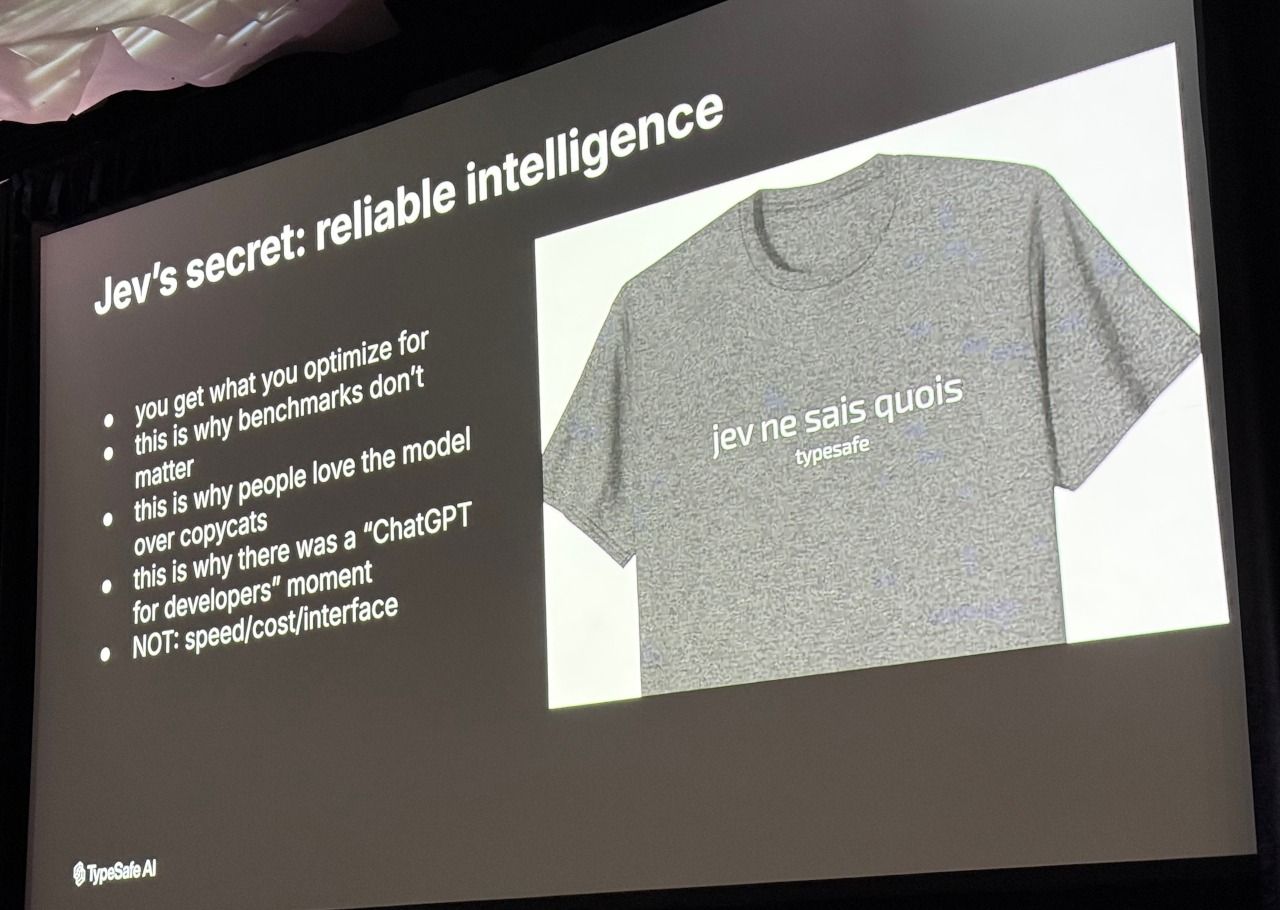
In today’s AIE Code keynote, he went a step further, claiming that Jev is “reliable intelligence” and should be used to “automate everything.”
Integrating System One Models into Code
What particularly interested AI engineers was Almeida’s view that System One models should be integrated with code. As he put it in his keynote, “code is the language of automation, so you need to integrate with code.”
Latent Space founder swyx interpreted this as a call to “freely intersperse ‘System One’ model calls all throughout application code to build smarter software, rather than the increasingly complex ‘concatenate strings and pray’ style of AI engineering.”
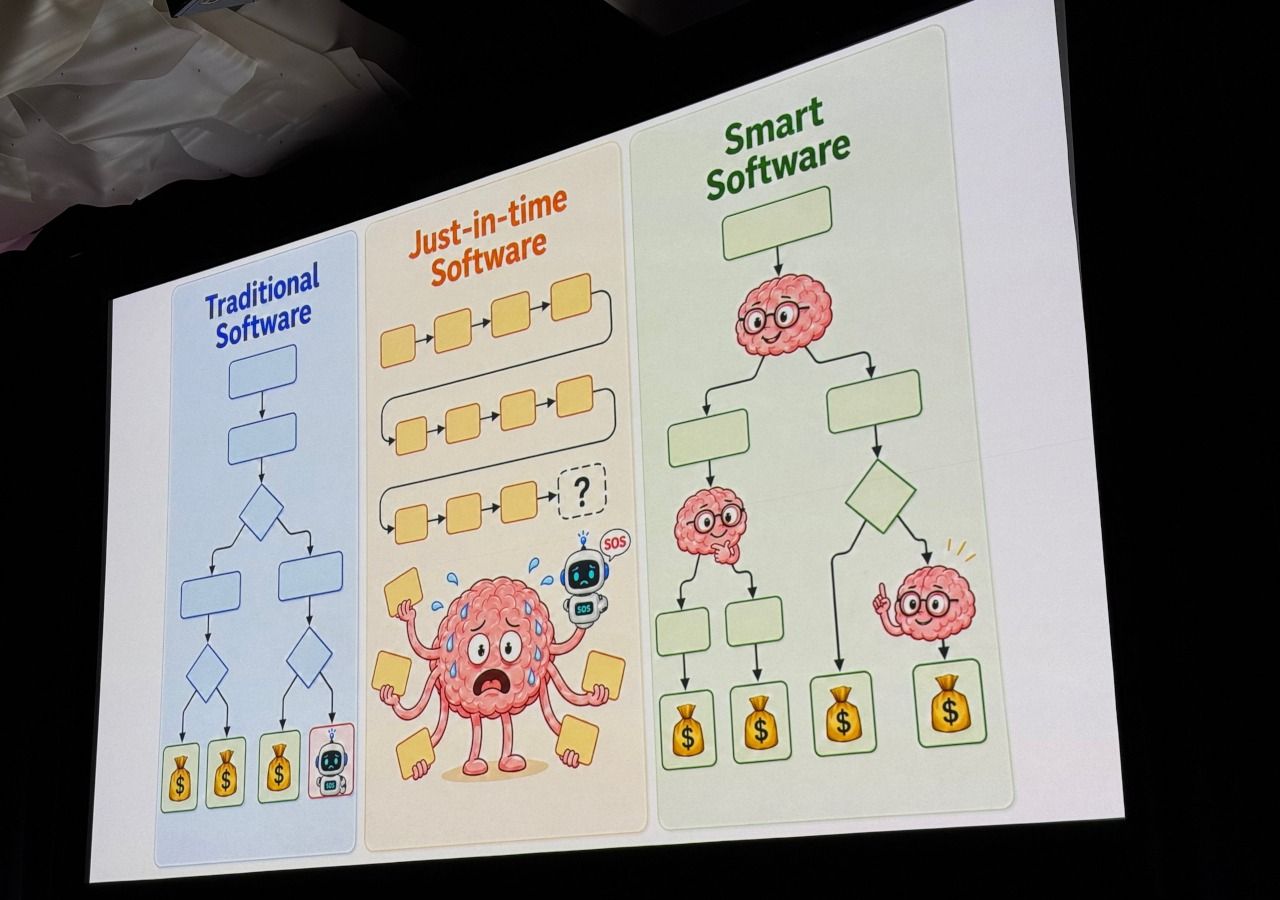
The term “smart software” ran throughout Almeida’s presentation. While it sounds like a phrase Microsoft or IBM might have used during the Web 2.0 era, in the age of AI, it highlights a harsh reality about LLM-powered software: sometimes it isn’t all that smart. As Almeida quipped during his talk, “95% of the time you get Einstein, and 5% of the time you get Mr. Bean.”
“And if you can’t tell which is which, how the f*ck do you automate,” he added.
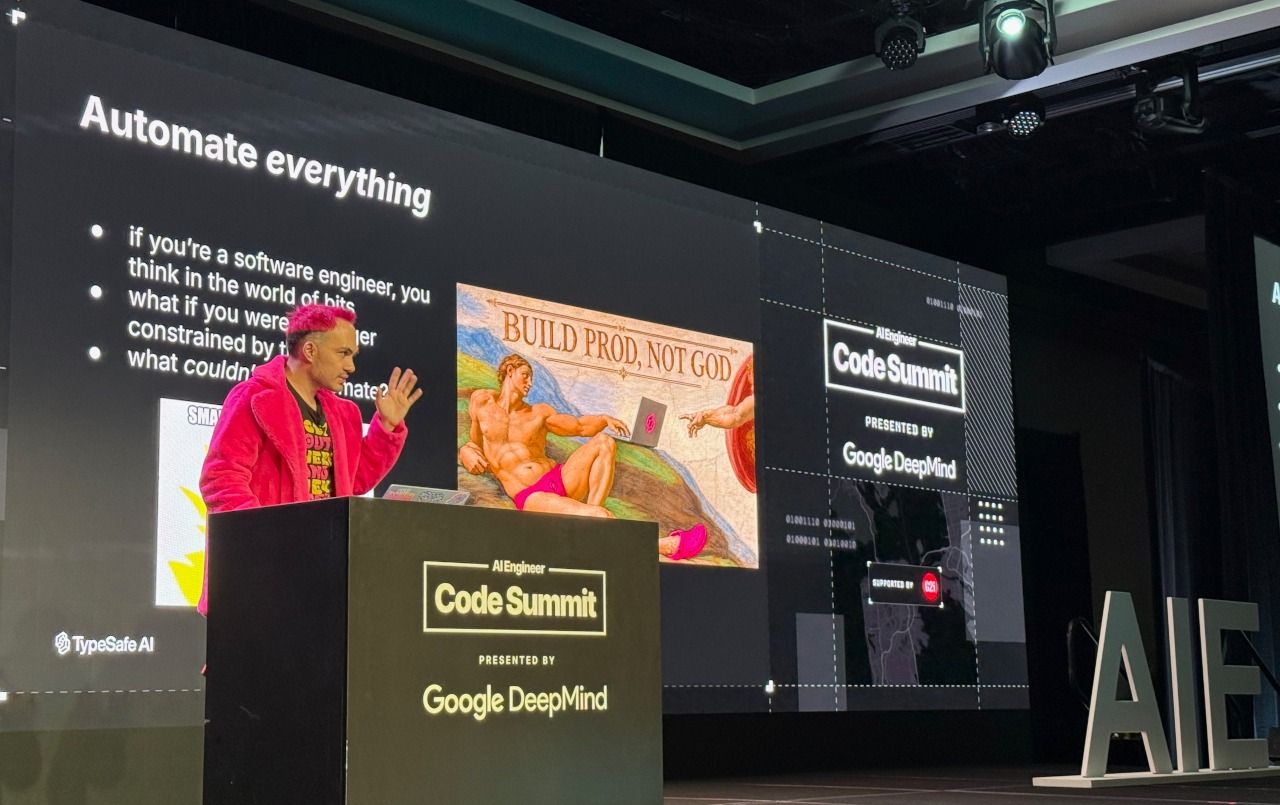
Almeida concluded with an impassioned plea to “automate everything.” Like a pink-haired Steve Jobs for the AI era, he appealed to “the dreamers and the people who don’t want to be limited by what has happened so far,” promising that TypeSafe AI wants to “really fight for you, and we want it to be as reliable as a fourth logic gate.”
How Glean Uses Jev
In the unenviable position of following Almeida on stage, Chinmay Goyal from Glean demonstrated a more pragmatic use of Jev. He explained that at Glean, System One models are used alongside LLMs and other types of classifiers, and that Jev is particularly useful for “zero-shot flexibility.”
“As the taxonomy of our decision space changes, we don’t have to fine-tune these models over and over again,” he said.
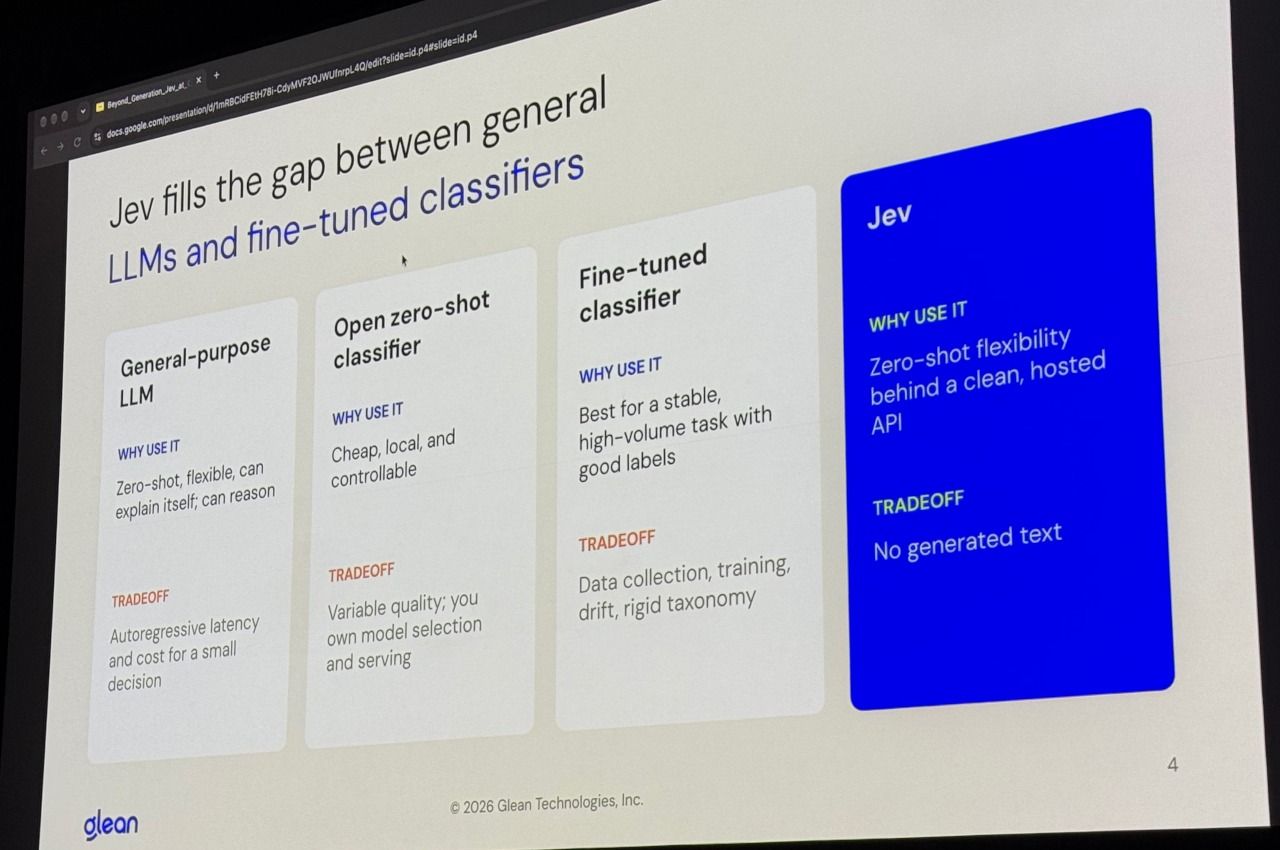
In a brief interview after his talk, Goyal told Latent Space that their customers don’t actually need to know which type of model they are using.
“Jev powers a pretty significant portion of the workflows, [but] the user just needs a product that works; that’s always our goal with anything we build. So we want to hide all the complexity, whether we’re using Jev or a full LLM.”