
Now I’ve truly seen everything. The most tech-savvy thing about this year’s Singles’ Day (Double 11) shopping festival isn’t figuring out how to stack discount coupons.
Scrolling through livestreams after work, ready for a shopping spree, things started looking suspiciously familiar—since when did AI start crashing major shopping malls?
First, top livestreamer Austin Li (Li Jiaqi) was enthusiastically peddling two trillion tokens, and right after that, I scrolled into Luo Yonghao’s livestream—
Well then, AI coding tools now have direct shopping cart links too.
The end-to-end AI development platform TRAE—affectionately dubbed “Cui Laosan” by Luo Yonghao—was offered at an unbeatable first-month trial price of just 9.9 RMB.
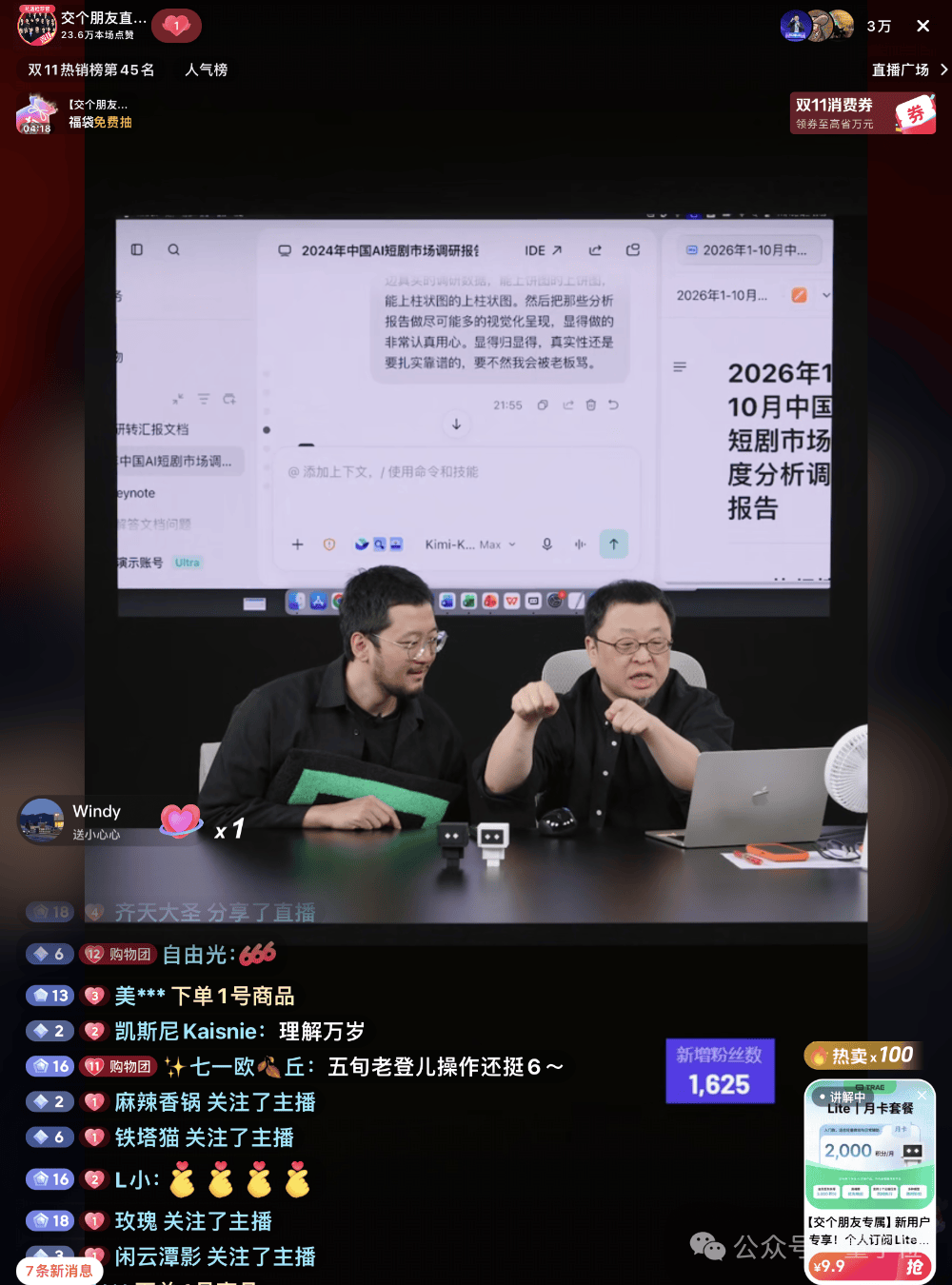
This fifty-something guy, who claims he “doesn’t know how to write a single line of code,” set up his computer and shared his screen on the spot, showing off his skills in front of tens of thousands of viewers:
Generating a short-drama market research report complete with data charts in just a few minutes;
Transforming over 50,000 words of dense material into two sets of keynote-level PPTs;
Building a genuine, globally functional voice input software from scratch using nothing more than a rough hand-drawn sketch.
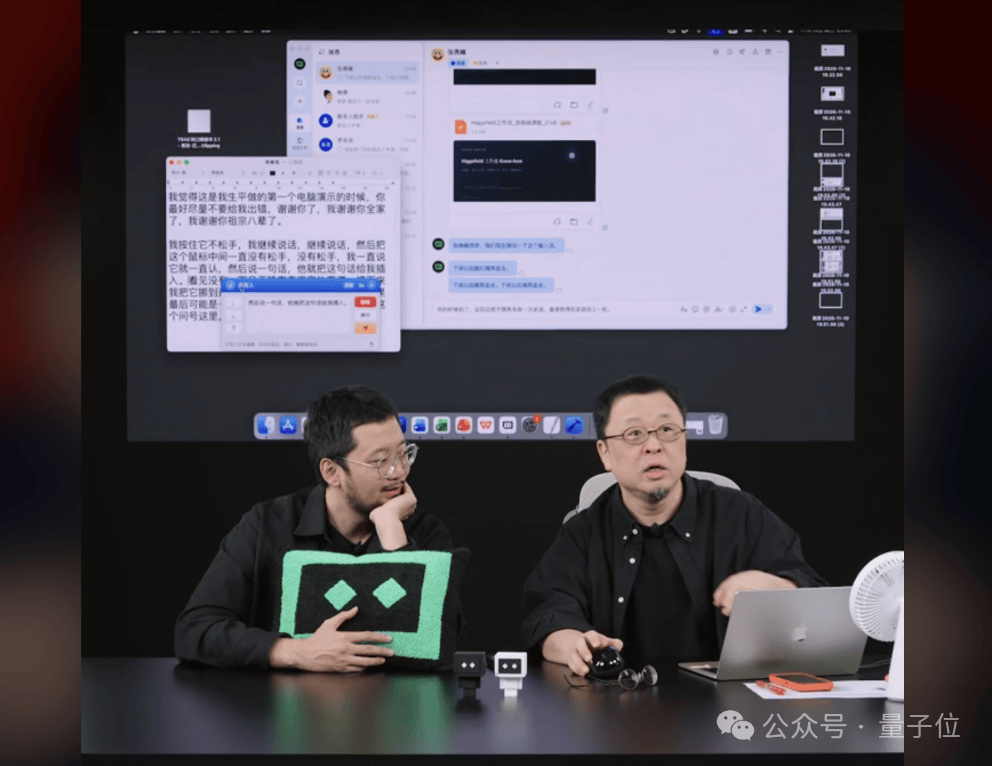
It’s wild. AI Coding, which is usually only dissected and benchmarked to death by programmers on tech forums, was thrust overnight onto the mainstream livestream shopping stage.
So? Why are top livestreamers collectively selling obscure tech products this year?
A Sea Change in Singles’ Day
In past Singles’ Day sales, what we fought over was nothing more than toilet paper hoarded by the case, skincare products with baffling discount math, and digital hardware with endless spec sheets…
This year, the vibe is completely different.
The two trillion tokens in Li Jiaqi’s livestream showed everyone for the first time that AI can actually be “hoarded in bulk.”

But once the hype dies down, many ordinary folks who impulse-bought followed up with a giant question mark over their heads:
I bought a pile of cold, abstract tokens, so what can I actually do with them in daily life? Use them to chat with a large language model and play word games to kill time? Or just casually search for materials to pad out a document?
The general public becomes desensitized to pure technical specs and abstract numbers very quickly. Once the novelty wears off, people really only care about one thing:
Can this thing be turned into something I can actually use?

This psychological shift among the public happens to mirror the changes currently taking place in the AI sector.
These two livestreams actually collided right with a cross-section of the industry.
The 2026 Hype Cycle for Generative AI released by authoritative research firm Gartner shows:
The market has moved past the early phase of inflated concepts and is accelerating toward a pragmatic stage focused on real-world results.
Growth in LLMs used purely for chat and Q&A has peaked, while capabilities closely tied to business scenarios—like code generation and application building—are receiving much more attention.
The industry is outright calling 2026 the Year of the Agent, and even the Cyberspace Administration of China has specifically established regulations for AI agents.

AI coding is the fastest-moving track in this gear shift.
Anthropic also mentioned in its coding trends report earlier this year that software development is undergoing its biggest paradigm shift since the invention of the graphical user interface:
“Anyone can be a developer” is no longer just a slogan on a slide deck, and the role of programmers is gradually shifting from “writing code by hand” to “directing AI to do the work.”
Beyond selling raw materials like underlying compute power and chat windows, the industry is also starting to output “finished product power” that directly delivers usable tools.
So if you look closer at these two livestreams: Li Jiaqi is selling raw materials—compute quotas; Luo Yonghao is selling finished goods—tools you can pick up and use right away.
What these two livestreams collided with is precisely this watershed moment: moving from “selling conversations” to “selling results.”
As a Coding Agent that takes in compute power and directly outputs applications, it bridges the gap between raw materials and finished products.
Software development used to be viewed as an arcane art, but with the whole internet watching the livestream, it was compressed into a process as natural as typing in a chat window.
The audience got the message, too:
What hit the shelves this time isn’t a chat quota that gets used up and disappears, but a set of digital productivity tools that can turn wild ideas into real tools at any time.
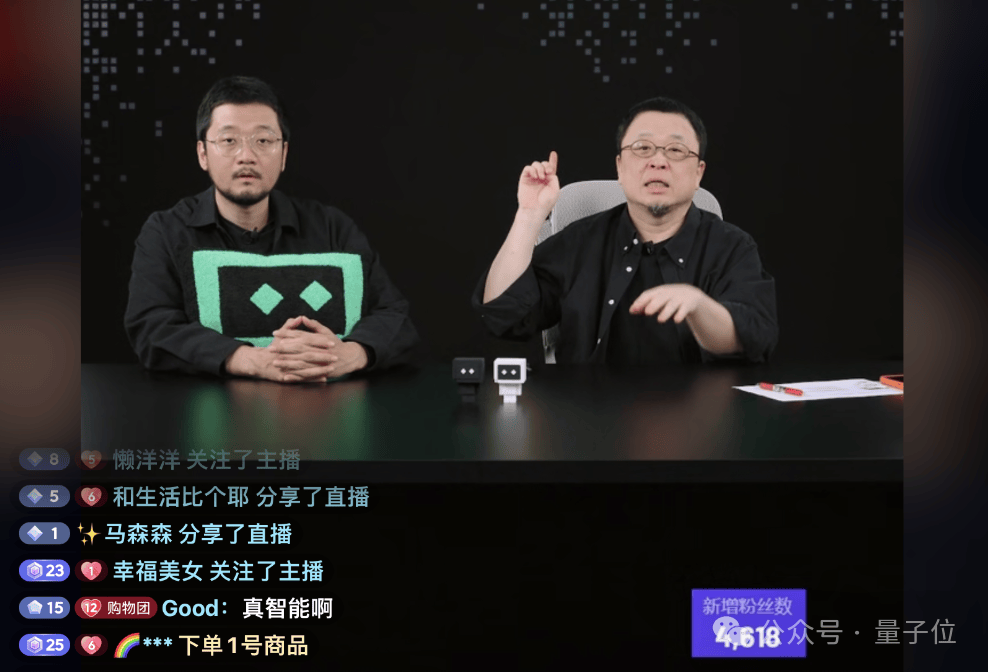
The public’s psychological barrier toward technology melted away on the spot.
Luo Yonghao Builds on the Spot
In the past, humans learned code to accommodate computers; now it’s the other way around—humans describe the ideas, and AI tools turn those abstract intentions into lines of code and clickable interfaces.
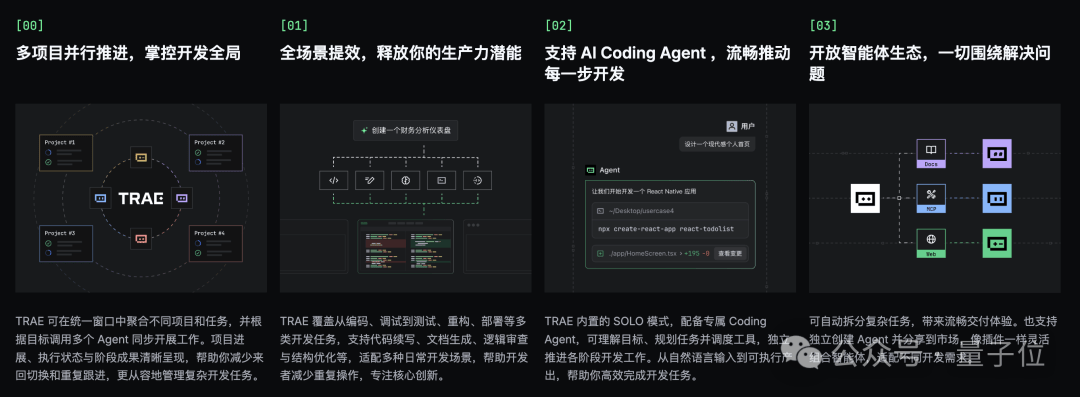
TRAE features multi-file context awareness, automatic environment configuration, and underlying local code orchestration capabilities.
The tedious steps in software engineering that used to scare off beginners the most—
configuring environments, installing dependencies, setting up project frameworks, fixing configuration file errors… all that scalp-numbing grunt work is encapsulated deep within the system, running silently in the background.
To put it even more bluntly, it lets you build software armed with nothing but an idea.
And who is Luo Yonghao?
A guy known across the internet for his nitpicky persona. With him on stage, the entire shopping livestream turned into a high-stakes stress test.
Yet this fastidious layman openly admitted:
I don’t know how to write a single line of code. In the past, making software meant hiring designers, product managers, and a bunch of engineers, and communicating with them was like walking on eggshells; now with Cui Laosan (TRAE), I can make it revise something a hundred times and it won’t even roll its eyes.
In the livestream, Luo shared his screen to show off three major creations he whipped up in just a few hours, each hitting the daily pain points of office workers right on the bullseye.
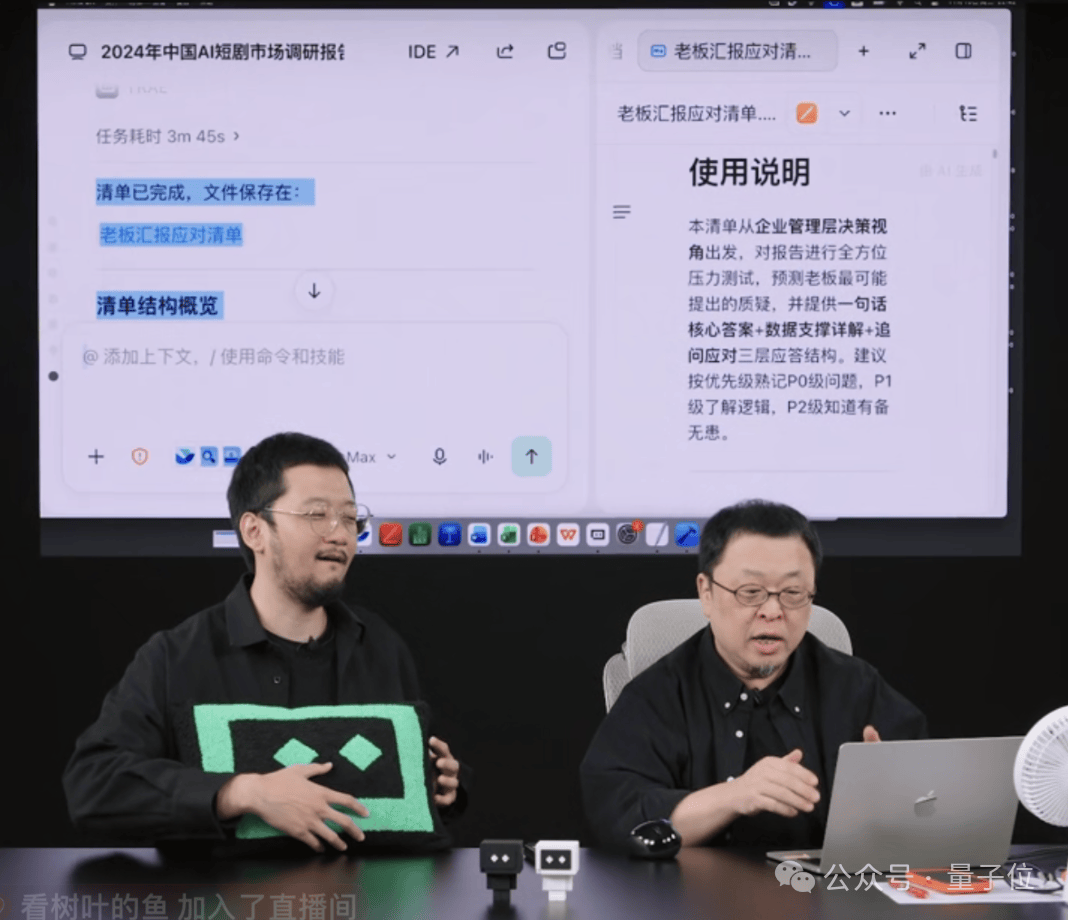
Facing the booming short-drama trend, Luo gave TRAE a direct command to analyze the short-drama market from January to October of this year.
The AI spat out a plain-text report in less than four minutes. Luo immediately channeled a picky boss and started finding faults:
Text alone won’t cut it. Import it directly into Feishu (Lark), put in pie charts where you can, and bar charts where you can. It needs to look like we’re taking it seriously enough to fool the boss, without actually lying to the boss—the data must be solid and reliable!
Luo’s computer even froze unexpectedly halfway through. After rebooting, he told the AI, “It crashed just now, continue finishing the task.” Not only did TRAE refrain from mocking Luo with his famous “Long live understanding” catchphrase, it steadily picked up right where it left off and generated a richly illustrated Feishu document within minutes.
Even more impressive was the workplace survival combo that followed.
Luo had it conduct a stress test from upper management’s perspective, reverse-engineering a checklist of responses structured into three layers: “one-sentence core answer + detailed data backing + follow-up Q&A.”
Wouldn’t that make you walk into Monday’s weekly meeting with total confidence?
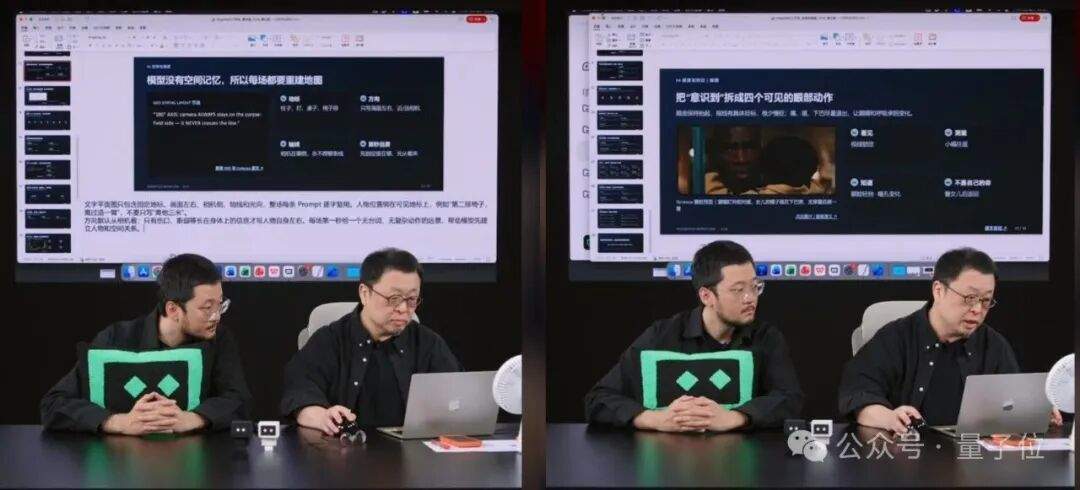
Dealing with cutting-edge industry materials, Luo fed an in-depth document of over 50,000 words directly to TRAE to read and digest, asking it to organize the content into two sets of PPTs: a “Speaker Version” and a “Self-Guided Reading Version.”
Each slide of the speaker version kept only core points, flowcharts, and case studies, stuffing all the detailed derivations into the speaker notes at the bottom; the reading version was complete with text and graphics, logically self-contained for easy silent reading.
Luo also made specific requests:
Work quietly in the background later, don’t hog the foreground GUI and delay me from doing other things; change the aspect ratio to 21:9 to match our company’s widescreens, and use a blue theme.
TRAE dutifully took the entire order, and before long, two well-formatted files were neatly delivered.
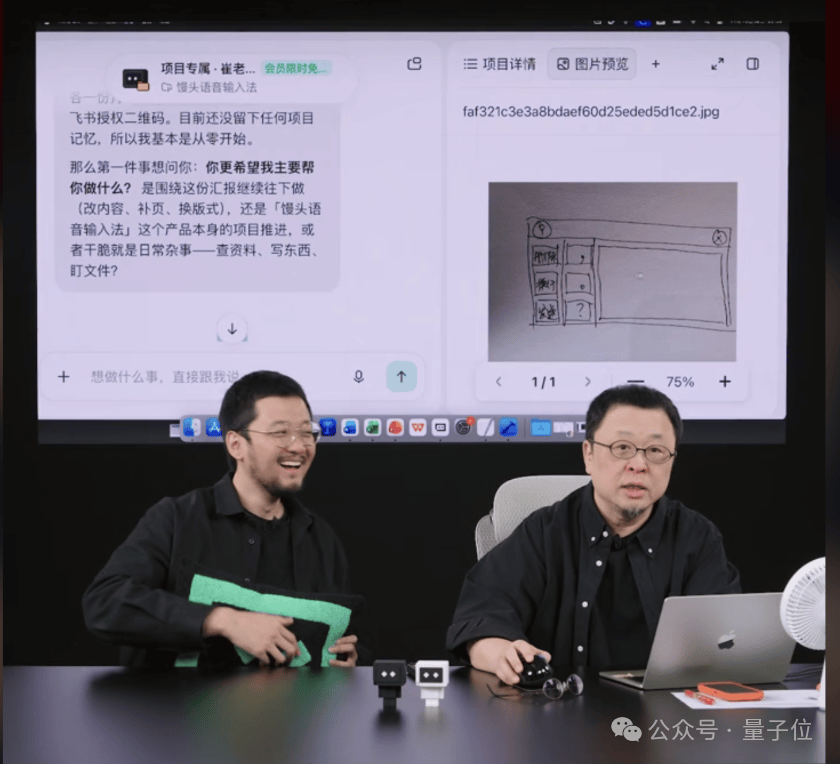
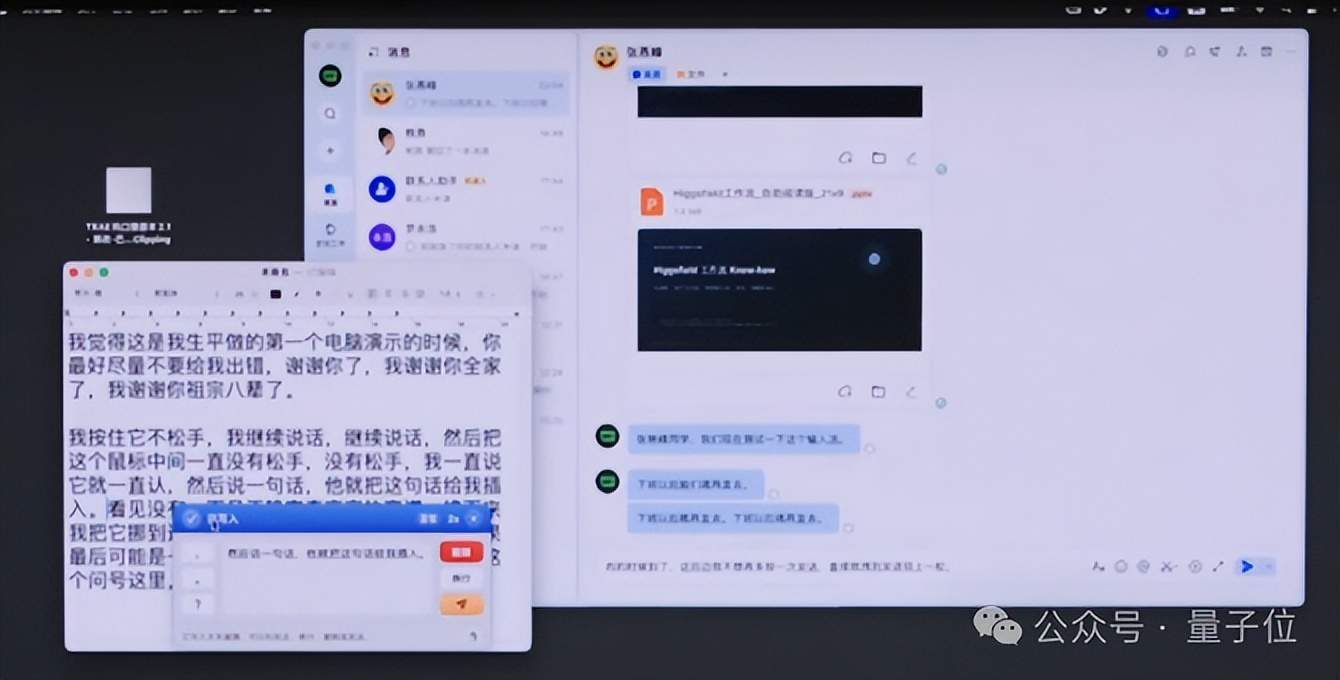
Of course, the most fun creation was a tool Luo dreamed up himself—Mantou Voice.
Because the Microsoft mouse he usually uses is nicknamed the “Mantou (steamed bun) mouse,” he wanted to make use of that idle middle scroll wheel button:
Long-pressing the middle scroll button in any software pops up a small floating window at the cursor to start voice-to-text; dragging and releasing over a punctuation mark or the send button completes the input in one smooth motion.
Luo first hand-drew an extremely rough wireframe sketch and fed it to TRAE. TRAE got the message instantly, not only recreating the interactive concept from the sketch, but also proactively breaking down button functions, fallback plans for failures, and cross-application coverage.
Not only can it spin up a finished product in one go, TRAE can also export the project package for secondary development at any time.
Realizing he had picked the wrong model at the beginning, Luo fibbed that he needed to switch computers (which wasn’t actually true…) and asked it to package up the source code and project documentation to make switching devices easier.
Thankfully, TRAE preserved all the project progress, saving face for this veteran product manager…
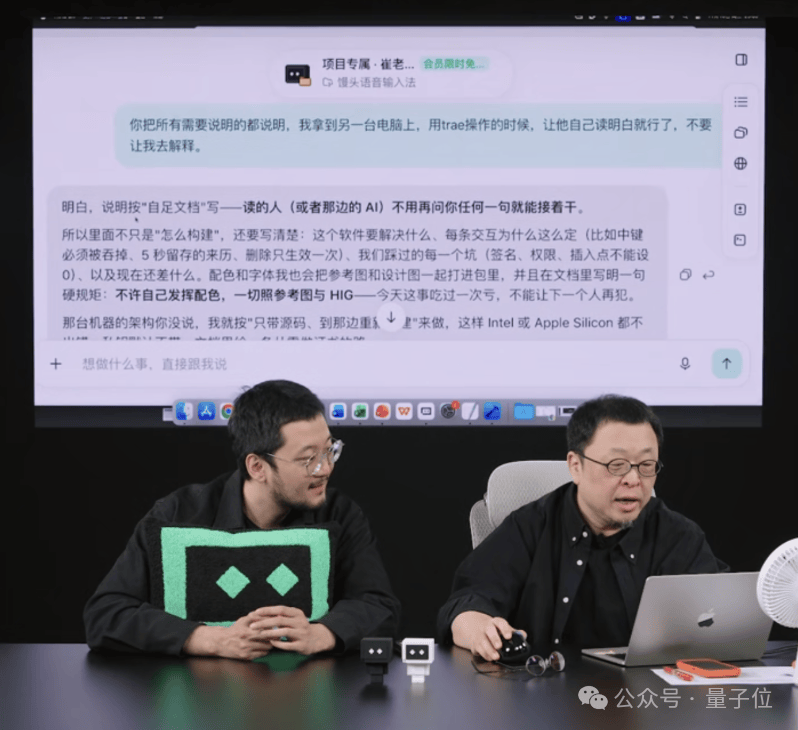
The final working local software works across browsers, chat windows, and even Feishu: hold down the scroll wheel and speak, and the text appears on screen accurately in real time; swipe right to a button and release, and commas or question marks are automatically filled in, or it can even trigger “Enter” to send directly.
Have to admit, it’s a great product concept—we’re all fans of Brother Long’s tech vision now (doge).
Freedom to Imagine, Freedom to Create
After watching the livestream, many people’s first reaction was definitely the novelty of it, closely followed by an itch to try it themselves:
I’m not a programmer, can I really use it to build something?
Yes, and the barrier to entry is much lower than you think.
In the past, making a small piece of software meant either spending years teaching yourself syntax until you went bald, or outsourcing it to a tech team with starting costs easily running into tens of thousands of yuan.
Now, with underlying code writing deeply managed by TRAE, the cost for an ordinary person to validate an idea keeps dropping. With just a few hours of spare time at most, you can mold the idea in your head into a clickable, interactive prototype.
As of June this year, TRAE has surpassed 10 million registered users globally, with 1.6 million monthly active users, and a significant portion of users open it for work nearly five days a week.
So what are ordinary people using it for?

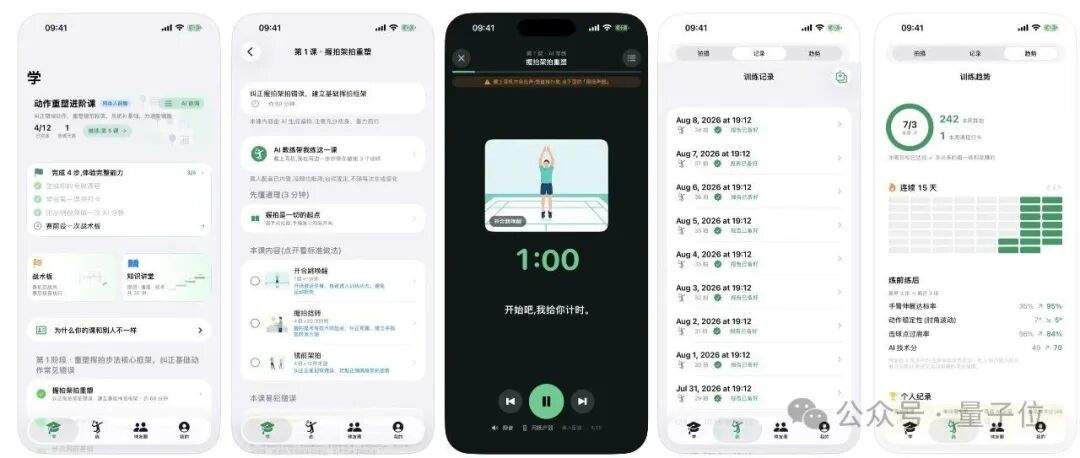
Two high school students who love playing badminton shared their story!
Because hiring a professional coach long-term was too expensive and they couldn’t clearly see the details of their own movements during regular practice, the two—who knew nothing about programming—used TRAE to call sensor data from phones, watches, and earbuds to build an app that analyzes swing movements and gives coaching advice. It has even officially launched on the app store.
Then there was a young guy torn over whether to install security cameras at his grandma’s house.
If he installed them, he’d know right away if she fell; but the thought of his grandma being watched by a lens 24/7 was truly hard to bear.
In the end, he used TRAE to build the “Fanglian Guardian Assistant.” Instead of relying on cameras to record audio and video, it relies solely on pillbox and door magnetic sensors to assess the situation, pushing alerts only when medicine is missed or there’s an unusual exit—preserving the dignity and privacy of the elderly in their later years.
Global developer community GitHub mentioned in its annual State of the Octoverse report:
AI is lowering the barrier to development, and a large number of “citizen developers” without traditional programming backgrounds are starting to participate in building applications; over 40% of PRs (pull requests) on the platform are initiated by AI Agents, and open-source contributions from non-professionals are growing rapidly.
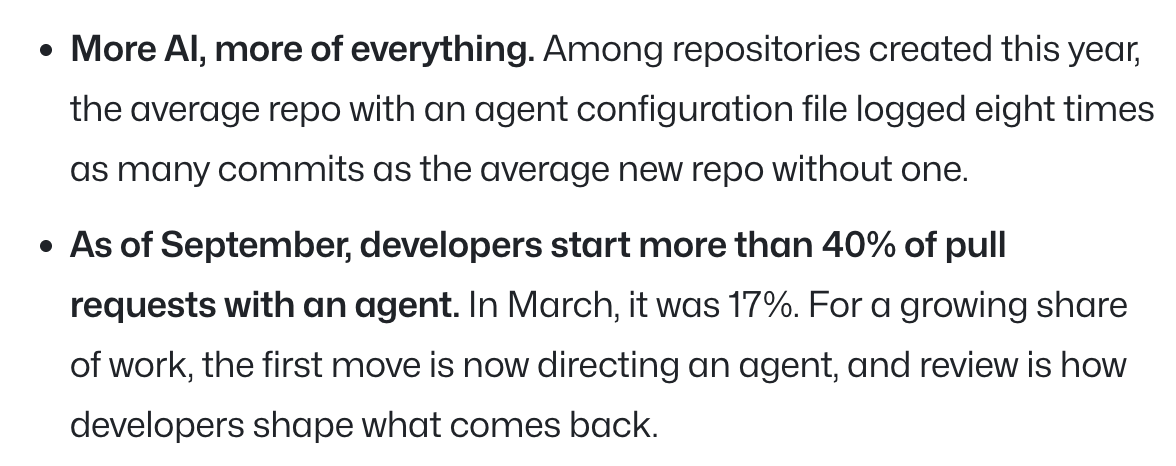 △Source: State of the Octoverse 2026
A McKinsey survey also pointed out that when it comes to lightweight business scripts and prototype building, AI coding assistance can cut development cycles that originally took days in half.
Although TRAE hasn’t put senior system architects out of a job, nor will it make you rich out of thin air, it genuinely makes up for the development shortcomings of independent creators who lack a technical co-founder.
What stops an idea from becoming reality is no longer incomprehensible terminal error messages. As long as you keenly capture real pain points around you and express them clearly, you have a chance to bring solutions to life painlessly.
This is practically the handiest real-world weapon in the era of the “super individual.”
People in the livestream chat already figured it out—
All you need to know is how to make a wish.

Admin and operations staff sitting in offices, tortured daily by spreadsheets in all kinds of bizarre formats, can totally use it to whip up a custom batch data-cleaning script;
Independent photographers and illustrators no longer need to buy expensive website templates—just a few natural language interactions can build a portfolio page with a style all their own;
Small e-commerce sellers can casually customize an automated bookkeeping plugin tailored to their store’s specific commission rules.
……
One person, armed with a clear business concept and seamless execution from the tool, can hold up a workflow that used to require a small team to run.
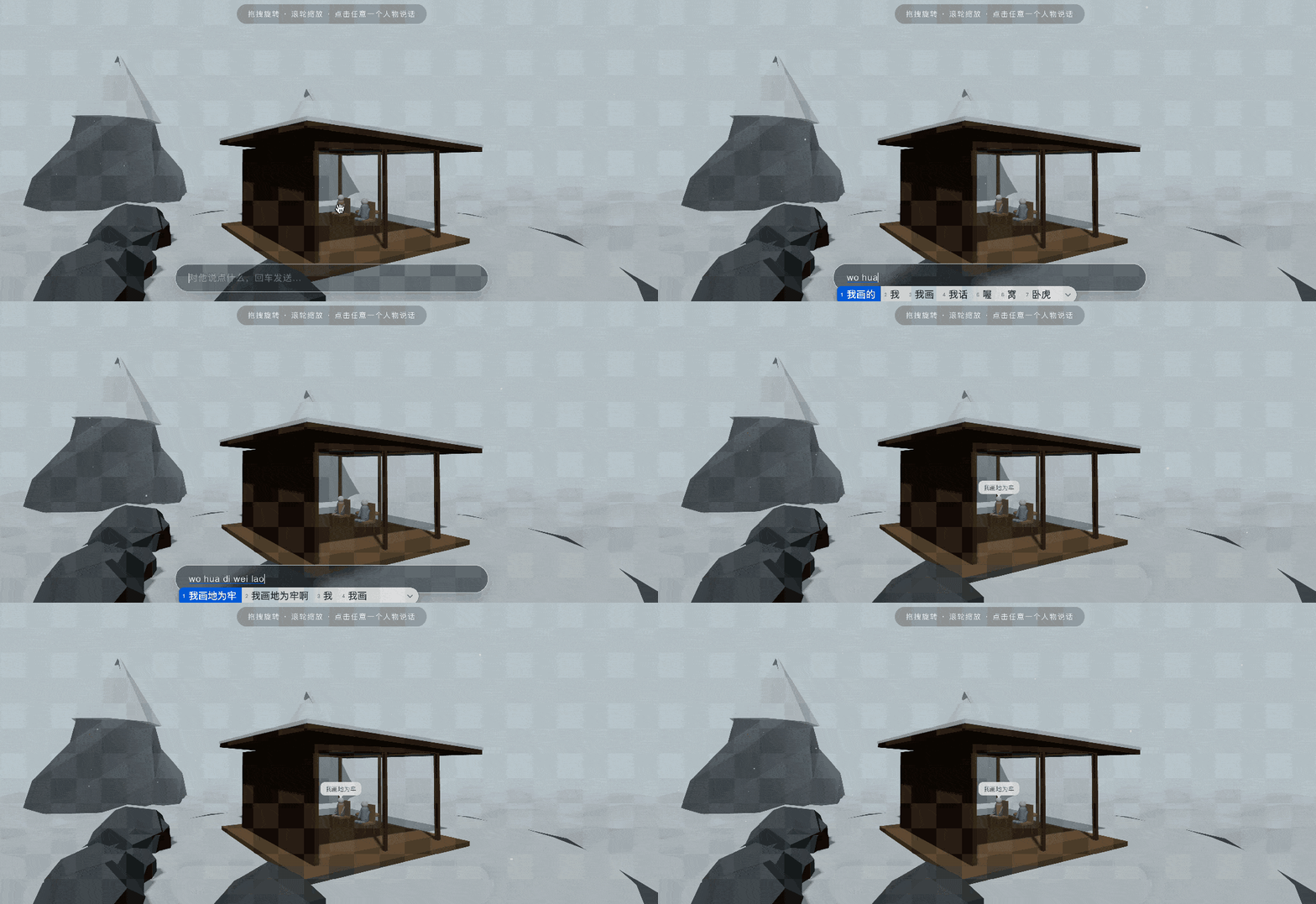
Not gonna lie, watching the livestream actually sparked a need of my own, so I immediately “TRAE’d” it!
Built a cliffside cabin from scratch, ready to invite my “nemesis” over to talk through our beef (doge).
What are you all planning to whip up?