
Hunyuan Hy4 is officially here!
Tencent has a crystal-clear goal this time: to rank among the most powerful open-source models.
Featuring 770B total parameters and 49B active parameters, the model introduces native visual capabilities for the first time and debuts support for Computer-Use.
Concurrently, instruction following, long-context understanding, and long-horizon agent capabilities have been comprehensively upgraded, firmly securing its place in the top tier of open-source models across computer-use and long-horizon agent benchmarks.
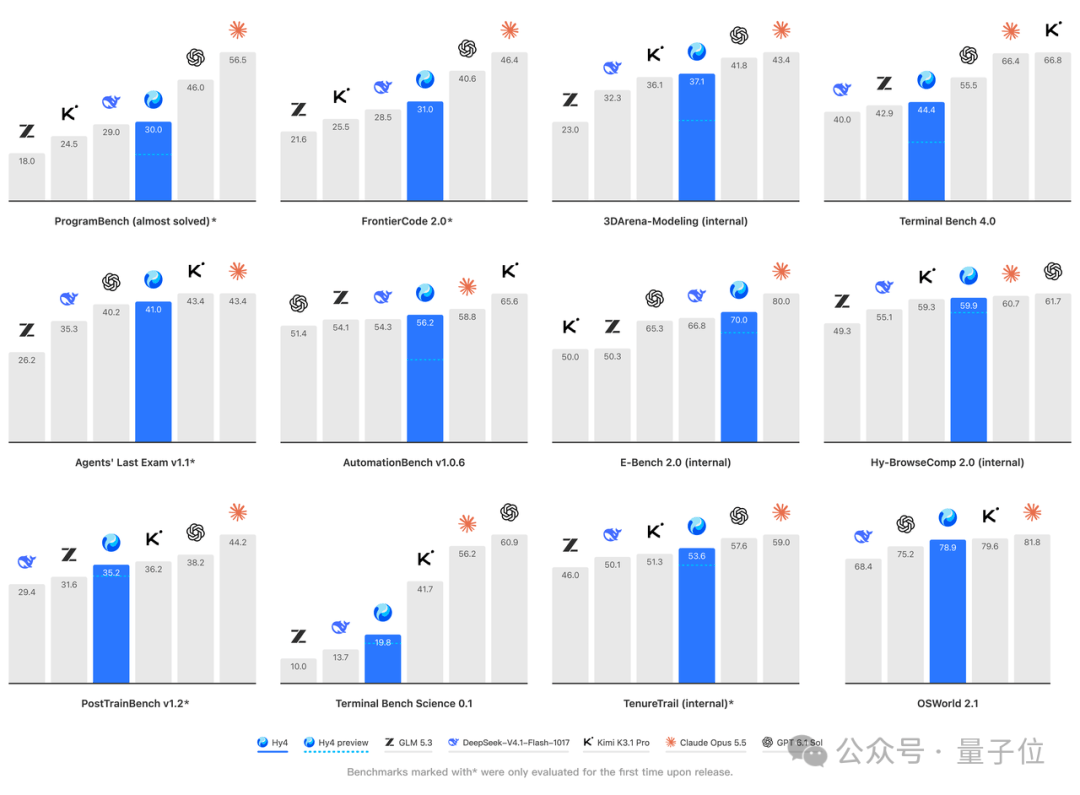
Transitioning from Preview to the official release, Hy4 significantly expanded the datasets and scale of both pre-training and post-training, co-designing and refining directly with frontline business scenarios.
Currently, both domestic and international editions of WorkBuddy have completed initial integration.
The first challenge presented to it in WorkBuddy was to build a fully interactive 3D mechanical keyboard from scratch:
Featuring a 75% layout with an 84-key design, it includes all six structural layers: keycaps, switches, switch plate, PCB, battery, and casing.
Dragging with the mouse triggers an exploded view to inspect internal components, and once reassembled, it can be typed on directly—even physical dynamics like key travel and spring rebound are faithfully simulated.
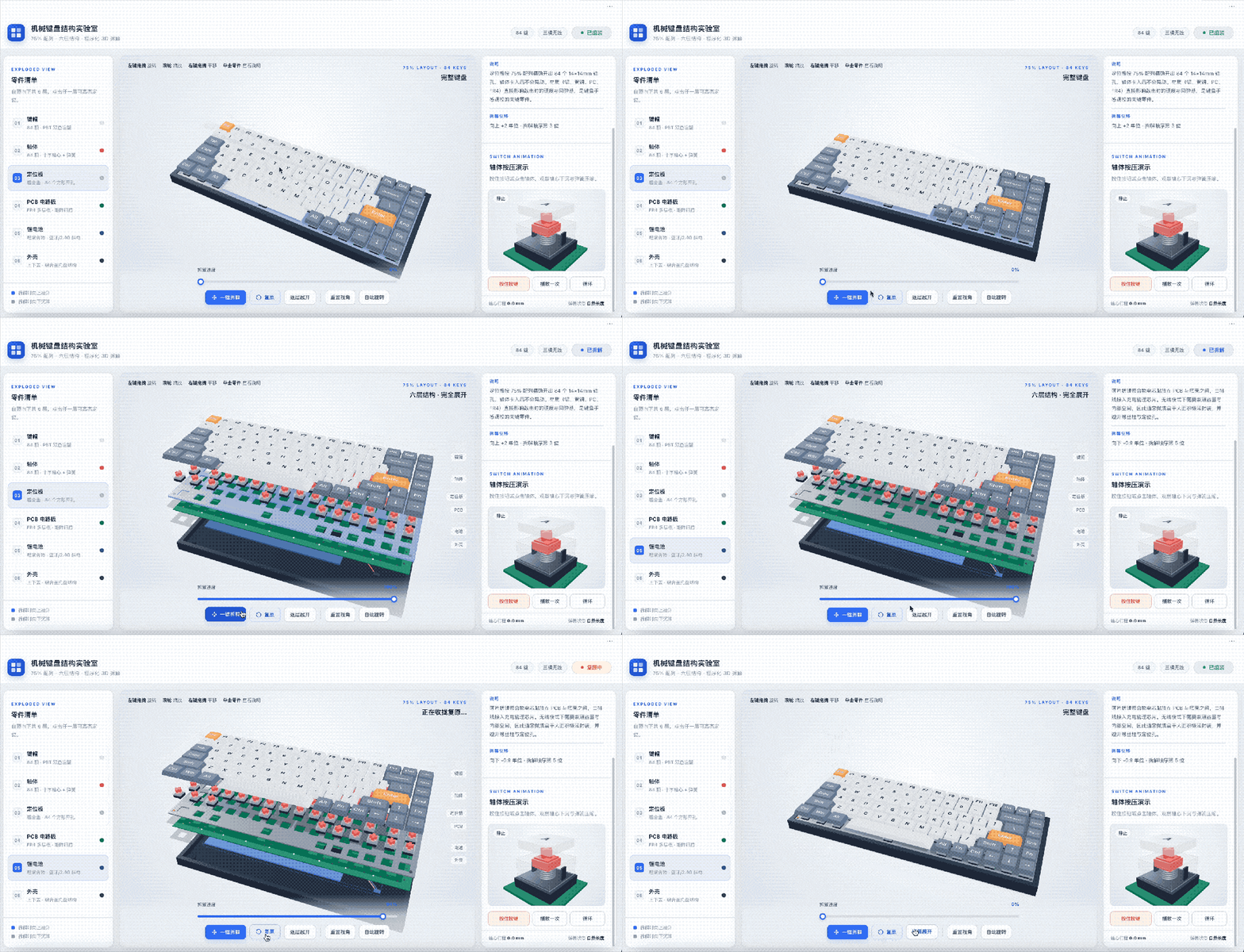
The workflow for creating product showcase demos has been fully streamlined.
Currently, Hy4 is live across products including Tencent Cloud TokenHub, WorkBuddy/CodeBuddy, Yuanbao, WeCom Intelligent Assistant “Da Yuan”, and ima; its API is also integrated into platforms such as OpenRouter, Hermes, and OpenCode.
Core products including QQ, Honor of Kings, Peacekeeper Elite, WeChat Read, and Tencent News are also actively integrating it.
Model weights will be officially open-sourced soon.
Without further ado, let’s dive straight into the hands-on tests.
Pixel-Level Visual Perception
Hy4’s newly introduced visual understanding capabilities reach a level of precision capable of pinpointing a roughly 2-meter-wide rooftop component in a 2.8-billion-pixel aerial photograph.
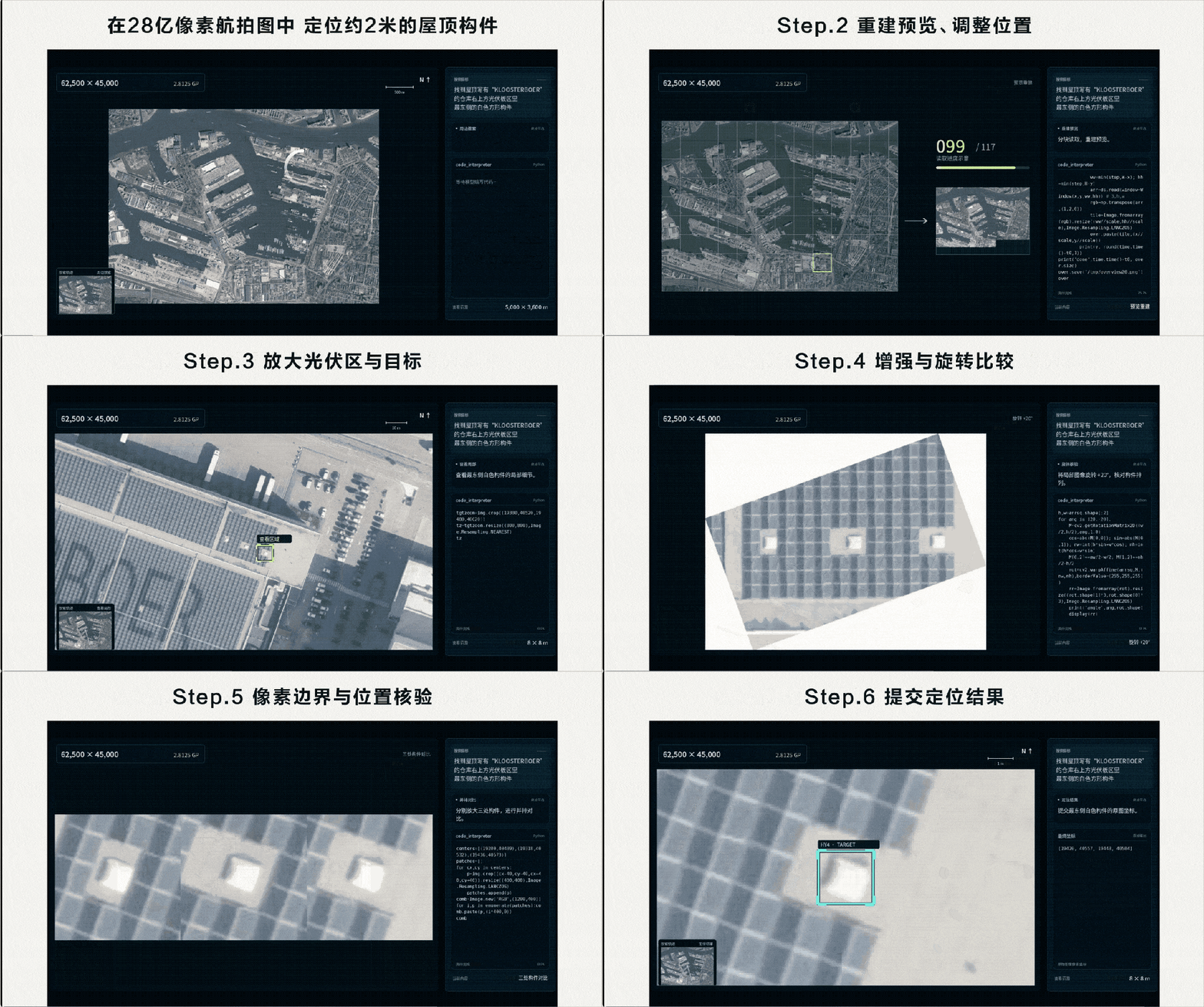
This perceptual precision is not only suited for industrial surveying and mapping, but also readily handles complex UI reconstruction tasks.
The first test: Recreate a retro-style music player based on a design screenshot.
This benchmark evaluates the model’s depth of comprehension regarding layout composition and visual nuance.
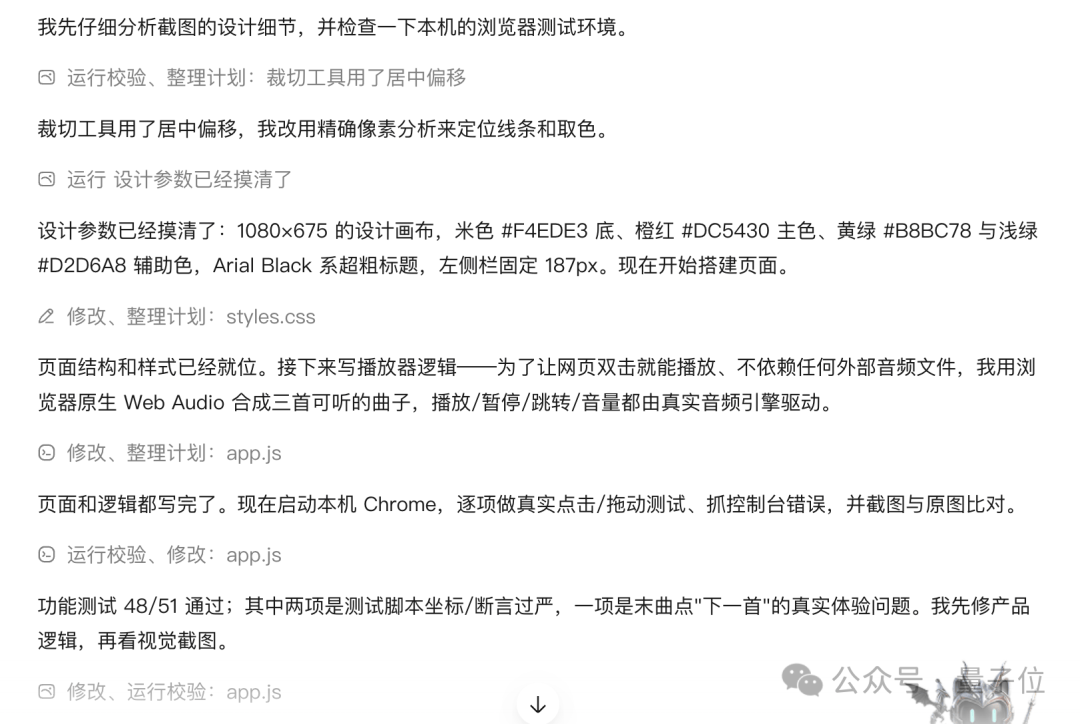
Upon receiving the prompt, Hy4 broke down the color palette, typography, and grid layout step by step, calculated the pixel-level width of the left sidebar, and then proceeded to write code—simultaneously constructing the page interactions and playback logic.
When a minor alignment discrepancy occurred with the cropping tool, it dynamically adjusted its strategy, repositioning lines and color values via pixel-level color analysis.
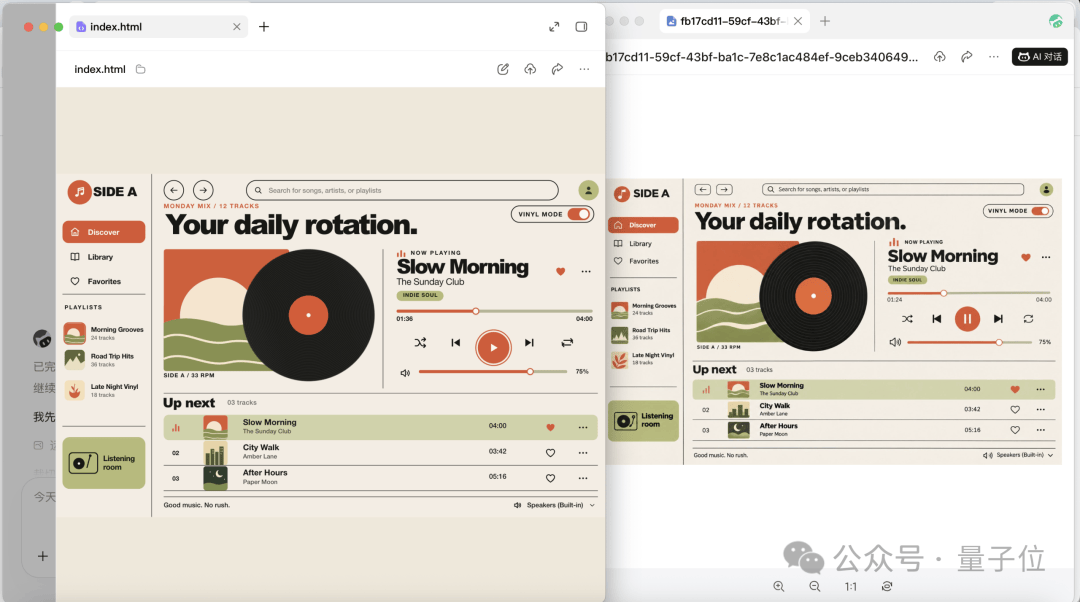
The final deliverable boasted remarkable fidelity:
A beige background, orange-red accents, and retro yellow-green hues, paired with bold serif headings and vinyl record motifs, established a cohesive retro aesthetic.
Navigation, track library, playback controls, and upcoming queue were all mapped precisely.
Comparing the original design side-by-side with the generated interface, only slight differences in the corner radii of the top-left forward/back buttons were noticeable; overall completeness was virtually flawless.
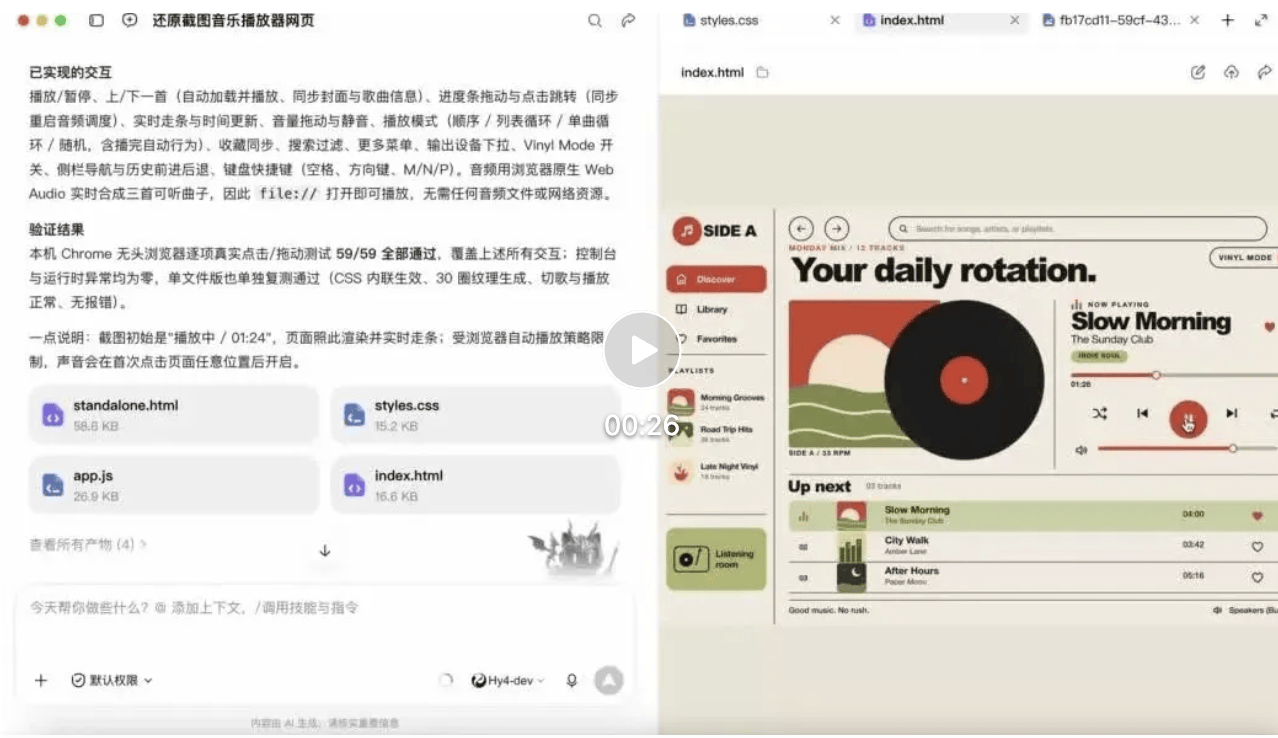
Checking Hy4’s delivery notes revealed play/pause, skip track, progress scrubbing, volume adjustment, repeat single track, shuffle, track search, and favorites synchronization were all fully implemented.
Catering to standard keyboard/mouse navigation, it also mapped the spacebar to toggle playback and arrow keys for seeking forward/backward.
Crucially, when clicking the play button, it had already bundled three built-in test tracks.
No external audio assets had been provided in the prompt.
 视频地址:https://mp.weixin.qq.com/s/OThj_29CAuHn6ioaqjkSpQ
These tracks were synthesized and rendered in real time using the browser’s native Web Audio API, functioning out of the box without relying on local audio files.
From just a single static screenshot, Hy4 delivered not only the player UI, but also an integrated test music library and complete audio calibration.
Taking a look at its background self-testing logs:
After outputting the code, Hy4 automatically spun up a headless Chrome instance in a sandbox environment, triggered clicks and drags across every UI control, and compared visual diffs via continuous screenshots.
Out of 51 initial test cases, 48 passed, 2 were blocked by test script issues, and 1 edge case was caught by the model’s self-inspection: when reaching the end of the playlist, clicking “Next” failed to loop or handle boundary behavior properly.
The model subsequently fixed the logic autonomously and ran regression tests.
The final report showed: all 59 tests passed, with zero console errors and zero runtime exceptions.

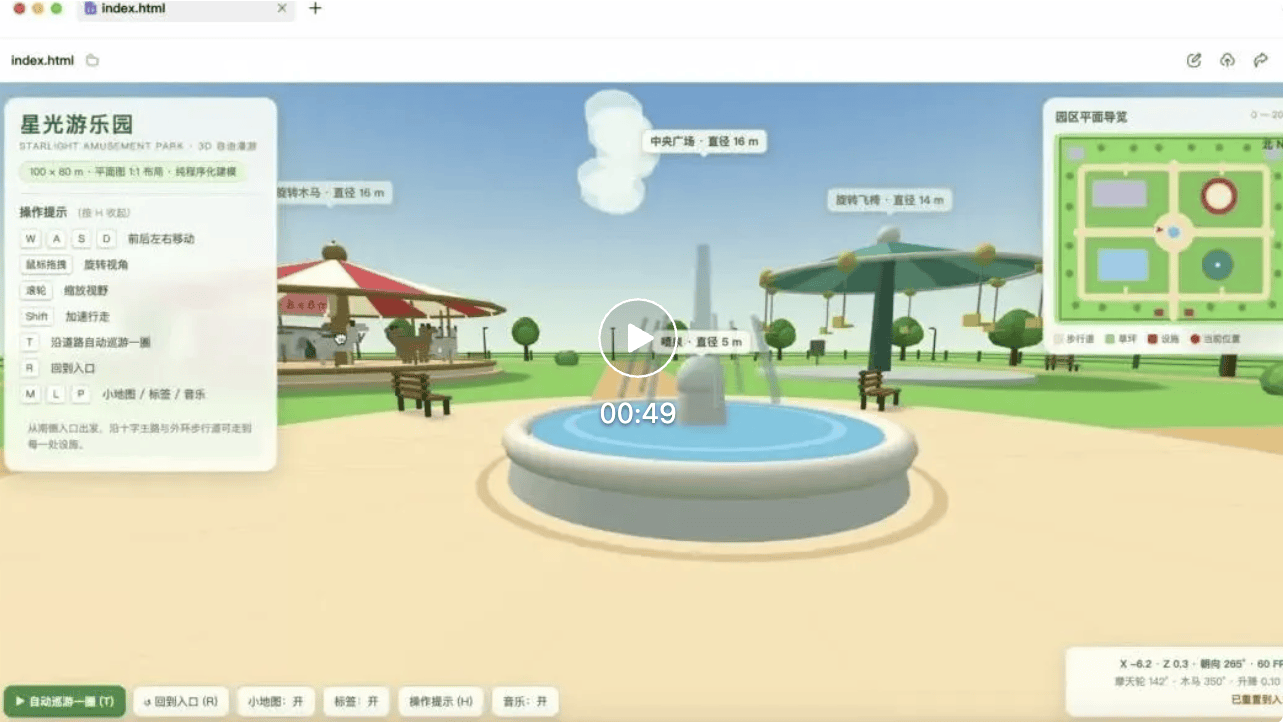
Beyond 2D interfaces, we raised the stakes: giving Hy4 a 2D floor plan of an amusement park and asking it to fully “3D-ify” it.
Facility coordinates, scale proportions, and walkway routes all had to align strictly with the blueprint; the Ferris wheel and carousel needed dynamic rotation animations; and the scene had to support free user roaming.

Following geometry modeling, shader configuration, and camera path binding, the entire “Starlight Amusement Park” was fully assembled.
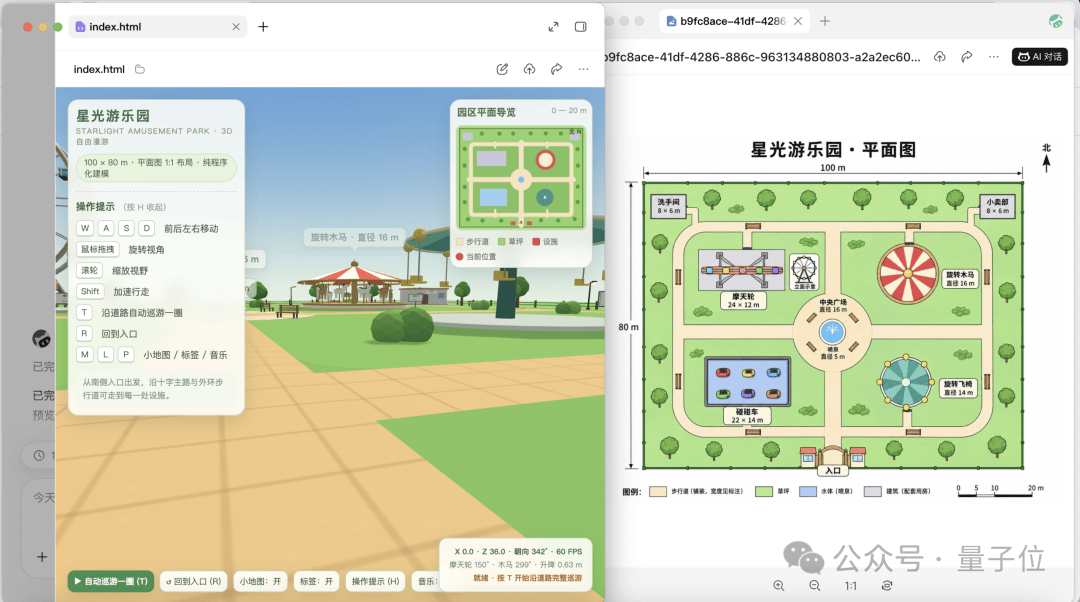
The classic red-and-white carousel canopy, service stations along the main thoroughfare, and scattered low-poly vegetation and lawns were all mapped to scale into 3D space.
An adaptive minimap was also integrated into the top-right corner, displaying facilities, main avenues, green spaces, and the user’s real-time position.
Once inside, users can navigate using WASD, adjust viewing angles by dragging the mouse, sprint with Shift, and click scene tags to view detailed text and image overviews of each attraction.

The UI features a one-click reset to the starting point to prevent getting lost, alongside an “Auto-Tour Path” button that navigates an automated guided route through the entire park.
 视频地址:https://mp.weixin.qq.com/s/OThj_29CAuHn6ioaqjkSpQ
Peak Agent Delivery Capability
In long-horizon agent tasks, Hy4’s performance is equally remarkable.
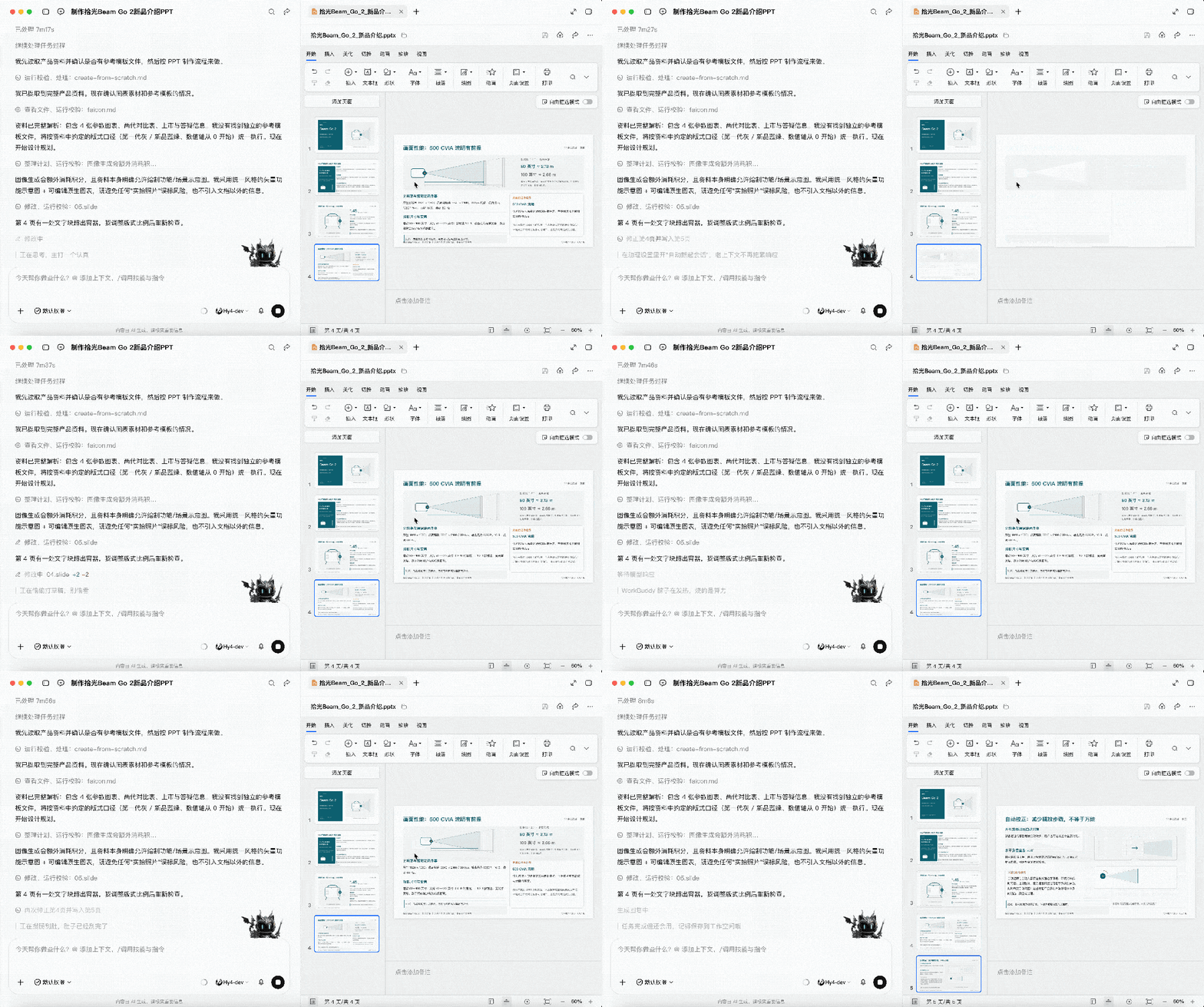
Provided with a product specification document for the “Beam Go 2” portable smart projector, it was tasked with generating an approximately 15-slide product launch presentation.
Hy4 first structured the narrative flow. Rather than pulling in arbitrary external imagery, it rendered stylistically consistent vector graphics via native code and encapsulated all data charts into editable formats for subsequent adjustments.
While rendering slide 4, the model detected that a lengthy paragraph overflowed the safe margin boundaries; it automatically refactored the layout in the background from a single-column mix into a card-flow layout, proceeding with subsequent slides only after secondary validation passed.
In total, it delivered a complete 16-slide presentation.
We then raised the bar by providing a dark, high-contrast visual template and requesting a complete redesign of the generated deck.
Rather than blindly rewriting the entire deck at once, Hy4 first applied the style to a single test slide. Once it verified visual and layout fidelity, it batch-migrated the remaining slides.
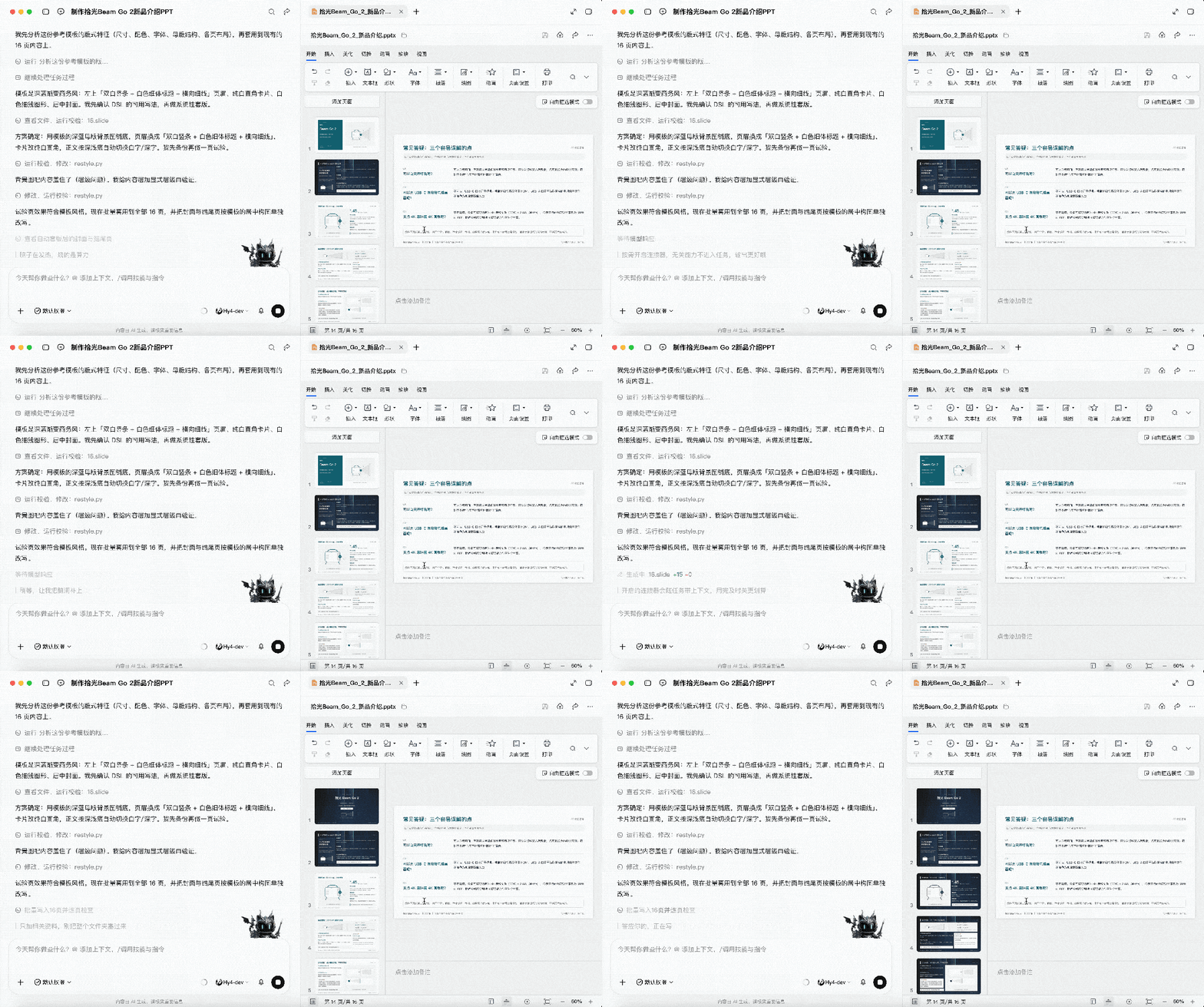
This “verify-as-you-go” workflow avoids “black-box” bulk generation. By executing in iterative sprints backed by status verification, it dramatically reduces rework overhead.
Next, Hy4 was tasked with independently developing a production-ready batch image processing tool featuring cropping, resizing, compression, and format export.
Upon receiving the requirements, Hy4 analyzed the design patterns of mainstream open-source tools such as Squoosh and Image Workspace, referencing architectures like real-time original-vs-compressed comparison sliders and preset workflows.
It promptly conducted an engineering breakdown: input streams, processing pipelines, Web Worker multi-threaded compute pipelines, a Canvas graphics rendering engine, and a ZIP archiving module, swiftly translating them into code.

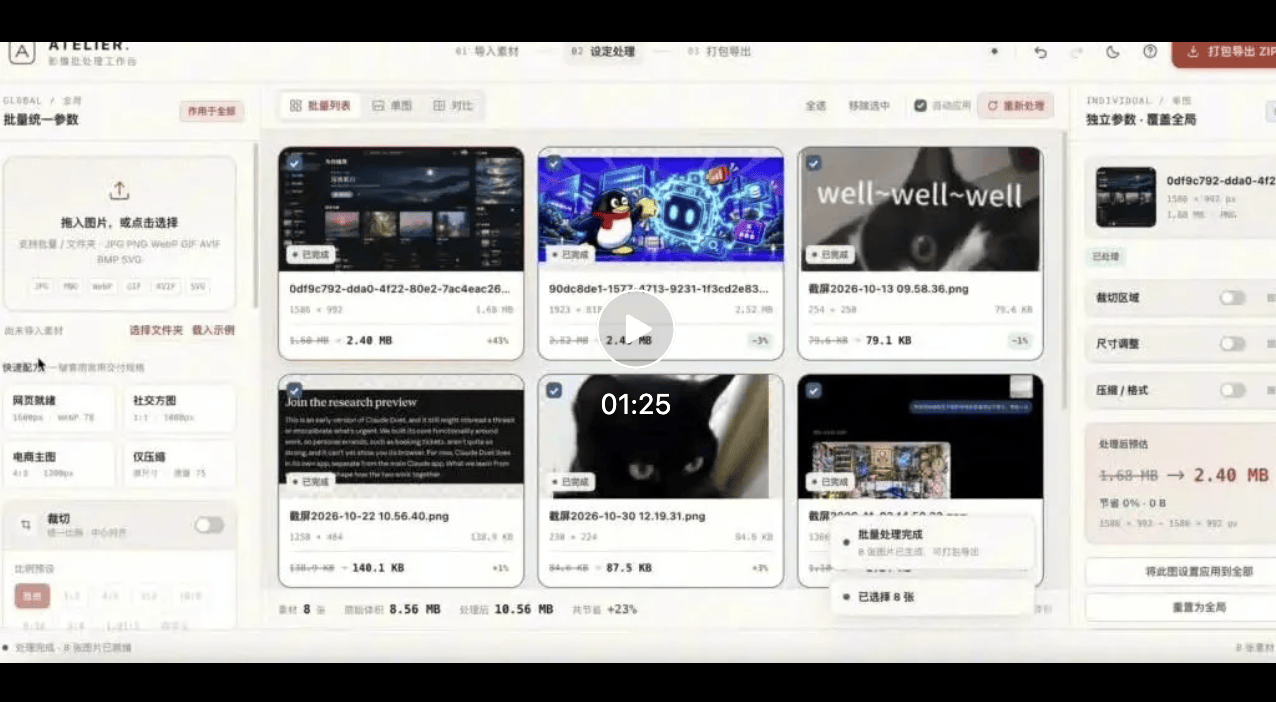
The final deliverable was named: ATELIER Batch Image Workbench.
The interface features an off-white background with orange accents, offers a three-step onboarding guide on initial load, and highlights the product slogan at the top: “Leave the repetitive to tools; keep aesthetics for yourself.”

Functionally, it supports batch drag-and-drop uploads as well as direct folder imports. The left panel provides global configuration for crop ratios, target resolutions, compression ratios, and format conversions, while allowing fine-grained adjustments on individual images.
In addition, the tool includes common presets such as 1:1 social avatars, e-commerce hero images, and ultra-compact file sizes. Users can slide the comparison bar to inspect compressed image quality in real time, with one-click packaging into a downloadable ZIP upon completion.
 视频地址:https://mp.weixin.qq.com/s/OThj_29CAuHn6ioaqjkSpQ
Beyond code generation, Hy4 also features native Computer-Use Agent (CUA) capabilities.
The test prompt was as follows:
Open JS Paint in Chrome, replicate the Hunyuan “kiss” emoji using the mouse, and record the entire operation.
 视频地址:https://mp.weixin.qq.com/s/OThj_29CAuHn6ioaqjkSpQ
From identifying the screen viewport, locating drawing tools, and picking targeted color values, to precisely executing mouse brush strokes—it is all powered by the brand-new CUA operational architecture.
More Power at No Extra Cost
Comprehensive testing demonstrates marked improvements in Hy4’s autonomous execution stability and task completion rate across long-horizon workflows.
When tackling multi-step execution chains, the model continuously maintains its global objective and contextual state. It performs phased self-checks during execution, localizes defects based on runtime feedback, patches code, and re-validates until a bug-free final product is delivered.
All benchmark cases above were delivered end-to-end through autonomous execution, self-inspection, and self-correction.

Hy4’s training was deliberately focused on real-world productivity scenarios:
In front-end development, emphasis was placed on complex interactions, core business logic, state management, and full-stack front-end/back-end orchestration;
Targeted training was conducted across specialized engineering tools such as Blender and CAD, as well as multi-app coordination scenarios, significantly improving the robustness of task planning and tool invocation.
In office productivity and retrieval scenarios, system-level optimizations were implemented across search pipelines for time-sensitive queries, multi-source synthesis, and factual consistency verification.
Internal evaluation data reveals that Hy4’s overall hallucination rate dropped significantly from 12.95% in the Preview edition to 7.2%, while speculative error rates plummeted from 23.1% to 5.6%.
In the financial sector, Hy4 underwent in-depth domain knowledge and regulatory alignment.
Its specialized training spans subdomains such as fund research, securities analysis, quantitative strategies, asset allocation, corporate finance, and accounting & taxation, establishing thousands of workspaces and tens of thousands of high-quality task sets derived from authentic business environments.
The evaluation involved 213 industry experts, 70% of whom came from leading external financial institutions with an average of over five years of professional experience.
Across 579 real-world financial evaluation tasks, Hy4’s composite score ranked first among open-source models.
In scientific research, the breadth and depth of task handling have simultaneously expanded.
Hy4 integrates complex logical reasoning, scientific computing, and long-horizon execution. On TenureTrail—an internal benchmark spanning 7 foundational disciplines and 123 executable research tasks—it demonstrated robust mathematical deduction and physical modeling capabilities.
Confronted with a dataset of 6.99 million single cells across 84 unordered 2D mouse embryo slices devoid of spatio-temporal markers and contaminated by mirror-flip noise, Hy4 operated under strict constraints—completely offline, without dedicated registration tools or cell-type annotations. Within 1.5 hours, it autonomously completed the spatial alignment and 3D mesh reconstruction of the slices.
The entire workflow required zero human intervention, achieving an alignment precision that outperformed the default pipeline of specialized registration tools.

In rigorous mathematical challenges, Hy4 also bridged the collaborative loop between deductive reasoning, programmatic verification, and formal theorem proving.
In a collaborative research initiative with a mathematics team from Peking University, Hy4 successfully discovered a counterexample to the Méndez–Pinto–Villarreal conjecture, proposed new conditions to refine the conjecture, and rigorously verified them using the Lean formal proof system.

Currently, all the aforementioned capabilities are fully rolled out across WorkBuddy and CodeBuddy, with a limited-time free trial running from now until November 15 at 23:59.
In addition, Hy4 Flash—a lightweight model optimized for ultra-low inference costs, on-device deployment, and high-concurrency agent orchestration—will officially launch in the near future.