November 10, 2026 · Models
Carolina Parada
We are empowering robots to learn for the real world at a faster pace—from everyday skills to the factory floor.
Today, we are introducing Gemini Robotics 2.5, our most capable Vision-Language-Action (VLA) model to date. Gemini Robotics 2.5 not only broadens the range of skills a robot can learn, but also accelerates how quickly it masters them. This improves dexterity, reliability, and safety, helping robots move out of the lab and into more unstructured, real-world environments to assist humans with a wider variety of tasks.
Earlier this year, we brought whole-body intelligence to a variety of robot embodiments, including humanoids. Now, thanks in large part to Gemini 4 Argon’s ability to accelerate robotics research, we are pushing the boundaries of physical intelligence even further. We tested Gemini Robotics 2.5 across more than 200 distinct tasks for breadth, performance, and complexity, using an approach that scales to even more tasks.
Gemini Robotics 2.5 delivers leaps forward in three key areas:
- Dexterity: Our robots can perform significantly more tasks with higher performance and dexterity—from using everyday tools to handling fragile, deformable objects.
- Reliability: In a real-world proof of concept (PoC) on a Mercedes-Benz production line, our model helped Apptronik’s Apollo 2 humanoid robot pick and pack automotive parts with a 96% success rate. This enables the robot to take on monotonous work, freeing up technicians to focus on complex assembly tasks.
- Safety: As robots move into everyday environments, we have improved the steerability of physical safety and introduced a new benchmark to defend against robotics-specific adversarial jailbreaks.
Gemini Robotics 2.5 is rolling out to our robotics partners.


Expanding task breadth, reliability, and dexterity
Because real-world environments are unstructured and unpredictable, robots must be able to handle everyday objects with high-precision manipulation and high reliability.
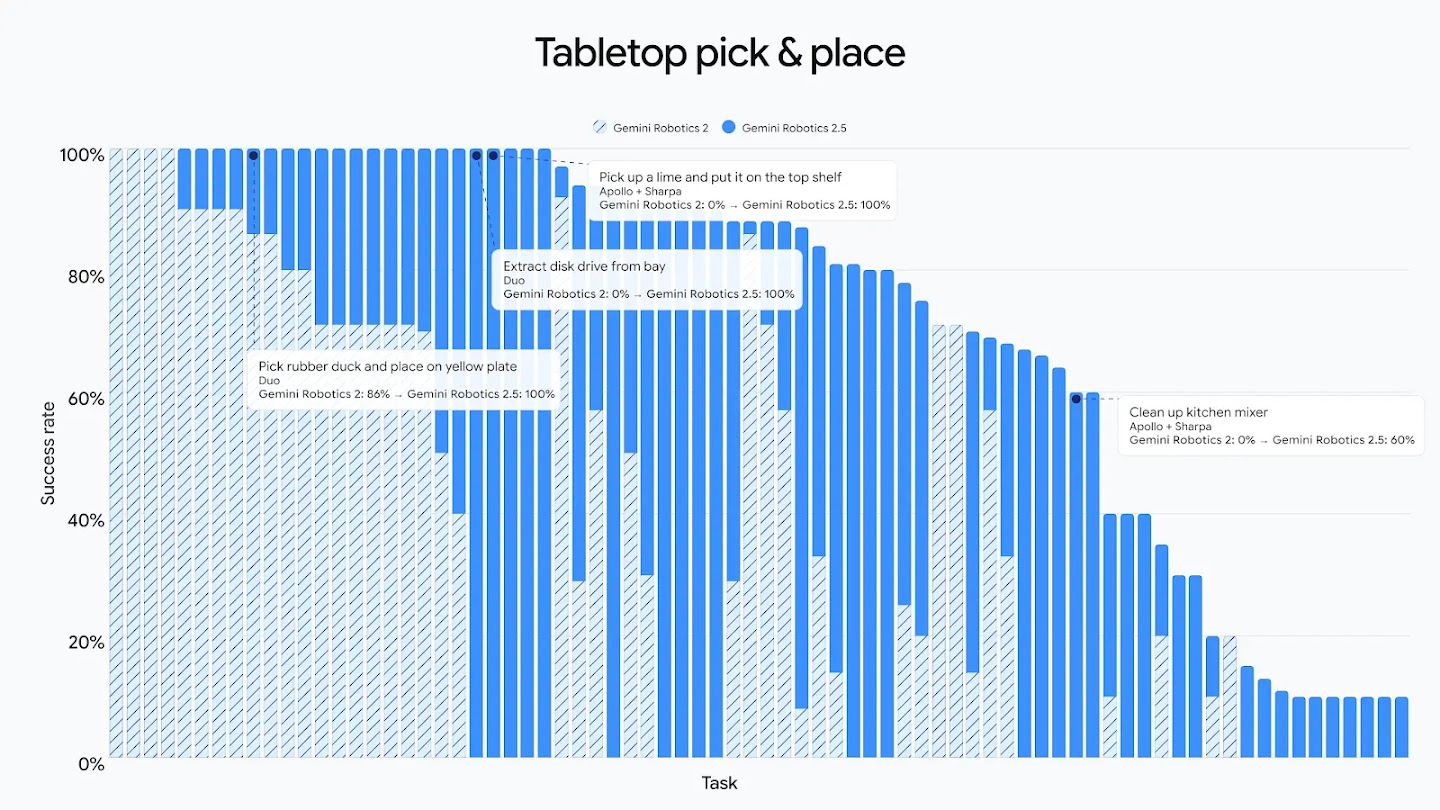
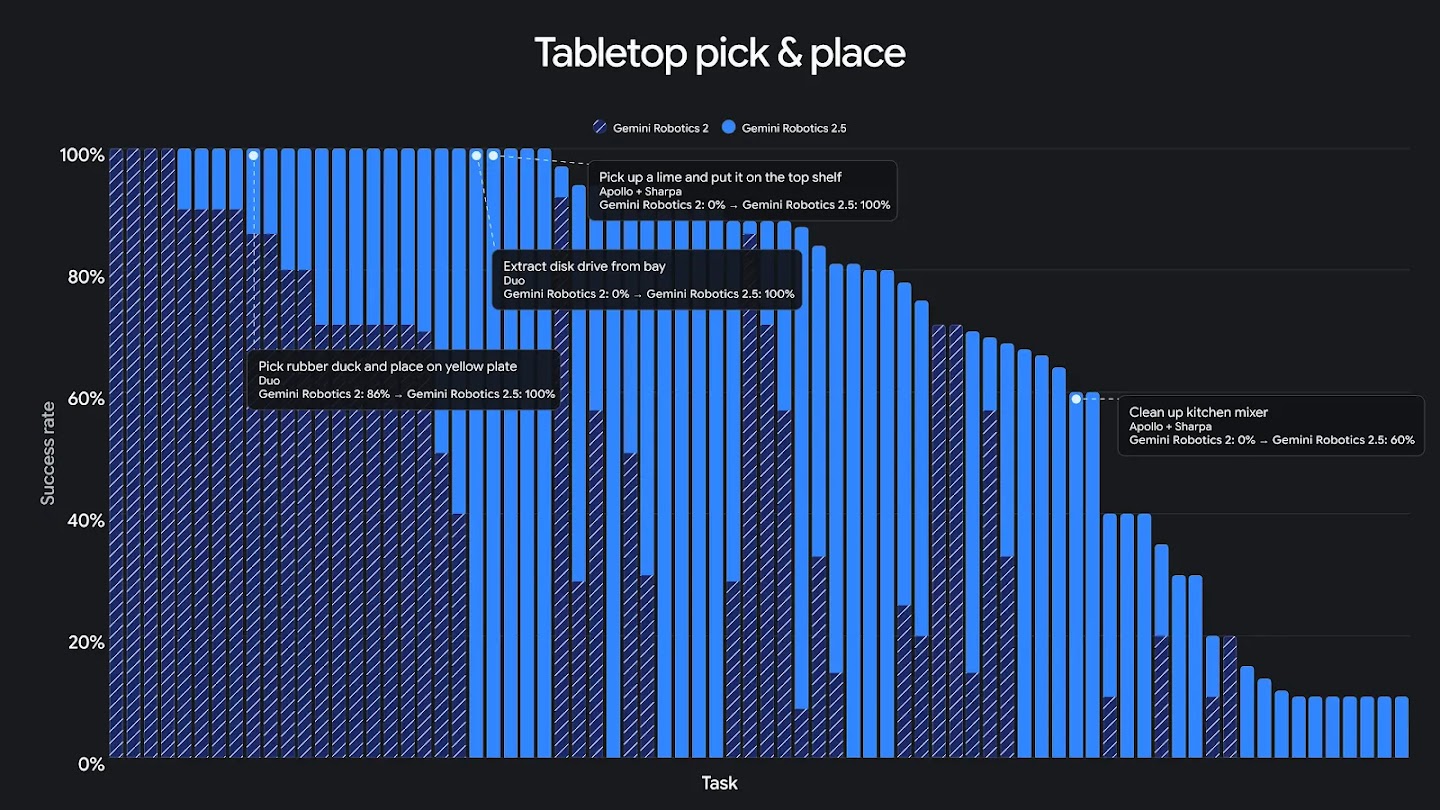
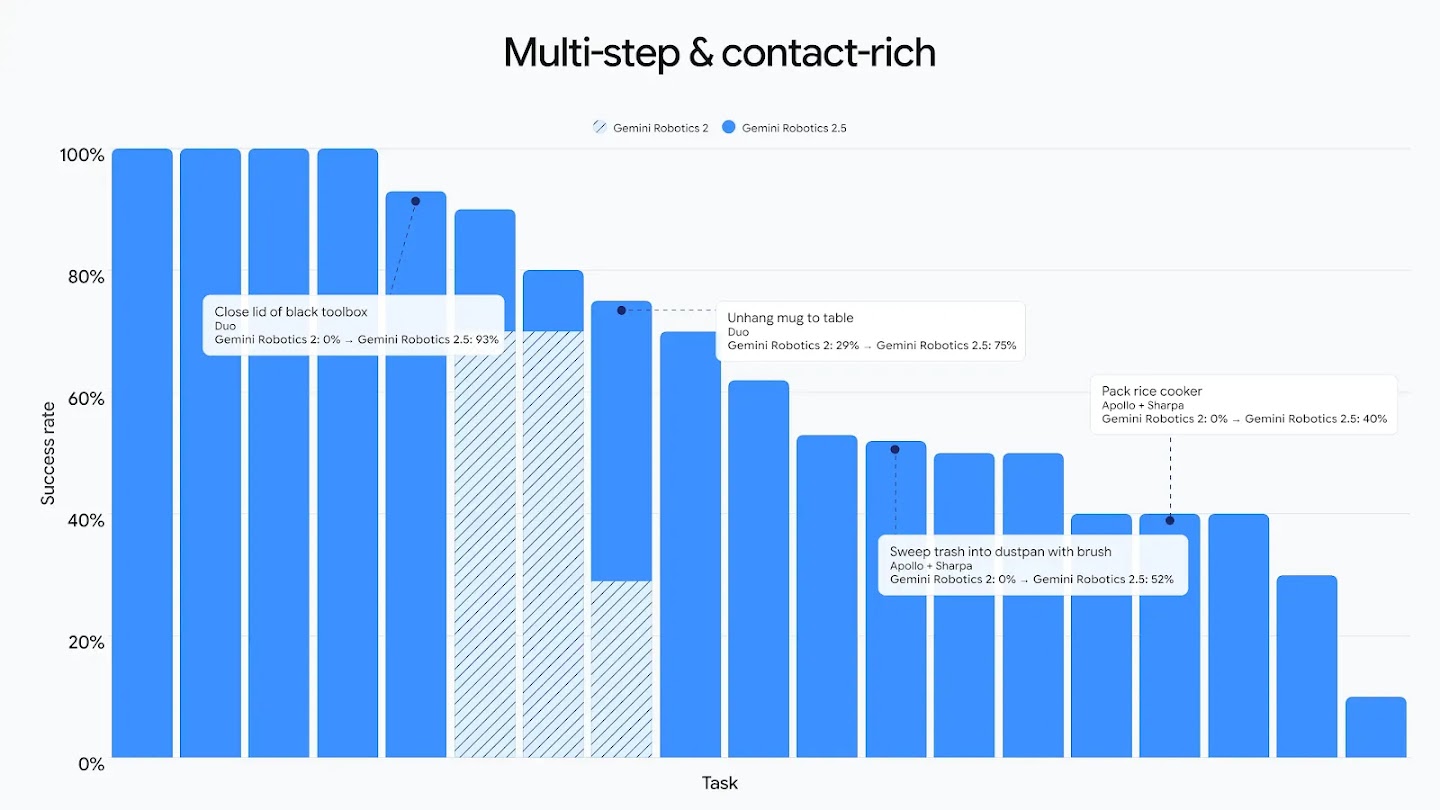
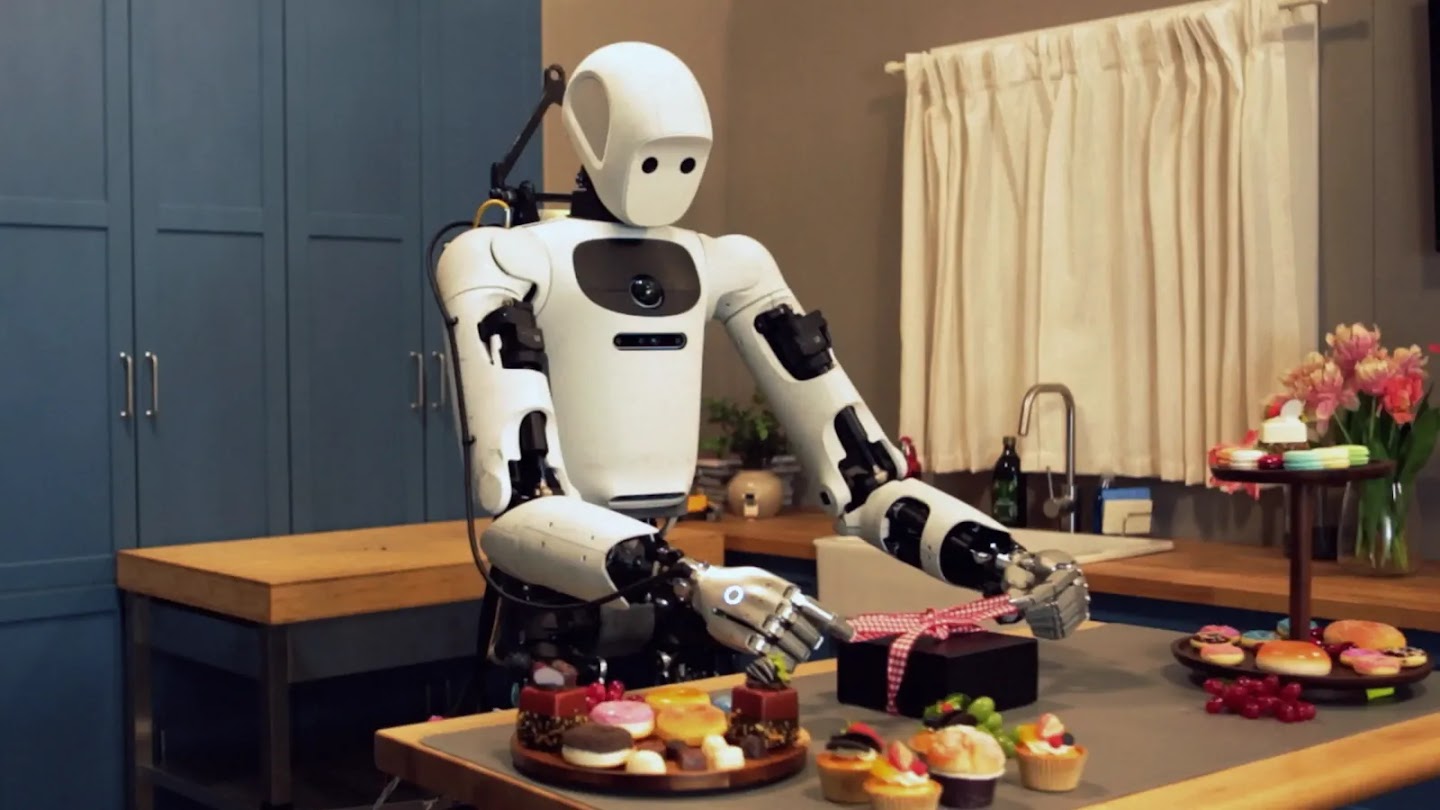
With Gemini Robotics 2.5, we have expanded our model’s capabilities across task breadth, performance, and complexity. We evaluated the model on 200 distinct tasks—such as serving food with tongs, tying a bow on a gift box, and drawing liquid with a pipette. These tasks combine multiple skills, including advanced tool use, complex manipulation of deformable objects, and delicate handling of fragile items, representing a step toward human-level dexterity.
Our evaluations show significant gains in task precision, robustness, and speed. Compared to previous baselines, Gemini Robotics 2.5 achieves a 30% to 100% higher success rate depending on the task category, while completing tasks 20% to 30% faster.
Like previous Gemini Robotics models, it natively supports multiple robot embodiments, including Apptronik’s Apollo 2 humanoid robot (equipped with five-fingered, 22-degree-of-freedom SharpaWave dexterous hands) and the Franka Duo platform with two-finger parallel grippers.