
On November 4, Orca Entertainment Group officially launched “Jingrui AI,” the industry’s first AI-powered film and television production and management platform. Focused on three core goals—precise control throughout the production process, delivery of cinema-grade visuals, and fine-grained cost management—the platform integrates over 50 mainstream AI video generation models alongside more than 10 proprietary models. Its infinite canvas feature supports thousands of nodes and real-time collaboration for up to 100 creators simultaneously. Through precise pipeline control and optimization, Jingrui AI reduces the per-minute production cost of AI video by more than 30% compared to conventional AI generation workflows.
Effective immediately, open registration is available on the official Jingrui AI website (www.jingruiai.cn). Creators can access pay-as-you-go credits without needing a paid membership subscription. Furthermore, the platform imposes no limit on team seats, eliminating extra seat costs caused by team turnover and significantly lowering the barrier to entry for collaborative creative teams.
“For Orca Entertainment, the official launch of Jingrui AI marks the starting point of building new entertainment infrastructure alongside the new generation of AI creators,” said Du Yanlong, CTO of Orca Entertainment Group. “Moving forward, Jingrui AI will continue to be refined across real-world production projects. We welcome professional teams to challenge us with rigorous demands and help define the professional standards of AI cinema and television.”
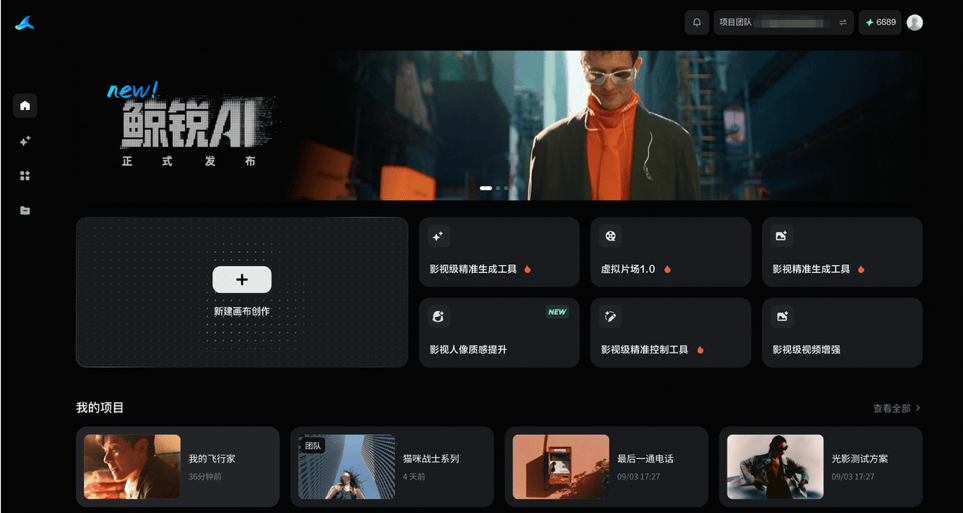
(Jingrui AI official website)
Goodbye to “Gacha-Style” Blind Generation: Per-Minute AI Video Costs Slashed by Over 30%
This year, AI-generated content has rapidly entered the mainstream. Data from China’s National Radio and Television Administration (NRTA) reveals that 430,000 micro-dramas were released nationwide in the first eight months of the year, with AI-generated content accounting for more than 90%. Now that visual generation is no longer a scarce capability, reliably delivering finished films that meet professional cinematic standards has become the pivotal watershed in industrializing AI filmmaking.
Addressing the common pain points in AI creation—such as endless re-generation and poor reproducibility—Jingrui AI introduced five precision control suites covering scenes, character performance, camera movement, virtual sets, and lighting adjustments. Backed by 35 toolsets and over 300 granular controls, the system comprehensively covers shot blocking, acting performance, lighting and atmosphere, actor staging, and scene editing. This architecture ensures that a creator’s intent in every single frame can be accurately conveyed, reproduced shot by shot, and continuously fine-tuned. It marks a fundamental shift from “luck-based black-box rolling” to “intentional, precise control,” substantially reducing wasted iterations. Testing shows that under identical conditions of character, scene, and duration, Jingrui AI shortens video production cycles by 40% to 60%.
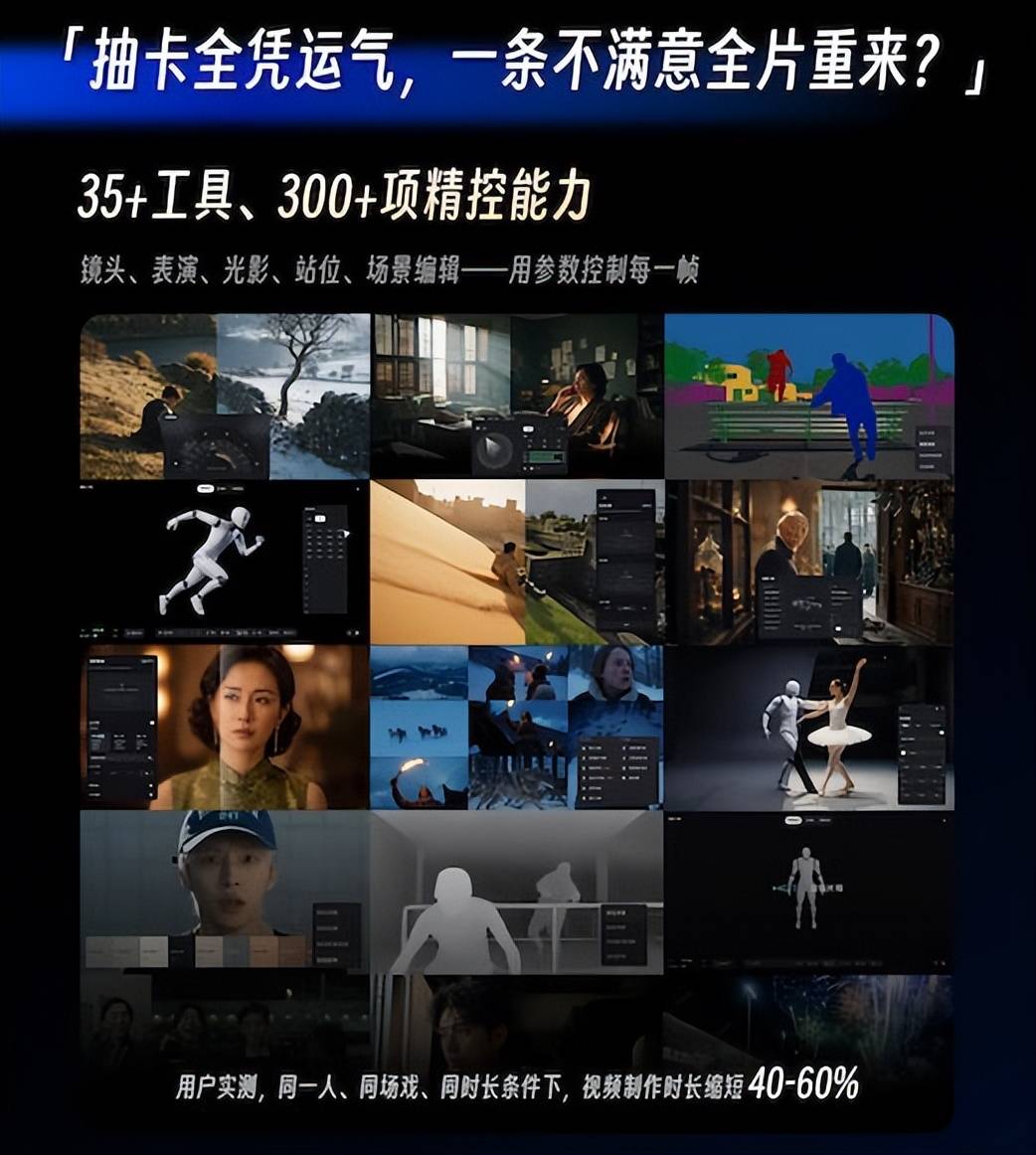
(Jingrui AI focuses on precise control throughout the production process)
When it comes to output quality, Jingrui AI relies on AI facial restoration, nine live-action cinematic texture enhancement modes, AI matte painting, and proprietary super-resolution and HDR pipelines. These features elevate AI-generated footage to big-screen and theatrical standards, supporting native direct export of high-spec content at 4K, 60 fps, 10-bit, and HDR. Real-world testing on the platform shows that, compared to traditional “export–post-processing–re-import” workflows, Jingrui AI’s native super-resolution export pipeline cuts post-production costs by approximately 65%.
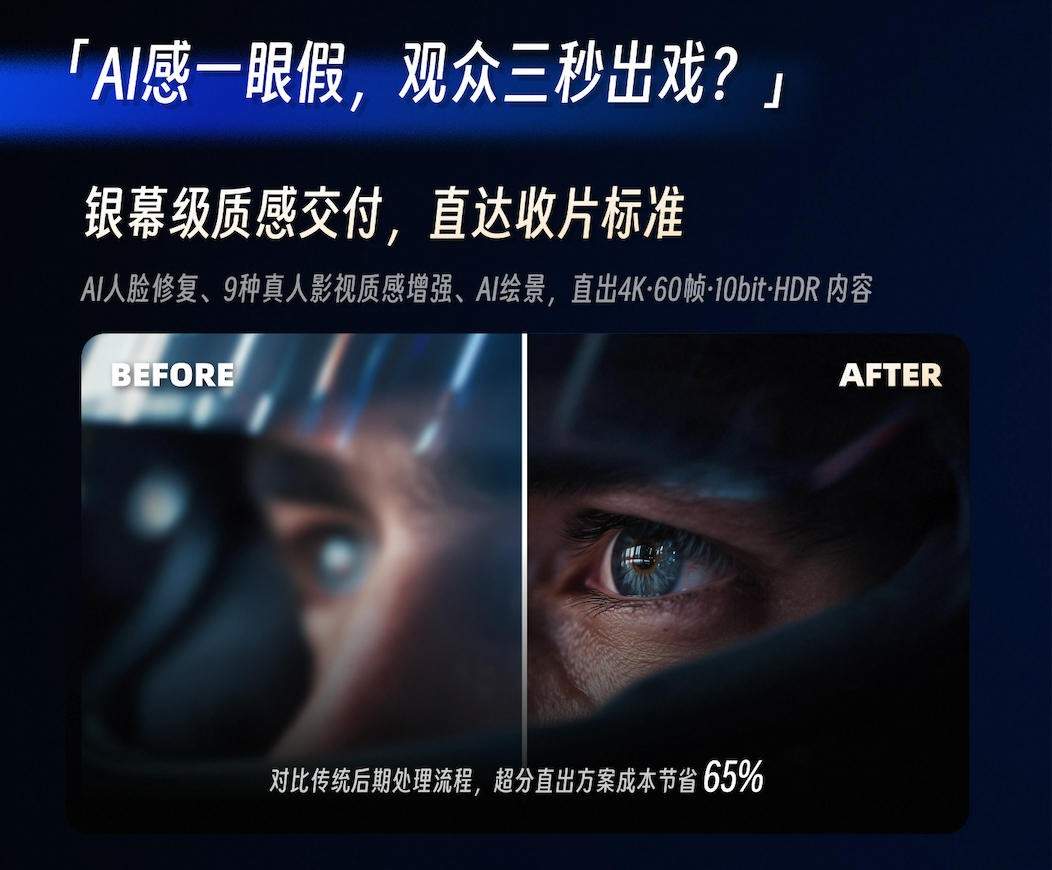
(Jingrui AI enables the delivery of finished films with cinema-grade visual quality)
Furthermore, professional filmmaking workflows rely heavily on meticulous cost management. Jingrui AI supports multi-dimensional tracking of production consumption across episodes, scenes, teams, and projects, ensuring full cost traceability at every step. Compared to traditional AI generation that relies solely on single models and prompt engineering, Jingrui AI’s precise control and pipeline integration successfully lower the per-minute production cost of AI video by more than 30%.
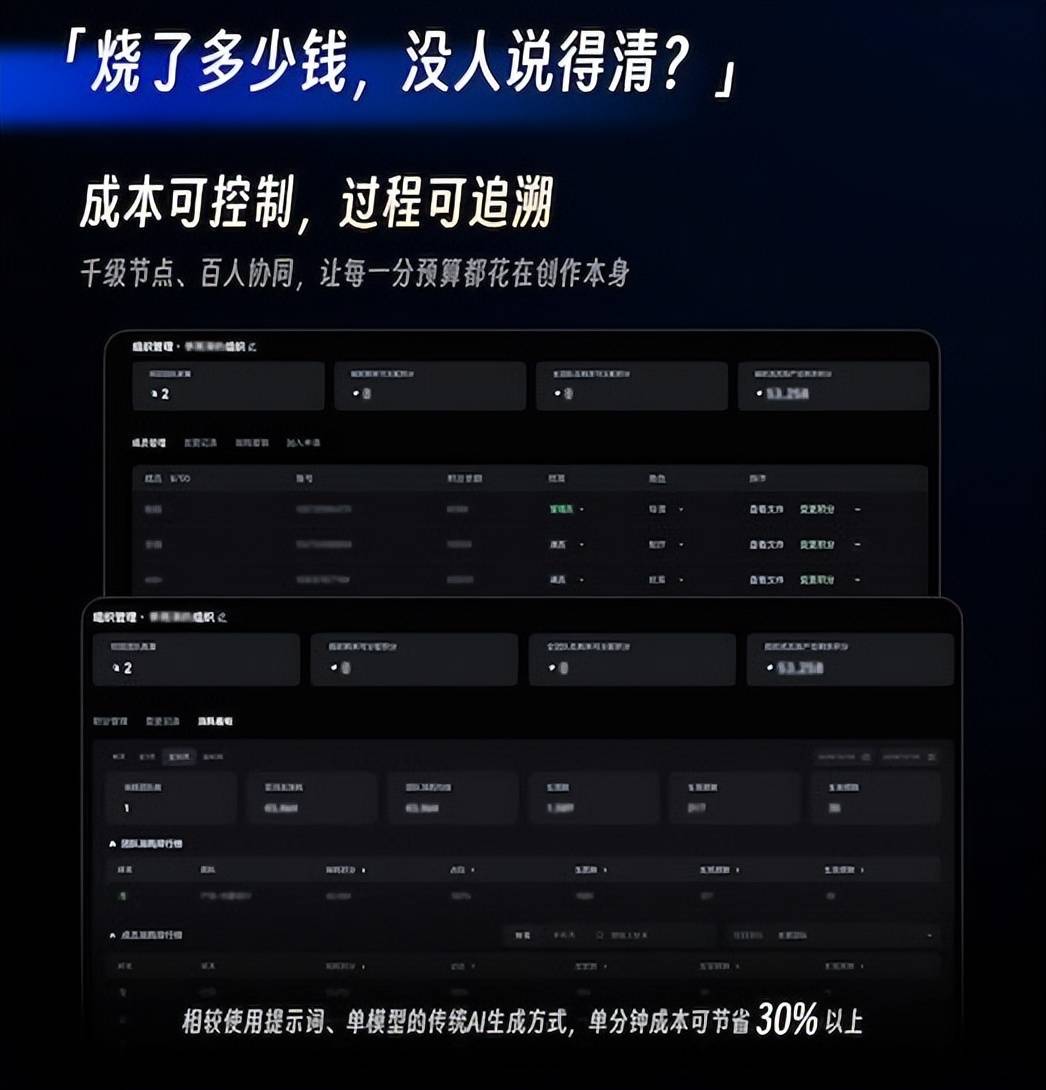
(Jingrui AI’s fine-grained cost management model)
Deeply Adapted for Real-World Production: Infinite Canvas Empowers Real-Time Collaboration for 100+ Creators
According to Du Yanlong, Jingrui AI was born and refined on the frontlines of professional film and television production. During its closed beta, the platform supported the actual production of over 100 projects across diverse categories, including drama series, children’s programming, animation, and commercial advertising. To better support team collaboration, Jingrui AI’s infinite canvas can handle thousands of nodes and over 100 creators working simultaneously in real time. It organizes production by project, episode, scene, and character, while systematically archiving and managing digital assets, prompt libraries, and workflows—providing solid operational infrastructure for long-cycle, cross-disciplinary film and television productions.
Prior to its official release, dozens of production teams and creators had already integrated the platform into their live workflows. Multiple beta testers reported that from pre-production visual storyboarding to unified asset management during production, and on to super-resolution and frame-interpolation enhancements in post-production, Jingrui AI delivers end-to-end industrial-grade support. It can rapidly bring a director’s vision to life with high fidelity, freeing creative teams to focus on cinematic language and narrative storytelling while accelerating iteration, shortening production turnaround, and optimizing overall costs.
The head of Time Axis, a well-known production company in the industry, likened Jingrui AI to a “dedicated central pipeline connecting the entire workflow,” where everything from scene editing and character asset dispatching to super-resolution texture enhancement is completed in a closed-loop unified interface, dramatically cutting losses from cross-software handoffs and endless adjustments. The head of Jiuwanli Films noted that given identical prompt descriptions, Jingrui AI renders depth-of-field blur, material textures, and ambient lighting gradations more naturally and subtly, adding that its sense of camera placement and lighting quality “almost flawlessly translates the compositions in your mind.”
“The true value of any tool is ultimately proven by exceptional work,” said Du Yanlong. “We hope Jingrui AI elevates not just production efficiency, but every creator’s pursuit of artistic expression—empowering professionals skilled in visual language, performance, and narrative storytelling to unleash their talents within a brand-new creative paradigm, rather than getting drained by tedious technical friction.”
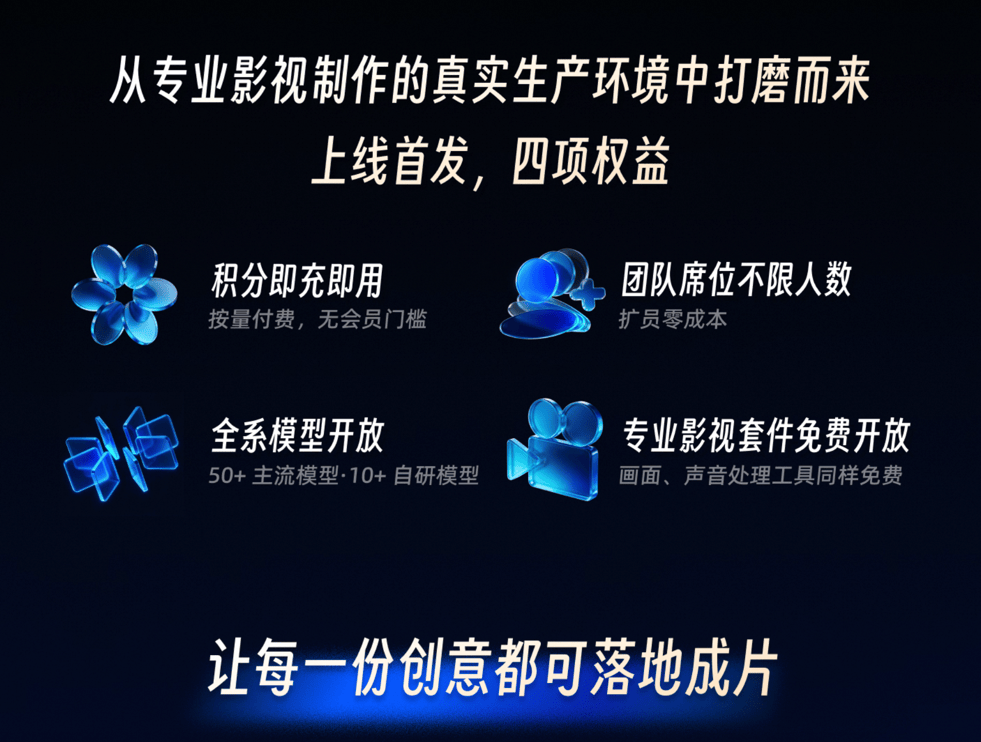
(Four launch benefits of the Jingrui AI platform)