
Today, we’re sharing recent progress on OpenAI models assisting engineers in designing, simulating, and manufacturing physical products. Spanning mechanical engineering, electrical engineering, and end-to-end system design, these capabilities are already helping our internal teams test ideas and iterate faster.
In these projects, engineers use specialized tools to bring together mechanical designs, electronics, software, and manufacturing requirements. We are training models to support this work—from generating engineering drawings and configuring simulations to coordinating cross-disciplinary design changes. Our goal is to give engineers more time to explore concepts and refine their designs.
Over the past year, improvements in frontier model capabilities have helped our internal teams validate new ideas and iterate more rapidly. At the same time, we are seeing early signs of how these capabilities can improve specialized industry workflows. We are collaborating with partners to understand where these tools can make the biggest impact and where they still need improvement. If you are an engineer, engineering firm, or software vendor involved in the design, simulation, manufacturing, or production of complex physical products, we would love to collaborate with you around the tools you use and the problems you need to solve.
Designing a Hardware Device with Astra
We tested Astra’s frontier performance across multimodal and computer-use workflows to explore whether a device could be built without direct human editing. To do this, we used GPT-6 to define functional requirements and complete the designs needed for the enclosure, printed circuit board (PCB), and software integration—ultimately producing a device that users can interact with to talk to Codex.
- Industrial & Aesthetic Design: Drawing on our recent collaboration with Work Louder and taking inspiration from gaming and toy design, Astra created the exterior look and feel of the device.
- Mechanical Design: Astra designed the enclosure and the internal mounting structures to secure the components.
- Electrical Design: Astra selected the electronic components and completed the PCB design (including component layout and trace routing), ensuring it fit seamlessly inside the enclosure.
- UI/UX & Software: Astra designed the user interface and generated the firmware and software integration code required to connect the device to Codex.
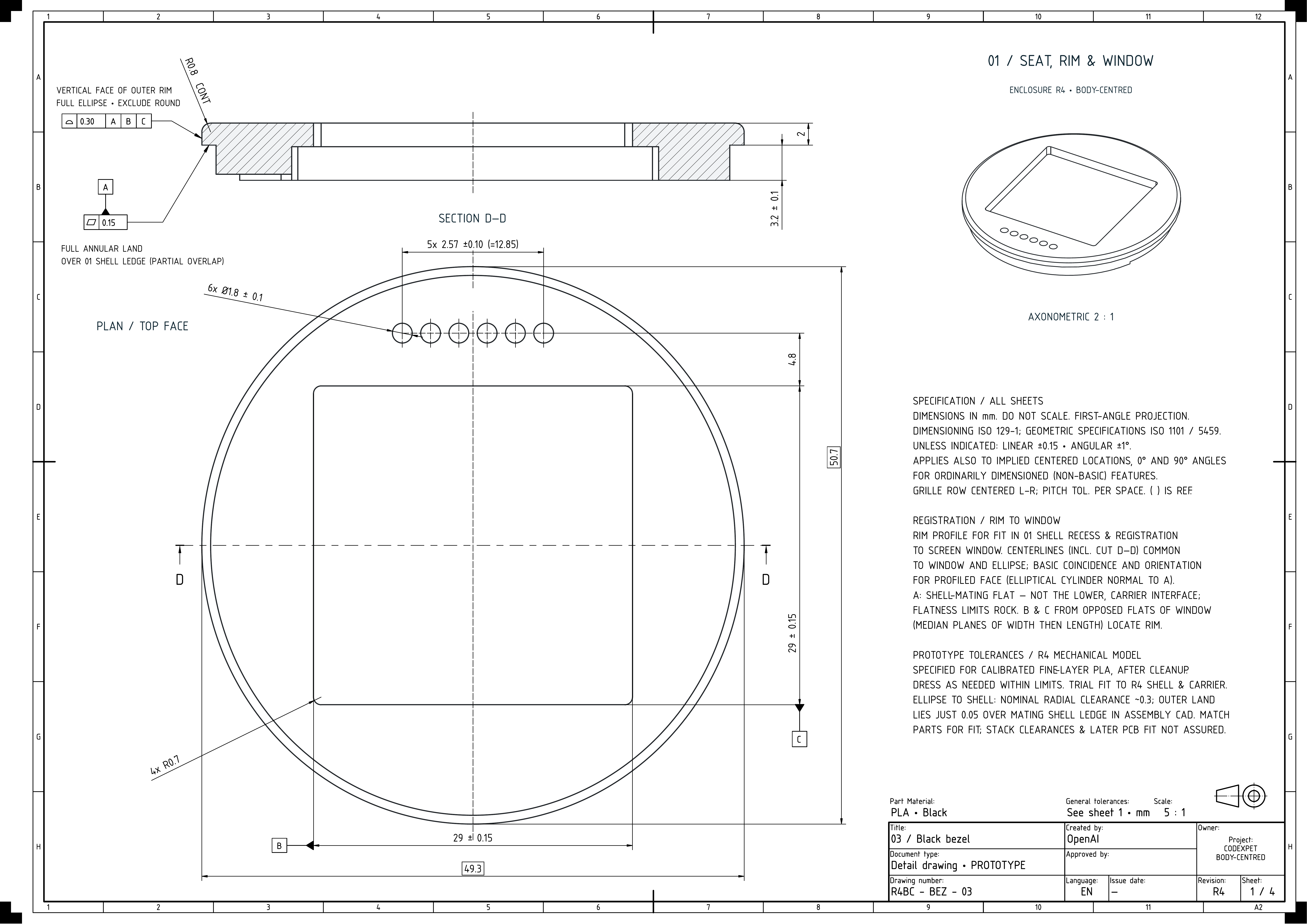
Working on this as a side project, two team members completed the design of this test device alongside Astra in less than a week. A contract manufacturer then produced a small batch of prototypes in under a month.
Getting the device ready for volume production still required several rounds of review and iteration. Astra was less consistent when navigating manufacturing constraints, tolerances, and assembly-level details from the manufacturer. These shortcomings are helping us pinpoint where future models need further improvement.
Accelerating OpenAI’s Hardware Teams
OpenAI’s hardware and infrastructure teams are using Codex and ChatGPT to create and modify computer-aided design (CAD) models, generate manufacturing drawings, set up simulations, and review designs. This work spans both robotics and compute infrastructure. Since February, token usage by our hardware teams has grown 23x.
“Codex has dramatically sped up our path from concept to engineering parts. We’re iterating faster on CAD modeling, turning 3D designs into production-ready 2D drawings, and setting up simulations and finite element analysis (FEA)—all while significantly cutting down on manual work.”
— Grace Lam, Forward Deployed Engineer at OpenAI
“As systems hardware designers, we use Codex and ChatGPT to navigate cross-functional design constraints, explore system architectures, collaborate across various ECAD environments, and conduct rigorous design reviews. Today, Codex and ChatGPT serve as our trusted, 24/7 partners in engineering and project management. Looking ahead, we envision them evolving into a multi-role team of hardware specialists that can manage the entire board design process—from initial concept to final Gerber export.”
— Qiong Wang, Member of Technical Staff at OpenAI
“In architecture, engineering, and construction (AEC) and building information modeling (BIM), a tremendous amount of time is spent on repetitive modeling, cross-referencing drawings and specifications, and coordinating design changes across disciplines. We’ve started using Codex to automate routine tasks, identify inconsistencies, and translate coordination clashes into clear, actionable issues. This frees up time for the team to evaluate design options and constructability, leaving architects, engineers, and BIM professionals to review and validate the outputs.”
— Jackie Lee, Member of Infrastructure Staff at OpenAI
Evaluating Technical Progress on Engineering Tasks
We are also testing tasks that combine coding proficiency with engineering domain expertise to measure progress in newer models. BenchCAD 2.0 specifically evaluates a model’s ability to reconstruct 3D parts and assemblies and identify connectivity in circuit boards. A newer internal model achieved an average score of 0.875, compared to 0.594 for GPT-6 Astra at its highest reasoning setting. While the full engineering lifecycle extends far beyond design, we see these gains as early evidence of how AI models can meaningfully accelerate iteration cycles across specialized workflows.