
Qodo Brings Context to AI Code Review with Codex | OpenAI
November 2, 2026
Startups
Qodo brings organizational context and repository best practices into Codex, helping developers catch critical P0 bugs across multiple codebases.
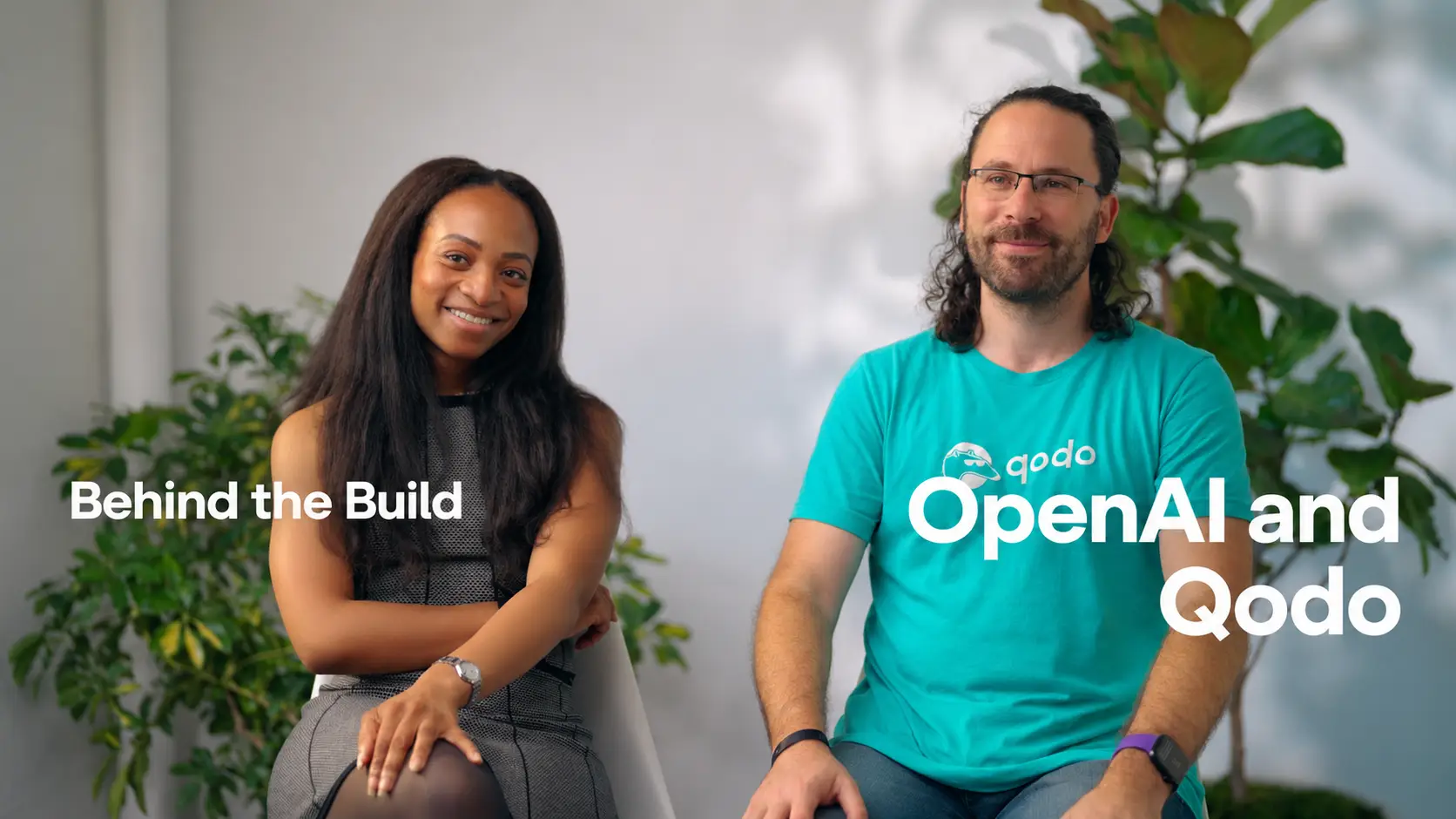
Behind the Build: OpenAI and Qodo.
Company size: Startup
Region: North America
Industry: Tech
Products: API, Codex
Qodo builds AI tools for code review and software quality, equipping coding agents with the organizational knowledge they need to understand the code they touch. Co-founder and CEO Itamar Friedman calls it the “best companion for coding agents.”
Qodo leverages OpenAI models, including GPT‑6 Astra, to gather engineering knowledge, review code, and monitor software quality. Its Codex plugin brings this context and review capability directly into developers’ programming sessions.
“We really love OpenAI’s models. We not only need models with the strongest frontier reasoning capabilities, but we also require lightning-fast response times.”
— Itamar Friedman, Co-founder and CEO, Qodo
Catching P0 Bugs Across Codebases with Codex
Itamar describes customer environments spanning 10,000 or more repositories, where a localized code change might look perfectly fine in isolation, yet break downstream services. To solve this, Qodo built a plugin in the Codex marketplace.
“Codex is exceptionally good at tackling localized tasks efficiently,” says Itamar. Through its Agentic Toolbox, the Qodo plugin equips Codex with access to repository knowledge, organizational standards, and independent review capabilities.
Armed with this context, Codex can account for cross-repository dependencies—even code hosted across different Git providers or services interconnected via Kafka. “Qodo makes those connections and helps Codex view the software system holistically, ensuring critical P0 bugs aren’t missed,” says Itamar.
Automating Reviews While Preserving Human Judgment
Before Codex starts writing code, it can retrieve relevant repository guidelines, PR history, and patterns via the Qodo plugin. Once Codex completes the changes, Qodo reviews them and feeds the findings directly back to Codex within the same session—before the developer ever opens a PR.
Nnenna Ndukwe, Head of AI Developer Relations at Qodo, sees developers using this workflow with GPT-6 models in Codex to build new features and tackle technical debt. They are automating the handoff between Codex’s coding and Qodo’s independent review. “That’s what I’m seeing developers do, and it’s super exciting because GPT-6 is so capable,” says Nnenna.
Itamar describes coding agents and reviewing agents as the “yin and yang”: one writes the code, while the other audits it and catches flaws. Each role requires independent configuration and context, potentially involving multiple agents. His vision is for agents to debate findings with each other and “only escalate what they can’t agree on” for human review. Developers will evolve into planners and reviewers, evaluating unresolved issues with the full context of inter-agent debates and prior developer decisions.
“That’s how trust is built,” says Itamar. “I think that makes the whole process much more efficient overall,” adds Nnenna. “We get to harness the true value of human expertise.”
Integrating Codex into Daily Workflows
Internally at Qodo, Nnenna has been using GPT-6 Astra with Extra High and Ultra reasoning effort settings across her automated development workflows and knowledge work.
“Is there anything Codex can’t do? I love everything about Codex. I’m a huge believer in combining AI with automation.”
— Nnenna Ndukwe, Head of AI Developer Relations, Qodo
Nnenna has Codex regularly report on what she accomplished during the week, along with key areas to focus on or improve next. She also uses it to research discussions around agentic engineering on social platforms, sparking ideas for developer content. When it comes to her own code changes, she has Codex analyze her work and suggest which agent skills to create or refine.
Selecting Applicable Code Guidelines with the Decisions API
Itamar sees an opportunity in leveraging OpenAI’s newly introduced Decisions API: dynamically selecting applicable rules and agent skills at each stage of development, rather than relying solely on the language model for every decision.
He illustrates how the Decisions API can pinpoint exactly which rules to check out of 200 before the language model reasons deeply over them. This helps reduce costs, accelerates triage, and elevates review quality. “The Decisions API opens up a massive opportunity for us to make the entire process more trustworthy,” says Itamar.
Building a Software Factory Owned by the Customer
Nnenna notes that Qodo’s approach pairs “the best qualities of AI with the best practices of traditional software engineering and scripting.” Organizational knowledge guides the coding agent, independent review safeguards the output, and human expert insight resolves remaining edge cases.
This lays the foundation for what Itamar describes as a “software factory”: a system that customers can assemble and control themselves, bringing together coding and review agents with a deep understanding of how software evolves in production.
Together with OpenAI, Qodo is building a future where coding agents can better leverage enterprise history and knowledge, freeing developers to focus their judgment where it matters most.