
It Wasn’t as Simple as They Thought
Qiao Chi reporting from Ofeisi
Editor: Li Huanhuan
Source: QbitAI
Boxing and dancing are yesterday’s news for robots; folding laundry and serving ice cream are the latest highlights.
Today, they dispense drinks in automated retail hubs and scoop cones in ice cream parlors, looking every bit like diligent employees on the clock.
Yet, a veteran retail giant just tripped and fell hard in this hype wave.
In March 2025, Sichuan community convenience store titan Hongqi Chain announced a joint project with a robotics company to develop an “unmanned robotic vending system.”
The announcement set capital markets ablaze, sending the company’s stock to hit its daily limit the very next day. By market close on April 23, the stock had gained roughly 35.0% since the announcement.
Market excitement over the commercial vision of “traditional convenience store + robotic clerk” was thoroughly ignited.
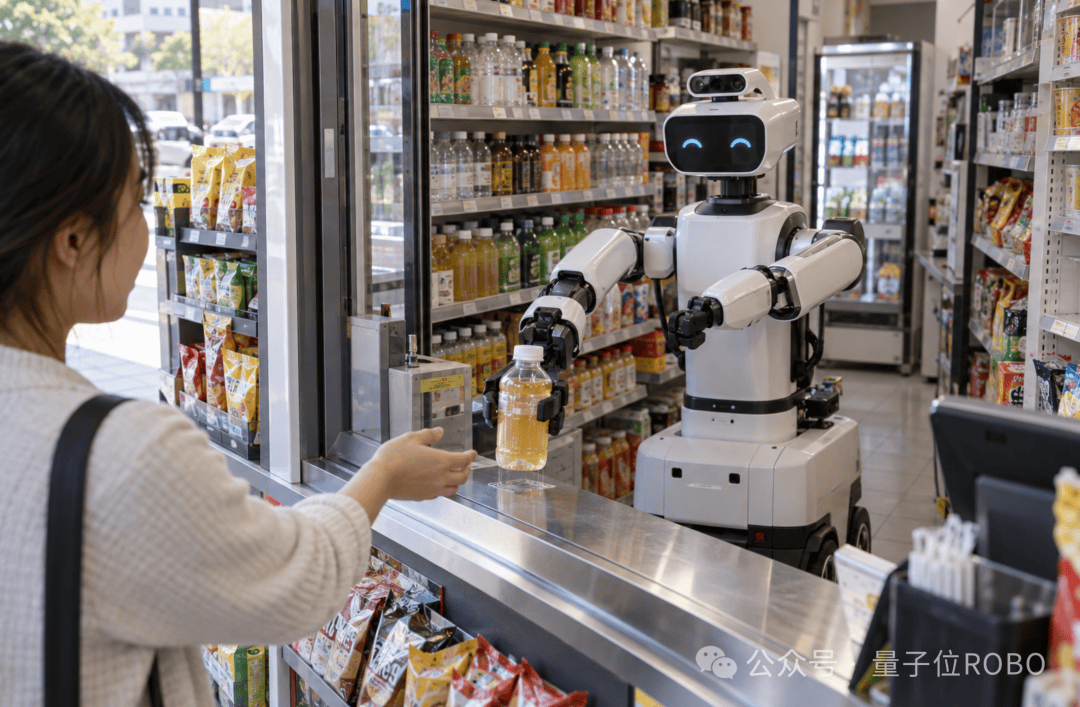
**△**Image generated by AI
Yet after 16 months of R&D, the project was quietly scrapped.
They discovered that even after being honed tens of thousands of times in the lab, a robot placed in front of real retail shelves still looked clumsy and bewildered.
Even so, in the embodied AI industry, robotic retail is fast becoming a go-to deployment scenario that numerous firms are banking on. In popular tourist spots and bustling shopping districts, “working” robots have been showing up in droves.
Are robots truly ready to punch the clock? What is the reality on the ground?
Hongqi Wanted Robots to Sell Goods: “They Took It Way Too Lightly”
Facing the frenzy of capital markets, Hongqi Chain ended up pouring cold water on the hype itself.
In early July 2026, Hongqi Chain released an announcement declaring the termination of its unmanned robotic vending system development.
Hongqi Chain is no ordinary mini-mart; it is China’s first A-share listed convenience store chain, widely recognized across the industry as the market leader in Southwest China.
So why did this publicly listed giant’s robotics initiative meet such an unfortunate end?
The project began in 2025.
In March, Hongqi Chain announced it was conducting R&D and innovation around an unmanned robotic vending system.
Shortly thereafter, Hongqi issued a risk warning disclosure, candidly laying out several realistic bottlenecks preventing robots from making a “seamless transition to the job” and advising investors to stay rational.
At the time, Hongqi highlighted three major shortcomings in robot capabilities:
When dealing with crowded shelves and irregularly shaped items, the robotic arm suffered from a “high grasping failure rate, with stability urgently needing improvement.”
This laid bare the fact that the robot’s autonomous manipulation capabilities were still woefully inadequate.
For example, when handling materials as diverse as glass bottles, tissue packs, and metal cans, the arm required vastly different grasping forces, angles, and strategies.
This placed demanding requirements on the arm’s motion precision, response latency, and the real-time computing power of its underlying algorithms.
Under varying lighting conditions, the robot’s vision recognition system was prone to errors, leading to misidentifications of goods or their spatial coordinates.
Furthermore, the system had to ensure agile obstacle avoidance while maintaining stable data transmission to sustain a smooth checkout loop. This posed a severe test for hardware performance, software algorithms, and network communication environments alike.
At the time, Hongqi stated it had completed hardware and software testing in a laboratory environment, with a prototype expected to roll off the line in May.
However, the disclosure also emphasized that “after all, a laboratory environment differs significantly from real-world application scenarios,” meaning “it is still some distance away from officially hitting the market and selling directly to consumers.”
Sixteen months went by, but outsiders never saw a mass-production prototype. Instead, they got Hongqi’s announcement terminating system development.
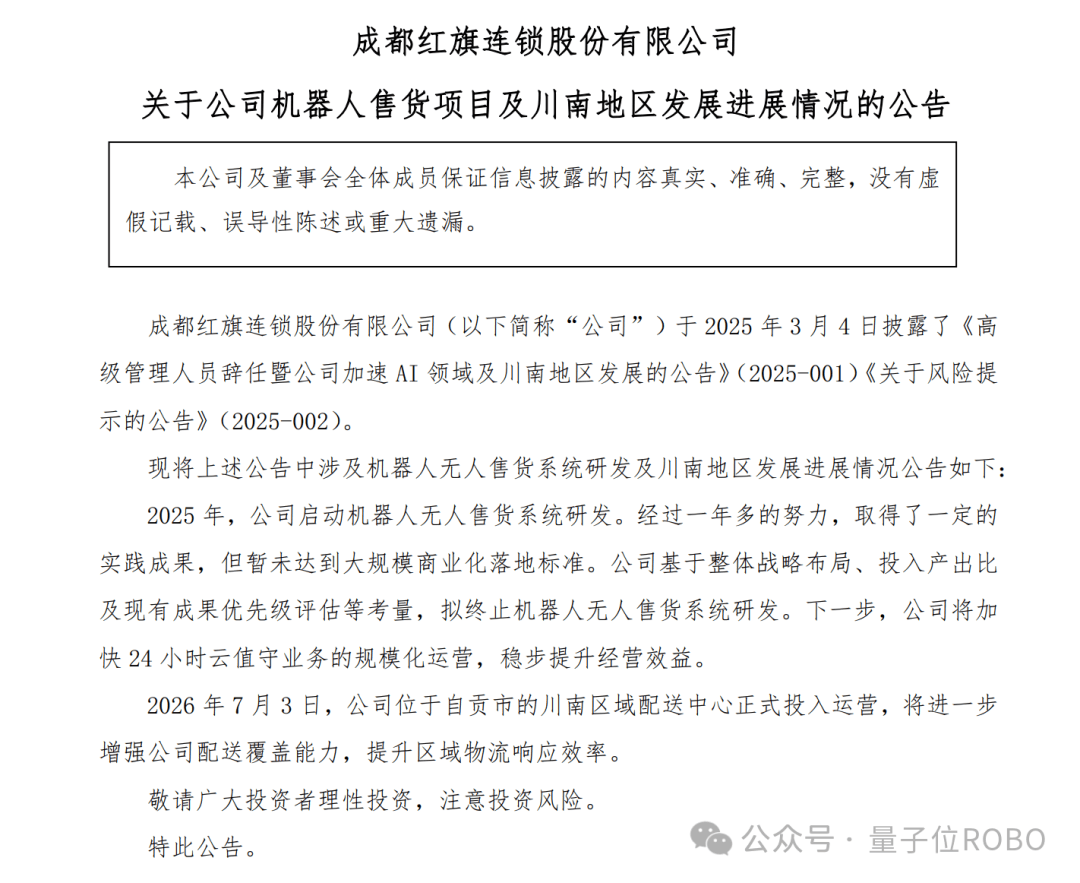
**△**Hongqi Chain Announcement
The announcement pointed out that the system had not yet met the standards for large-scale commercialization. Based on considerations such as return on investment (ROI), the company decided to terminate R&D on the unmanned robotic vending system and pivot toward scaling up its 24-hour cloud-monitored operations instead.
An industry insider close to Hongqi Chain revealed to QbitAI ROBO that Hongqi’s original goal was to use robots to replace night-shift clerks. However, field validation showed the robot’s practical operational capabilities were severely limited. For instance, in summer, condensation frequently formed on chilled glass bottles, causing the robot to lose its grip and repeatedly drop and shatter them. The robot was also incapable of stably picking and placing irregularly shaped, soft-packaged items.
On top of that, a convenience store’s operational environment is far more chaotic than a lab. Aisles between shelves are notoriously narrow, and the robot had to operate in a dynamic setting with customers and store clerks constantly crossing paths.
After exhaustive testing, Hongqi confirmed the robot could not deliver the expected performance and had no choice but to pull the plug.
The insider admitted that while robots shine in demonstrations and entertainment, they still have a long way to go before they can reliably perform solid work in complex, real-world business environments.
Hongqi never disclosed its exact R&D spend on the project, but its 2025 annual report shows its R&D expenses for the period stood at around 2.8668 million RMB.
A review of Hongqi’s historical financial filings by QbitAI ROBO revealed that the company had never previously broken out R&D expenses as a separate line item.
This suggests the overall R&D budget for the initiative likely hovered right around 2.8 million RMB.
Several embodied AI practitioners were hardly surprised by this outcome. One of them told QbitAI ROBO plainly: “Hongqi took this way too lightly. If you could build [a retail robot] for just over 2 million RMB, embodied AI companies wouldn’t need to exist. The annual salary we pay a single core scientist exceeds that amount.”
Most “Selling” Robots Are Really Just Fetching Items
Even though Hongqi’s endeavor fell short, retail remains a high-velocity landing ground that the embodied AI industry is aggressively pushing into.
Currently, the most common deployment format is the standalone robotic retail kiosk. These setups are well-suited for industrial parks, commercial districts, and tourist attractions, serving the dual purpose of selling merchandise and drawing curious crowds.
Across China, there are already more than 100 robotic retail kiosks or related retail deployments spanning over 30 cities, with footprints expanding into Hong Kong.
Another deployment format involves robots working in semi-open settings, such as coffee shops and ice cream parlors, as well as back-of-house picking robots quietly fulfilling orders, such as automated drug dispensing in pharmacies.
In fully open supermarkets, where operational tasks and environmental complexity surge, robots are currently confined to lightweight interactive duties like greeting guests, offering product walkthroughs, and handing out food samples.
According to QbitAI ROBO’s tracking, at least a dozen embodied AI companies are actively advancing retail projects spanning self-service vending, freshly prepared beverages, pharmacy fulfillment, and in-store guiding.
Public reports show that robots from 17 companies have entered operational stores or standalone consumer kiosks, running across normal operations, pilot trials, and live technical showcases.
These scenarios make it seem as though robots have already secured established “jobs,” but what does their actual day-to-day work look like?
QbitAI ROBO conducted on-site visits across several robotic retail kiosks.
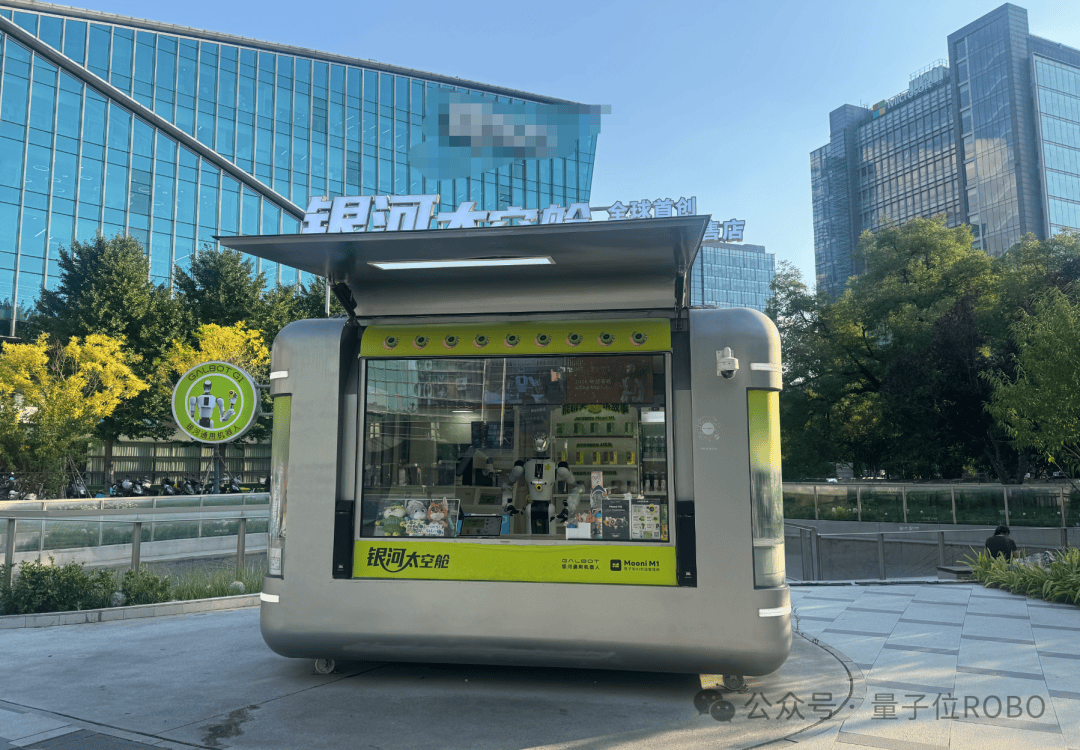
In a public plaza in Zhongguancun, Haidian District, Beijing, a silver robotic retail kiosk covering roughly 10 square meters was open for business.
Passing by the kiosk, a young male voice broadcasted from within: “Friends on the right, come take a look! Even Spring Festival Gala stars are clocking in here. Our little retail shop is packed with good stuff—come hang out with me!”
Approaching the service window, a silver-white robot was waving its arm to attract patrons. When pedestrians walked by, it actively recognized them and called out a greeting.
The robot was equipped with two-finger grippers, flexible arms that moved up and down, and a wheeled mobile base.
Behind it, two shelving racks held neatly organized bottled water and beverages; another rack displayed various children’s smartwatches and canned potato chips; in the back right stood a fully automatic coffee machine.
Compared to the 2,000 to 3,000 SKUs (Stock Keeping Units) found in a typical convenience store, the selection inside the kiosk was stripped down to the bare essentials.
Once a customer scanned a QR code on the tablet at the window and completed payment, the robot received the system command and initiated fulfillment.
Tucking its arms slightly to its sides, the wheeled base drove the robot in front of the target shelf. It then extended its right gripper, clamped onto a beverage bottle, and smoothly transferred it onto the service counter.
The entire pick-and-place process was sluggish, taking over 20 seconds.
Picking up a coffee followed a similar logic: after receiving an order, the robot rolled over to the automated coffee machine, used its gripper to grasp the completed cup, and delivered it to the pickup hatch.
Across the entire workflow, the robot essentially served as little more than a rigid transfer mechanism for basic picking.
Once the handover was finished, the robot paused for a second or two before reverting to its interactive standby mode, repeating its canned pitch to passersby with zero conversational context retained from the previous interaction.
More critically, the robot cannot operate autonomously without human supervision.
An on-site attendant told QbitAI ROBO that the kiosk operates daily from 10:00 AM to 10:00 PM and requires human monitoring throughout the entire shift.
Staff on-site must restock goods at any time, manage battery charging, and promptly report malfunctions when the robot encounters issues.
When a glitch occurs, back-end maintenance engineers debug and resolve it remotely.
The attendant noted that items on the shelves must be lined up with absolute precision by hand. If a product is tilted or out of stock, the robot lacks the ability to adapt and will typically freeze in place, leaving it entirely dependent on human intervention.
Beside the checkout counter of another convenience store chain in Zhongguancun, a robot was similarly on standby.
Despite being placed in a much more dynamic convenience store environment, its operational logic mirrored that of the retail kiosk: it was restricted to a cramped front-counter area, capable of picking only a handful of standardized beverages and packs of gum from the shelves directly behind it, with its newest trick being helping skewered sausages for the grill.
Why was the robot confined strictly to the front counter? On-site tuning engineer Zhou Yun explained to QbitAI ROBO that letting it roam freely would severely disrupt normal store operations. “Its movements are relatively slow, and we are still in the middle of ongoing optimization.”
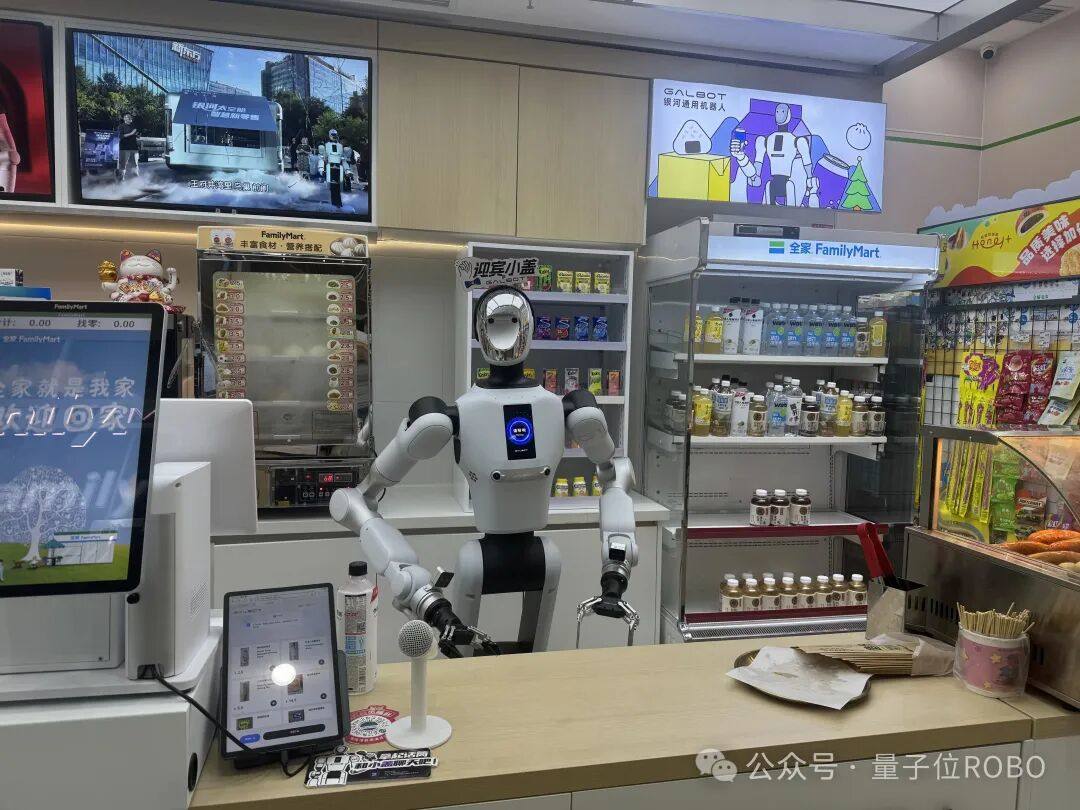
Zhou Yun noted that when first deployed, these robots are far from plug-and-play. “Its grip force and spatial coordinates all require meticulous on-site calibration and tuning to find the ideal parameters.”
Currently, the robot in this store uses standard grippers. “The rigidity and compliance across different product packaging vary wildly. At this stage, we only let it handle firm packaging, such as chewing gum or rigid bottled drinks. To reliably grasp soft packaging, a multi-fingered dexterous hand is recommended. But due to prohibitive hardware costs, dexterous hands aren’t deployed in current commercial setups.”
Store clerk Xiao Tao put it frankly: The robot “is still quite far from working as smoothly as a human. It’s not as nimble as a person, but it definitely keeps improving through iteration.” In the early stages of the project, picking and handing over an item took nearly a minute; it has now been cut down to around ten seconds.
While actual operational efficiency remains low, its on-site interactive charm and ability to turn heads are undeniable.
This is likely the primary reason many brick-and-mortar businesses remain eager to experiment with robots.
Throughout the order fulfillment process—from the moment a customer approaches to the completion of the sale—the robot maintains continuous voice interaction.
Its vision system extracts physical characteristics in real time to personalize the conversation: “Welcome, friend in the red hat! Come have a look inside.”
While fetching an item, it chimes in: “Got your phone ready to take photos and video?”
When the transaction wraps up, it showers the customer with pleasantries: “Thank you for your support! Wishing you smooth sailing and every success. Thanks for stopping by, have a great day, bye-bye!”
Compared to typical convenience store staff, the robot delivers a remarkably dense dose of emotional value.
That emotional value translates into meaningful foot traffic. Clerk Xiao Tao noted that the robot’s role as a showcase and spectacle is far more prominent: “A lot of foot traffic comes from people who booked visits specifically through the robotics company just to see it.”
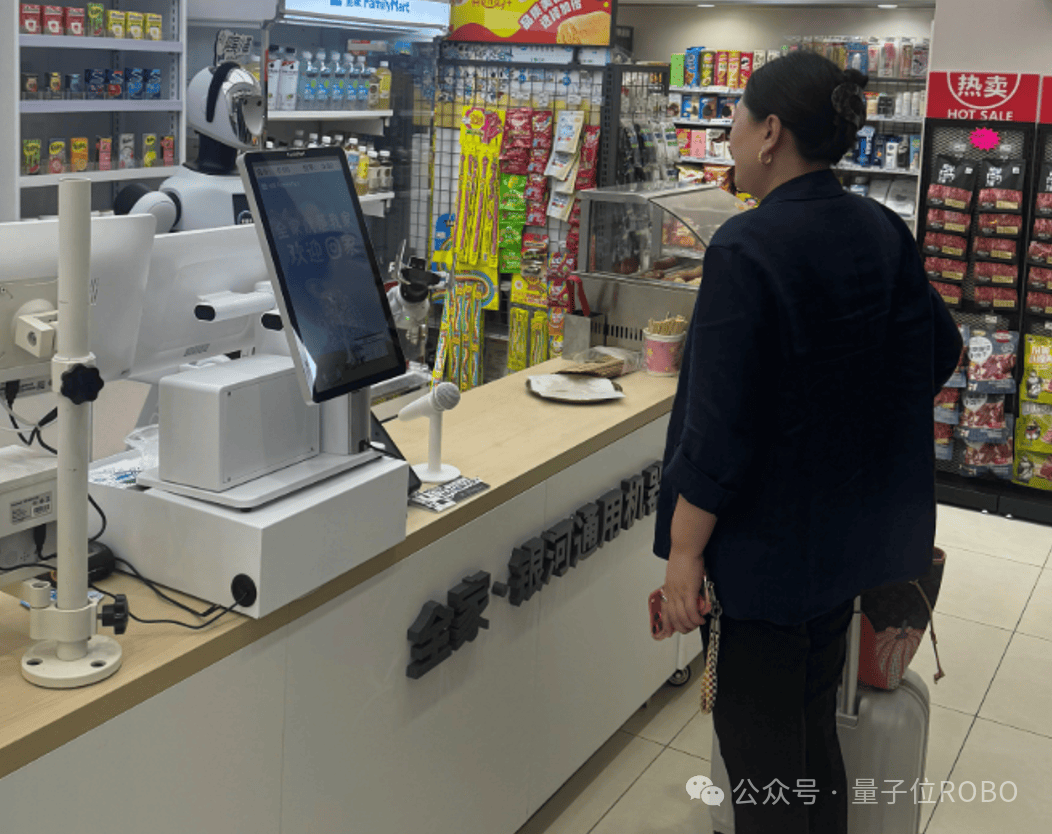
On-site, QbitAI ROBO observed two travelers pulling suitcases, recording video while interacting with the robot to buy bottled water. One remarked that they were in Beijing on business and found seeing a retail robot up close novel enough that they made a point to record the experience. “It’s really fun, and its movements were more agile than I expected.”
Is Robotic Retail Still Stuck in PoC?
Field visits make one thing clear: most retail robots on duty today cannot independently handle end-to-end restocking and vending tasks. Given this, does bringing in a high-cost robot make sense from a business standpoint?
Most robotic retail solutions on the market are spearheaded and deployed by embodied AI companies. By developing proprietary retail kiosks or deploying operational robots, these firms partner with shopping malls, scenic tourist spots, and restaurant chains to push their products into physical locations.
Categorized by delivery model, embodied AI players in retail fall into three main groups:
First, full-stack product providers: Centered on proprietary foundation models and integrated hardware, these companies bundle micro-kiosks or modular storefronts, with the primary deliverable being the robot body and its manipulation capabilities.
Second, embodied brain and solution providers: Centered on an embodied AI OS or “brain,” these players deeply integrate algorithmic models with general-purpose hardware bodies and retail management systems, delivering picking and fulfillment solutions that cover hardware adaptation and deployment engineering.
Third, retail operating system providers: Responsible for integrating multi-form-factor robot capabilities into item recognition, checkout settlement, and digital store operations, delivering scalable, turnkey smart-store solutions for commercial operators.
All three categories are racing to achieve technological breakthroughs in proprietary “brains,” and offline retail happens to serve as the ideal stage to showcase the generalization and execution capabilities of these embodied brains.
From order intake, intent understanding, visual positioning, and trajectory planning to force-controlled grasping, inventory verification, and final delivery, the entire pipeline is chained together with high-frequency human-robot interaction, projecting a polished impression of advanced intelligence.
Yet, does robotic retail actually make economic sense?
Consider the upfront hardware and infrastructure costs.
On public e-commerce platforms, a commercial retail robot alone sells for nearly 700,000 RMB. Factoring in custom retail kiosks and electrical integration packages, industry insiders estimate the total build-out cost for a single deployment pushes close to 1 million RMB.
Standing in stark contrast to this hefty price tag is the meager selection inside: a kiosk often holds only a few dozen SKUs, with minimal product diversity.
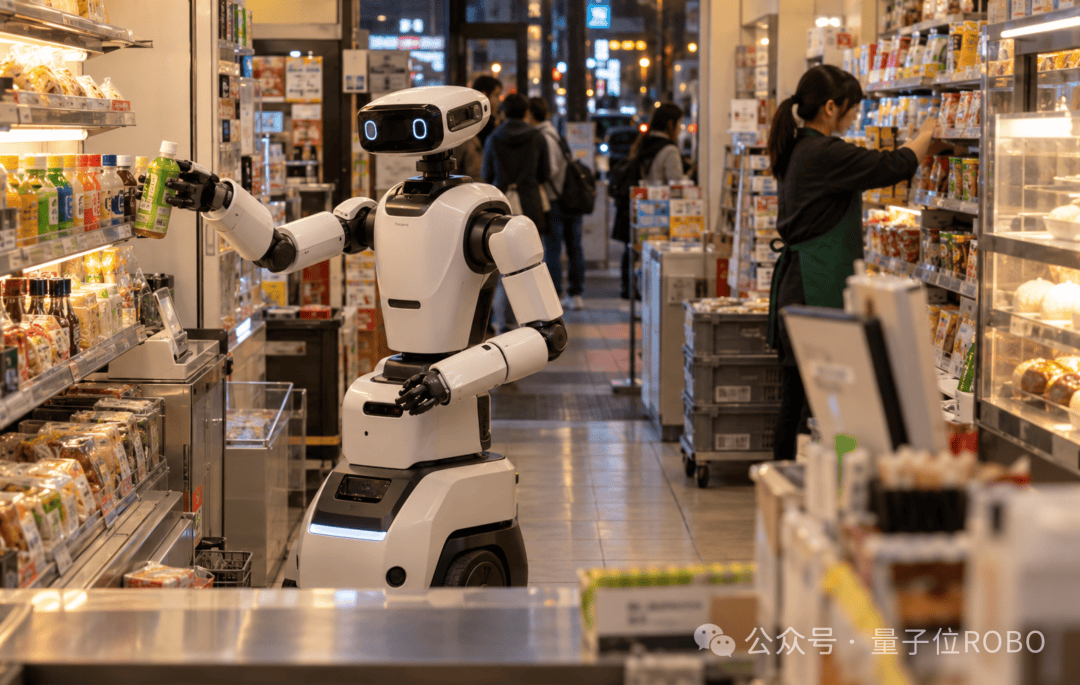
**△**Image generated by AI
Relying solely on retail margins from selling a few dozen low-ticket beverages and standard fast-moving consumer goods makes breaking even an exceptionally long road.
On top of that, fixed overheads such as on-site human supervision, routine maintenance, and remote hardware/software support must be factored in.
What about actual sales figures?
According to public reports, some robot shops pulled in 21,000 RMB in weekly sales per store during the 2026 May Day holiday, while specific locations peaked above 10,000 RMB in single-day sales during the 2026 Spring Festival.
However, the 2025 financial report of a listed AI tech firm revealed that its new business segment—which includes robotic retail—accounted for only 6.0% of total group revenue.
Because that segment also consolidates three other sub-businesses, the revenue directly generated by robotic retail is negligible.
Jia Chuan, an industry veteran and former sales manager at UBTECH, pointed out that the commercial monetization model for robotic retail is nowhere near mature, and the vast majority of commercial deployments remain stuck at the PoC (Proof of Concept) stage.
Through small-scale trial runs, enterprises primarily seek to test the viability boundaries of their technology stack, product form factor, or operational workflows in real-world settings.
Simply put, the actual productivity value robots generate in this scenario remains quite modest.
If the unit economics do not yet add up, why are embodied AI firms still tripping over each other to push robots to the retail frontlines?
The core reason: far more than retail needs robots, the robotics industry desperately needs real commercial deployment scenarios.
Zhou Xiang, a business lead at a company focused on retail embodied brains and operational solutions, told QbitAI ROBO: “We are seeing massive inbound interest from robot hardware manufacturers looking to partner, precisely because everyone is wrestling with a lack of real commercial deployment grounds.”
From Zhou Xiang’s perspective, stage performances can no longer sustain a narrative premium; high-end manufacturing demands extreme motion precision and reliability; in-home scenarios are held back by generalization bottlenecks and safety liabilities, making them unrealistic in the short term; and industrial data collection is gradually shifting toward bodiless, simulation-based pipelines.
Signs of an oversupply crisis are already brewing in the robot hardware sector.
Against this backdrop, retail has emerged as a lifesaver during this awkward commercialization phase thanks to its sweet-spot profile: high public exposure coupled with high fault tolerance.
Jia Chuan explained that industrial manufacturing offers near-zero fault tolerance for robots: “A deviation of a single millimeter can halt an entire assembly line.”
In tourist spots and shopping malls, however, consumers are remarkably forgiving of mechanical hiccups. “People don’t even mind when the machine makes a mistake; an occasional clumsy slip gets filmed and posted online, sparking viral secondary social sharing.”
Multiple industry insiders agree that the direct cash flow generated by retail today is too thin to meaningfully support corporate revenue or net profit. Its primary utility remains anchored in “brand marketing and concept validation.”
The site selection for retail robots shows a distinct pattern: they are heavily clustered in top-tier landmark shopping hubs and iconic tourist attractions across major cities, such as Beijing’s Summer Palace, Chengdu’s Chunxi Road, Hangzhou’s West Lake, and Xiamen’s Gulangyu Island.
For embodied AI companies, every retail kiosk and robot effectively serves as a high-tech, high-impact outdoor billboard.
Without shouldering hefty PR advertising budgets, companies can secure frequent, high-density public exposure right where pedestrian traffic converges.
Footage captured organically by tourists and uploaded across social media platforms magnifies the brand’s reach even further.
Robotic Retail: Closer to Cultural Tourism Marketing for Now?
If the commercial economics have not closed the loop, who is footing the bill for these expensive retail kiosks?
Jia Chuan noted that cultural tourism destinations and urban landmarks have become the primary buyers of robotic retail kiosks, accounting for 60% to 70% of purchases.
QbitAI ROBO learned that numerous regional tourism groups are forging strategic partnerships with embodied AI firms, exploring asset-light leasing arrangements or even launching joint ventures to “co-promote AI adoption in cultural tourism.”
The entities funding these deployments include scenic spot administrative committees making bulk purchases, embodied AI companies placing units themselves, or regional operators running them on consignment.
Having interfaced with tourism authorities on numerous occasions, Jia Chuan noted that cultural tourism settings have a powerful native appetite for robots, fundamentally driven by the desire to “attract attention and drive foot traffic.” He explained: “This aligns with policy incentives encouraging local technology integration, while offsetting the declining draw of traditional cultural performances. Compared to conventional song-and-dance tours, embodied robots offer an innate sense of sci-fi novelty that reliably prompts tourists to stop, snap photos, and share them online.”
Yet in the eyes of Zhou Xiang and Jia Chuan, merely selling robotic retail kiosks is not a healthy or sustainable long-term business model. “At its core, this remains an experiential tourism initiative rather than a serious retail model.”
First, these sites face the bottleneck of an exceptionally low repeat-purchase rate.
Lin Qi, sales director at a firm developing autonomous pharmacy-picking robots, argues that for robots parked in tourist zones or commercial plazas, their primary value is exhibition, not production. Consumers make one-off impulse buys purely out of curiosity, resulting in near-zero customer retention. “Most people line up just to watch a robot make an ice cream cone, not because they desperately need ice cream—especially when waiting for a single cone takes a full six minutes.”
Second, if restricted to the cultural tourism sector, the pool of high-quality scenic spots and landmarks suited for deployment nationwide is relatively limited, setting a clear ceiling on total addressable market size.
“A single retail kiosk easily costs anywhere from several hundred thousand to nearly a million RMB. Aside from tourism procurement backed by municipal budgets and dedicated funds, purely commercial entities rarely open their checkbooks on their own,” Zhou Xiang remarked.
Even so, embodied AI companies continue to push downmarket into cultural tourism. “The logic here is similar to the early data-annotation bases: securing local government-initiated procurement provides startup tech firms with vital early commercial cash flow.”
In Lin Qi’s view, setting aside fundraising narratives and capital market expectations, a robot executing purely retail duties does not necessarily need a humanoid form factor. As long as the mechanical arm’s degrees of freedom and end-effector grippers can reliably grasp objects, wheeled or gantry architectures are already far more efficient.
Based on his industry observations, not a single embodied AI firm has achieved commercial deployments exceeding 100 units within any single retail vertical. “The entire industry is still stuck in an exploratory validation phase.”
“Business decisions ultimately must answer to holistic ROI,” Jia Chuan argued. At this stage, the actual productivity unlocked by robots is not enough to offset their acquisition, deployment, and full-lifecycle maintenance costs.
Only when the marginal cost of a robot providing end-to-end service falls decisively below the labor cost of hiring a standard full-time employee will physical merchants develop a genuine internal drive to replace humans at scale. “Until that economic tipping point is crossed, this sector cannot be considered commercially mature.”
Yet the flip side of the coin is that engineering and algorithmic flaws can only be exposed and resolved through continuous operation in real-world environments. “The true inflection point for mass commercial adoption will only arrive when we can definitively converge the 99% of long-tail edge cases robots encounter in the field.”
Lin Qi noted that during routine commercial business development, the core question prospective clients ask is disarmingly simple and concrete: “Once this machine is rolled in, can it reliably replace at least one full-time employee?”
Replacing Human Clerks Still Needs a Two- to Five-Year Window
If robots are to truly pull off end-to-end replacement of human retail clerks, several deeper challenges must be overcome:
First and foremost is operational safety.
Lin Qi stressed that safety remains the number one bottleneck throttling embodied AI adoption in commercial scenarios.
In unstructured, open public spaces, robots must interact amidst high-density foot traffic. If a robotic arm moves too quickly or sweeps across too wide an envelope, it creates real risks of blunt impact and pinching. Especially when dealing with young children, whose small statures and unpredictable movement paths are difficult to anticipate, existing perceptual obstacle-avoidance and force-controlled safety mechanisms cannot yet provide an airtight safety net.
Meanwhile, in spaces where shoppers constantly weave back and forth, frequent safety triggers cause the robot to freeze and re-plan its trajectory over and over, severely undermining its operational continuity and service efficiency.
Beyond safety, commercial deployments remain largely unstandardized. Most deployments require deeply customized engineering that often demands structural retrofitting of physical spaces.
For instance, uneven flooring in pharmacies and convenience stores can easily cause wheeled bases to bump and stall. Furthermore, shelf spacing, slot depth, and stacking heights vary wildly across stores with no uniform standards, demanding bespoke engineering to calibrate the robot’s perception and motion planning for each individual venue.