
On October 30, Baidu App held a product upgrade press conference in Beijing. Baidu Search has achieved recursive self-evolution and comprehensively upgraded its Search AI API—with promotional pricing starting as low as ¥4.9 per 1,000 queries, undercutting the pricing of DeepSeek’s Search API. Concurrently, Baidu rolled out major upgrades across key dimensions including the search box, AI Lens, GUI visualization, and interactive AI applications, delivering a smarter, more efficient, and more engaging user experience.
Search paradigms are evolving from “one question, one answer” to “one task, one delivery.” Complex queries can now be delegated to the search engine for multi-step information retrieval and synthesis, directly returning verified and consolidated conclusions. High-frequency tasks can be resolved in a single step, minimizing the cumbersome loop of “search, redirect, and operate.” For items requiring ongoing attention, the system can continuously track updates with user consent and proactively send alerts whenever changes are detected.
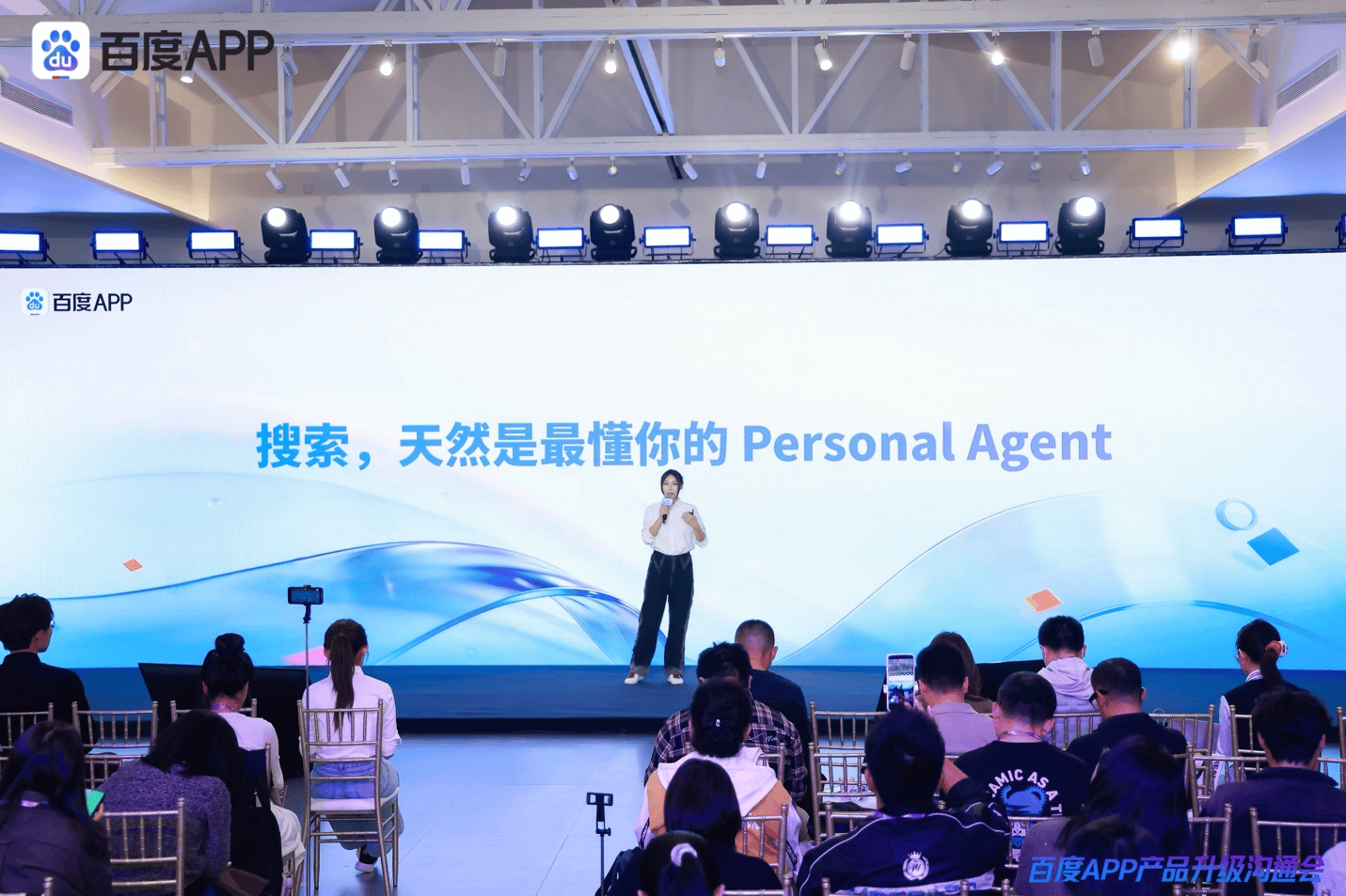
Currently, this capability covers over 170 tool scenarios. For example, when parents search for school admission information, Search factors in previously recorded student grades, home address, and boarding preferences to compare commute distances, tuition fees, and admission policies, offering tailored school recommendations. Similarly, when planning a Chinese New Year trip to Sanya, Search can generate a full five-day itinerary and budget breakdown in one click, while proactively notifying users of hotel price drops—saving them ¥2,100 across a five-night stay.
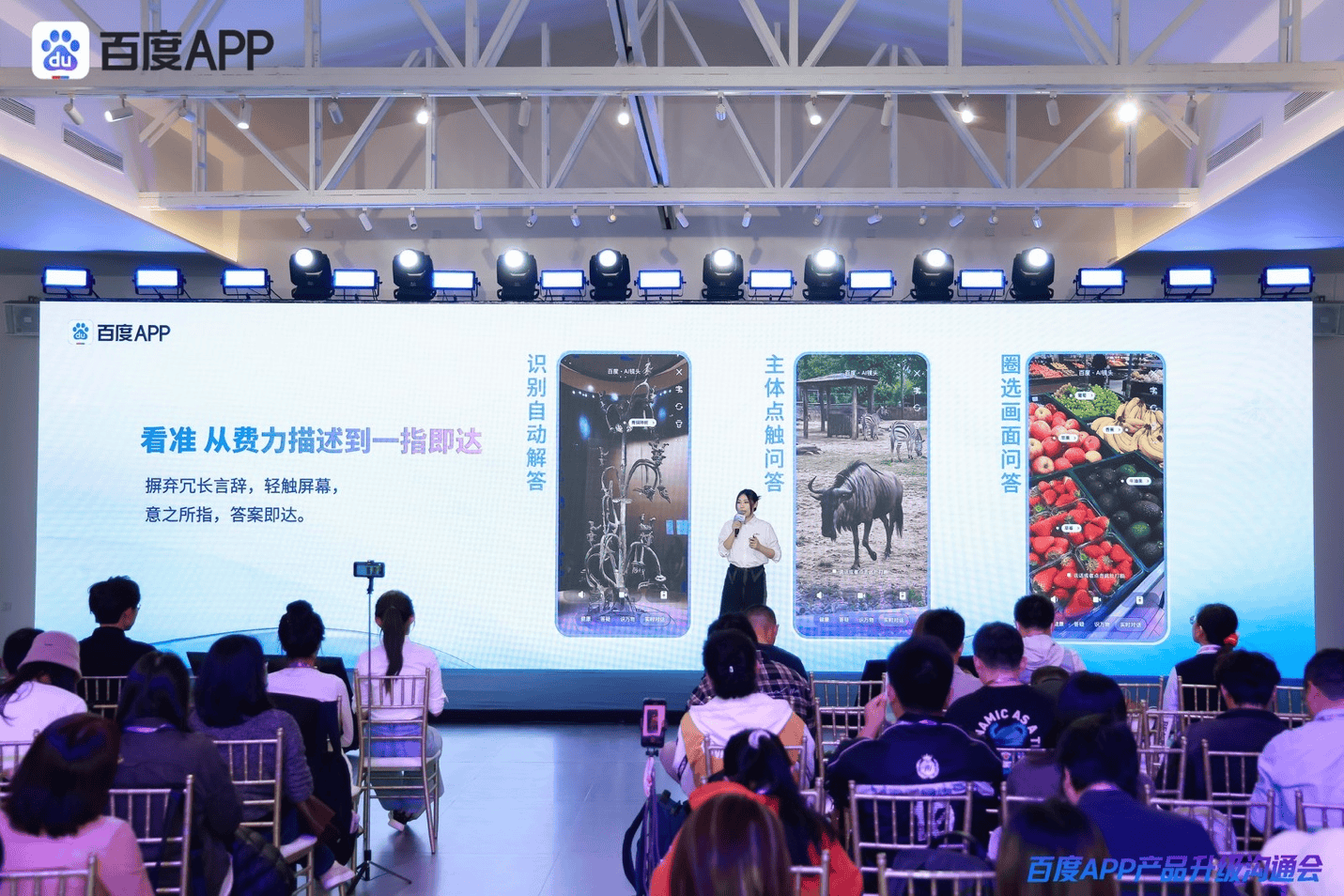
Regarding the AI Lens, Baidu is shifting visual search from “static snapshots” to “fluid, continuous streams,” tackling the three traditional limitations of photo-based recognition: incomplete identification, vague explanations, and superficial inquiry. The upgraded lens supports simultaneous multi-object recognition and dynamic tracking: multiple plants or musical instruments in a single frame can be recognized all at once, while tags stably track moving subjects like leaping monkeys or swimming schools of fish. Users no longer need to struggle to describe what they see—simply tapping or circling an object allows them to ask targeted questions. After snapping an image, users can seamlessly transition to real-time voice conversations to ask follow-up questions driven by curiosity, bridging the gap between simply identifying an object and deeply understanding it. Furthermore, the AI Lens supports real-time voice interaction across nine Chinese dialects—including Dongbei, Sichuanese, Cantonese, and Changsha dialect—bringing the vision of “conversing with the world through the lens” into reality.
In terms of GUI interaction, GUI coverage on search result pages has increased fivefold, integrating over 5 billion authoritative data assets across government affairs, public services, central banking, and more than 20 vertical industries. Leveraging intelligent AI visualization capabilities and professional chart templates, complex data is now “visible, comparable, and interactive.” In addition, Baidu has opened this ecosystem, welcoming more authoritative data institutions and ecosystem partners to join.
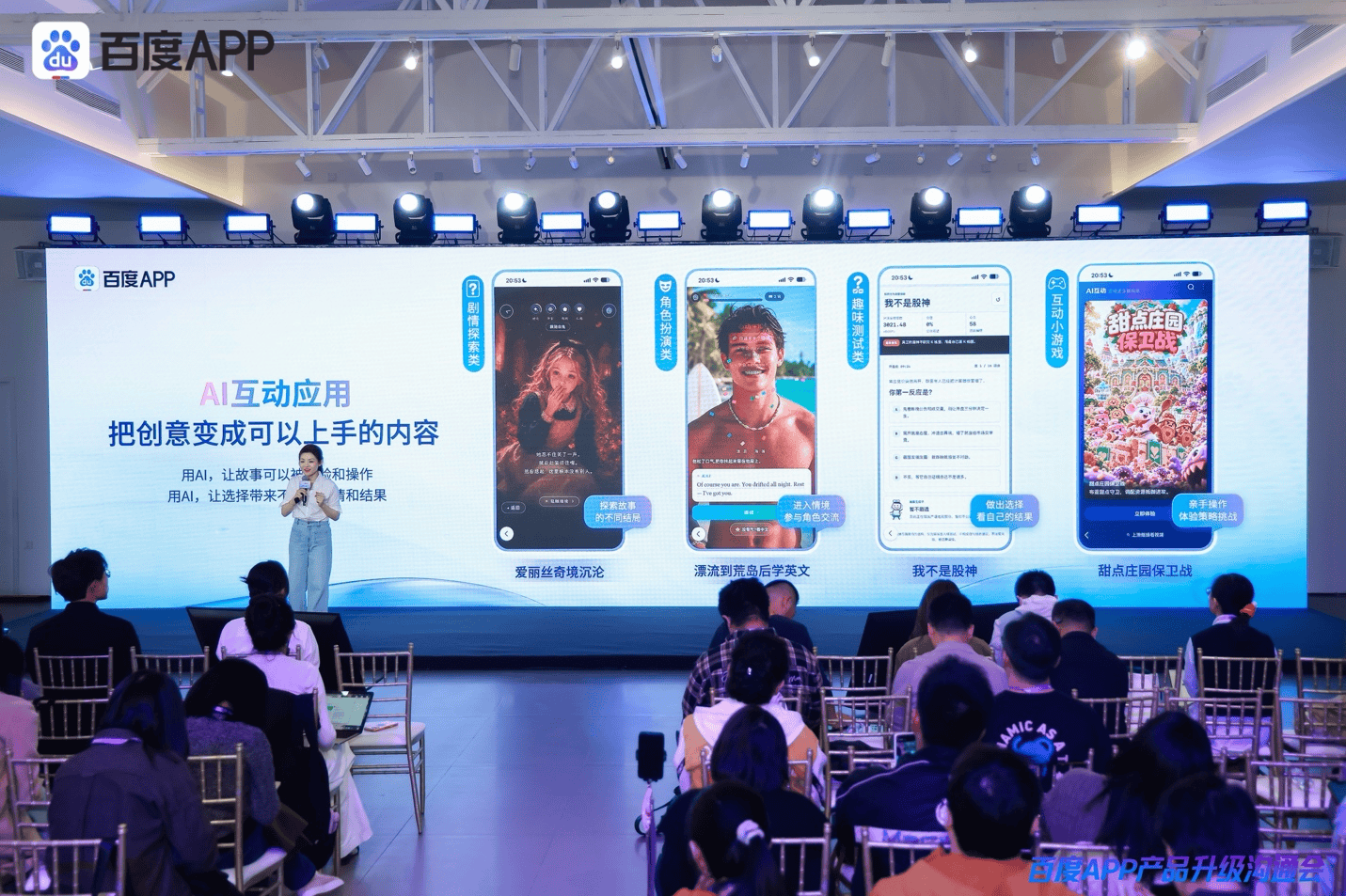
For interactive AI applications, Baidu App introduced AI interactive dramas and AI interactive applications, shifting the user experience from passive consumption to deep engagement. Users can not only steer plot directions in interactive dramas but also take hands-on actions with instant feedback in interactive applications, propelling the content ecosystem from one-way consumption toward participatory co-creation. Concurrently, Baidu launched the “Baidu AI Future Creator League,” offering millions of yuan in cash prizes and hundreds of millions in traffic support to recruit top-tier interactive content creators.
Notably, the promotional pricing for Baidu’s newly upgraded Search AI API starts as low as ¥4.9 per 1,000 queries, lower than DeepSeek’s Search API pricing.
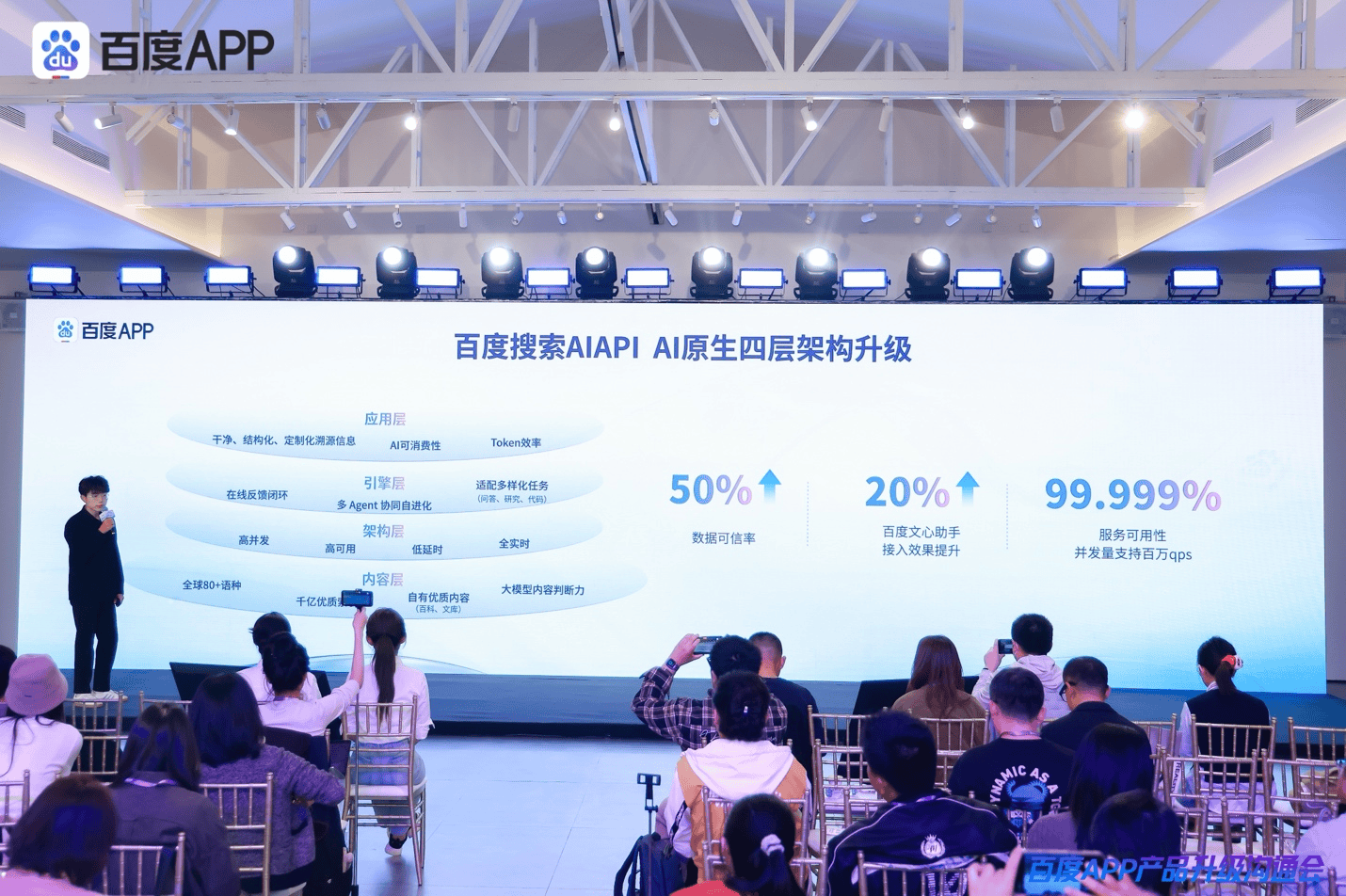
Behind its high cost-effectiveness and exceptional performance lies the technical foundation of Baidu’s AI-native four-layer architecture:
- Content Layer: Aggregates over 80 languages and hundreds of billions of high-quality indexed pages worldwide, boosting data trustworthiness by more than 50%.
- Engine Layer: Achieves multi-agent collaborative self-evolution through an online feedback loop. Baidu Search converts every real query and user feedback into training signals, feeding them continuously through a “search–feedback–retraining” closed loop. This drives recursive self-evolution of the model without manual intervention, boosting overall iteration efficiency by over 80%.
- Architecture Layer: Balances high concurrency with low latency, providing robust, enterprise-grade service reliability.
- Application Layer: Supports comprehensive integration specifications including API, MCP, and Skill protocols; after integration, Wenxin Assistant’s overall performance improved by 20%.
Driven by its core strengths—“accurate search, high-quality answers, and actionable delivery”—Baidu App is redefining competition in the AI application layer, delivering a smarter, sharper, and more enjoyable experience for users.