
WIKA: A Proven Path Toward Intelligent and Minimal-Crew Construction Machinery
In the second half of 2026, WIKA Mobile Control made frequent appearances across industry exhibitions and conferences in the embodied AI sector.
In September, WIKA was invited to speak at both Huawei Connect 2026 and Alibaba’s Apsara Conference 2026. The annual flagship summits of these two domestic tech giants both centered on Agentic AI, systematically mapping out the complete journey of artificial intelligence from foundational technical breakthroughs to real-world industrial value.
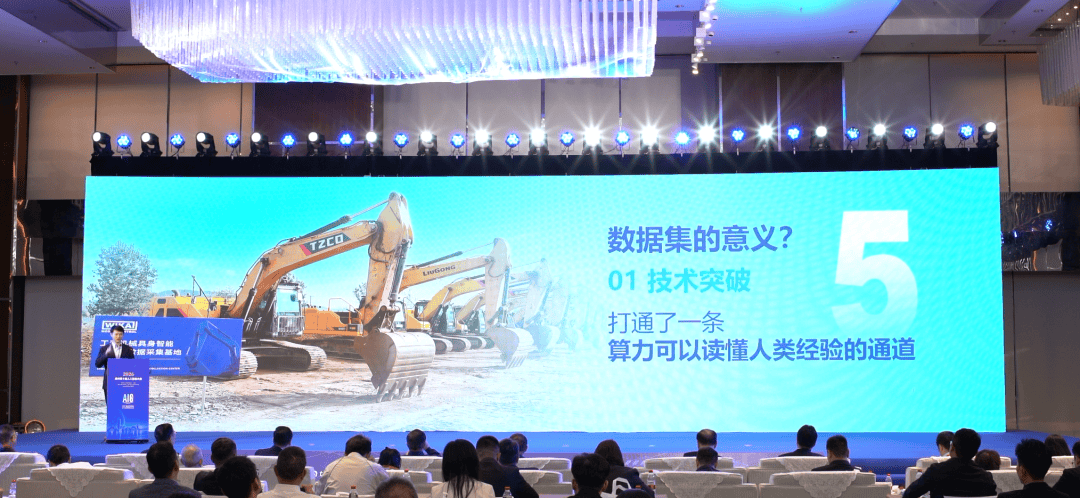
On October 19, at the 10th Xuzhou Artificial Intelligence Conference 2026, WIKA General Manager Xue Lige officially unveiled the “High-Quality Embodied AI Dataset for Construction Machinery.” There were no flashy robotic stunts on stage; instead, the main screen displayed real-world footage of excavators working at active construction sites. This research milestone drew widespread attention across the physical-world AI domain.
General Manager Xue Lige stated that this dataset bridges the gap for models to understand human domain expertise accumulated on construction sites. As a vital cornerstone for deploying AI in extreme environments and mega-infrastructure projects, it will propel traditional construction toward minimal-crew and autonomous operations. Alongside the launch, WIKA released the dataset on major global open-source platforms such as Hugging Face. The goal is to leverage the open-source ecosystem to unite global research capabilities, collectively build a data flywheel for construction environments, and drive continuous iterative innovation.
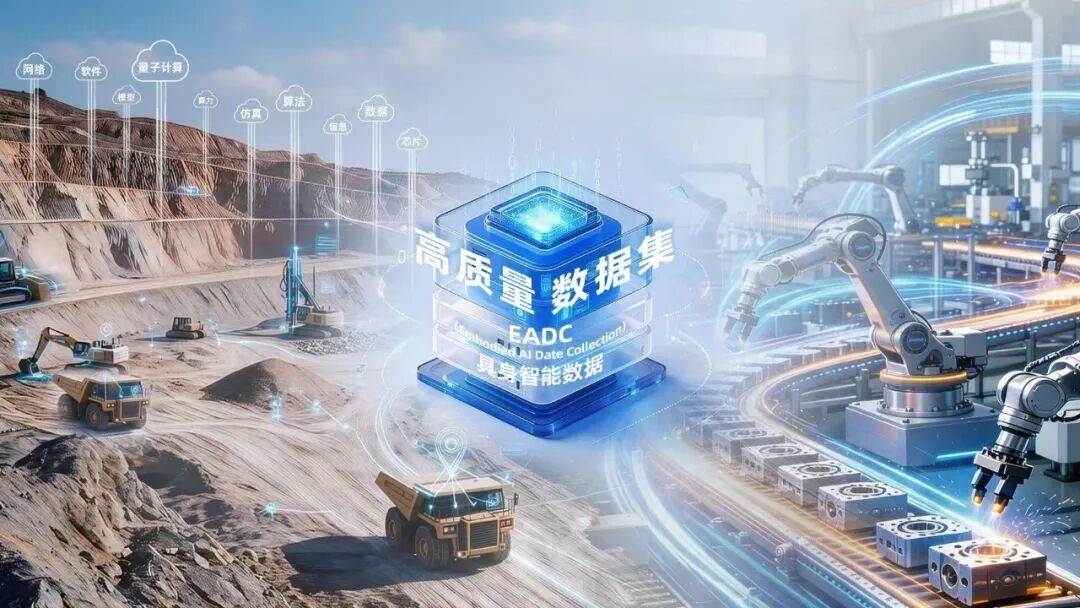
Currently, the embodied AI industry faces bottlenecks such as data scarcity and steep deployment challenges in practical scenarios. As an automation control enterprise deeply rooted in controllers, sensors, and functional safety, WIKA has driven the deep integration of embodied AI with construction machinery. By closing the loop from real-world operational environments to training data, WIKA has not only charted a viable pathway for the intelligent transformation of traditional manufacturing, but also contributed an invaluable, high-quality dataset to frontier embodied AI research.
Data: The Soil from Which Embodied Brains Grow
Many industry insiders regard 2026 as the inaugural year for embodied AI applications. Industry metrics show that domestic financing in the embodied AI sector reached approximately 93.5 billion RMB in the first half of the year, a nearly fivefold year-over-year increase. However, the capital-fueled hype does not necessarily mean technology has achieved refined industrial deployment.
Why is embodied AI so difficult to deploy in real-world scenarios? The core pain points lie in insufficient real-world data, the limited practical utility of simulations, poor domain adaptation for models, and the lack of robust safety systems. The WIKA dataset was purpose-built to address these exact challenges. Looking deeper, why did such a dataset originate from WIKA rather than a pure-play AI algorithm company? The answer lies far beyond algorithms alone.
This is precisely where the core value of WIKA Mobile Control’s dataset shines. While the broader industry grappled with data bottlenecks, WIKA directed its R&D focus toward the tangible domain of construction machinery. The authentic operational data accumulated across construction sites and mines throughout operational and maintenance cycles holds immense potential to empower the transformation and upgrading of the real economy. Rather than chasing conceptual hype, WIKA leverages deep technical expertise to bridge the “virtual brain” of embodied AI with the “steel limbs” of heavy machinery powering economic development.
Earlier this year, in a public interview, Li Yan—Deputy Director and Senior Research Fellow of the Industrial Economics Research Department at the Development Research Center of the State Council—pointed out three major shortcomings currently facing embodied AI: a scarcity of high-quality physical-world data, limited model generalization, and engineering bottlenecks in hardware maturity. Among these, the data bottleneck ranked first. While data alone does not equal an intelligent brain, training one is impossible without a solid foundation of data.
Wu Bowen, Director of the Intelligent Innovation Center at WIKA Mobile Control, remarked in an interview: “The foundation of a model does not rest in algorithmic frameworks, but in data. Human domain expertise is embedded deep within data. Only by first constructing high-quality data can we train well-adapted models, which in turn unlocks downstream technical applications. This logical sequence cannot be reversed.”
Grounding this in industrial reality: construction sites are highly unstructured environments with fragmented equipment standards, prohibitive data collection costs, and exceptionally low data reusability. Although synthetic assets and video footage can assist in pre-training, there remains a massive sim-to-real transfer barrier. The supply of effective, training-ready data lags far behind the pace of model iterations. Therefore, for embodied AI to achieve sustainable progress, companies must step up to collect, organize, and parse big data from the physical world.
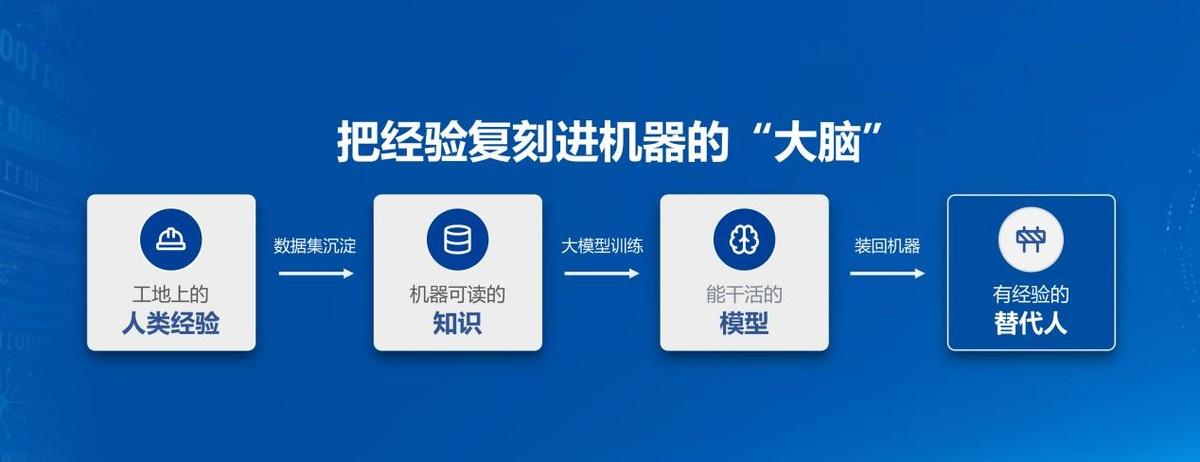
Crucially, a dataset is far more than an arbitrary dump of raw video files and uncurated material stored on a hard drive. It is a systematic collection of operational data spanning multiple scenarios and excavator models, engineered to translate the tacit, on-the-ground experience of veteran operators into structured, machine-interpretable knowledge. Only with data products built to this standard can an intelligent “brain” truly viable for construction machinery be trained.
Driven by Policy and Market: The Arduous Path of Dataset R&D
WIKA’s initiative in datasets did not begin in 2026. As early as five years ago, WIKA had already commenced preliminary preparations. Back then, the company foresaw that heavy machinery equipped with “smart brains” would witness surging market demand in hazardous, dirty, strenuous, tedious, and heavy-duty engineering environments.
In 2026, the Ministry of Industry and Information Technology (MIIT) explicitly called for strengthening the collection, construction, and governance of high-quality datasets in the 15th Five-Year Plan for the Development of the Information and Communications Industry. Meanwhile, following Unitree Robotics’ successful IPO, capital market attention toward embodied AI continued to surge.
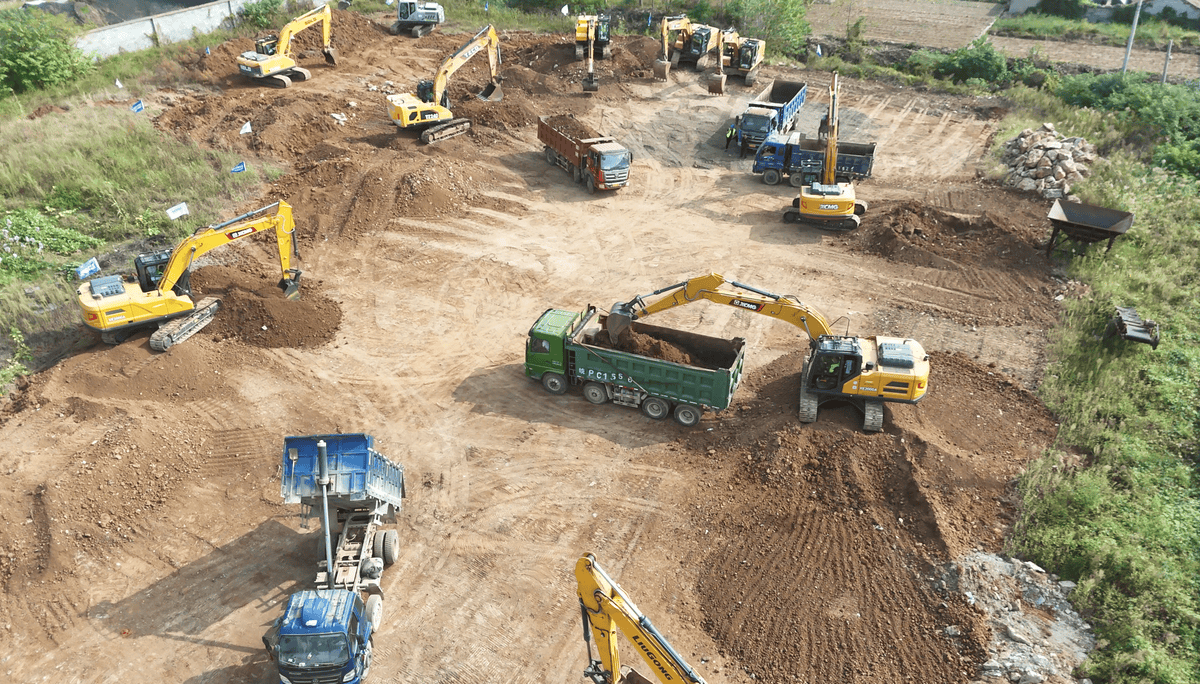
While construction machinery encompasses a wide variety of equipment, WIKA chose excavators as its breakthrough point. Though exceptionally representative, excavators present formidable engineering challenges. Their working conditions are complex: operations such as trenching, truck loading, slope trimming, leveling, and stockpiling involve high degrees of freedom, unpredictable dynamic loads, severe airborne dust, and terrain lacking standardized reference baselines—hallmarks of a profoundly unstructured setting. Consequently, collecting an excavator dataset requires not only spanning diverse machine models across brands, but also structuring the output to align with the learning paradigms of embodied AI.
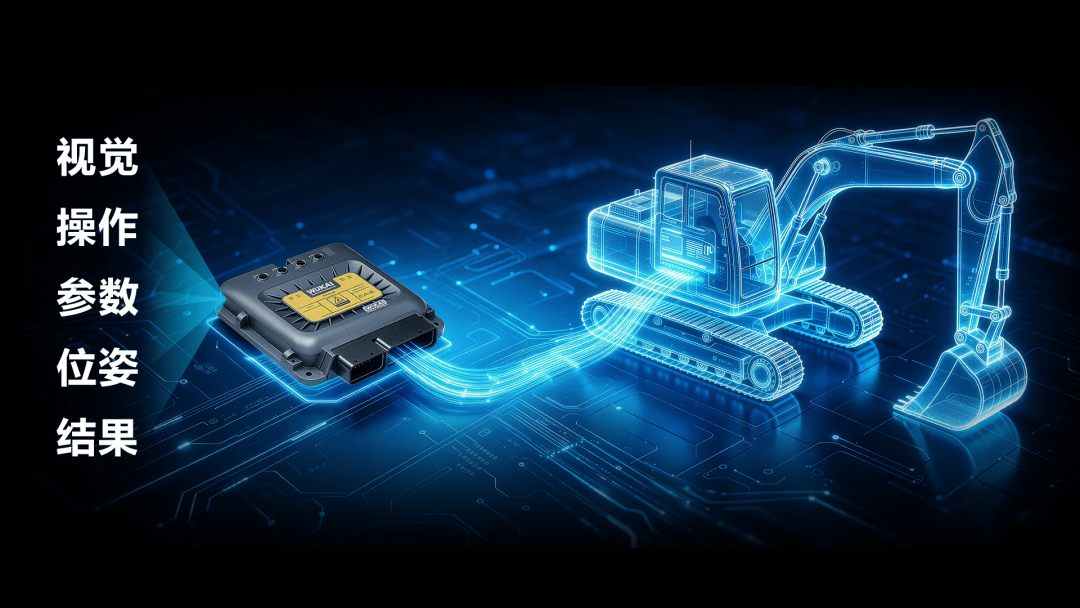
It is widely acknowledged across the industry that every operational skill acquired by a model originates from observing and replicating the trajectories of veteran operators. Venturing deep into active job sites, WIKA achieved temporal synchronization across five core dimensions based on unified timestamps:
- Vision & LiDAR: Reconstructs the operator’s spatial workspace with high precision;
- Pose & Force Feedback: Faithfully captures the dynamic interaction state between machine implements and work materials;
- Joystick Inputs: Accurately records human decision-making and operational intent.
These multi-dimensional data streams corroborate and interconnect with one another, completely preserving the end-to-end logic of “operator environment perception → machine-material interaction → human control execution.” If any single link is missing, the collected data devolves into isolated sensory footage or fragmented control signals, unable to be distilled into reusable domain assets.
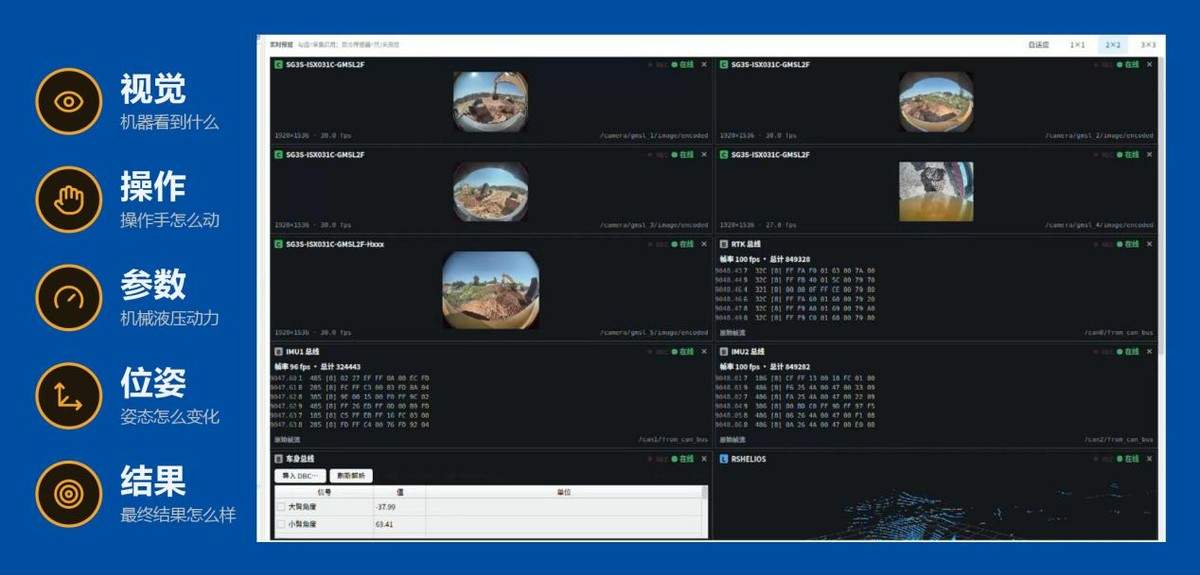
This all-dimensional collection approach translates into steep R&D expenses. Wu Bowen revealed that at WIKA’s excavator data acquisition base, data collection currently costs around 5,000 RMB per hour. Training a production-ready embodied model requires on the order of 100,000 hours of data, meaning real-machine field collection alone costs upwards of hundreds of millions of RMB. Upfront R&D for physics-based simulators is equally demanding, though once built, synthetic data generation costs can drop to roughly one-tenth of real-world machine collection.
Confronted with such massive R&D investments, any manufacturing-focused enterprise would find this a daunting challenge. Yet WIKA has remained steadfast in driving this project from research into real-world fruition.
The Confidence Behind the Dataset: Three Decades of Deep Expertise in Intelligent Control Systems
Architecturally, embodied AI can be broken down into three core tiers: the “body,” the “cerebellum,” and the “brain.” The “body” represents the mechanical airframe and structural hardware manufactured by OEMs; the “cerebellum” consists of motor controllers, drives, and hydraulic controllers responsible for smooth, reliable execution; and in today’s construction machinery, the “brain” is still largely played by the human operator on site. The cerebellum serves as the vital intermediary hub: high-level cognitive decisions generated by the brain must be translated through the cerebellum before they can precisely drive mechanical limbs to carry out work.
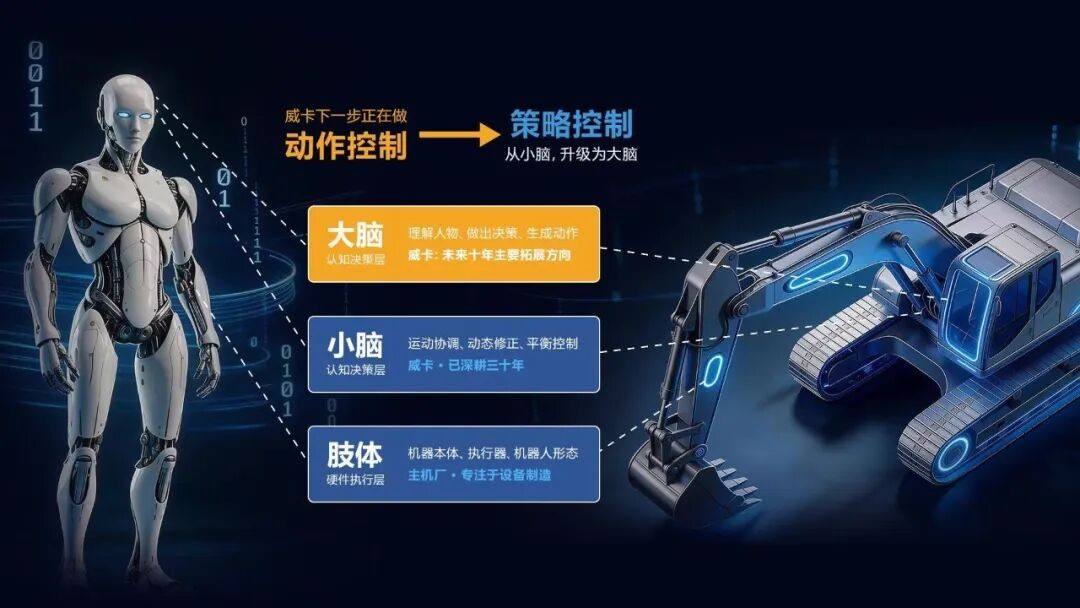
From this vantage point, WIKA has accumulated over 30 years of technical heritage in the “cerebellum” tier of embodied AI. Its product portfolio spans five core categories: controllers, displays, sensors, human-machine interface (HMI) controls, and new energy electronic control systems. These are widely deployed across more than ten equipment categories, including cranes, aerial work platforms, concrete machinery, earthmoving equipment, and mining machinery. WIKA’s client roster includes industry giants such as XCMG, SANY, Zoomlion, and Liebherr. This means WIKA’s control hardware is already natively installed inside leading heavy equipment worldwide. This natural advantage ensures that WIKA’s dataset acts from day one as a bridge between the cerebellum and the brain—built on top of a proven, industrial-grade intelligent control foundation, rather than an abstract concept decoupled from industrial reality.
A site visit to WIKA’s intelligent manufacturing facility in Xuzhou offers tangible proof of its deep manufacturing roots. The plant is organized into five functional divisions: electronic manufacturing, electronic assembly, warehousing & picking, machining, and mechanical assembly. It has been recognized as an Advanced Intelligent Plant in Jiangsu Province and attained Level 3 Intelligent Manufacturing Maturity certification. As the plant’s core division, the electronics manufacturing area features two SMT lines, DIP lines, conformal coating lines, and automated finished-goods storage. The workshop is fully orchestrated by the VALOR system, achieving end-to-end traceability and quality control from raw materials to finished products.
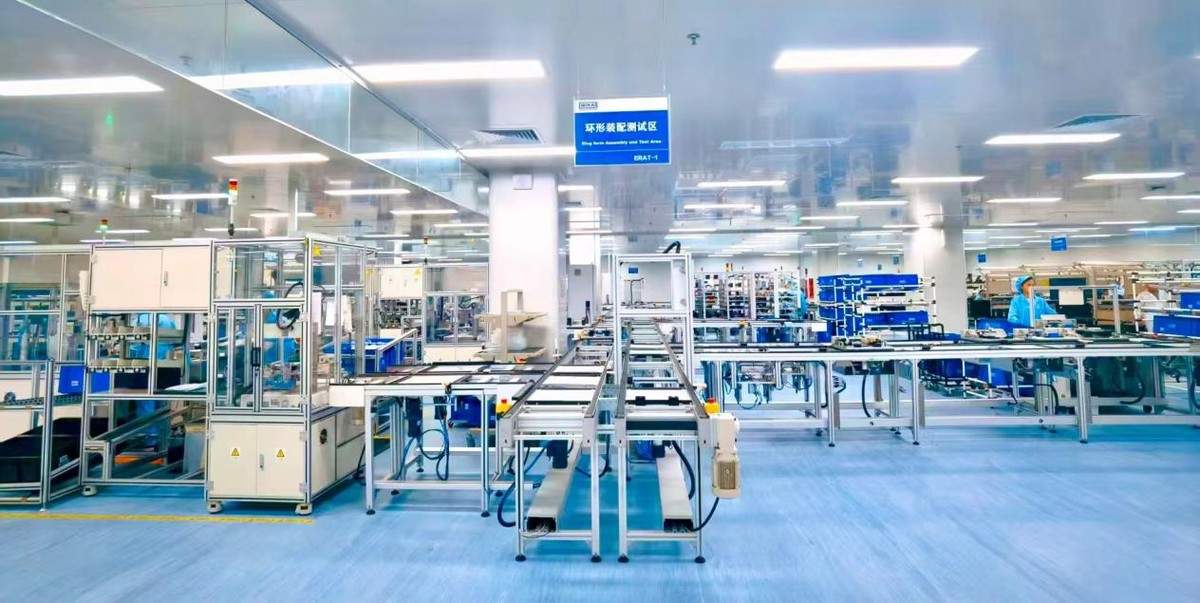
Notably, the automated testing line supporting the SMT operations was entirely designed and assembled in-house by WIKA—a 100% “WIKA-made” system. A site lead explained that the line was custom-engineered to meet specific client requirements and product characteristics, delivering exceptional operational stability since deployment. Today, in addition to supporting WIKA’s internal production orders, nearly half of the line’s excess capacity is available for outsourced custom testing services. This comprehensive, self-reliant capability—spanning product R&D all the way to in-house manufacturing equipment construction—is the bedrock that empowers WIKA to steadily advance its high-quality dataset initiative.
Conclusion: A Proven Path Toward Intelligent and Minimal-Crew Construction Machinery
Phase one of WIKA’s dataset encompasses 36 million frames across 12 representative operational scenarios. While this may represent an initial milestone relative to the broader embodied AI landscape, the R&D philosophy behind it offers far deeper lessons for the industry than sheer data volume.
First, adhering to the right R&D sequence. Build a foundational data layer embedded with reusable domain expertise first; follow with rigorous model training; and finally deploy intelligent capabilities onto proven machinery. Many teams reverse this logic: they rush to build hardware carriers first and then scramble to graft intelligence onto them. Yet the true, defensible moat lies in the operational expertise captured through physical-world data. Inverting this sequence often yields little more than costly demonstration prototypes, despite heavy investments.
Second, laser-focusing on core complex scenarios. Rather than settling for simple scenarios designed to impress in tech demos, WIKA targeted the construction machinery sector—an arena characterized by brutal operating conditions, volatile dynamic loads, and heavily unstructured environments. WIKA avoids hollow narrative-chasing and steers clear of futile competition against generic foundation models. The embodied AI space has never suffered from a shortage of grandiose promises; what it desperately lacks are pragmatic teams willing to dig in and tackle the tedious, grueling work of data collection, alignment, annotation, and quality assurance. Positioning itself as a builder of data infrastructure, WIKA delivers not only data, but an integrated methodology and hardware foundation. The deep synergy among these three elements transforms one-off proof-of-concept projects into scalable, reproducible engineering capabilities, driving tangible industrial deployment.
Third, maintaining strategic clarity. While many peers are preoccupied with equity fundraising and crafting hardware prototypes for pitching stories, WIKA remains focused on fortifying the data bedrock, building a solid foundation for training native construction machinery models, and ultimately feeding mature models back into production equipment. For embodied AI—and heavy machinery in particular—this is not just a story on paper; it is a battle-tested, viable engineering roadmap that offers distinctive and actionable reference value for the entire industry.