
Turning Infrastructure into a Permanent Buff
When will embodied AI reach its “ChatGPT moment”?
Most likely when people see something like GPT-6 Astra assign cross-domain manipulation tasks to robots with just a single API call.
Frontier foundation model teams continue to demonstrate formidable capabilities, proving to the world early on that AI’s general capabilities are stunning—and nowhere near their ceiling.
The good news: the model engine’s performance far exceeds expectations, with AI algorithms tearing down the “supercar racetrack.”
The bad news: the engineering infrastructure (Infra) responsible for translating instructions into physical actions remains a pothole-ridden “dirt road”…
The stronger the models become, the greater the need for an accessible, robust embodied AI infrastructure to support every leap in frontier algorithms.

Recently, LimX Dynamics released the second technical report for its open-source engineering platform, FluxVLA Engine.
Compared to the initial V1 release in September, the V2 report introduces online reinforcement learning (Online RL) post-training experiments and significantly expands the scope of simulation benchmarks and real-world robot deployment.
According to the report, on the simulation and evaluation side, 14 distinct policies have been integrated into a unified LIBERO closed-loop evaluation system; additionally, 8 policies each have been benchmarked across the RoboCasa GR-1, RoboTwin, and RoboDojo platforms.
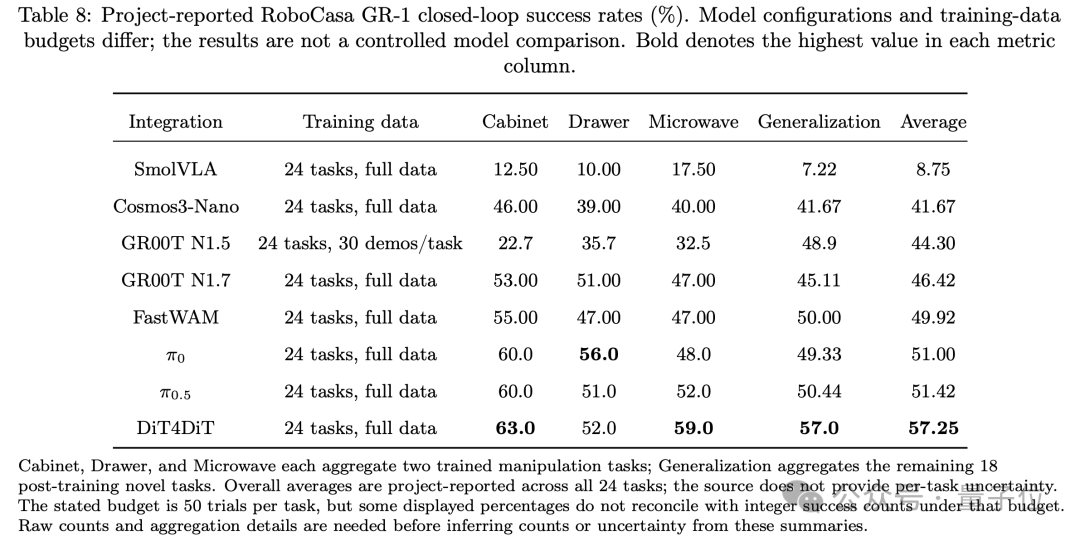
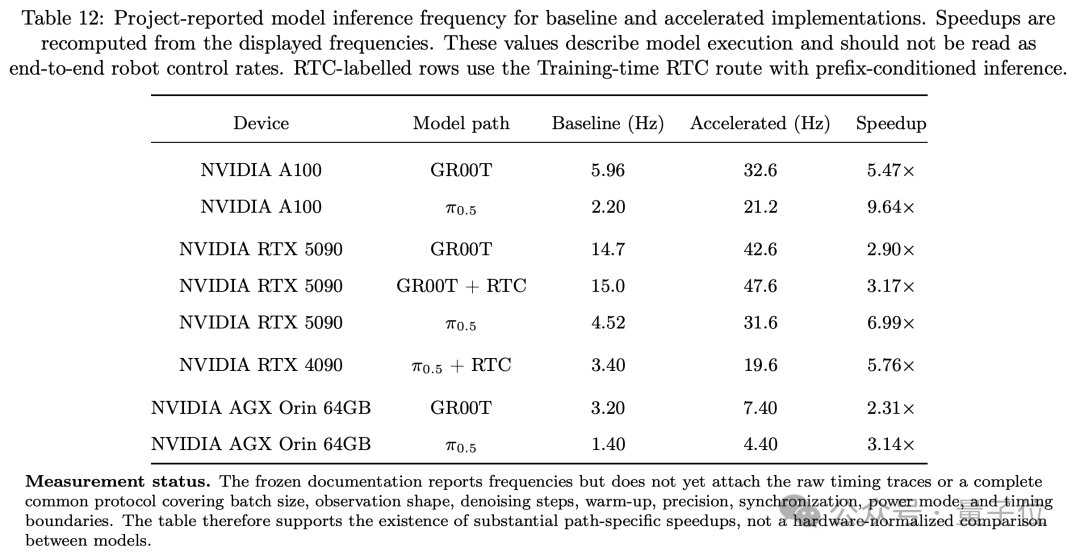
On the inference front, real-world tests across 8 model-hardware pairings showed that low-level optimizations boosted inference frequency by 2.31× to 9.64× compared to baseline.
Meanwhile, across multiple real hardware platforms—including ALOHA, Rebot, dual-arm Franka, and LimX Dynamics’ proprietary full-sized humanoid robot LimX Oli—the report validated an end-to-end deployment pipeline running straight from model checkpoints to closed-loop physical execution.
Online reinforcement learning is also a primary highlight of this update.
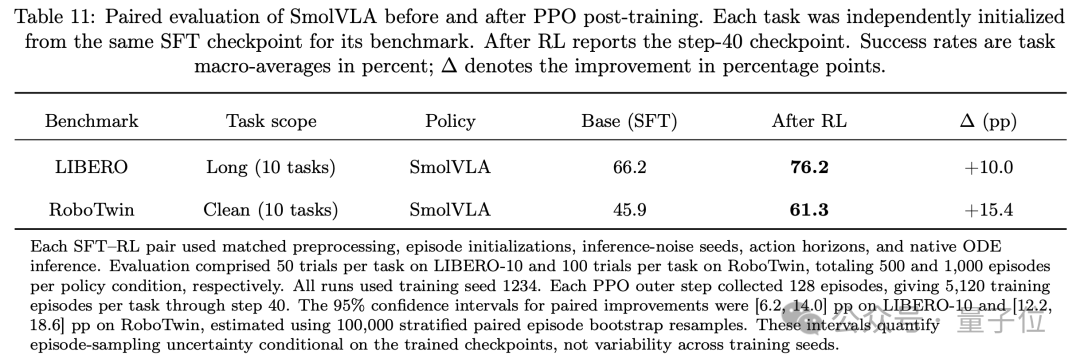
Taking SmolVLA as an example, across two control experiments, online RL post-training improved its success rates on LIBERO-10 and RoboTwin Clean (10 tasks) by 10.0 and 15.4 percentage points, respectively.
Since its open-source launch on April 8 this year, FluxVLA Engine has continuously expanded its model support, evaluation benchmarks, and real-robot deployment capabilities.
In the words of the LimX Dynamics team, the core value of FluxVLA Engine lies in: enabling high reusability of foundational engineering capabilities, liberating valuable R&D bandwidth from endless “environment setup and interface tweaking,” and giving frontier algorithms a solid road to travel and land on.
Moving Past “Cottage-Industry” Reinvention: Building a Standardized Assembly Line for Embodied AI R&D
Why is embodied AI R&D so costly and labor-intensive?
A key bottleneck is the long-standing lack of unified, standardized components across the industry. For most teams, almost every new experiment is a one-off engineering effort.
The primary objective of FluxVLA Engine is to upgrade this “cottage-industry” approach of repeatedly building from scratch into a standardized industrial assembly line—Wei Zhang, Founder and CEO of LimX Dynamics, aptly compares FluxVLA Engine to a factory production line for embodied models.
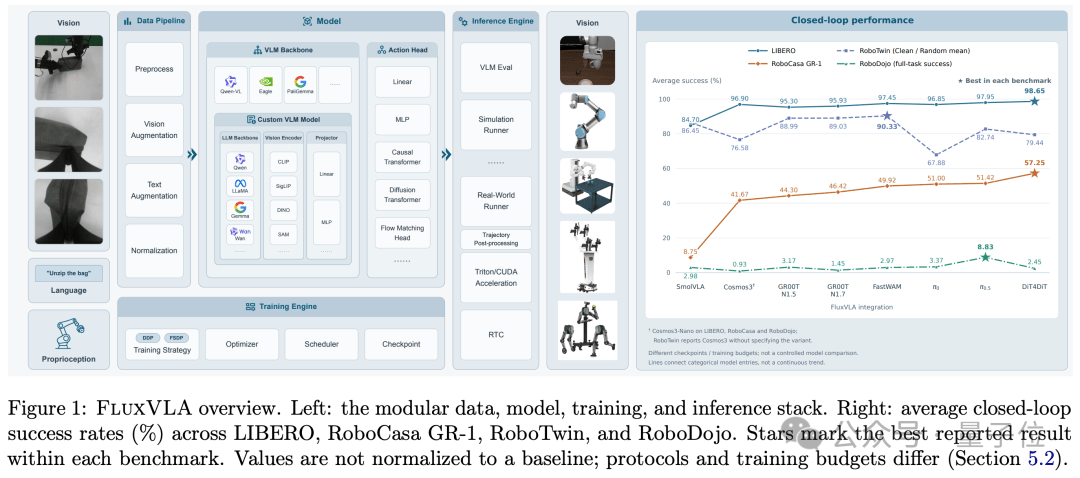
To ensure this pipeline is both robust and highly usable, the underlying architecture was built around four core engineering principles:
- Unified Configuration (All-in-one): Farewell to scattered scripts; manage data, models, training, evaluation, and deployment through a single global configuration blueprint.
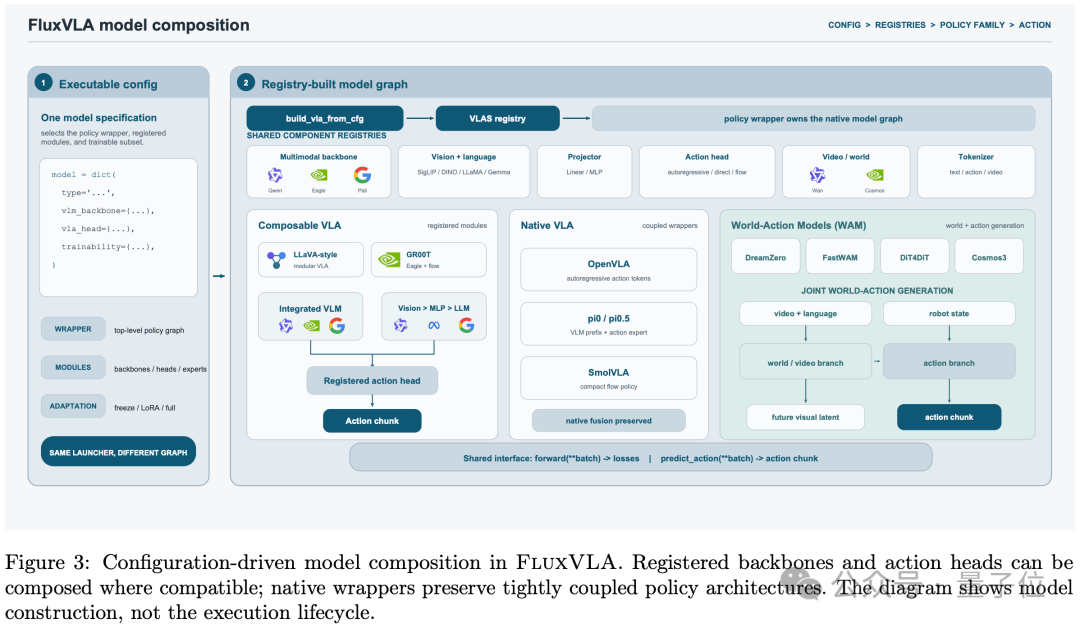
- Modular Decoupling: Based on a registry mechanism and standardized interfaces, decouple vision-language backbones, action prediction heads, datasets, and training strategies into modular components. This supports plug-and-play composition while preserving native policy implementations.
- Deployment-Oriented System Optimization: Move past idealized laboratory assumptions by deeply integrating inference acceleration, Real-Time Chunking Coordination (RTC), and trajectory smoothing post-processing directly into the runtime pipeline from day one.
- Rigor and Reproducibility: Thoroughly log and trace hyperparameters, checkpoints, and execution trajectories for every experiment—making success reproducible and failure diagnosable.
Notably, since going open-source in April, FluxVLA Engine has maintained a rapid iteration cadence and routine operations.
A look back at its evolution over the past six months highlights the rapid expansion of this infrastructure:
-
April 8: FluxVLA Engine officially open-sourced
-
June 22: Established minimal inference pipeline for whole-body mobile manipulation on the LimX Oli humanoid robot
-
June 30: Added support for physical inference on single- and dual-arm Franka setups
-
September 9: Integrated GR00T N1.7
-
September 16: Technical report published on arXiv
-
October 15: Extended support to the RoboDojo benchmark
-
October 22: Released V2 technical report, introducing online RL post-training and expanded simulation and real-robot evaluations
-
Technical Report: https://arxiv.org/abs/2609.17210
-
Hugging Face: https://huggingface.co/limxdynamics/FluxVLAEngine
Driven by continuous, high-frequency iterations, the platform’s capabilities have expanded solidly from basic “training and evaluation support” to “real-world closed-loop deployment and data flywheel loops.”
For R&D teams, adopting FluxVLA Engine is like having a dedicated backend engineering team continuously upgrading foundational infrastructure and pushing technical boundaries.
How a Single Engine Unifies the End-to-End Pipeline: Training, Evaluation, and Deployment
The embodied AI tech stack is still in a fast-paced exploratory phase before convergence.
From Diffusion Policy and Flow Matching to World Action Models (WAM), if every algorithmic pivot wipes out previous engineering assets, R&D costs quickly become unsustainable.
The only way to avoid “starting from scratch every time a model changes” is to deeply decouple low-level engineering infrastructure from top-level frontier algorithms.
In short, the industry urgently needs a highly versatile, adaptable infrastructure capable of handling constant change.
FluxVLA Engine was built specifically to unify the entire “training, evaluation, and deployment” pipeline, preserving accumulated engineering assets. Its core technical implementation boils down to three key dimensions:
1. Data and Model Integration
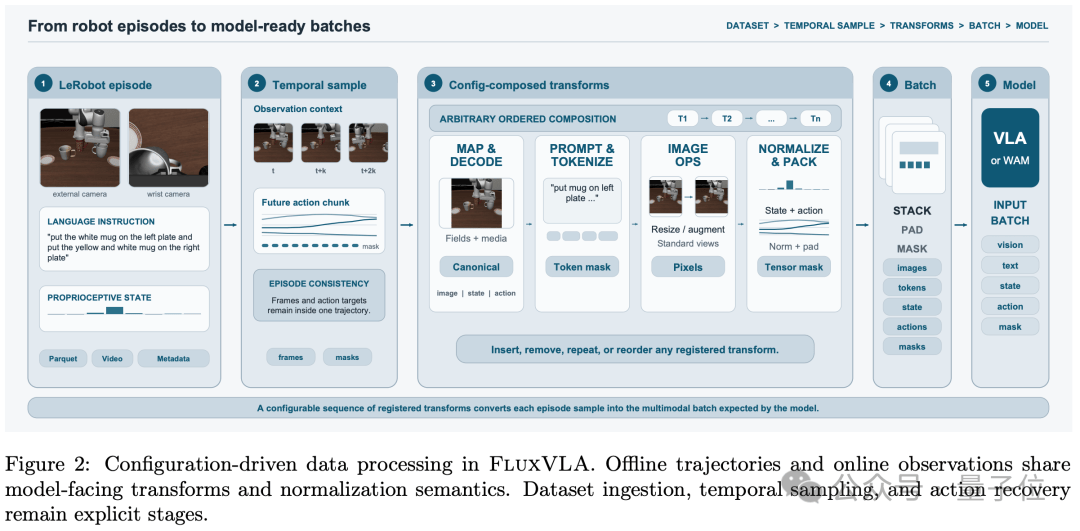
To seamlessly connect diverse models with varying architectures to the same pipeline, the prerequisite is standardizing underlying data specifications and interface formats.
On the data front: Raw trajectory data from diverse physical robots and simulation environments undergo explicit format conversion, cleaning, and validation, being consolidated into a standard schema compatible with LeRobot specifications (including Parquet metadata indexing, multi-view video streams, etc.). Concurrently, specifications such as camera perspective order, action space definitions, and normalization statistics are deeply aligned.
Standardized data not only enables mixed training in the same pipeline, but also allows subset-specific preprocessing and normalization rules to be retained. Whether during offline training or online inference, the system executes unified input encoding/decoding semantics through dedicated data entrypoints.
As the most costly core asset in embodied AI R&D, streamlining the efficient reuse and standardized accumulation of multi-source data is in itself a major driver for slashing marginal R&D costs.
On the model front: The framework has deeply integrated mainstream VLM, VLA, and WAM architectures, including Qwen-VL, GR00T, the π series, and DreamZero. While preserving each model’s native structural characteristics, standardized interfaces allow them to hook directly into training, evaluation, and deployment pipelines.
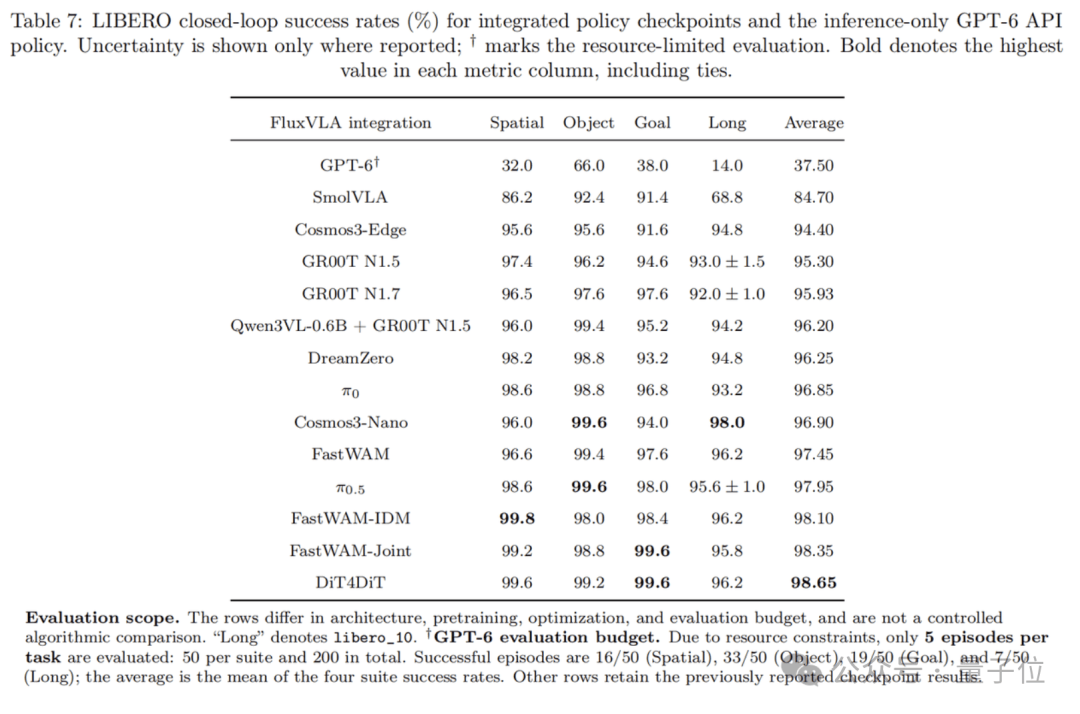
The benchmark of 14 policies evaluated side-by-side in the report directly validates the scalability of this design. The evaluation covers today’s mainstream algorithmic branches:
Compact VLAs, flow matching policies, modular VLM + action head setups, world action models, and even direct cloud API calls to GPT-6 Astra and the newly added MiniMax-M3.1-Flash without local deployment.

Across designated benchmarks, 11 of the 13 local policies achieved an average success rate exceeding 95% on the LIBERO benchmark (e.g., DiT4DiT reached 98.65%, and π 0.5 reached 97.95%).
The efficiency gains from modular architecture are clear: when new model architectures emerge, researchers can rapidly evaluate and adapt them without rebuilding environments or data pipelines.
2. Online Reinforcement Learning (Online RL) Support
Models trained purely via Supervised Fine-Tuning (SFT) tend to over-rely on training distributions, showing limited generalization robustness when facing unseen disturbances.
To expand the decision boundary of models in complex, dynamic environments, introducing environmental interaction and Online Reinforcement Learning (Online RL) is a critical path.
However, Online RL requires managing parallel environment interactions, efficient policy updates, and large-scale distributed scheduling simultaneously—presenting a massive engineering hurdle.
To tackle this, FluxVLA Engine made targeted low-level engineering breakthroughs: by deeply integrating RLinf, models compatible with flow-matching mechanisms can plug directly into online interactive post-training pipelines without needing to rewrite policy interfaces or data distribution pipelines for new tasks.
In simulation control benchmarks across LIBERO and RoboTwin, experiments used SmolVLA SFT checkpoints as cold-start weights to conduct task-specific PPO post-training.
After 40 outer iterations, SmolVLA’s average success rate on LIBERO-10 jumped from 66.2% to 76.2%; on the RoboTwin Clean 10-task suite, success rose from 45.9% to 61.3%—achieving performance gains of 10.0 and 15.4 percentage points, respectively.
This benchmark proves that the infrastructure effectively connects the pathway from “imitation learning cold-start” to “online interactive enhancement,” empowering lightweight to mid-sized models to unlock their full decision-making potential through closed-loop interaction.
3. Multi-Dimensional, Fine-Grained, and Traceable Evaluation
Traditional evaluation paradigms typically output only a single high-level metric: final success rate. This makes it difficult to conduct in-depth root-cause analysis on intermediate reasoning steps and failure mechanisms.
The V2 report substantially enhances the granularity and coverage of the simulation evaluation system:
- RoboTwin: Added support for 8 policies, outputting metrics under both Clean (unperturbed benchmark) and Random (random perturbation) environments to assess noise resilience under perturbations;
- RoboDojo: Covered 42 fine-grained tasks across 8 policies, with up to 2,100 evaluations per model to generate comprehensive benchmark reports.
The system not only tracks final task success, but also records real-time stage progress bars and generates capability radar charts across five dimensions: generalization, memory capacity, control precision, long-horizon planning, and open-ended instruction following.
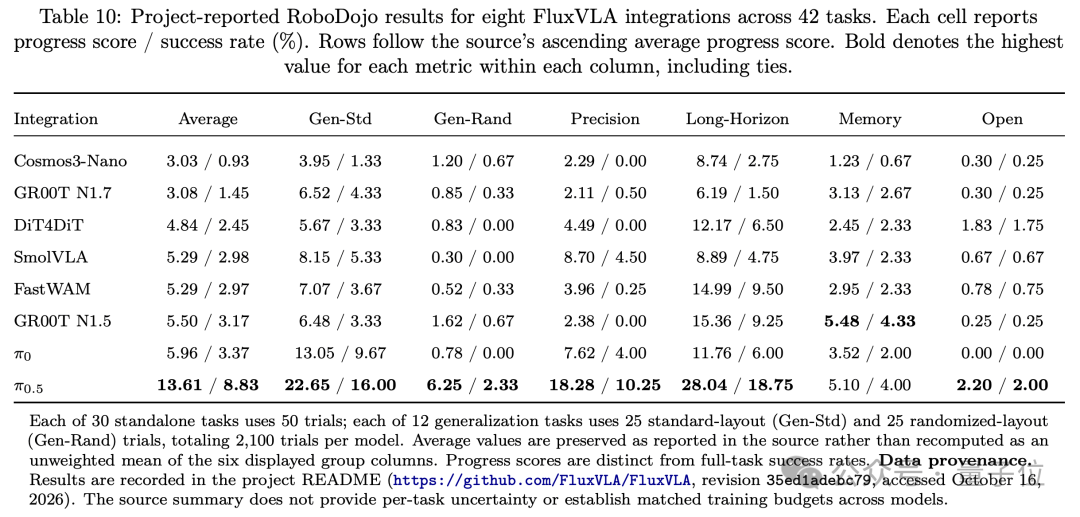
Fine-grained process metrics provide precise feedback for algorithmic iteration. For instance, in tasks like folding clothes or sorting blocks, if a model performs reliably during initial planning and approach phases but falters during final placement, the system can cross-reference “stage completion rate” with “end-to-end success rate” to quickly isolate the bottleneck—clarifying whether the failure stems from visual representation, long-horizon action planning, or high-frequency end-effector control.
Pinpointing the exact failure mechanism significantly cuts down the wasted trial-and-error costs of blindly scaling data and compute, driving true optimization efficiency.
Bridging the Engineering Chasm from “Simulated High Scores” to “Real-World Execution”
In embodied AI, a stark “Sim2Real” gap has always separated simulation from the physical world.
Mainstream embodied foundation models commonly adopt a temporal output mechanism: “predict a chunk of future actions (Action Chunking), then execute them step-by-step via low-level controllers.” In this workflow, deep network forward passes carry significant computational overhead, while the robot’s low-level servo control loops must run continuously at high frequencies.
If a newly predicted trajectory is issued before the previous trajectory finishes executing, jerky pose discontinuities can easily occur between adjacent segments. Furthermore, theoretical action sequences output by models must strictly adhere to motor power limits, velocity bounds, and acceleration smoothness constraints when sent to real hardware.

To resolve the latency bottlenecks and motion jitter typical in real-world deployments, FluxVLA Engine engineered a comprehensive production-grade system solution:
Solution 1: Low-Level Compute Optimization Delivering up to 9.64× Inference Speedup
Without altering model weights or network topology, the system refactored low-level kernel operators and optimized computation graph topologies for flagship models like GR00T and π 0.5, slashing redundant GPU memory copies and scheduling latency to the bare minimum.
Across 8 model-hardware test configurations documented in the report, optimized inference throughput increased by 2.31× to 9.64× compared to baselines:
- On an NVIDIA A100 platform, π 0.5 inference frequency surged from 2.20 Hz to 21.2 Hz—a 9.64× speedup;
- On edge hardware like AGX Orin (64GB), GR00T framerate rose from 3.20 Hz to 7.40 Hz, while π 0.5 improved from 1.40 Hz to 4.40 Hz.
This acceleration maintained exceptional numerical precision: numerical alignment checks on the GR00T action output head showed a cosine similarity above 0.99999 compared to the original model, with maximum absolute error kept within ~0.02. It unlocks edge hardware performance with virtually zero precision loss.
Solution 2: Introducing RTC Coordination and Smoothing Filters for Seamless Execution Continuity
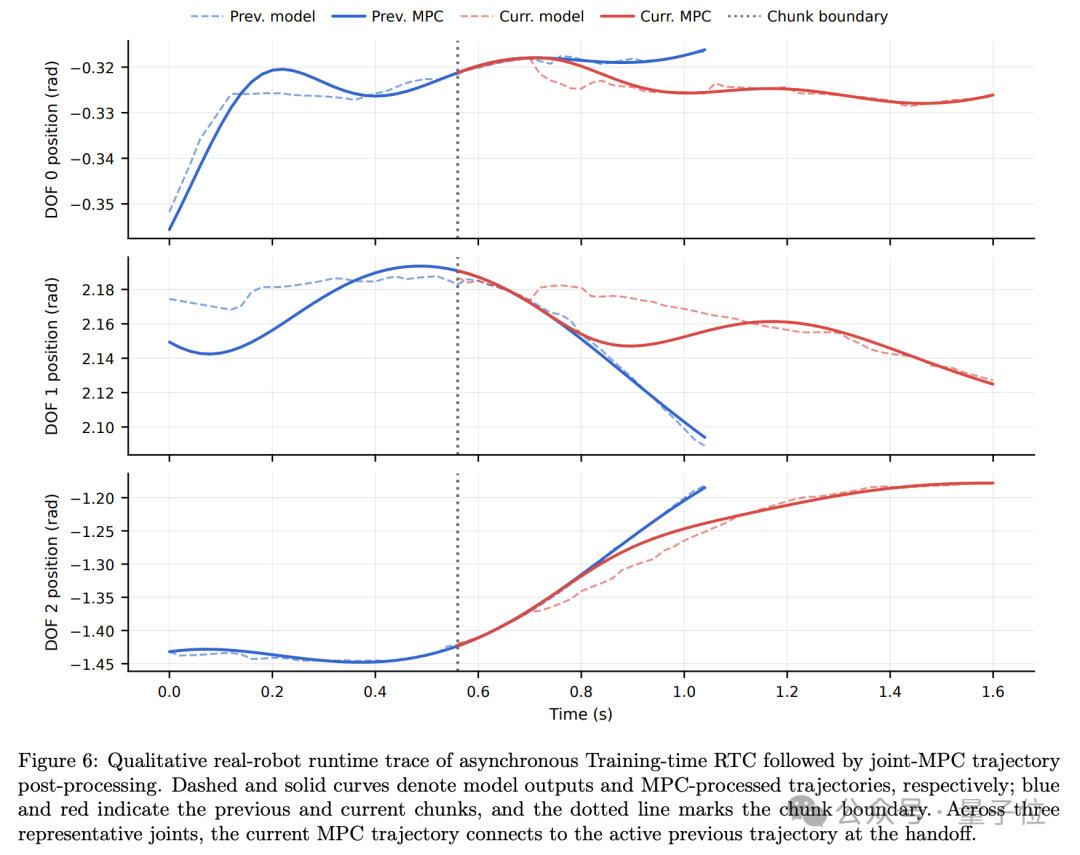
To address temporal action discontinuities, FluxVLA Engine embeds a Real-Time Chunking Coordination (RTC) mechanism.
This mechanism leverages the tail-end dynamic state of the currently executing trajectory to enforce smooth transition constraints on the initial segment of the newly predicted trajectory, achieving seamless transitions between action chunks. Working in tandem with kinematic boundary constraints and low-pass filtering in the post-processing module, it guarantees that torque and velocity commands sent to actuators remain strictly within physical limits.
Inference optimization tackles generation latency, while RTC and post-processing smoothing safeguard the control loop’s stability. Together, they eliminate erratic jerks during physical movement, improving operational safety and extending robotic hardware lifespan.
Solution 3: Universal Cross-Embodiment Abstractions and Human-in-the-Loop (HITL) Closed-Loop Workflows
For embodiment adaptation, FluxVLA Engine implements a decoupled two-layer communication architecture: the Runner, responsible for policy computation and state orchestration, and the Operator, handling hardware interaction.
The Runner oversees model inference scheduling, action chunk planning, and phase state transitions; the Operator interfaces with low-level sensor drivers, real-time bus communications, and actuator command execution.
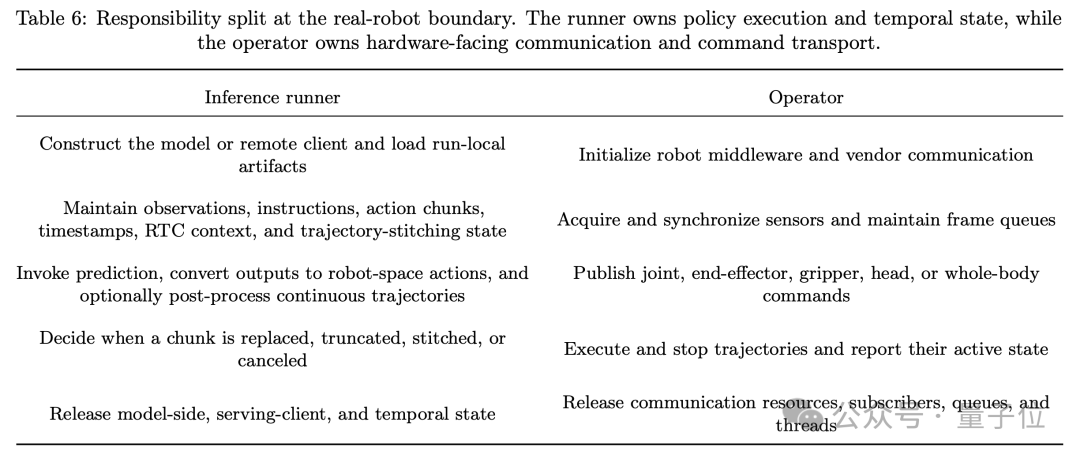
Thanks to this layered design, different robot embodiments only need to wrap their hardware drivers around the standard Operator interface to reuse the upstream Runner algorithm pipeline, drastically lowering the barrier to multi-hardware migration.
The technical report validated the framework’s generalization across diverse hardware platforms:
- ALOHA Platform (6 tasks): π 0.5 achieved a 72.22% overall end-to-end success rate;
- Dual-arm Franka Platform (5 tasks): GR00T N1.7 achieved 88.00% overall success, while π 0.5 reached 79.00%;
- Rebot Platform (4 tasks): π 0.5 reached a 77.50% overall success rate;
- LimX Oli Full-Sized Humanoid: In long-horizon, whole-body coordinated heavy-object transport tasks, π 0.5 completed the first three sub-stages in 61.67% of runs and completed all four stages in 33.33% of runs, proving the feasibility of end-to-end control for whole-body mobile manipulation.
(Note: The above metrics represent empirical records under specific experimental setups documented in the report, intended to demonstrate cross-hardware compatibility rather than direct algorithm benchmarking)
In real-world embodied AI deployment, achieving physical execution is only the baseline. If intervention data from off-track failures cannot effectively flow back to power continuous model iterations, the system cannot spin a sustainable data flywheel.
To this end, FluxVLA Engine natively integrates a Human-in-the-Loop (HITL) intervention and active learning module.
The system enables human operators to perform seamless, low-latency takeovers whenever autonomous execution deviates, automatically recording takeover context, teleoperation intervention trajectories, and reward labels.
Evaluations using the companion ARM technique demonstrated the efficacy of this closed-loop mechanism:
In an 8-stage long-horizon towel-folding task on ALOHA, a baseline trained purely on Behavior Cloning (BC) achieved a 62.1% success rate; adding SARM reward modeling elevated the success rate to 78.5%; combining it further with the ARM advantage-weighted behavior cloning algorithm pushed end-to-end success to 99.4%, while task throughput surged from 18 to 32 episodes per hour.
At this point, the complete architectural blueprint of FluxVLA Engine comes into sharp focus:
It doesn’t just provide a deployment route from algorithm to physical robot; powered by the dual engines of “online RL exploration in simulation” and “human-in-the-loop experience feedback in the physical world,” it helps close the full loop from model training and physical deployment to self-improving data iteration—paving a clear path to production for frontier embodied AI algorithms.
Conclusion
From data cleaning, model training, and fine-grained benchmarking, to inference acceleration, cross-embodiment deployment, and human-in-the-loop data flywheels—embodied AI is steadily moving past the “cottage industry” phase and entering an era of standardized, scalable engineering infrastructure.