
AI image generation continues to get more powerful, yet users have long grown weary of the unmistakable “AI look.”
Overly polished lighting, airbrushed skin, familiar compositions… while many AI-generated images look striking, they are instantly recognizable as synthetic.
Recently, an open-source image generation model from China sparked widespread discussion across the global AI community for its remarkably natural visual texture.
Ostris, a prominent developer in the ComfyUI community, offered an interesting hypothesis: as more models incorporate AI-generated images into their training pipelines, their outputs increasingly take on a homogeneous “ChatGPT flavor.” In contrast, this model completely eliminated synthetic AI images from its training dataset—a choice that may explain its uniquely authentic aesthetic.
That model is MOSS-Image, open-sourced by Mosi Intelligence and the OpenMOSS team.
Just 4 days after launch, MOSS-Image surpassed 1.3 million cumulative downloads across international platforms, including Hugging Face’s Comfy-Org repository:
It has earned 1.4k GitHub stars, quickly topped the Hugging Face Text-to-Image trending leaderboard, and ranked among the top trending models across all categories.
Activity in the developer community has been even more intense.
Immediately after release, developers and creators rolled out a flurry of derivative works: 8-step and 4-step accelerated variants, INT8-quantized and GGUF builds, diverse LoRAs spanning photography to anime, and a constant stream of new ComfyUI workflows.
On platforms like X and Reddit, developers pitted it against models like FLUX.3-klein, Krea2, and Qwen Image 2.1, benchmarking visual style, character details, text rendering, and complex composition.
So how did this domestic Chinese image generation model, built on a 5B-parameter DiT backbone, captivate so many global developers in just a few days?
Buzz Across the Global Developer Community: Head-to-Head Comparisons with FLUX.3-klein and Krea2
Following its open-source release, the international community reacted with remarkable speed. Beyond the natural visual feel mentioned earlier, developers began rigorously testing its generative capabilities across multiple dimensions.
Some focused on whether it truly shed common AI stylistic quirks, while others used complex prompts to evaluate character poses, fine details, and stylistic consistency.
From anime and illustration to photorealism, MOSS-Image’s stylistic range was on full display in the works shared by community creators.
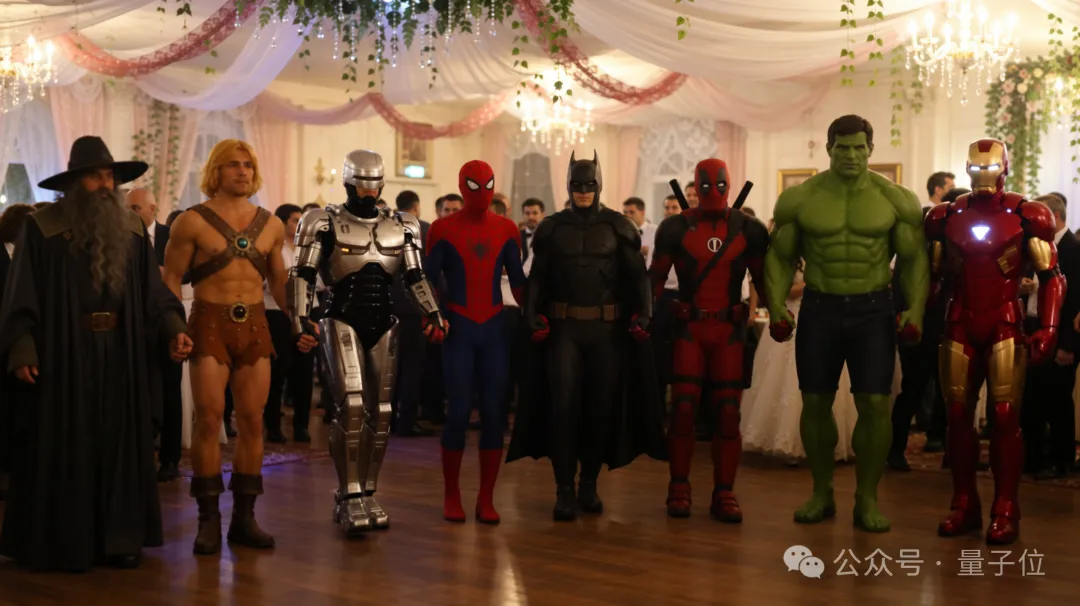 △ Source: Reddit@Ok-Option-6683
Another developer, Wildminder, zeroed in on MOSS-Image’s layout control capabilities.
Using JSON Layouts and bounding boxes, users can explicitly specify the spatial positions of text and objects within a frame. This level of compositional control is extremely valuable for visual design tasks like posters and e-commerce graphics.
Furthermore, community members conducted extensive tests on Japanese text rendering, intricate compositions, long prompt generation, and performance across different LoRAs and inference settings.
Shared results show that MOSS-Image garnered widespread acclaim in these scenarios, with developers specifically praising its text rendering and complex instruction following.
On Reddit’s r/StableDiffusion, MOSS-Image quickly became one of the most actively discussed models.
An AMA (Ask Me Anything) hosted by core MOSS-Image developers was pinned by the community moderators. The core team engaged directly with members, addressing questions about architectural choices and real-world deployment.
One post hailed it as a “standout base model in recent memory,” while others drew comparisons to the launch of SDXL (Stable Diffusion XL, the open-weight foundational image model released by Stability AI in 2023).
Even more interesting was how quickly comparative benchmarks emerged, with FLUX.3-klein, Krea2, and other models placed in head-to-head evaluation setups.
Some compared composition and fine detail using identical prompts; others evaluated complex pose fidelity, photorealistic textures, color rendering, and stylistic execution.
These tests offered multifaceted perspectives: while many praised its natural textures and detail rendition, others noted room for improvement regarding stability in specific niche artistic styles.
Collectively, these community experiments offer valuable insight into MOSS-Image’s practical performance in real-world creative workflows.
Throughout these discussions, text rendering and layout control consistently emerged as the standout highlights.
Text, Layout, and Long Prompts: What Problems Does MOSS-Image Tackle?
Image generation models have made immense progress in raw visual quality. However, asking an AI to directly generate a poster or e-commerce banner with dense text and intricate layouts still presents major challenges:
Misspelled words, misplaced headlines, and chaotic arrangements of multiple elements remain common pain points in production workflows.
The core of MOSS-Image’s latest optimization lies squarely in addressing these design-critical requirements.
First is bilingual Chinese and English text rendering.
MOSS-Image was heavily optimized for dense text generation. It handles long-form Chinese and English typography while preserving formatting structures such as line breaks. In the Long Long Text Benchmark (LLTB), MOSS-Image achieved a Mean-6 text coverage score of 96.3%, ranking first among all evaluated open-weight models.
While text coverage measures completeness rather than strict character-level accuracy, this score highlights the model’s robust capabilities when handling complex textual prompts.
Second is spatial layout control, a feature especially coveted in design workflows.
In conventional text-to-image workflows, users typically describe composition through natural language—e.g., “place the headline in the top-left, the person on the right, the product centered, with background accents and explanatory text around it.” As constraints multiply, models often fail to align with the intended arrangement.
MOSS-Image introduces a structured JSON Layout input approach.
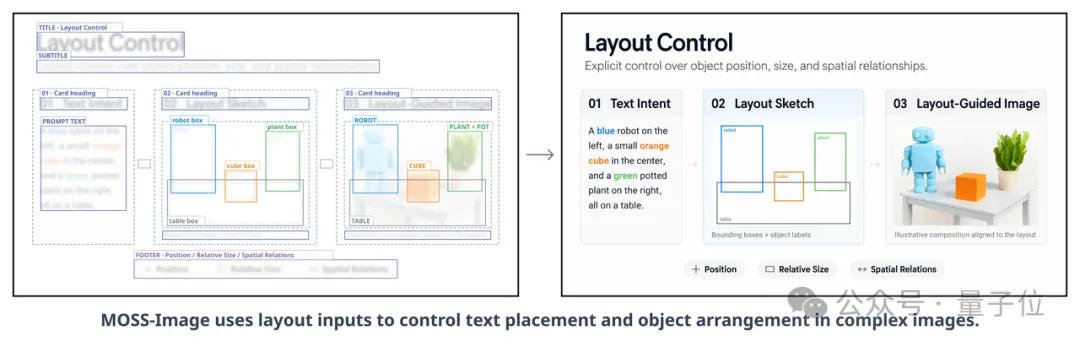
Developers can describe the overall scene in a summary field, specify text, objects, and visual attributes in items, and use Bounding Box coordinates to precisely anchor the position and extent of each element. This translates abstract design intent into concrete spatial geometric constraints.
 △ Source: Reddit@Nid_All
In the 7Bench layout control benchmark, MOSS-Image achieved a target localization mIoU of 0.88 and a layout AUC of 0.70.
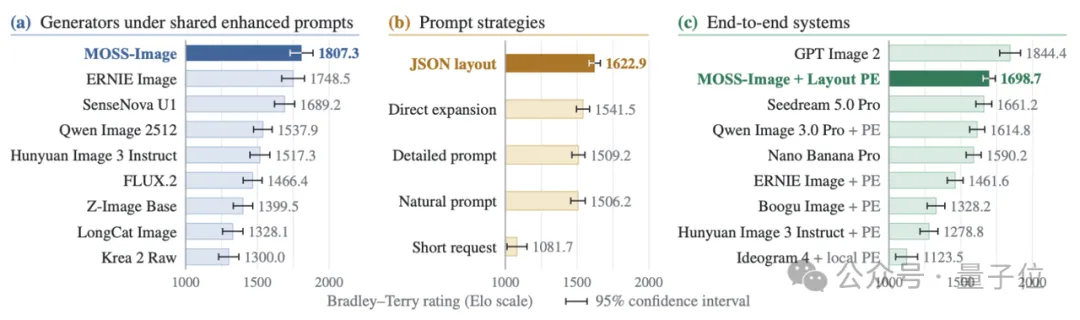
MOSS-Image also demonstrated solid competence in complex visual design tasks.
In RLA real-world design blind evaluations, given only brief design specifications, MOSS-Image attained an Elo point estimate of 1698.70, ranking second among tested models, trailing only GPT Image 2.
In another test group using unified enhanced prompts, MOSS-Image’s Elo point estimate rose to 1807.34, taking top honors and outperforming ERNIE Image and SenseNova U1.
The third core capability is support for ultra-long, complex prompts. MOSS-Image supports text conditioning inputs of up to 4,096 tokens.
While short prompts suffice for casual generation, professional design projects involving overlapping subjects, intricate spatial relationships, extended copy, dynamic camera angles, and nuanced art direction require long prompts to convey precise guidelines. Paired with structured layouts, developers can define both scene content and spatial topology simultaneously, substantially enhancing controllability.
To lower the barrier to writing long prompts, the OpenMOSS team introduced the MOSS-Image Prompt Enhancer Skill tool, which can expand a simple idea into detailed captions or structured layout prompts with a single click.
These three pillars—text rendering, precise layout control, and ultra-long prompts—clearly outline MOSS-Image’s technical direction: shifting image generation from freeform conceptual creation to demanding, highly controllable commercial visual design.
Under the hood, MOSS-Image utilizes a single-stream Diffusion Transformer (DiT) architecture pre-trained from scratch.
Its core DiT backbone features 5B parameters, coupled with a frozen Qwen3.5-9B text encoder and a FLUX.2 VAE, unifying text conditions and image latents into an end-to-end generative pipeline. Qwen3.5-9B handles deep text semantic extraction, FLUX.2 VAE encodes and decodes image latents, and the DiT backbone drives the core diffusion modeling process.
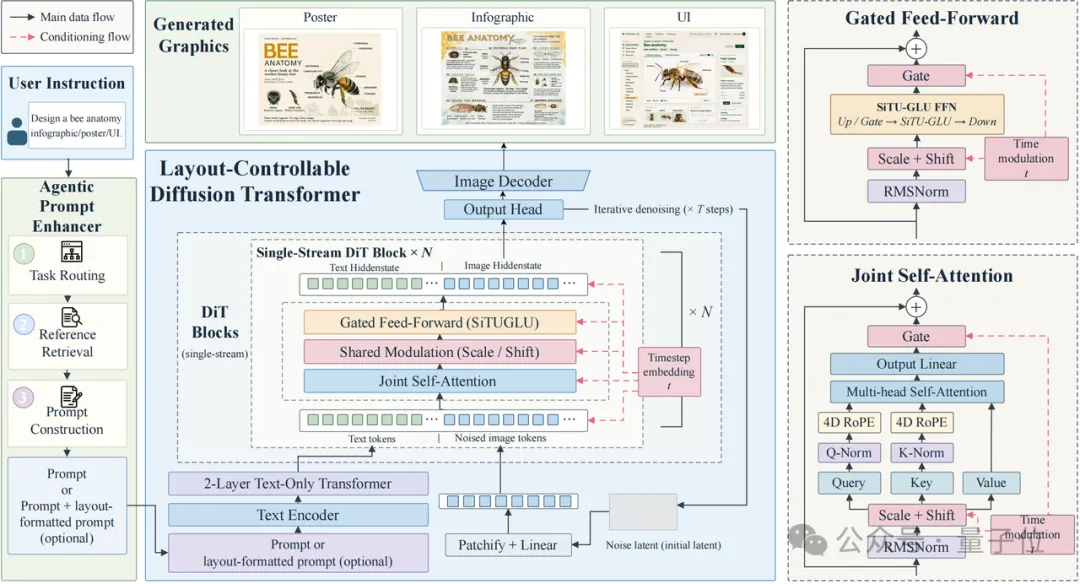
In terms of data curation, the team implemented meticulous deduplication and quality filtering, completely removing AI-generated images to preserve authentic photography diversity, while establishing fine-grained annotations for noise artifacts like watermarks and blur.
Another key engineering milestone disclosed by the team is that MOSS-Image was trained end-to-end on domestic Chinese PPU compute platforms. This provides valuable production-proven experience for training and adapting large-scale generative models across heterogeneous compute ecosystems.
Days After Open-Sourcing: Accelerated Builds, Quantized Versions, and Diverse LoRAs Emerge
For a brand-new open-source model, the speed at which the community built an ecosystem around MOSS-Image has been remarkable.
Developers initially focused on inference optimization.
While the official baseline configuration recommends 50-step sampling, the community rapidly explored few-step alternatives. Developers like Lodestone introduced a DMD-based 8-step accelerated setup, while Rapid-MOSS pushed it further down to 4 steps.
These solutions offer lightweight options for high-volume generation and fast ideation.
Other developers targeted edge deployment and inference acceleration.
INT8 quantization, GGUF formats, and MLX weight conversion pipelines quickly surfaced, alongside a steady stream of runtime-specific optimizations. These efforts significantly reduced VRAM overhead and boosted throughput, making local deployment feasible on personal workstations and lightweight tooling environments.
Meanwhile, community exploration into specialized LoRA fine-tuning took off. From vintage film grain and casual smartphone snapshots to gouache, anime illustrations, and pixel art, a rich assortment of style LoRAs emerged, validating MOSS-Image’s fine-tuning adaptability.
On ecosystem compatibility, day-zero support was achieved across Diffusers pipelines, official ComfyUI nodes, SGLang, and vLLM-Omni. Popular toolchains like Ostris AI Toolkit and sd-scripts followed suit promptly, providing a seamless pipeline from fine-tuning to production integration.
From base image generation to precise layout formatting and downstream editing, the workflow around MOSS-Image is maturing rapidly. Though these tools are still in early iterative stages, global community engagement has been extraordinary.
The MOSS-Image API is now officially live. Developers can call the image generation API directly without managing local hardware infrastructure, integrating it into existing products and production workflows.
In addition, general users can tap into MOSS-Image via MosMos, Mosi Intelligence’s desktop voice assistant, enabling creative image generation through real-time voice interaction.
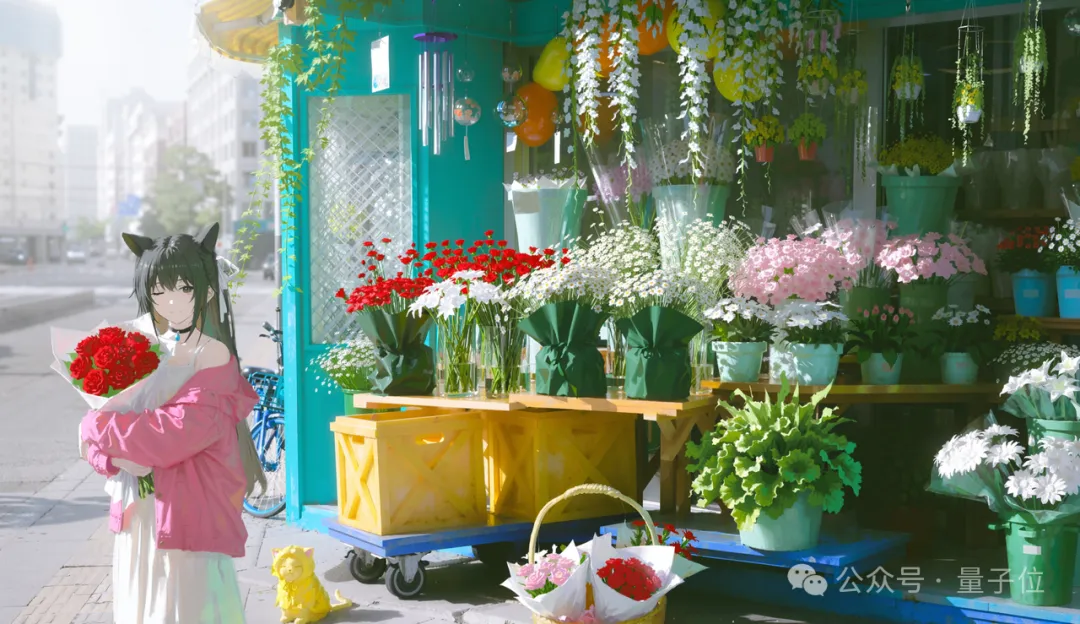
Below are selected community creations using MOSS-Image:
Notably, just 4 days before open-sourcing MOSS-Image, Mosi Intelligence announced that it had closed a Pre-A funding round exceeding 1 billion RMB.
According to funding disclosures, the round was led by Huakong Fund, with co-investors including CDB Venture Capital, Shanghai Science and Technology Innovation Center Capital (Shanghai STIC), Sinowisdom Capital, Xuhui Capital, Photon Hard Tech VC, and Lingang Ceyuan Fund. Existing shareholders such as Oriza Holdings, Shanghai Venture Capital (under Shanghai State-Owned Capital Investment), and Singlian Capital also continued to participate. Mosi Intelligence stated that proceeds will primarily support R&D and global commercialization of omni-modal real-time interactive intelligence, alongside ongoing exploration into AI-for-AI capabilities.
Beyond this breakthrough visual model, in the first half of 2026 alone, the MOSS team has open-sourced and shipped a matrix of over 20 models, spanning voice generation, visual perception, and multimodal understanding.
Among them, the MOSS-TTS family has surpassed 3 million global downloads. The team has also released the end-to-end video understanding model MOSS-VL and the multi-speaker transcription model MOSS-Transcribe-Diarize, designed for complex meeting environments.
Furthermore, the MOSS team plans to launch MOSS-Live, a full-duplex real-time interaction system, and MOSS-TTS 2.0, a next-generation speech synthesis model, aimed at elevating real-time interactive experiences across multimodal settings.
Evolving from individual benchmark breakthroughs to highly realistic interactive systems—and embedding productivity tools into complex real-world workflows—marks Mosi Intelligence’s strategic direction toward embodied intelligence.
- Project Repository: https://github.com/OpenMOSS/MOSS-Image
- MOSS-Image API: https://platform.mosi.cn/
- Model Weights:
- Technical Report: https://github.com/OpenMOSS/MOSS-Image/blob/main/paper/MOSS_Image_Technical_Report.pdf
- Desktop Voice Assistant MosMos: mosmos.io