
Breaking into the Global Physical AI Core Supply Chain
Meng Yao reporting from the Office
QbitAI | WeChat Official Account: QbitAI
Amid intense excitement surrounding Artificial General Intelligence (AGI) and Recursive Self-Improvement (RSI), even as Sam Altman pushes his frontier models to new heights, one thing remains indisputable: on the Physical AI track, OpenAI has navigated just as many detours as the leading embodied AI pioneers.
Looking back at 2020 to 2021, OpenAI’s ambitious robotics team experienced a wave of disbandment. One of the primary bottlenecks cited time and again back then was an extreme scarcity of high-quality training data.
Years later, however, the continuous evolution of the GPT series has not only catapulted language comprehension forward, but also unlocked remarkable multimodal capabilities: a general-purpose LLM can now directly manipulate robotic arms to execute embodied tasks like picking and placing.
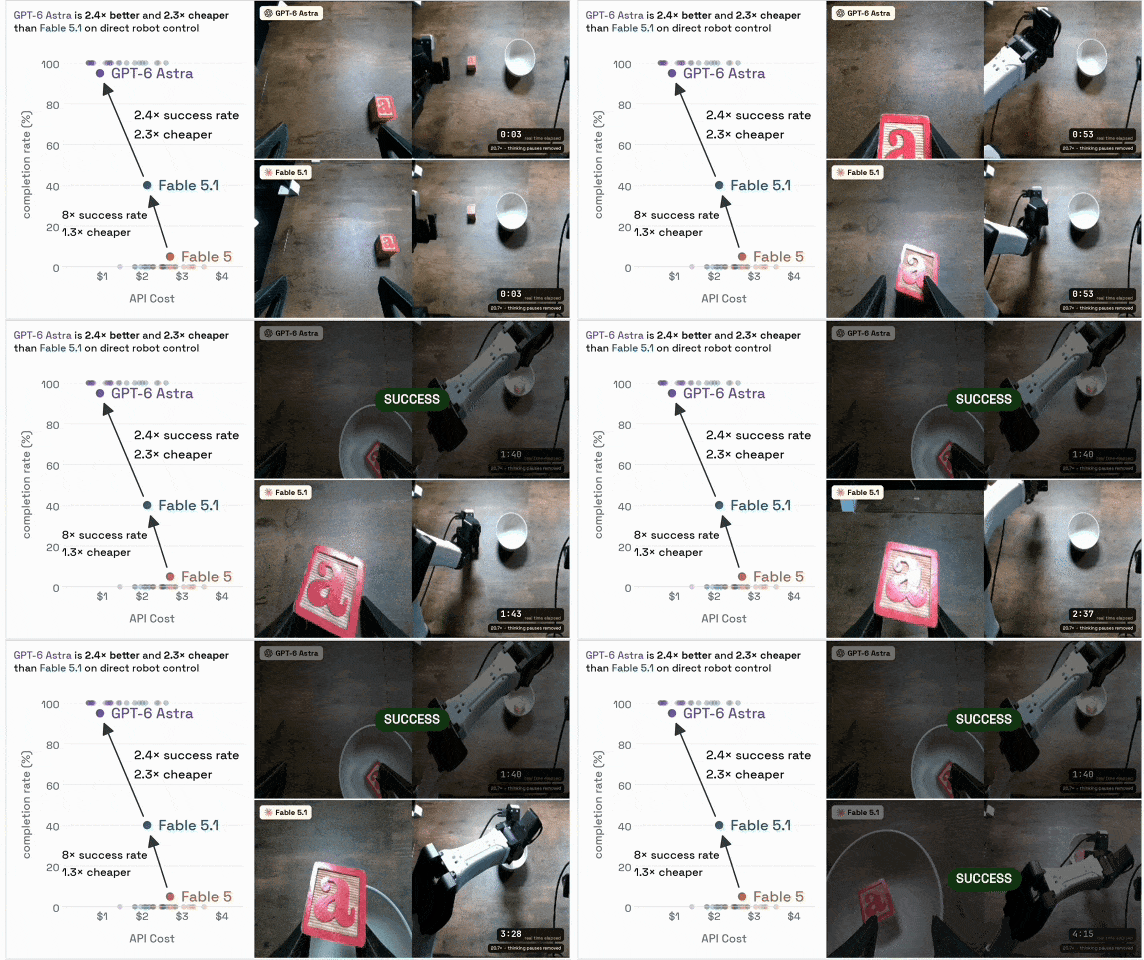
△ Source: US independent evaluation agency RoboCurve
How did OpenAI—once constrained by data bottlenecks—stage its comeback in robotics?
Delving through public reports and industry whispers reveals a clear trajectory: OpenAI had quietly been procuring large-scale egocentric (first-person perspective) datasets—a format that has recently taken center stage in Physical AI.
Although OpenAI has never publicly disclosed the identities of its data vendors, as the Physical AI track heats up, one startup has surfaced with increasing frequency across inner-circle industry discussions. It is no legacy tech giant, but rather a Silicon Valley startup founded just two or three years ago: Maxinsights.

A closer look at its client roster reveals that this startup has deeply embedded itself into the supply chain of global Physical AI heavyweights: Google DeepMind, Figure, 1X… virtually every marquee player is among its partners.
Even more striking, the company’s Annual Recurring Revenue (ARR) has held at or near the $100 million benchmark for several consecutive months. A young Silicon Valley startup has turned the physical task experience of thousands of real people across the globe into a scaled, cross-border industry spanning both the US and Chinese markets.
How did they make this ostensibly high-barrier data business work?
Delivering Over 2 Million Hours: Penetrating the Global Physical AI Core Supply Chain
In recent years, demand for large-scale egocentric data in Physical AI has surged exponentially, driven by a pragmatic reality: relying exclusively on physical robots to autonomously gather manipulation data incurs prohibitive hardware costs, protracted collection cycles, and strictly limited coverage of real-world scenarios.
Egocentric data bridges this critical bottleneck in embodied AI training pipelines. Human collectors simply wear head-mounted cameras to record fine-grained hand movements and human-object interactions during daily life in real time.
This paradigm slashes collection costs, vastly expands scene diversity, and eliminates reliance on fragile, expensive robot hardware, laying the groundwork for assembling massive datasets spanning tens of thousands—or even millions—of hours.

Yet while many players have ventured into egocentric data collection, only a handful of startups have actually penetrated the core supply chains of tier-one model developers. The data moat established by Maxinsights sets it decisively apart from typical market participants.
In its core data reserves, the company has scaled into the million-hour territory:
- Delivered over 2 million hours of cumulative data to clients;
- Possesses over 1.5 million hours of high-quality data equipped with high-precision hand tracking and multimodal linguistic annotations;
- Boasts a monthly data acquisition capacity of 450,000 hours, with a collection network spanning over 2,000 physical environments and covering more than 50,000 concrete scenarios worldwide.
Step by step, this young company has aggregated real human behaviors from across the globe into a massive data foundation for robotics training.

Of course, sheer volume is merely table stakes. The true litmus test lies in downstream customer demand and the measurable value the data brings to model capabilities.
Leveraging data accrued across tens of thousands of scenario categories, Maxinsights’ footprint spans six continents, including North America. Its client roster features the vanguard of embodied AI: Google DeepMind, Figure AI, Dyna Robotics, Genesis AI… all category-defining enterprises. In March this year, the company expanded further into the Chinese market, completing its global business loop.

More critically, this massive-scale delivered data has been systematically validated in the pre-training results of frontier robotics models.
Take Dyna-2, unveiled this August, as an example: Dyna Robotics leveraged 1 million hours of human egocentric manipulation videos for pre-training, guiding the model to learn the fundamental physical laws of real-world interactions. The experimental results verified a clear Scaling Law—as human egocentric pre-training data scaled from 1,000 hours to 1 million hours, Dyna-2’s mean squared error in predicting human actions decreased by approximately 12%. Even more crucially, when evaluated against entirely unseen robot morphologies not present in the training set, the model’s generalized predictive capability continued to improve as the volume of human video expanded. The primary supplier behind this pivotal 1 million hours of pre-training data was none other than Maxinsights.

Another prime example is GENE-26.5, a general-purpose robotics foundation model released in May this year by Silicon Valley star startup Genesis AI.
During its launch, the team showcased a challenging, continuous cooking workflow: the robot autonomously executed a complex, roughly 20-step cooking process in an actual kitchen—including slicing tomatoes, cracking eggs with one hand, and bimanual coordination—all without human intervention. Even more groundbreaking: for numerous complex composite skills, the model achieved autonomous, generalized execution with under an hour of task-specific robot demonstration data.
The underlying catalyst for this breakthrough was enabling the model to internalize physical priors embedded in vast quantities of human egocentric video and sensor data during pre-training.

What remains less widely known is that Maxinsights was also the exclusive egocentric data partner behind GENE-26.5.
Carving Out a $100M ARR Powerhouse from Global Foundation Model Budgets
In a Physical AI landscape flush with technical narratives, the true hallmark of a mature business model is the ability to transform compute and model demands into sustained, healthy cash flow.
Maxinsights’ recent financial and operating figures bear witness to its rapid commercial velocity.

Latest operational data indicates that in Q3 2026, Maxinsights’ bookings are projected to grow 48% quarter-over-quarter.
In embodied AI, consistent booking growth holds profound strategic significance: given the stringent quality requirements of robotics pre-training, sheer volume alone does not win contracts. When customers continually expand budgets, it signifies that the vendor’s data has successfully integrated into their training pipelines, reliably drives performance gains, and possesses the delivery resilience needed for next-generation, larger-scale foundation models.
Particularly for top-tier foundation model teams, a single training iteration often demands hundreds of thousands—or even millions—of hours of data, with exacting standards for diversity, annotation consistency, and delivery stability. Sustaining a nearly 50% QoQ growth rate on top of an already executed million-hour baseline is a testament to clients’ deep conviction in its long-term supply capabilities.

Another key financial metric is equally compelling: Maxinsights has maintained an Annual Recurring Revenue (ARR) at or near $100 million for several consecutive months.
ARR reflects annualized, highly repeatable recurring cash flows backed by strong contract renewal rates. Holding an ARR near $100 million over multiple months demonstrates that the company has evolved beyond one-off, project-based procurement to establish a high-certainty revenue flywheel.
In the growth trajectory of software and AI companies, a $100 million ARR is widely recognized as a watershed mark of maturity, demonstrating that a company has successfully navigated initial technical and flagship-customer validation and entered full-scale expansion.
Behind this scale lies the establishment of a powerful data flywheel: Physical AI data infrastructure exhibits immense economies of scale. The more core clients served, the richer the accumulated real-world interaction scenarios and engineering know-how become. Richer and more precise data directly translates to superior generalization in downstream embodied models. In turn, proven model performance drives clients to continually scale up orders—creating a self-reinforcing virtuous cycle.

△ AI-generated
This performance fundamentally shifts industry perceptions of AI data providers.
Historically, data procurement across embodied AI, simulation, and autonomous driving carried a heavy project-based flavor: clients would buy a batch of synthetic or labeled data for a specific model cycle, and once training converged, the procurement lifecycle concluded. This transactional, pay-per-project model subjected data startups to wild revenue swings, making it difficult to accumulate lasting, scalable enterprise value.
By converting data services into compounding monthly ARR, Maxinsights has overcome this structural headwind. Through a diversified client portfolio, deep pipeline integration, continuous multi-modal data delivery, and robust self-funding capabilities, it has erected a formidable business moat.
Beyond Data Supply: Co-Defining Next-Gen Data with Foundation Model Teams
Beneath the frenzy of procurement across Physical AI lies an overlooked problem: the data specifications clients purchase today may not fully satisfy the evolving demands of next-generation agents.
As foundation model architectures advance at breakneck speed, identifying what physical laws embodied AI must learn next—and which data modalities remain missing—is an open exploratory question even for the world’s leading research teams as they train, benchmark, and iterate concurrently.
Addressing this industry challenge, Maxinsights positions itself not merely as a passive “data vendor,” but as an active architect of Physical AI data infrastructure, collaborating with cutting-edge foundation model teams to define the industry’s next-generation data standards.

Today, Maxinsights serves nearly 50 enterprise clients worldwide, including five universally recognized top-tier institutions.
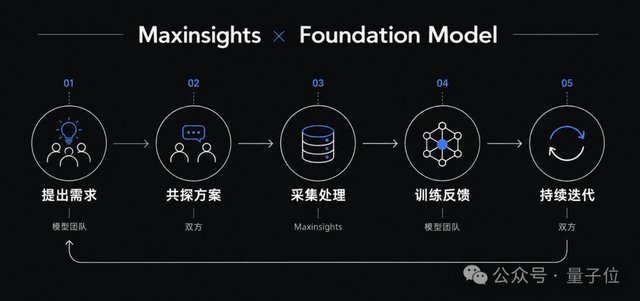
Its commercial strategy displays a distinctive co-development dynamic: the team typically initiates deep joint exploration with leading clients, refining novel data pipelines against the most demanding technical benchmarks. Once a robust, standardized suite of data products takes shape, they propagate these battle-tested solutions across the broader ecosystem.
Take Maxinsights’ early collaboration with Google DeepMind: the two teams began by exploring bare-hand egocentric data capture, scaling from an initial ~200-hour proof of concept to full-pipeline engineering and industrial-grade delivery volumes.
This engagement transcends a conventional transactional vendor-client relationship: the modeling team formulates forward-looking hypotheses, both parties vet capture methodologies and sensor configurations, and Maxinsights deploys global collection and automated processing pipelines, rapidly tuning data specs based on downstream evaluation feedback.
This co-research paradigm has now expanded across emerging data dimensions, including text-action alignment (Text), upper-body coordination (Upper Body), full-body kinematics (Full Body), and Universal Manipulation Interfaces (UMI).
△ AI-generated
The capability to address the rigorous demands of premier institutions stems from the technological foundation Maxinsights has built in data collection and spatial computing:
- Full-Body Kinematics: The team successfully reconstructs 3D full-body motion trajectories directly from monocular egocentric video. While precisely tracking bimanual motion capture and object contact states, the system reliably solves for 3D human body poses, broadening the robot’s learning scope from isolated end-effector manipulation to whole-body coordinated gross motor tasks.
- Upper-Body Control: Technical development extends to multimodal joint representations bridging “action-space-semantics.” From brewing coffee to handing over objects, every micro-step is aligned with high-level natural language instructions and low-level spatial topologies, furnishing high-fidelity demonstrations for training Vision-Language-Action (VLA) foundation models.
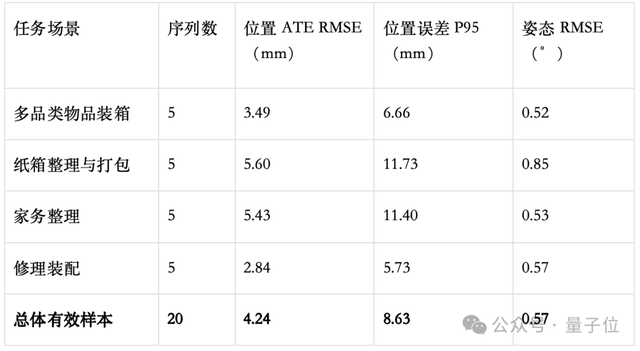
- High-Precision Spatial Perception: Maxinsights developed MaxSLAM, a proprietary spatial perception model capable of reconstructing subtle 3D camera displacements with millimeter-level accuracy, precisely capturing the relative spatial movements behind tidying, assembly, and precision repair. Benchmarked across 20 highly dynamic manipulation sequences spanning four canonical task categories, MaxSLAM achieved a trajectory position error of just 4.24 mm and an orientation angle error of only 0.57°.
Looking back at Maxinsights’ growth trajectory, its significance reaches well beyond the commercial success of an individual company.
In the current industrial cycle, Physical AI data acquisition has turned into a high-stakes battleground drawing heavy investments from global tech giants and premier venture capital. Yet amidst the fervor, firms capable of balancing delivery scale with cutting-edge quality—while cementing high-retention partnerships with world-class model builders—remain exceedingly rare.
From scaling deliveries to millions of hours, to serving as a critical data partner for leaders like OpenAI, Google DeepMind, and Figure AI, to co-defining next-generation data paradigms, Maxinsights exemplifies the ascent of an embodied AI data infrastructure leader.
While the timeline for General Physical AI to fully permeate everyday industry and life remains an open question, along the foundational supply chain empowering agentic evolution, trailblazers with sharp technological foresight and relentless engineering execution have already secured an indispensable niche.
Anticipating the tide before it turns, and realizing ambition through execution: Maxinsights’ commercial breakthrough serves as the definitive footnote to this principle.