
What FDE Means at OpenAI | OpenAI
October 22, 2026
What we do, how we collaborate, and how we tackle enterprise’s toughest challenges to drive real impact.
By Colin Jarvis, Head of Forward Deployed Engineering (FDE) at OpenAI
When Codex launched, someone on the team asked me, “What do we do if Codex can one-shot the use cases we spent months building?”
That question cuts straight to the core of what FDE means at OpenAI. We work shoulder-to-shoulder with customers, understand their hardest problems, and build solutions they can rely on. What we learn helps shape our products and provides our Research team with the real-world problems that actually need solving.
That’s progress. If we obsolete ourselves every few months, it means our FDE team is doing its job right.
I started this team in early 2025 to close what we call the “deployment gap”: the divide between what models appear capable of on the surface, and what people can reliably put to work in practice.
A diagram illustrating the deployment gap between available AI intelligence and business value.
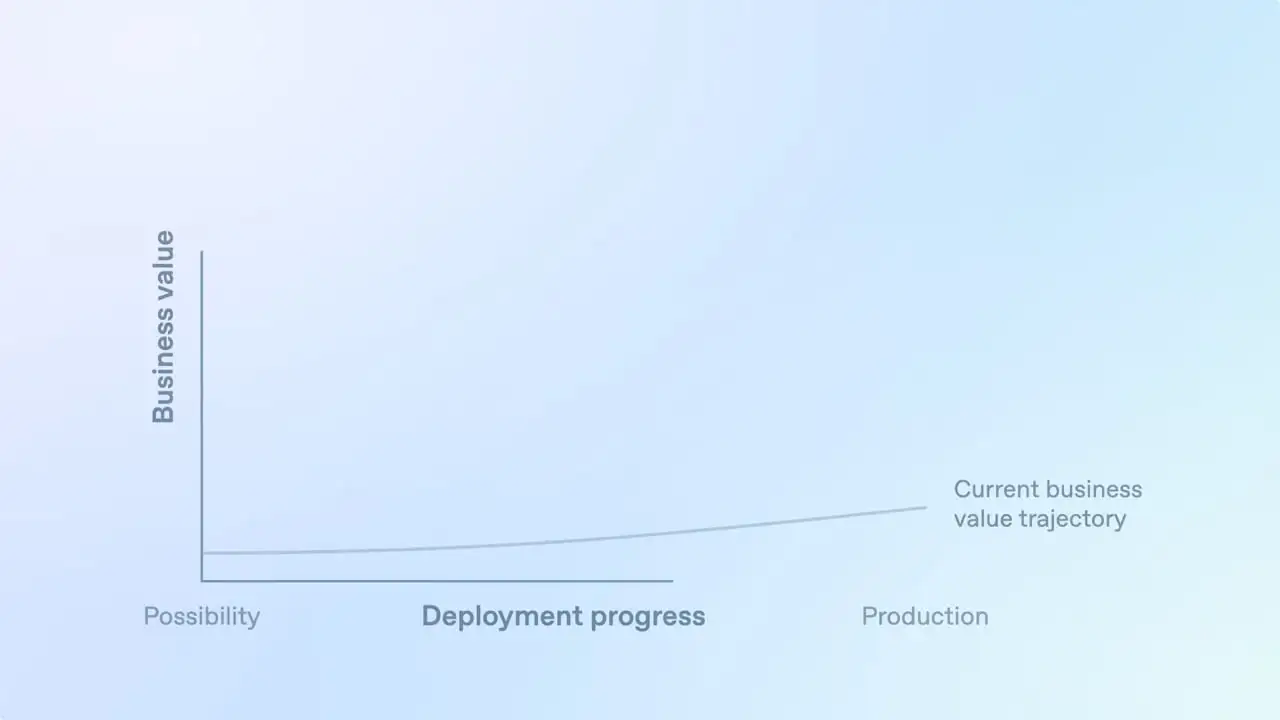
Model capabilities are advancing faster than the systems and processes needed to put them into production. Sometimes what’s missing is a product; other times, a model aces benchmarks but falls apart against real-world variables and constraints.
We focus on our customers’ hardest problems. Where existing models can handle the job, we partner with product teams and customers to make the solutions repeatable. Where models fall short, we collaborate with customers and Research to pinpoint the gaps and improve them. Our goal is for every engagement to raise the baseline for the next customer—if we can raise the floor enough that a customer can solve similar problems next time without an FDE’s help, we’ve done our job.
John Deere, a 200-year-old agricultural enterprise, faced the challenge of delivering personalized recommendations to farmers at scale.
One example is its precision spraying technology, See & Spray, which uses cameras and machine learning to identify and target weeds directly rather than broadcast spraying entire fields, reducing chemical usage by up to 70%.
Unlocking those benefits, however, depends on whether farmers know how to configure the technology, plan their seasons, and adjust operations as conditions change.
John Deere deployed OpenAI’s APIs to help make that support both personalized and scalable.
AI can answer farmers’ questions in natural language, offer tailored setup guidance and recommendations, flag when equipment isn’t operating at its full potential, and help farmers understand the tangible value they are getting from the technology.
The opportunity goes far beyond a single interaction: it is about providing relevant guidance across the entire customer journey, helping farmers get more out of their machinery while boosting efficiency and sustainability.
This is precisely the challenge OpenAI FDE is built to solve: helping enterprises move from simply having AI capabilities to building systems that deliver real value in complex, real-world environments.
Yet these problems are often wide open, with no established ground truth and no proven playbook. Everyone wants to build what has never existed before, but few are willing to do what it takes to bring it to life.
Finding exceptional FDE talent while constantly raising the bar requires relentless experimentation and hands-on practice.
Start with the outcome
At the start of every FDE all-hands, I share a slide with our core values: “Start with the outcome, do whatever it takes to get there, then scale.”
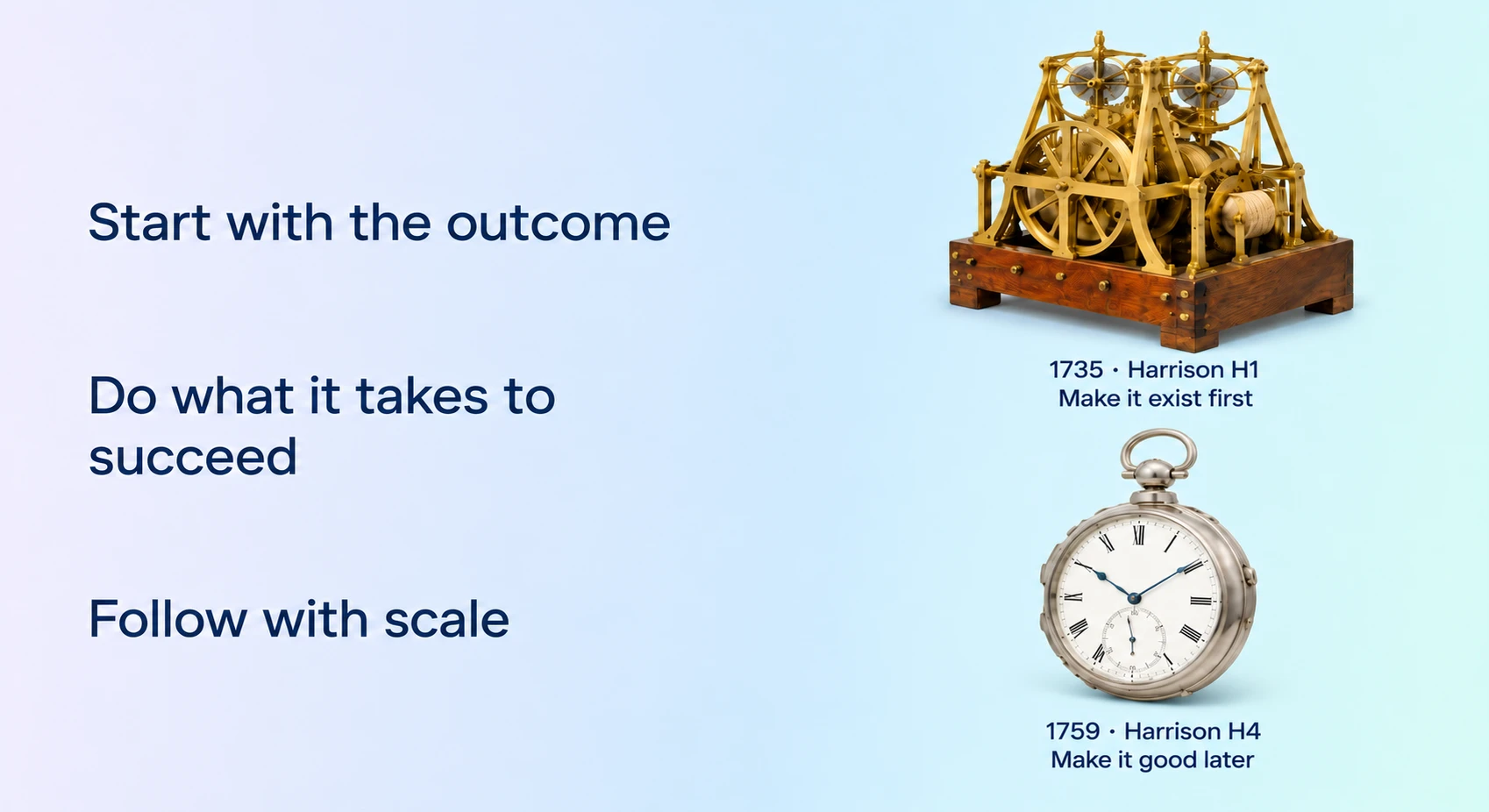
A flashy demo can capture attention for a long time—until someone asks if it actually works in production.
Our job is to solve customer problems at production-grade standards.
In mid-2025, around 15 FDEs partnered with a major semiconductor customer across more than 10 use cases. The goal was to make their chip verification pipeline AI-native, spanning:
- Directed test generation
- Root cause analysis and debugging
- An architecture assistant
In that industry, verification can account for roughly 70% of a project’s total effort. The opportunity was massive, and so was the surface area to tackle.
Some of the FDEs were just days into OpenAI and had never touched semiconductors before. They embedded directly within the customer’s verification teams, studied chip design on their own time, and co-built evals with engineers to test whether AI could generate high-value test cases and accurately diagnose chip failures.
Learning on the fly, we built custom test harnesses tailored to each use case. Within the first 3 to 6 months, every use case was live in production and seeing early adoption. The results showed up directly in the metrics:
- ~48% time saved via AI-based directed test generation.
- 22% median performance improvement through kernel optimization.
- Debugging cycles compressed from weeks to hours.
When we presented the results, the customer’s Chief Hardware Officer asked, “Did any of you do chip design before coming here?”
Our FDEs don’t need to be domain experts on day one, but it is their job to go deep.
As coding assistants make building software faster than ever, understanding customer domain logic becomes increasingly critical. We build our team with a balance of generalists and domain specialists.
You need enough knowledge to exercise sound judgment, and enough curiosity to challenge baseline assumptions.
In life sciences, for instance, FDEs with scientific backgrounds earn the trust of researchers working in preclinical drug discovery on tasks like target validation and prioritization, gene expression analysis, and retrosynthesis. That domain background allows them to offer sophisticated insights that push those workflows forward.
Make success repeatable
We had proven that these workflows could deliver value, but every use case still required…