
A Quantum Leap in Medical AI
By Luyu, reporting from the Office
QbitAI
Am I the only one who does this?
Now, before every hospital visit, I always have AI organize everything for me first.
Where it hurts, how long symptoms have lasted, past medical history… all these scattered details are neatly sorted out during the pre-consultation stage.
Yet when sitting down face-to-face with the doctor, it turns out the physician is also vibe working:
AI agents assist with clinical diagnosis, while follow-ups and health data management outside the consultation room are handled end-to-end by AI as well.
While it might sound cyberpunk at first glance, this is already an everyday reality taking place right beside us.
The Institute for AI Industry Research (AIR) at Tsinghua University, founded by Academician Ya-Qin Zhang, recently incubated another standout healthcare AI company—Zijing Zhikang (Tairex).
Its “Zijing AI Hospital” (Agent Hospital) system is currently undergoing pilot testing across hospitals in multiple regions nationwide.
Even more futuristic: here, every physician can have a dedicated “AI digital twin” to assist in daily diagnosis and treatment. But that is far from the whole picture.
Take routine hospital visits as an example: a single condition often involves multiple distinct departments. Yet medicine has always demanded deep subspecialization—you certainly wouldn’t expect an orthopedic surgeon to treat lung disease.
So, once physicians across different specialties each have their own AI digital twins, can these agents collaborate across disciplines?
Tackling this core pain point, Zijing Zhikang recently introduced its Multidisciplinary Human-Agent Collaboration technology tailored for healthcare, alongside a comprehensive upgrade to its “Zijing AI Hospital” (Agent Hospital).
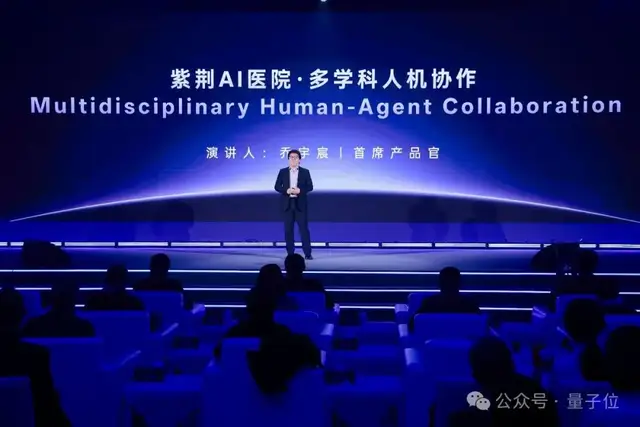
Inside the AI hospital, AI physicians and human doctors work in close tandem… a virtual medical world that bridges real-world care and evolves continuously is quietly taking shape.
Bringing Multidisciplinary Expertise into a Single Consultation Room
Let’s start with a chronic industry pain point.
Healthcare consistently faces an unavoidable reality: high-quality medical resources are perpetually scarce.
Physicians specialize in distinct areas, and every hospital operates under finite capacity.
For patients whose conditions span multiple clinical departments, the traditional care journey has always been exhausting:
First registering in internal medicine, finding no clear answers, transferring to surgery, consulting a surgeon, and then scheduling imaging appointments; after bouncing between departments, they finally—if lucky—secure a formal multidisciplinary team (MDT) consultation.
This tedious ordeal risks missing optimal treatment windows, and organizing an MDT consultation is inherently expensive—merely coordinating the schedules of specialists across multiple departments demands tremendous logistical effort and financial cost.

Zijing Zhikang’s approach is straightforward: if having patients bounce between specialists isn’t practical, why not bring the AI digital twins of those specialists together upfront?
For common conditions handled within a single specialty, a single AI twin suffices, effectively embedding the expertise of top-tier specialists into routine outpatient clinics to provide attending physicians with real-time recommendations.
For complex, multidisciplinary cases, Zijing Zhikang has built a multidisciplinary collaborative deliberation mechanism across specialized AI agents.
As agents specializing in different fields step in to analyze the case, the attending physician gains access to an exponentially broader spectrum of professional perspectives.
Orchestrated under a unified operating system, the AI agents deliver deep, intra-specialty support while enabling seamless cross-disciplinary collaboration.
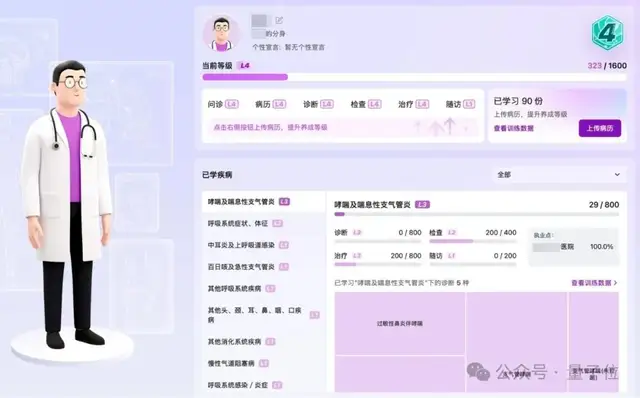
For instance, when a hyperthyroid patient visits the endocrinology clinic, the system detects a concurrent history of asthma during the consultation.
For endocrinological treatment, subsequent medication plans must thoroughly account for potential impacts on the respiratory system.
At this point, a pulmonology AI agent steps in proactively, alerting the physician to specific contraindications and drug-interaction risks.
This is the core rationale of multidisciplinary multi-agent collaboration: it shifts cross-specialty expert support upstream into initial consultations and even pre-visit screening.
In other words, the moment a patient steps into the clinic, a multidisciplinary “expert panel” is already working behind the scenes. MDT consultations—once reserved strictly for critical or rare cases—can now become a standard feature of routine outpatient care.
In terms of collaboration modes, Zijing Zhikang offers two distinct workflows:
First is the On-Demand Alert Mode.

The physician conducts the visit at their normal pace while the system runs quietly in the background. Once new patient data indicates the need for cross-specialty input, recommendations from the relevant specialist agent appear as non-intrusive alert cards—never interrupting the natural flow of care.
Second is the Consultation Mode.
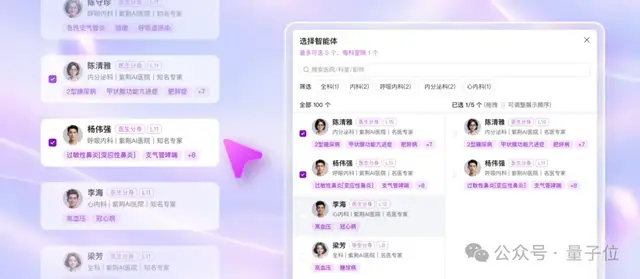
For complex cases explicitly requiring joint analysis, multiple specialty agents join a shared workspace to provide synchronized insights across differential diagnosis, combination therapy, and other critical clinical decisions.
Physicians can then leverage their own clinical expertise to weigh and synthesize perspectives from all sides.

Yet diverse inputs bring a new challenge: What happens when AI agents disagree?
To address this, Zijing Zhikang took an insightful, almost counterintuitive approach:
Rather than forcibly smoothing over disagreements or flattening conflicts under the hood, the system puts discrepancies front and center in an objective, transparent manner.
The platform displays recommendations from each agent separately, highlighting discrepancies. The attending physician can trace the origin and evidence base behind every opinion, making the final call by combining patient vital signs with their own clinical judgment.
In serious medicine, differences and divergences themselves hold immense clinical value.
As an internal medicine clinician noted, the greatest clinical value of AI today lies in eliminating blind spots:
When an AI recommendation differs from my initial impression, I review the input data to identify why.
If the clues in the chart lead it to a completely different conclusion than mine, that is precisely where the real value lies.
It forces me to be more rigorous in my differential diagnosis and determine which hypothesis truly fits the patient’s condition.
Ultimately, multidisciplinary agent collaboration is designed to help clinicians deepen their clinical deliberation.
Compared to other medical agents on the market, Zijing Zhikang provides a more comprehensive cross-specialty lens while keeping the clinical reasoning chain transparent and traceable—forming its core technical barrier.

Multi-agent collaboration has emerged as a key frontier in the global evolution of healthcare AI.
For example, Microsoft’s MAI-DxO study built a virtual clinical team to simulate medical history taking, generate diagnostic hypotheses, and recommend diagnostic tests, investigating how to balance diagnostic accuracy against healthcare costs.
Zijing Zhikang takes this further by strengthening the digital twin connection between the AI agent and the individual human physician.
While equipped with foundational clinical capabilities, the AI twins continuously learn from an individual physician’s practice style and clinical experience to evolve in a personalized way—firmly placing ultimate clinical authority back in the hands of frontline doctors.
In this sense, multidisciplinary collaboration dismantles the tired narrative of “AI replacing doctors,” effectively stationing an on-demand multidisciplinary panel of specialists behind every physician.
Laying the Groundwork: Enabling AI Twins to Continuously Evolve
Keeping hundreds of AI twins online, functioning reliably, and performing distinct roles demands a robust, integrated algorithmic and engineering architecture.
How agents acquire clinical knowledge, interpret dynamically changing patient signs, adapt to a physician’s workflow habits, and integrate seamlessly into existing hospital IT systems—every link directly dictates real-world efficacy.
This was the foundational impetus behind Zijing Zhikang’s development of the Zijing AI Hospital ecosystem.
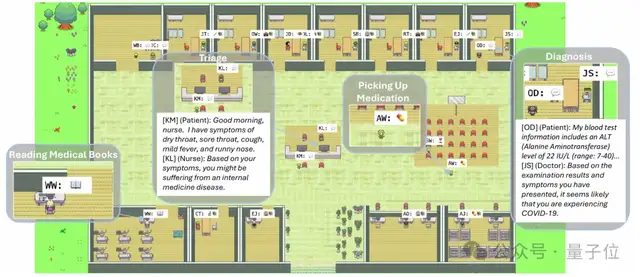
The industry has seen similar explorations into medical agent platforms, such as Microsoft’s Healthcare Agent Orchestrator, which coordinates specialized agents to process health data and construct workflows for complex scenarios like oncology tumor boards.
Zijing AI Hospital differentiates itself by enabling its AI twins to undergo organic, endogenous growth directly through real-world clinical practice.
This core technological approach stems from the SEAL mechanism (Simulacrum-based Evolvable Agent Learning) proposed by Professor Yang Liu’s team at AIR when creating Agent Hospital.
It is a two-tiered evolutionary framework: “virtual world training + real-world validation and fine-tuning.”
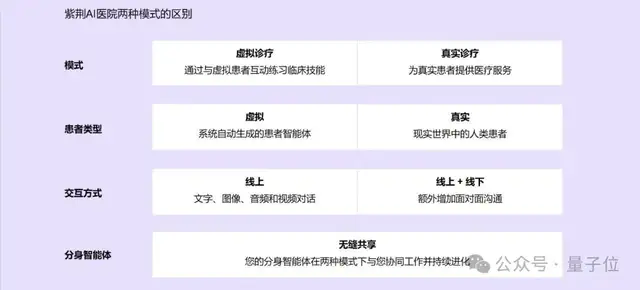
Inside the virtual simulation environment, patients, physicians, and nurses are all played by agents.
AI doctors undergo high-intensity simulated clinical encounters with millions of high-fidelity AI patients seeking care, creating a closed-loop virtual healthcare world.
Successful clinical cases are preserved in an expert case repository as benchmarks for future tasks. Whenever deviations or errors occur, agents automatically run retrospectives, reflect, and distill takeaways, gradually formalizing reusable clinical reasoning rules.
Within days, AI doctor agents can navigate hundreds of thousands—even millions—of cases, comprehensively rehearsing rare diseases, complex comorbidities, and diverse disease progressions.
Analogous to AlphaGo’s self-play mechanism, AI physicians continuously self-iterate within the virtual hospital. While their professional competence improves steadily, the computational cost is orders of magnitude lower than end-to-end retraining of traditional large language models.
However, early AI trained intensively in virtual settings has its limitations: it tends to consider every variable and possibility too exhaustively.
Yuchen Qiao, Chief Product Officer of Zijing AI Hospital, shared a real-world clinical example:
The AI initially recommended a medication that was theoretically optimal in efficacy. However, after considering the patient’s financial situation, the attending physician switched it to a more cost-effective, insurance-covered alternative.
Consequently, grounding the model in real-world clinical practice is essential.
Through real-world clinical cross-validation and symbiotic growth, the system pairs AI twins with human physicians and feeds real clinician decisions back into the model for internal fine-tuning.
The agent must not only act like a physician in execution; its clinical reasoning must also align with that of real human experts.
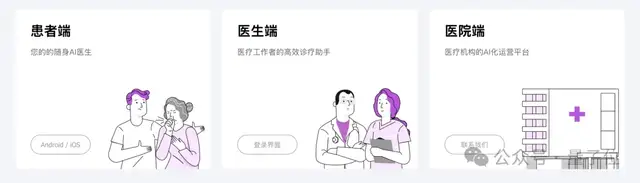
In deployment, Zijing AI Hospital spans three operational portals: Doctor, Patient, and Hospital.
The Patient Portal handles intelligent pre-consultations, health records management, and rehabilitation follow-ups. The Doctor Portal delivers personalized AI twins, automated clinical documentation, and clinical decision support. The Hospital Portal manages cross-department scheduling, access control, and end-to-end data compliance.
This tripartite architecture deploys the underlying technology stack to different stakeholders. Expanding on this foundation by integrating specialized toolchains and industry partners marks the next phase of evolution.
The platform has already posted its first wave of clinical results:
As of July 2026, the system has developed 54 specialized AI physician twins and millions of high-fidelity AI patients, covering thousands of common and complex diseases.
At Beijing Tsinghua Changgung Hospital, 18 clinical departments have initiated routine outpatient testing, with over 40 frontline physicians using the system on a daily basis, boosting overall clinical efficiency by 30%.
In benchmark evaluations, the AI physician achieved an accuracy exceeding 96% on the MedQA benchmark and scored top marks across multiple authoritative international medical evaluations.
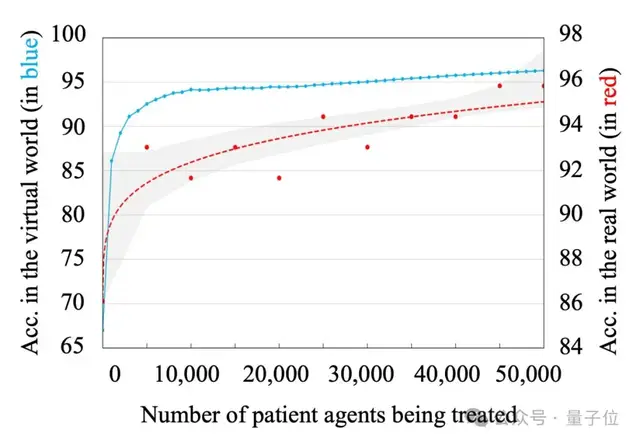
The next challenge is scaling this cutting-edge specialty technology across broader healthcare networks to benefit primary care and the general public.
The Next Step: Bringing AI Hospitals to the Masses
Looking back at the industry’s evolution over recent years, healthcare AI has largely operated in isolated silos.
Whether tech vendors or partner hospitals, the standard approach was typically to target single, isolated tasks—such as medical imaging analysis, clinical note structuring, or triage chatbots.
Clinical care, however, is an inherently complex systems engineering challenge characterized by interlocking steps and multi-stakeholder interactions.
What the industry has lacked is a production-grade, AI-native system capable of connecting specialized roles and unifying pre-, peri-, and post-consultation workflows.
This vision was not neglected for lack of interest, but because the barrier to entry is exceptionally steep: very few teams possess the rare combination of cutting-edge AI algorithms, clinical depth, and complex systems engineering.

This reflects a systemic structural divide shared by academia and industry alike:
Elite universities like Harvard, MIT, and Stanford boast deep research ecosystems in frontier medical AI, yet translating lab breakthroughs into frontline clinics runs into severe systems engineering hurdles;
Top-tier medical institutions such as the Mayo Clinic, Toronto General Hospital, and the Cleveland Clinic command rich clinical data and diverse patient cohorts, but lack the proprietary software and hardware engineering muscle to build an AI-native operating system from scratch;
And while Silicon Valley AI tech giants move faster, healthcare is merely one of many verticals in their portfolios; they often lack the dedicated focus required for systematic clinical innovation and must spend years navigating healthcare compliance.
Bridging these worlds is prerequisite to making production-grade, AI-native healthcare systems a reality—and it is precisely why Zijing Zhikang has secured its place in the top tier (Tier 0).
Incubated just two years ago by the Institute for AI Industry Research (AIR) at Tsinghua University, Zijing Zhikang might seem like a newcomer in an industry where R&D cycles are measured in decades.
Yet the team’s technical heritage runs deep, with core members rooted at the forefront of AI-driven healthcare for years:
Key breakthroughs have been published in premier international journals such as Nature Medicine and NEJM AI;
Among them, their 2024 paper on Agent Hospital drew worldwide academic acclaim, recognized as the “world’s first self-evolving AI hospital”;
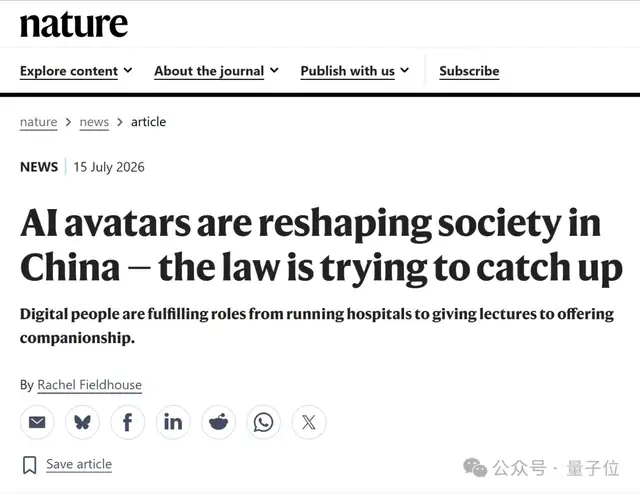
Their technical implementations received in-depth feature coverage from Nature, spotlighted as a landmark case study for AI digital twins empowering serious medicine.
Zijing Zhikang represents a quintessential paradigm of deep industry-university-research integration and translational commercialization.
From theoretical foundations at Tsinghua AIR to top-tier publications and real-world clinical deployments, the team is systematically translating algorithmic breakthroughs into tangible productivity tools that benefit both grassroots clinicians and patients.
One More Thing
Throughout this product unveiling, Zijing Zhikang demonstrated a compelling product philosophy.
“Great virtue carries all things.” Inheriting Tsinghua AIR’s ethos of tech for social good, Zijing Zhikang places medical ethics and human-centric care at the center of its algorithmic and system evolution.
The team emphasizes that through algorithmic value alignment, rigorous medical ethics and humanistic principles are translated into quantifiable, constrainable preferences within the underlying models.
This means the boundaries of human-agent collaboration are anchored at the architectural core: staying strictly human-centered and resolutely positioning AI as a tool for clinical assistance and collaborative decision-making.
In building its multi-agent ecosystem, the platform avoids the blind pursuit of an omnipotent, monolithic “Super AI”. Instead, it respects and preserves the specialized diversity and nuanced experience of distinct medical agents—synthesizing collective intelligence.
In practical healthcare settings, this means top-tier clinical intelligence can trickle down to underserved county-level and rural areas, granting grassroots general practitioners and rural clinics real-time access to specialist-level decision support and realizing the true promise of democratized healthcare.
Needless to say, this path is far from easy. Rigorous ethical compliance reviews and the restructuring of clinical consultation habits must be refined through thousands of real patient interactions.
The roadmap chosen by Zijing Zhikang—“from virtual simulation into real outpatient clinics”—may seem longer, but it is undoubtedly the most grounded.
One thing is certain: with every piece of precise collaboration delivered to the clinician, patients are spared another detour on their journey to healing.
When every life receives better care, the true value of technology is realized.
Official Website: https://www.tairex.cn/