
Claude Mods are an early glimpse of the Attention Interface. They completely invert the paradigm of the agent harness—transforming it from a machine-facing harness into a human-facing one.
Oct 21 · 10 min read
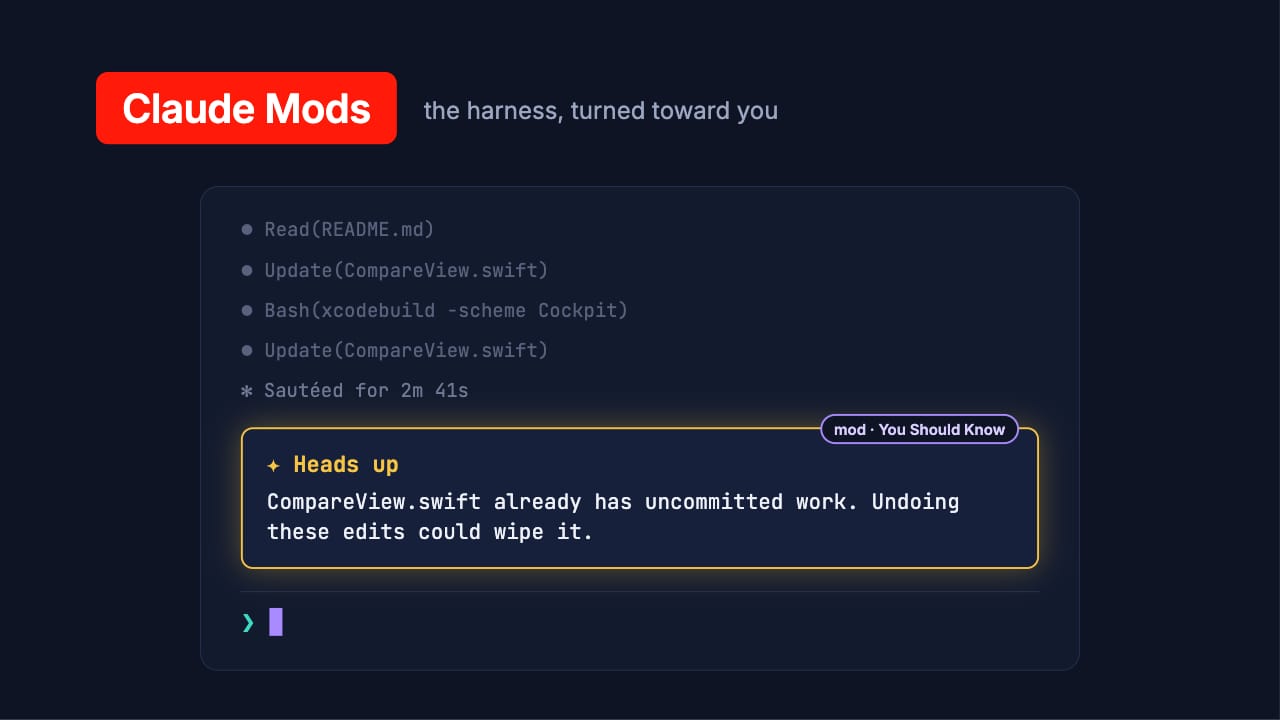
Over the past few weeks, I’ve been using Claude Mods to shape Claude Code around my personal AI engineering workflow. Claude Code is fantastic out of the box, but every engineer works differently. Claude Mods allow you to craft Claude Code tailored precisely to how you allocate your attention.
Allocating Attention Is Now What Matters Most
In a recent Latent Space post, “The Evolution of the Agent Harness”, I argued that as model weights absorb more and more harness capabilities, what remains unabsorbed directly faces the human. It evolves into the Attention Interface: the layer that determines when the agent interrupts you, what it shows you, and what decisions it asks you to make. Claude Mods are an early version of the Attention Interface, and you can shape it yourself.
My prediction is that ultimately, the harness will become the platform upon which other companies build their businesses, with underlying models serving as the engine. Just as browsers became the platform for web applications, harnesses can become the platform for interfaces between humans and agents.
What Are Claude Mods?
A Mod is a type of Claude Code plugin, consisting of TypeScript or JavaScript functions that run inside Claude Code. These functions customize the behavior and appearance of both the CLI and desktop interfaces. Mods react to events, such as prompt inputs, tool calls, or UI rendering. They can listen to events, alter how things are rendered, and intercept default behaviors to handle them directly.
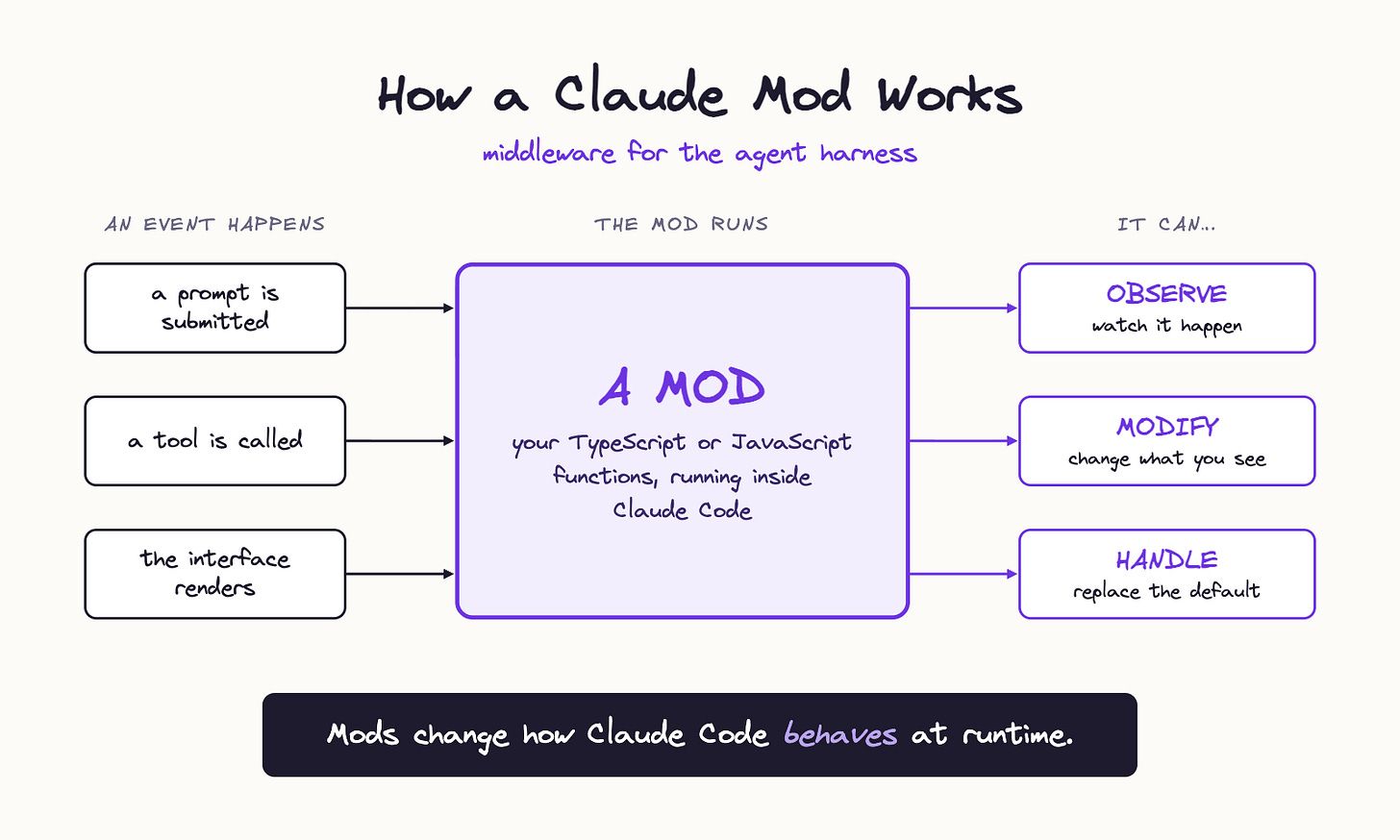
Claude Mods are middleware for the agent harness. They inject code to alter Claude Code’s execution and rendering pipeline, thereby changing how the application behaves at runtime.
Claude Mods allow developers and agents to co-build the human-facing parts of the harness. You can now collaborate with Claude to design how Claude interacts with you. That is the essence of the Attention Interface.
A Complete Inversion of Harness Direction
Agent harnesses originally emerged as an interface between the agent and the machine it runs on. You prompt the agent, and the agent issues commands, edits files, and calls tools. Today, it is evolving into a bridge for agents to interact with humans.
Claude Mods let you invert the direction of the harness. Instead of pointing from agent to machine, you redirect it from agent to human operator, turning the harness into an interface to human attention.
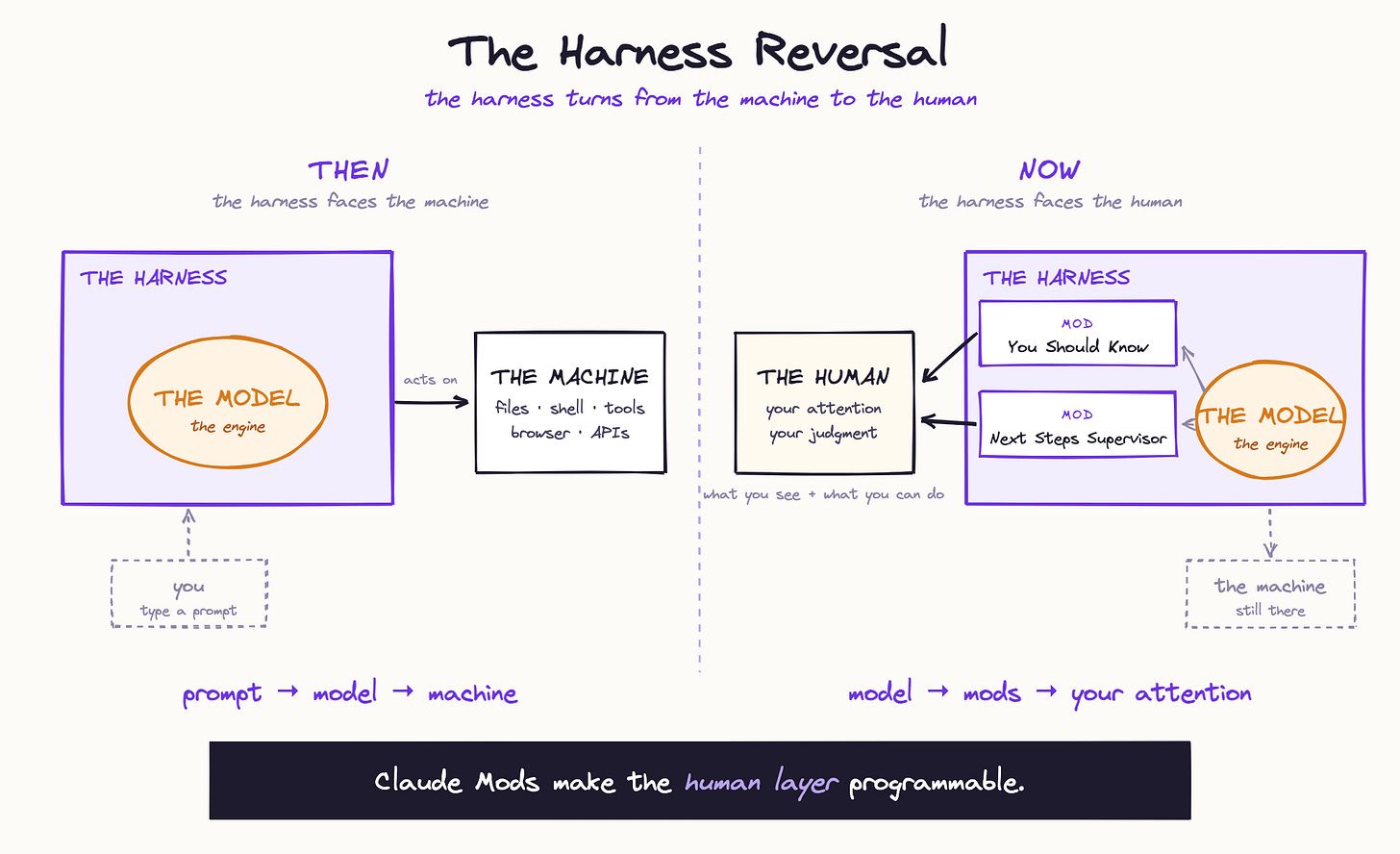
Claude Mods make the human layer programmable—and written by the very humans who use Claude.
Claude can also write Mods for you. Claude Code comes with a built-in skill that teaches it how to build Mods. So, you can simply describe what you want in natural language, and Claude will build it for you.
Mods in Practice
Part of Claude Code is already built out of Mods. Anthropic ships six of them built-in. You can run /plugin and view Installed to see them listed under Built-in:
- agents-md: Loads AGENTS.md as project instructions.
- diff: Intercepts
/diffand renders its view panel. - plugin-authoring: Gives Claude the skill to author Mods.
- sec-default: