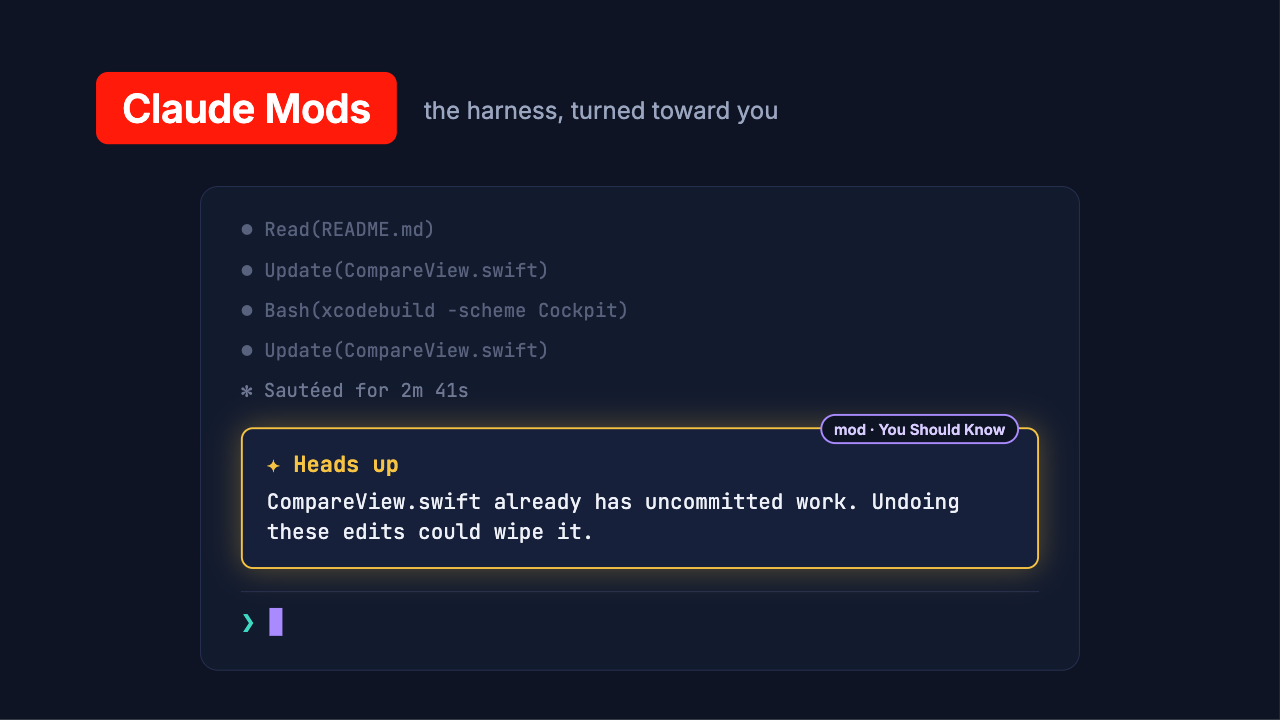
Over the past few weeks, I’ve been using Claude Mods to shape Claude Code into something tailored to my own AI engineering workflow. Claude Code works exceptionally well out of the box, but every engineer’s workflow is different. Claude Mods allow you to craft a Claude Code that is truly yours, built around how you want to allocate your attention.
And “how you allocate your attention” is precisely what matters most right now.
In a recent Latent Space post, The Evolution of the Agent Harness, I argued that as models absorb more of the harness into their weights, what remains will directly face humans. It will transform into an Attention Interface: the layer responsible for deciding when an agent interrupts you, what it shows you, and what decisions it needs from you. Claude Mods represent an early incarnation of this Attention Interface—and one you can shape yourself.
My prediction is that ultimately, the harness will evolve into a platform on which other companies build their businesses, with models serving as the underlying engine. Just as browsers became the platform for web applications, harnesses are poised to become the new platform for human-agent interaction.
What Are Claude Mods?
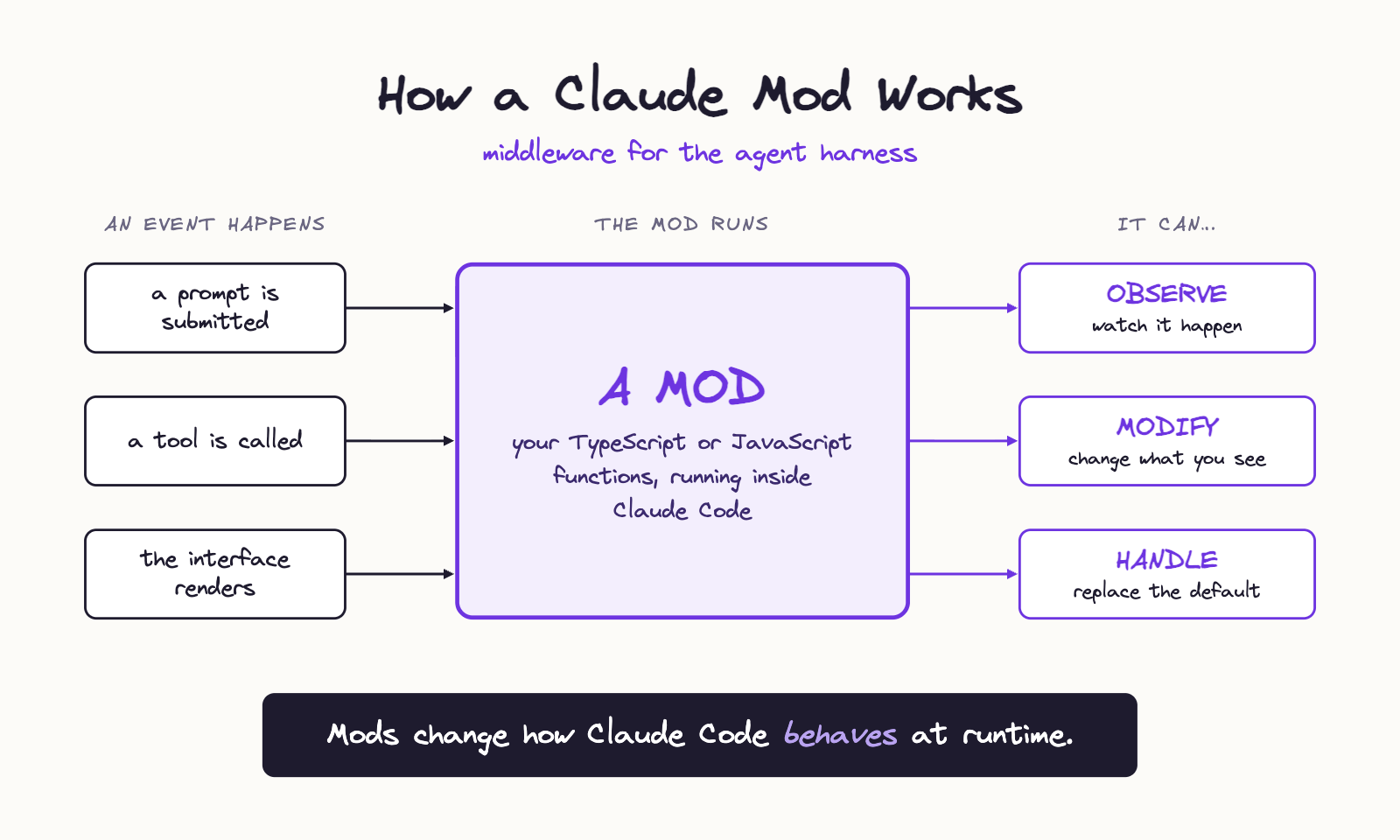
A mod is a Claude Code plugin composed of TypeScript or JavaScript functions running inside Claude Code. These functions are used to customize the behavior and appearance of both the CLI and desktop interfaces. Mods can respond to various events, such as prompts, tool calls, or interface rendering. They can listen to events, modify how they are rendered, and take over execution from default handlers.