
On October 17, ZheYuan Tech officially launched the WHIRLPO computational medicine platform.
In 2026, the AI landscape is undergoing an intriguing shift: while industry attention remains fixed on model parameter scaling, AI agents, and Artificial General Intelligence (AGI), Mark Zuckerberg has already placed his bets on a far more challenging domain—living systems.
In April this year, the Chan Zuckerberg Initiative (CZI) Biohub, founded by Mark Zuckerberg and his wife Priscilla Chan, launched the “Virtual Biology Initiative,” committing $500 million to build the data and experimental infrastructure required to train AI models capable of predicting biological phenomena. By October, the project had expanded significantly: the U.S. Department of Energy (DOE) and the National Institutes of Health (NIH) partnered with Biohub to co-develop the data foundation for life-predictive models, bringing onboard top teams including Meta, Google DeepMind, and Isomorphic Labs. The initiative represents an overall funding commitment of $1.8 billion, with the DOE allocating over $500 million over the next five years and the NIH providing unrestricted access to its vast, long-accumulated repositories of biomedical data.
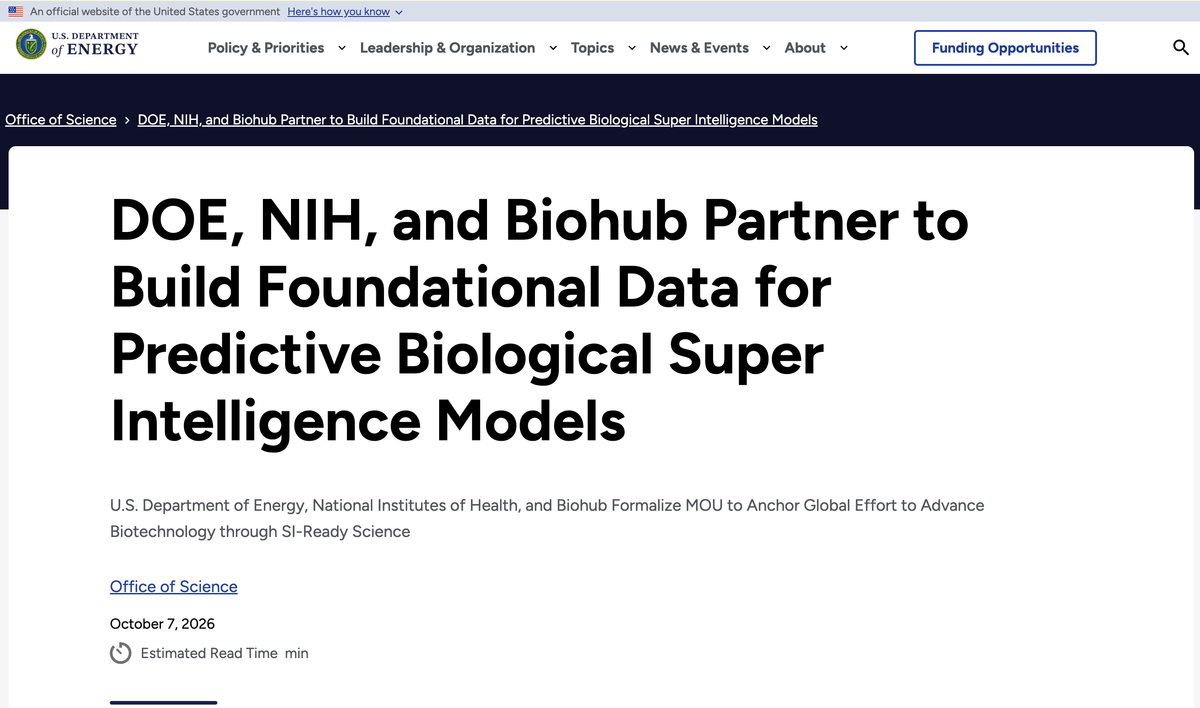
The initiative’s objective is straightforward: to create an AI system capable of accurately predicting biological behavior—a paradigm Biohub terms “virtual biology.” In layman’s terms, this means building high-fidelity digital twins that span molecules, genes, and cells all the way to complete living organisms. In the future, researchers will be able to query and intervene in biological systems computationally just as they interact with large language models—validating hypotheses and simulations in the digital realm before ever stepping into a wet lab.
This strategic move reflects more than just Zuckerberg’s optimism about biomedicine; on a deeper level, the life sciences are emerging as the second battleground in the AI arena. The race for general foundation models has devolved into a cutthroat “arms race” with skyrocketing barriers in compute, talent, and capital. By contrast, understanding and modeling living systems remains an uncharted blue ocean. Whoever enables AI to truly decode life will establish a technological moat far more formidable than any chatbot could ever offer.
AI Excels at Designing Molecules, Yet Drug Discovery Remains Daunting
The intersection of AI and biomedicine has a long history and was among the earliest domains slated for massive commercial breakthroughs. Yet, after more than a decade of evolution, a fundamental question continues to loom over the industry: Are we genuinely any closer to discovering novel drugs?
In recent years, the most celebrated breakthroughs in AI drug discovery have centered predominantly on the molecular scale: protein structure prediction, candidate screening, de novo molecular generation, drug toxicity/safety prediction, and drug-target interactions. AI can generate tens of thousands of candidate molecules in a single run, dramatically expanding the reachable chemical space and unquestionably boosting exploratory efficiency.
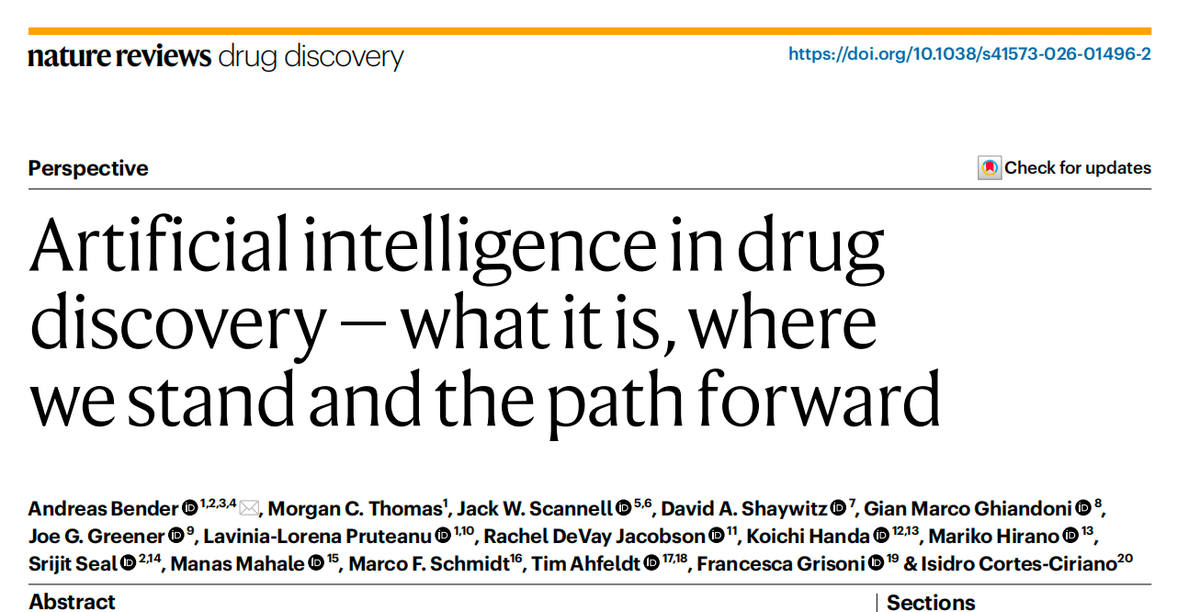
However, shift the benchmark from algorithm benchmarks to successful regulatory approvals of new drugs, and the reality remains sobering. In August this year, a retrospective review published in Nature Reviews Drug Discovery evaluated the decade-long journey of AI drug discovery: despite a constant influx of novel AI algorithms, few have delivered tangible clinical value. The pipelines of numerous AI biotechs remain stalled in preclinical development or Phase I/II clinical trials, with only a minuscule fraction advancing to Phase III.
In small-molecule generation, AI can readily identify molecules with high binding affinity to target proteins—yet this is merely “ligand design,” not comprehensive “drug design.” Discovering a molecule that binds to a target and developing an approved, viable medicine that is both safe and efficacious in the human body are fundamentally distinct challenges.
This is precisely where the industry must rethink its approach. In the past, we frequently oversimplified highly intricate biological processes. While AI excels at answering “which molecule can bind to this target,” actual drug development hinges on resolving a series of deeper, systemic questions:
- Why does this target trigger the disease in the first place?
- What complex downstream cascade will be initiated across human biological systems once the target is perturbed?
- Why does the exact same drug exhibit vastly disparate efficacy across different patient cohorts?
- Why do drug candidates that perform exceptionally well in cell cultures and animal models frequently fail upon entering human clinical trials?
Drug molecules never operate in isolation. They enter a vast, dynamic, and exceptionally complex system—where genes, proteins, cells, tissues, organs, the immune system, and metabolic networks are intricately interwoven and continually influenced by external environments. The ultimate success or failure of drug discovery is inextricably rooted in this overarching system. This leads to a fundamental question: If AI can only decipher molecules without comprehending the living system as a whole, how far can it truly push the boundaries of drug discovery?
From Point Molecular Models to Life World Models
This is the core catalyst behind the paradigm shift occurring across AI life sciences in 2026: modeling is no longer confined to isolated proteins, molecules, or cells, but is expanding upward to the system level to construct life-predictive models. The goal is no longer merely predicting spatial structures, but dynamically characterizing biological states, forecasting how systems evolve following interventions, and simulating cellular stress responses to external perturbations—what the industry defines as Life World Models.
If large language models learn the syntax and logic of human language, and physical world models learn the laws of motion and spacetime, then the underlying mechanics confronting a life world model are orders of magnitude more complex. Genetic mutations alter protein expression; protein networks regulate signaling pathways; signal transduction reshapes cellular states; intercellular interactions define the tissue microenvironment, cascading upward to govern organ function and the whole human organism. Life is by no means a static construct—it exists in a perpetual dynamic state of growth, aging, compensation, and mutation, continuously responding to external interventions.
Consequently, a life world model is far from a static biological encyclopedia. Its primary mission is to decipher the fundamental mechanics of living systems, accurately simulating how the entire complex network evolves when a single variable changes.
Once realized, such models will radically reshape the role of AI in drug discovery:
- The Old Paradigm: Given a predefined target, rapidly conduct high-throughput screening for candidate molecules.
- The New Paradigm: Given a specific disease, first elucidate its underlying pathogenic mechanisms, then evaluate therapeutic targets, identify patient populations most likely to benefit, and predict potential systemic chain reactions resulting from the intervention.
Although both represent AI-powered drug discovery, the foundational problems they address belong to entirely different realms.
Parallel Developments in China: Computational Medicine Enters National Planning
This profound technological transition is not confined to Western labs; China’s AI life sciences sector is similarly leapfrogging from isolated algorithmic breakthroughs toward systemic disease modeling.
In September this year, ten Chinese government agencies, including the Ministry of Industry and Information Technology (MIIT) and the National Development and Reform Commission (NDRC), jointly issued the 15th Five-Year Plan for the Pharmaceutical Industry. For the first time, computational medicine was ranked alongside artificial intelligence, quantum computing, and supercomputing as a key technological priority for the pharmaceutical industry over the next five years. While AI and supercomputing provide robust, general-purpose compute foundations, the essential value of computational medicine lies in bridging this compute capacity with complex biological systems to solve real-world clinical challenges.
Domestic pioneer ZheYuan Tech is a prominent practitioner of this approach. Rather than merely chasing ever-larger parameter counts in biological models, the team focuses directly on disease biology. By integrating multidimensional data—spanning genomics, cellular profiles, pathogenic mechanisms, patient phenotypes, and pharmacological interventions—they have constructed multi-tiered computational models aimed at establishing a life world model ecosystem capable of continuous simulation, training, and experimental validation.
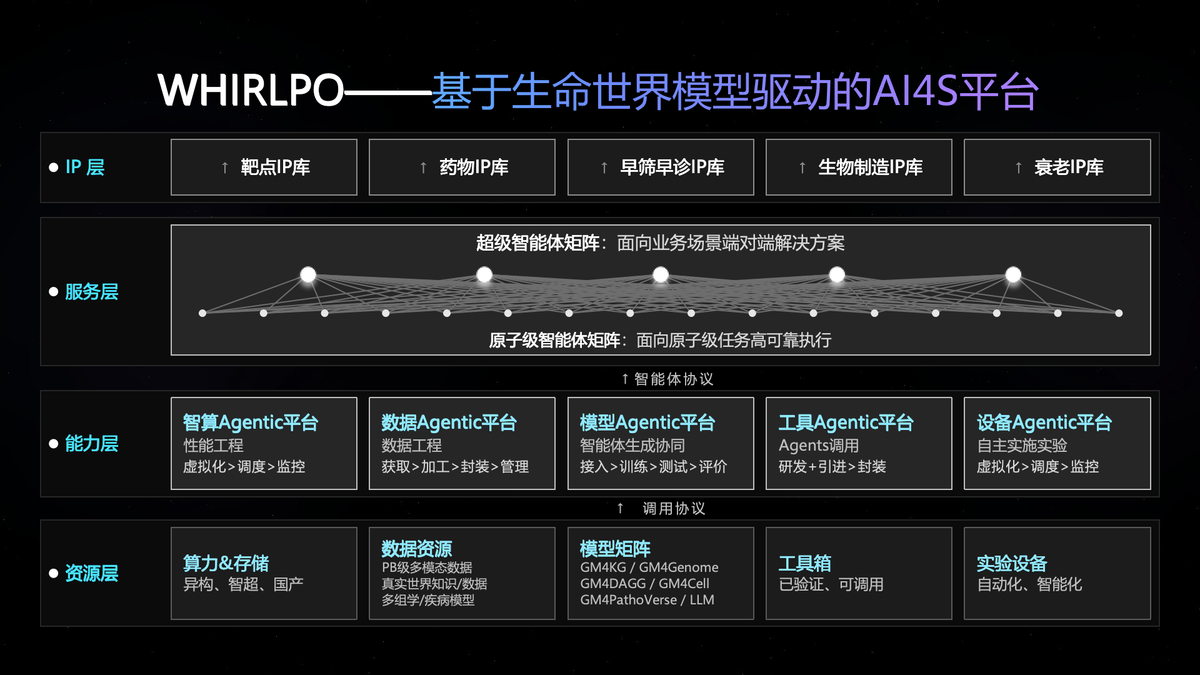
On October 17, ZheYuan Tech officially unveiled its WHIRLPO computational medicine platform. Rather than serving as an isolated vertical bio-model, the platform is engineered to tackle lower-level infrastructural hurdles: if life world models are to form the cornerstone of next-generation life sciences, the industry requires a solid infrastructure capable of supporting the continuous training and efficient execution of such composite systems.
Building Life World Models: Far Harder Than Training LLMs
The engineering complexity of building a life world model is frequently underestimated by outside observers:
- Multimodal and Heterogeneous Data Hurdles: While large language models feed on massive volumes of public internet text, the life sciences suffer from a stark lack of standardized, unified public datasets. Genomics, single-cell sequencing, spatial transcriptomics/omics, pathology slides, medical imaging, and clinical cohort data remain highly fragmented, with massive disparities in data formats, quality standards, and observational scales. Furthermore, a substantial share of high-value data must be custom-generated via wet-lab experiments. A major portion of Biohub’s $1.8 billion funding is specifically allocated to the standardized production of high-quality biological data, rather than purely to model inference and compute consumption.
- Multiscale, Cross-Hierarchical Modeling Challenges: In biology, there is no all-encompassing, monolithic “theory of everything” model. Decoding DNA mutations, cellular state transitions, tissue microenvironment remodeling, and disease progression across the human body necessitates the orchestrated cooperation of specialized models operating at different biological scales. A mature life world model will likely not be a single monolithic network, but rather a compound, collaborative architecture integrating multiscale models, structured knowledge graphs, and domain-specific toolchains.
- Heterogeneous Scientific Computing Challenges: Tasks such as foundation model pre-training, multi-omics integration, disease progression simulations, and digital patient modeling have vastly differing computational profiles. They demand dynamic scheduling and optimization across heterogeneous compute hardware (CPUs, GPUs, and specialized accelerators)—introducing complex high-performance scientific computing challenges seldom encountered in conventional general-purpose LLM engineering.
- Virtual-to-Wet-Lab Closed-Loop Bottlenecks: When an LLM produces hallucinations or errors, the remedy lies in algorithmic iterations and fine-tuning. But when a biological model generates a target hypothesis or mechanistic prediction, it must be validated through empirical wet-lab experimentation. Those experimental results must then feed back to refine model parameters, culminating in the rigorous scrutiny of clinical trials. The model’s reasoning logic cannot simply remain an insular, self-consistent digital simulation.
The WHIRLPO platform targets precisely these bottlenecks: by harmonizing heterogeneous compute clusters, a multi-omics biological data hub, specialized model matrices, cutting-edge scientific toolkits, intelligent agents, and automated wet-lab closed loops, it establishes an end-to-end infrastructure spanning model training, scientific computing, and empirical validation. In short, ZheYuan Tech is not merely training models; it is architecting an industrial production foundation for life world models.
AI Life Sciences Enters the Era of Infrastructure Competition
In 2026, the global computational life sciences sector is experiencing a powerful synchronized momentum:
- In the United States, Biohub—alongside the DOE, NIH, Meta, DeepMind, and others—is collaboratively constructing the data, compute, and experimental infrastructure essential for life-centric AI;
- In China, “computational medicine” has been formally integrated into the national 15th Five-Year Plan for the pharmaceutical industry, while domestic teams accelerate the development of underlying engineering platforms for life world models.
While seemingly independent, these two developments converge on a single industry consensus: AI in life sciences has transitioned from competing over isolated algorithm benchmarks into a full-scale battle over foundational infrastructure.
In the past, the industry fixated on who achieved marginally better protein structure predictions, who built superior molecular generation algorithms, or who could shave days off an isolated step in R&D. The competitive moats for the next era, however, have shifted to:
- The capacity to acquire large-scale, high-dimensional, and pristine biological datasets;
- The ability to achieve multiscale systems modeling spanning genes, cells, tissues, and whole organs;
- The efficiency in orchestrating and scaling heterogeneous model ensembles across distributed, diverse compute resources;
- The capability to execute seamless, closed-loop validation between computational predictions and wet-lab biology;
- Ultimately, whether AI can transition from simply “processing discrete biological data points” to “deeply comprehending dynamic living systems.”
Looking back across the decade-plus trajectory of AI drug discovery, the overall direction was never misguided; researchers simply began by conquering the facets of biology where computational complexity was most manageable. Molecular structure is indisputably a vital pillar of drug discovery, yet therapies ultimately treat a whole human being, not an isolated molecule. Between a candidate active molecule and verifiable clinical benefit in living human patients lies an extraordinarily sophisticated, dynamic biological system.
Life world models are poised to become the next strategic frontier for artificial intelligence, following in the footsteps of language models and physical world models. In this transformative phase of evolution, the greatest opportunities may no longer belong to teams marginally topping benchmark leaderboards. The truly scarce and decisive asset will be the end-to-end infrastructure capable of empowering AI to enter, decipher, and master the living world.