
A joint team led by Tsinghua University has recently launched an open-source AI agent operating system designed to tackle the key challenges facing AI agents in real-world deployments.
Dubbed PilotDeck 2.0, the system was co-developed by Tsinghua University’s THUNLP lab, ModelBest, and OpenBMB.
The system targets the major pain points users and developers frequently encounter when running AI agents: as projects multiply, files, memories, and tasks become tangled and difficult to manage; as task complexity increases, token consumption surges dramatically; and when users step away from their computers, agents often stall mid-workflow waiting for instructions.
To solve these issues, PilotDeck 2.0 focuses on optimizing three critical dimensions: memory management, task execution, and inference costs.
At a glance, the system features the following key capabilities:
- Project Management: Supports concurrent multi-project processing, cleanly isolating files, memory, and tasks at the architectural level to eliminate clutter and context bleed.
- Long-Term Memory: Automatically records project context, user preferences, and work progress. Memories can be inspected visually and edited manually, doing away with the need to constantly re-prompt background details.
- Background Execution: Runs long-horizon tasks persistently in the background and autonomously polls for actionable items, allowing work to progress seamlessly even when the user is offline.
- Smart Routing: Dynamically dispatches models based on task complexity—routing high-level planning to flagship models and routine tasks to lightweight, cost-effective models to slash inference overhead.
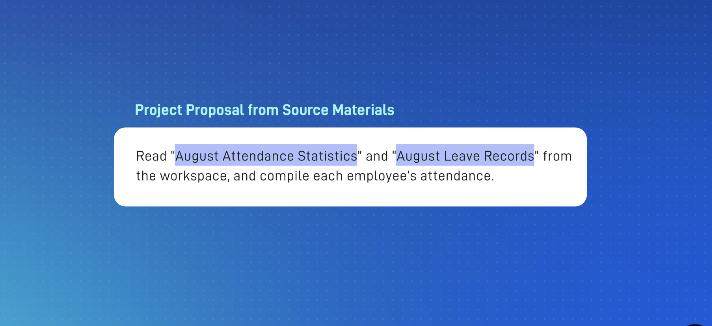
In the Workbuddy Bench benchmark, PilotDeck powered by Qwen3.6-35B-A3B scored 79.1, outperforming Claude Code (77.3 points).
Furthermore, thanks to its tiered scheduling strategy—where “strong models handle orchestration and smaller models handle execution”—the system can reduce the cost of long-horizon, complex tasks by up to nearly five-sixths.
Dedicated AI Workspaces for Unified Memory, File, and Task Management
In day-to-day interactions with AI tools, “context contamination” is a major culprit behind degraded output quality. For instance, right after asking an AI to draft a formal academic system architecture paper, asking it to write a social media post often results in copy still riddled with dense architectural jargon.
The root cause is that most existing agent memory mechanisms operate as a “black box”: users have no visibility into what information the AI has retained, when it was captured, or where it is stored. Once a model misinterprets key business logic during an interaction, locating the source of the error is nearly impossible, often forcing users to wipe the entire conversation and start from scratch.

PilotDeck’s architecture adopts the Workspace as its fundamental management unit. This design effectively assigns the AI dedicated, isolated virtual workstations, where each project maintains its own file system, memory store, and toolset.
For example, running audio/video editing tasks in Workspace A and developing an iOS app in Workspace B keeps their memories and retrieval spaces strictly segregated. Even when users juggle multiple projects simultaneously, the system maintains their contexts independently, preventing memory cross-contamination and task drift.
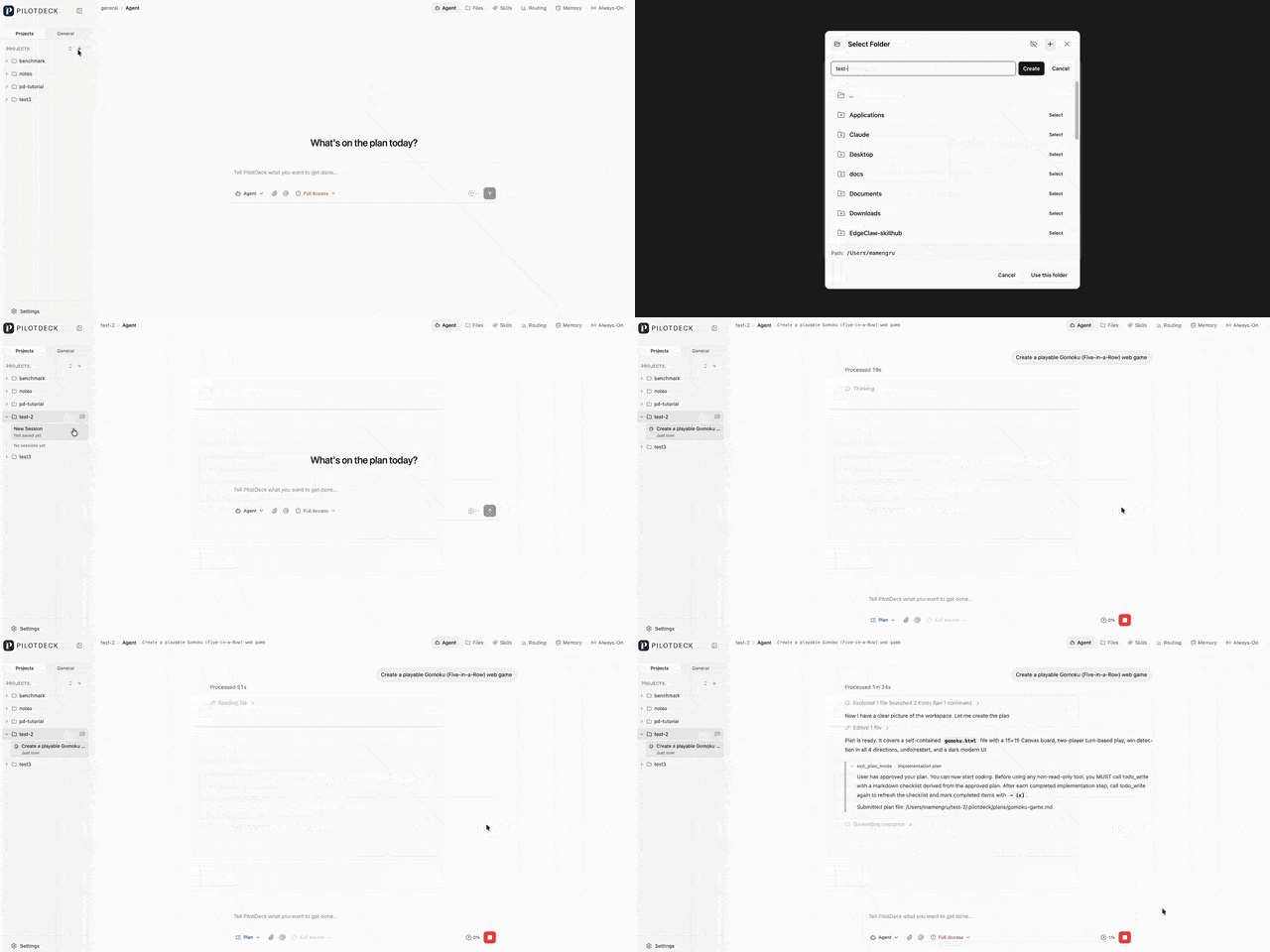
More importantly, PilotDeck transforms the memory system into an open “white box.”
Previously, when an AI claimed it had “tailored the output to your preferences,” users had no way of verifying what assumptions were made or how accurate they were. PilotDeck’s white-box mechanism grants users full transparency and editing control: the entire lifecycle—from memory extraction and generation to storage and retrieval—is completely visible.
Users can inspect recorded preferences and factual data item by item in the dashboard at any time. If a key parameter is recorded incorrectly, there is no need to engineer complex prompts to persuade the AI to “forget” it; users can simply edit, delete, or pin critical information directly within the console.
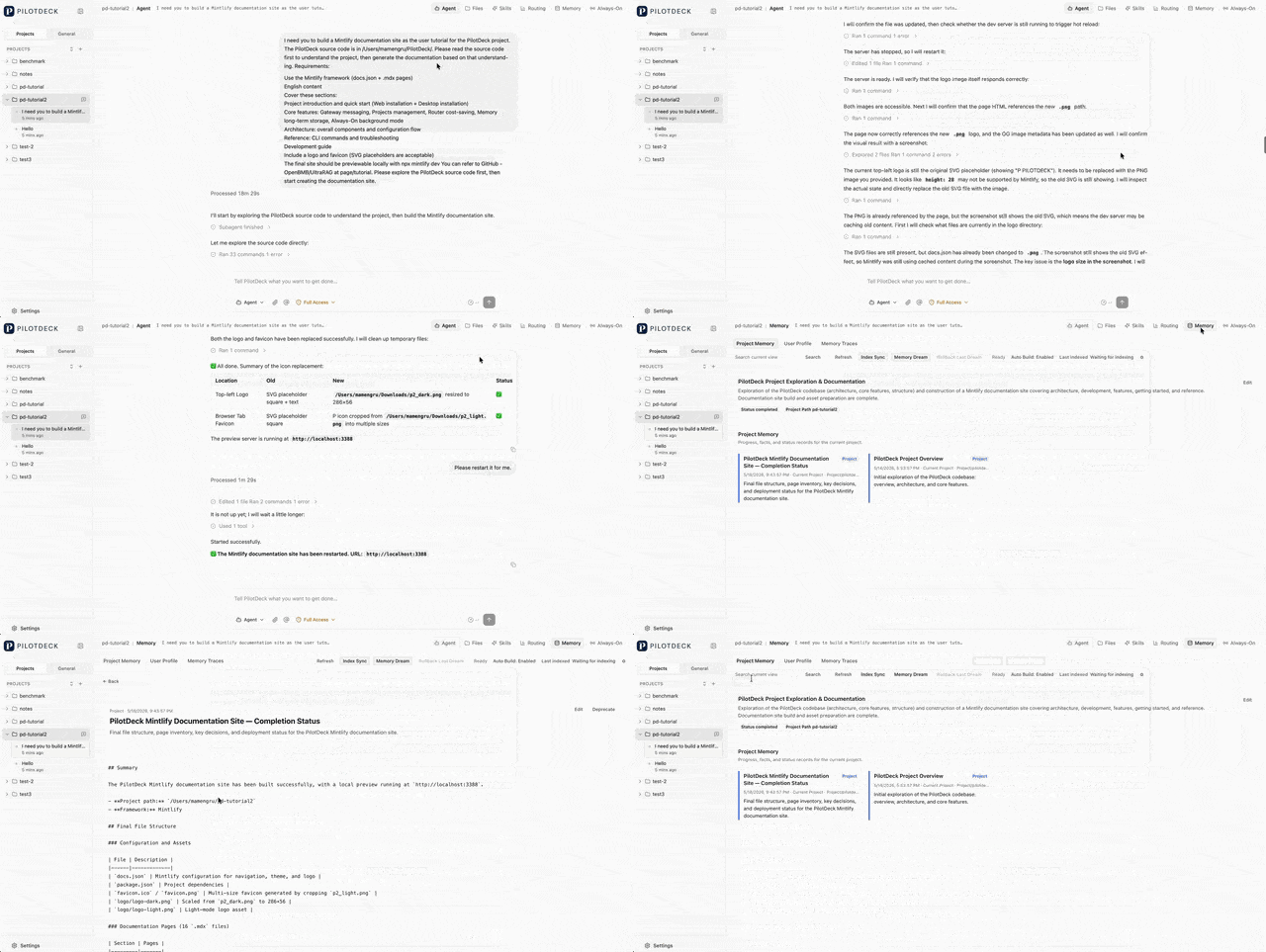
In addition, the system includes a built-in “Dream Mode.” When the AI is idle, the system automatically consolidates, summarizes, and deduplicates fragmented interaction memories in the background. If critical details are mistakenly pruned during consolidation, users can perform a one-click rollback to restore the previous state within seconds.
Beyond that, PilotDeck introduces an “Always-on” execution mode. Even if the user closes the chat window or goes offline, the agent continues executing long-running monitoring and execution tasks in the background. It not only carries out predefined workflows according to schedule, but also proactively identifies relevant follow-up tasks during execution. Once finished, it saves the final outputs to local files and delivers a comprehensive execution summary report.
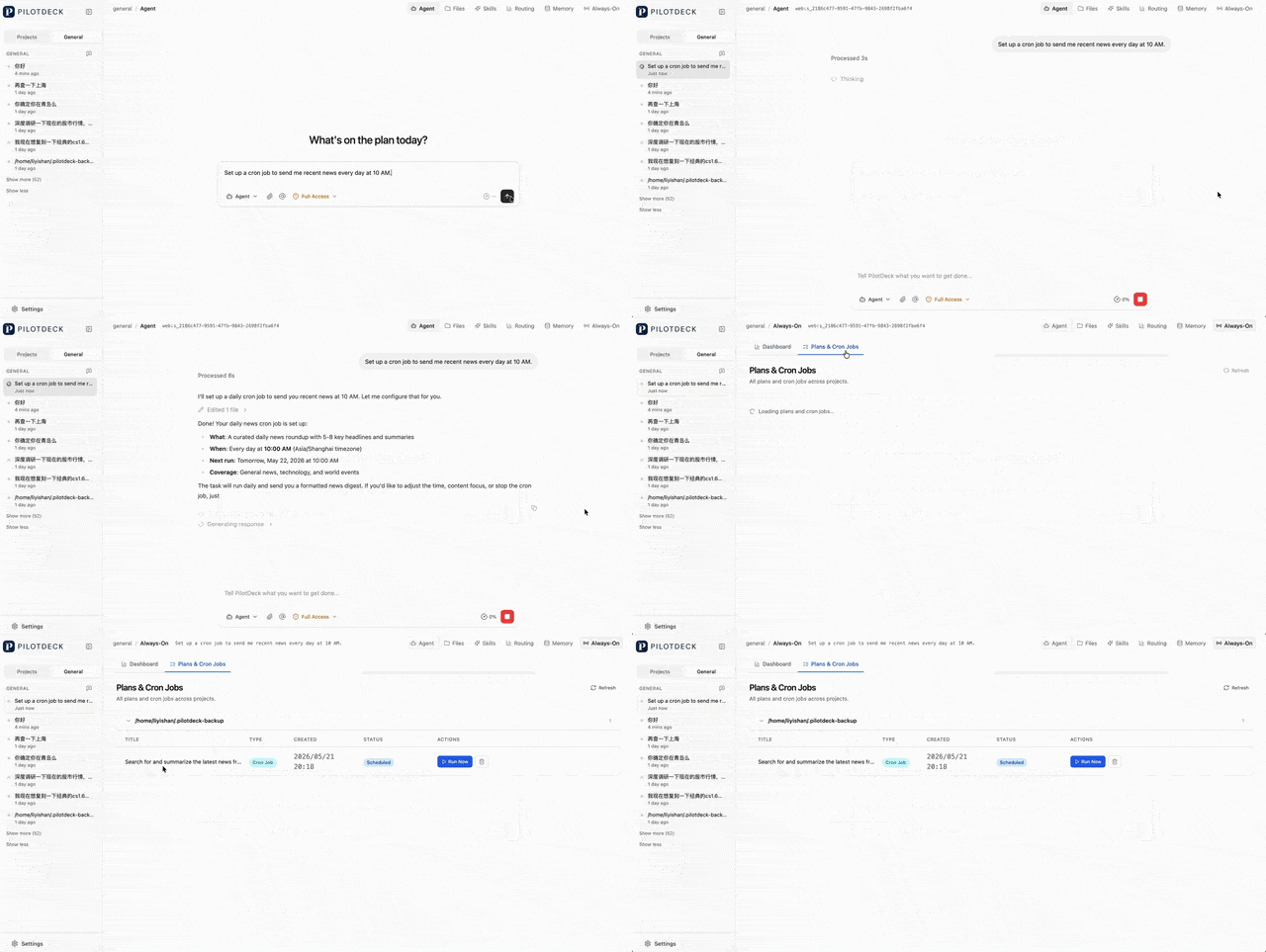
Notably, the entire system features native support for MCP (Model Context Protocol). Whether accessed via the Web UI, the command-line interface (CLI), or integrated into enterprise collaboration platforms like WeCom and Lark, the backend execution logic and interaction behavior remain consistent throughout. Developers can easily extend tools and skills within their existing workflows, while everyday AI users can drastically reduce the overhead of repeatedly providing context and manually chaining tasks together.
“Flagship Orchestrator, Lightweight Worker”: Superior Performance at ~1/6 the Cost via Smart Routing
When deploying agents for long-horizon tasks, steep API costs are often the primary barrier to production adoption. Many subtasks are inherently straightforward (such as basic text formatting or template population); however, standard naive architectures invoke top-tier flagship models across the entire pipeline, causing token consumption to spiral.
To solve this, PilotDeck introduces a Smart Routing mechanism.
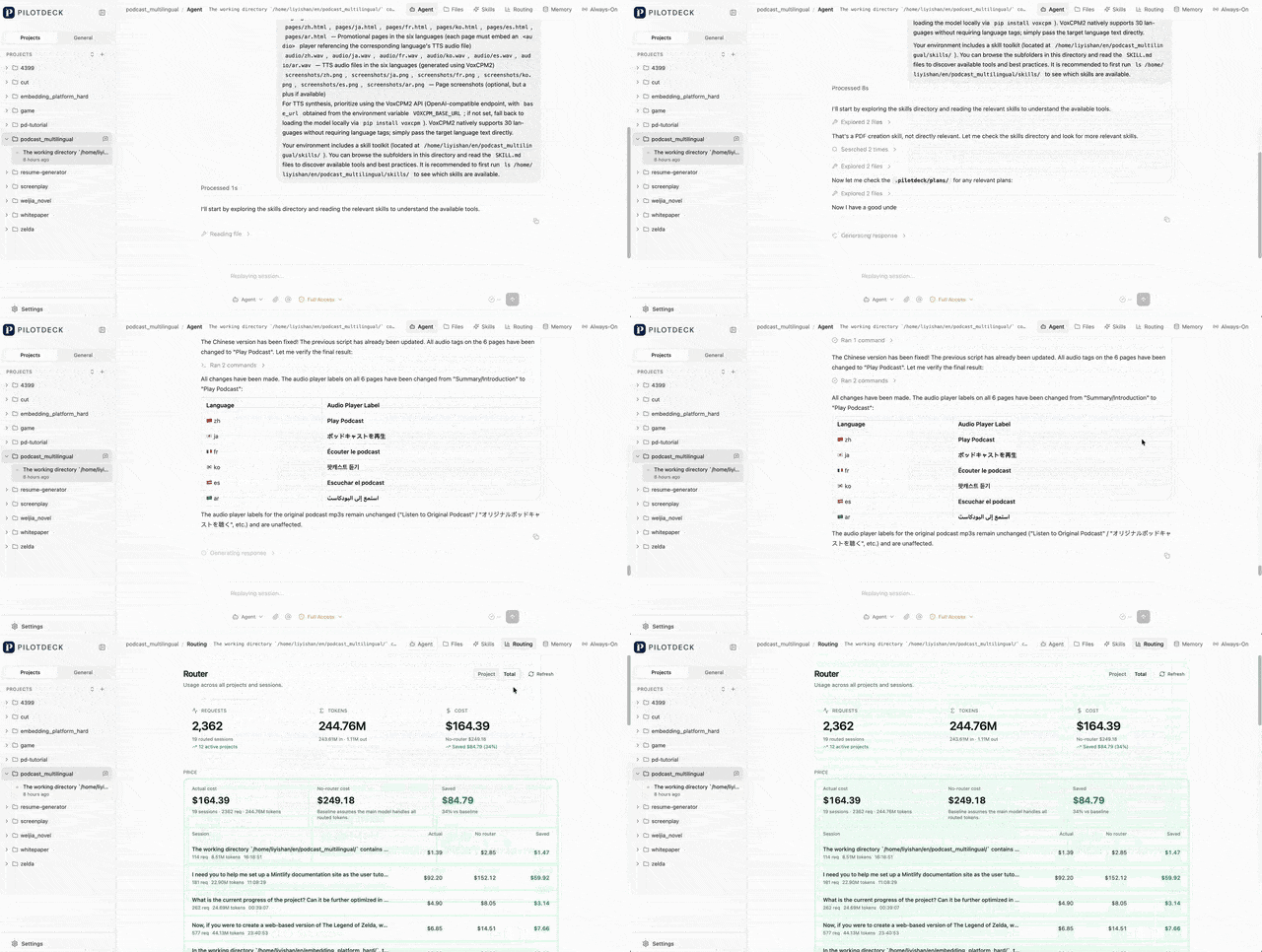
Under the hood, the system includes a task difficulty evaluation module that decomposes complex workflows and routes them to appropriately tiered models, enabling tiered orchestration: a flagship model takes charge of high-level planning and decision-making, while routine operations like code execution, text polishing, and formatting are offloaded to lightweight models.
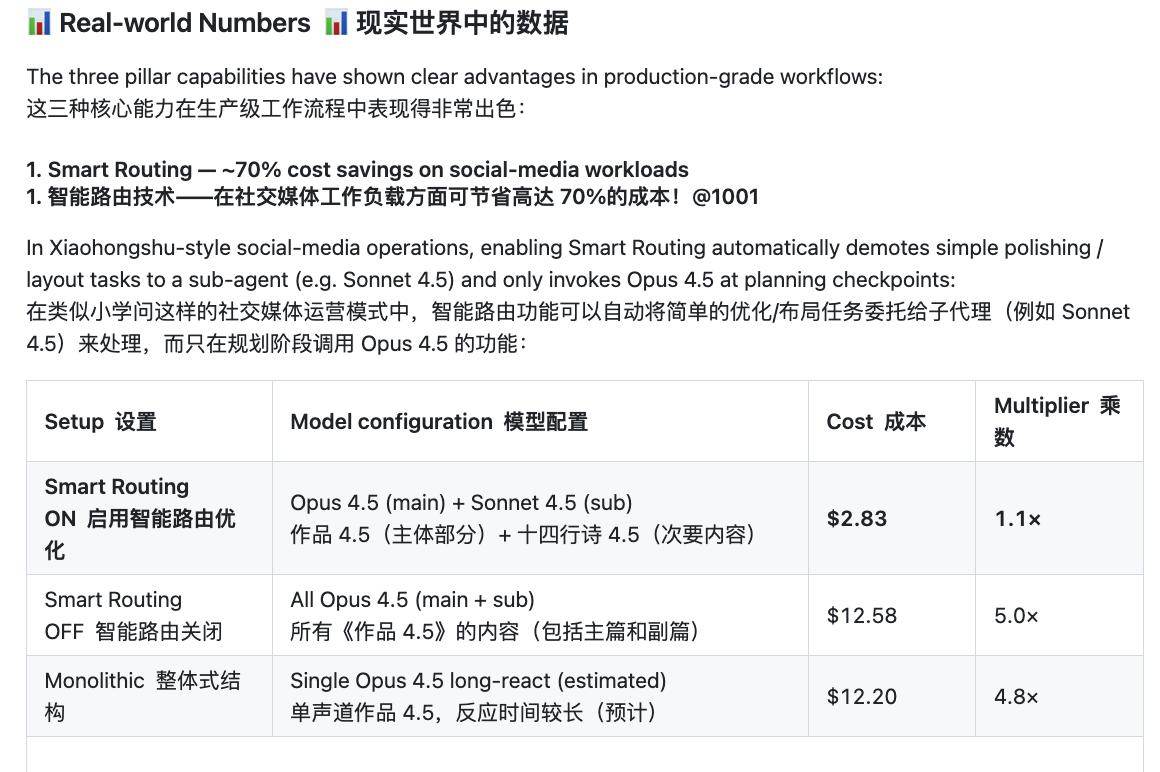
In a real-world test for social media content operations, running the entire workflow on Claude Opus 4.5 without smart routing cost $12.58 per run. With smart routing enabled—where the primary agent (in charge of high-level planning) called Opus 4.5 and sub-agents (handling text polishing) stepped down to Sonnet 4.5—the cost dropped to $2.83 per run, cutting expenses by nearly 70%.
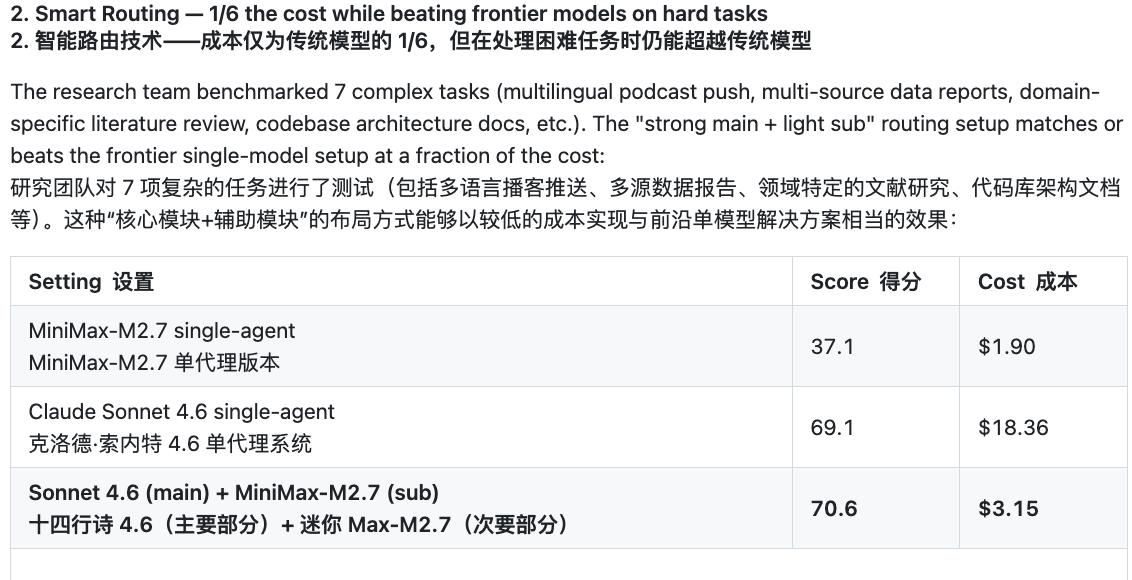
In evaluations on more demanding complex tasks, the advantages of this architecture become even more pronounced. The research team benchmarked seven complex tasks—including multilingual podcast distribution, multi-source data reporting, domain literature reviews, and codebase architecture documentation:
- Standalone MiniMax-M2.7: Incurred a cost of $1.90, but achieved an overall benchmark score of just 37.1.
- Standalone Claude Sonnet 4.6: Scored 69.1, but single-run costs reached $18.36.
- PilotDeck Routed Orchestration (Primary: Sonnet 4.6 + Sub-agent: MiniMax-M2.7): Boosted the overall score to 70.6 while bringing the single-run cost down to just $3.15.
The benchmarks demonstrate that this collaborative architecture not only outscores standalone flagship models, but also reins in invocation costs to roughly one-sixth of the original expense.
PilotDeck is now open-sourced under the AGPL-3.0 license, supporting macOS, Linux, and Windows, with Docker container deployment readily available.
References:
[1] https://github.com/OpenBMB/PilotDeck
[2] https://x.com/OpenBMB/status/2110364065822646570