
The Secret Lies in Time
Early this morning, the AI community was set abuzz once again.
The latest wave of AI problem-solving has just cracked open an unsolved mystery from the cryptography world dating back more than twenty years.
This time, the protagonist is Claude—
According to Anthropic, Claude took less than half an hour to uncover how the seeds for five standard NIST elliptic curves were originally generated.

These sequences of numbers have been used across the tech industry for over two decades and baked into international cryptographic standards—yet no one ever truly knew how they were originally chosen.
Researchers who previously contacted the individuals involved were led down a path pointing to a hashed passphrase: “Give Bob and Jerry a raise.”
Dramatically, Claude reached a completely different conclusion: that previous lead was entirely wrong!
The real answer came down to time—the system clock of a 1990s computer.
The breakthrough has now been independently verified and confirmed by the creator of the original bounty.

Cracking a Decades-Old Cryptography Mystery in Half an Hour
The story begins with a core identity-verification technology:
ECDSA, or the Elliptic Curve Digital Signature Algorithm.
It allows a recipient to verify whether data was genuinely signed by the claimed party and whether it has been altered since signing. In 2000, the National Institute of Standards and Technology (NIST) adopted the algorithm into the FIPS 186-2 Digital Signature Standard.
Before putting the algorithm to use, a set of public mathematical parameters must first be defined, including the well-known suite of five standard curves: P-192, P-224, P-256, P-384, and P-521.
The long-standing controversy stemmed from the seeds used to generate these curves.

A seed acts as the raw starting material for generating curve parameters: with the seed in hand, anyone following the standard’s prescribed steps can reproduce and verify all subsequent parameters.
Yet why these specific seeds were chosen in the first place remained an unexplained mystery throughout the industry.
Even Jerry Solinas, the researcher who originally provided the seeds, had hazy recollections, vaguely remembering that they had converted an inside joke about a pay raise into numbers combined with a counter.
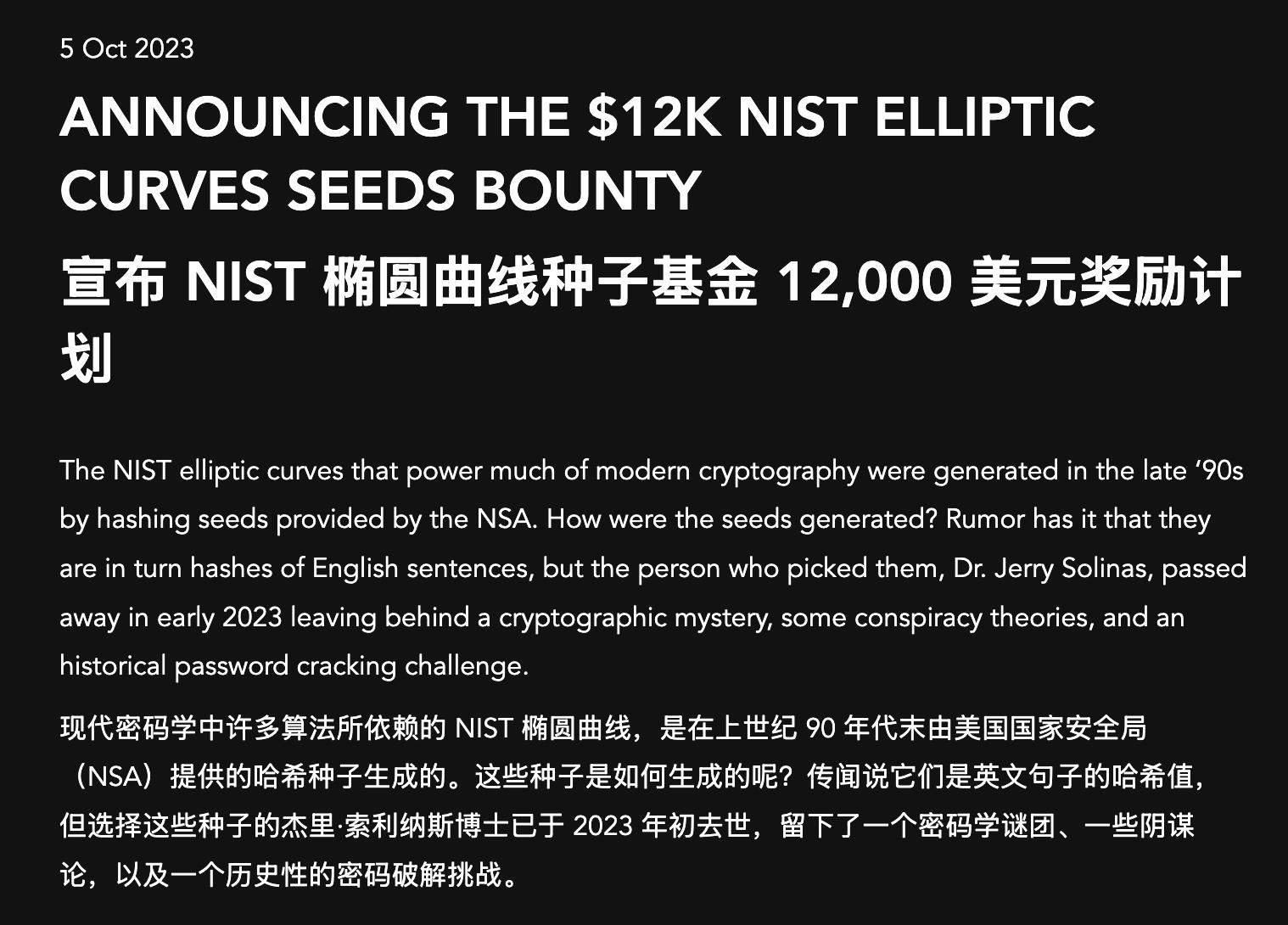
For more than twenty years, reverse-engineering efforts across academia and industry followed this thread. Cryptography engineer Filippo Valsorda even issued a public bounty seeking the true origins of the five seeds.
Yet all attempts hit dead ends—until Claude entered the picture.
According to Anthropic, researchers did not supply the supposed “pay raise” clue when presenting the challenge to an internal research version of Claude.
Free from that preconceived bias, Claude hypothesized that the random numbers were likely generated directly by a pseudorandom number generator (PRNG) from a 1990s C standard library.
While such algorithms produce seemingly chaotic pseudo-random numbers, they actually follow strict mathematical recurrence relations. Once the underlying patterns are identified, it becomes possible to reverse-engineer the generation process.
Claude then wrote a scanner script that performed sliding-window bit matching across the public seeds, testing 34 combinations of common generators and their output truncation schemes.
The analysis revealed something striking: when four of the seeds were each split into five 32-bit integers, the most significant bit across all 20 integers was always 0.
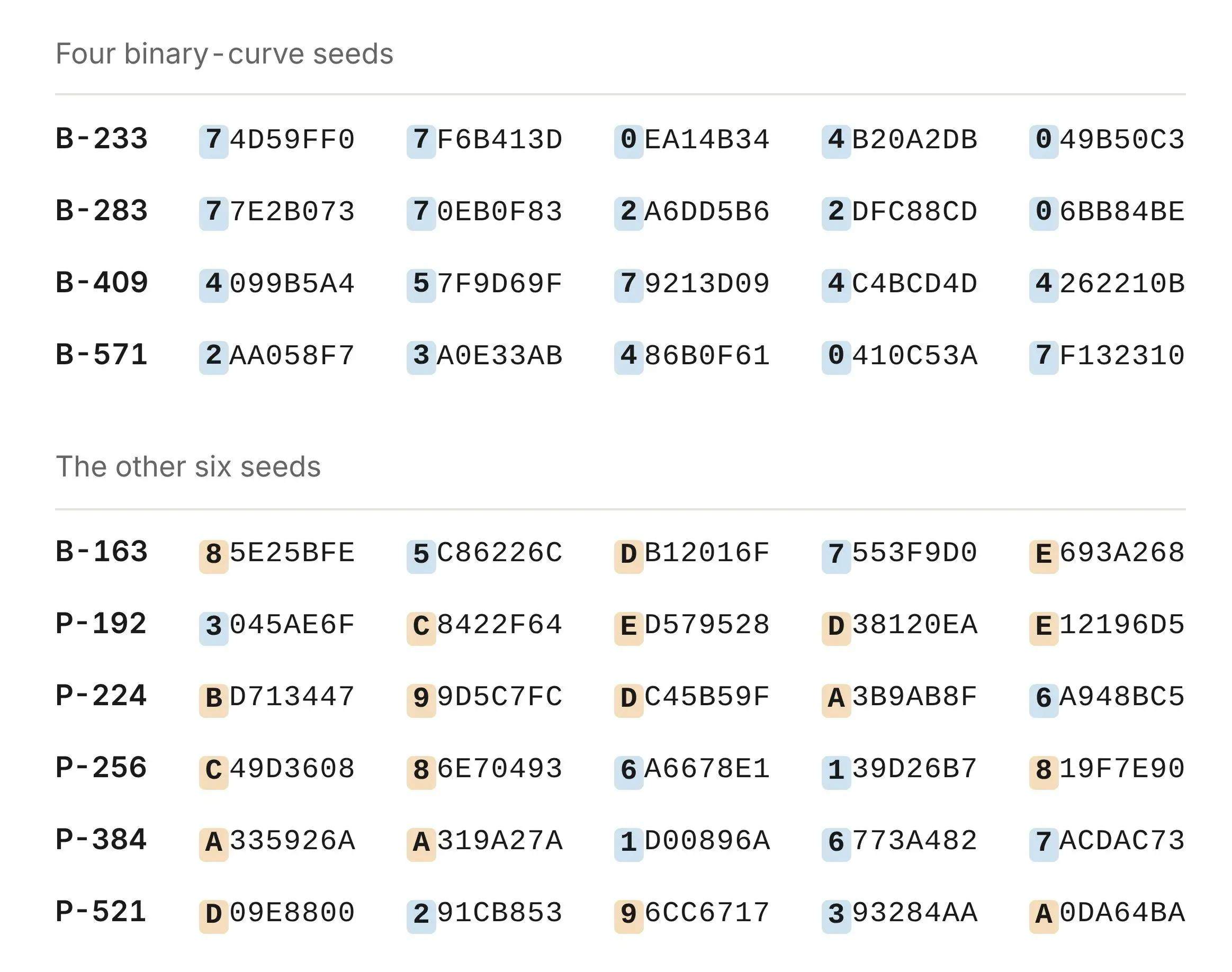
With that, the primary suspect was locked in: the classic lrand48 random number generator.
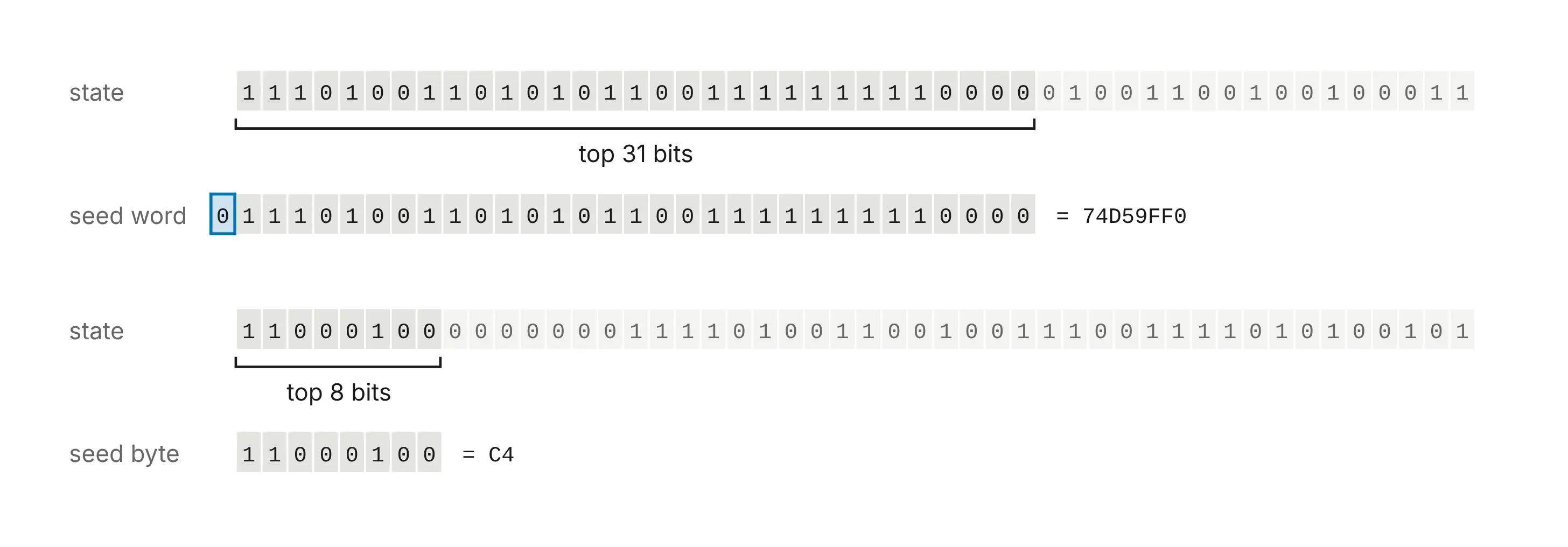
lrand48 maintains an internal 48-bit integer state. On each call, it multiplies the state by a fixed constant, adds an increment constant, and takes the lower 48 bits as the next internal state.
However, it outputs only the upper 31 bits as an unsigned integer; storing this in a standard 32-bit container invariably leaves the most significant bit padded with 0.
Having clarified the generation mechanism, Claude used the LLL lattice basis reduction algorithm (Lenstra–Lenstra–Lovász) to successfully recover the truncated internal states.
The final key question remained: how was the generator originally seeded?
The corresponding initialization function is srand48, which places a 32-bit input seed into the upper 32 bits of the 48-bit internal state while fixing the lower 16 bits to 0x330E. Stepping backward through the recurrence formula, the reconstructed input values perfectly matched the characteristics of Unix timestamps from that era.
These initialization timestamps were densely clustered between May 1997 and April 1998.
In other words, the logic behind generating the NIST curve parameters back then was remarkably straightforward: take the machine’s current timestamp as the seed input for the PRNG, extract the values according to standard rules, and obtain the curve seeds published in the standard.
For the P-256 curve, the generator was initialized at exactly: August 16, 1997, at 01:52:34 UTC.
Seeding the generator with that timestamp and running it to the 1,842nd candidate value yields the exact historical seed beginning with C49D; the generation processes for the remaining four seeds match up with equal precision.
Anthropic also noted that these findings do not yet fill in every historical detail.
The analysis found that the generation program skipped several candidate curves that seemingly met the same criteria, with the reasoning behind those choices still unclear. Additionally, the seed for the B-163 curve and the generation logic for some base points remain to be fully resolved.
Nonetheless, this discovery fundamentally dispels long-standing suspicions in the cryptographic community about hidden backdoors in the curve seeds—confirming that these standard curves were not maliciously backdoored and can be trusted.
References:
[1] https://www.anthropic.com/research/ecdsa-curve-origins
[2] https://x.com/sweis/status/2111165738836717980
[3] https://words.filippo.io/seeds-bounty/