
VLA Solves “Doing the Job,” World Models Solve “Thinking It Through”
During the morning rush hour at the pharmacy, online orders roll in continuously. Upon receiving an order, a robot navigates precisely to a shelf—where medicine boxes of similar sizes are packed tightly together, their transparent packaging glinting under the lights. It smoothly extends its robotic arm, pinches a box with pinpoint accuracy, turns around, and delivers it to the dispensing window.
Directing its movements is the “Lingbo General Brain,” developed by Ant Lingbo, a company based in Zhangjiang AI Innovation Town. During pre-training, this “brain” was adapted to 17 mainstream robot brands and 20 different robot configurations, enabling a single “brain” to operate across diverse embodiments and tasks. Today, robots powered by this brain are officially deployed across multiple Shanghai Guoda Pharmacy stores.
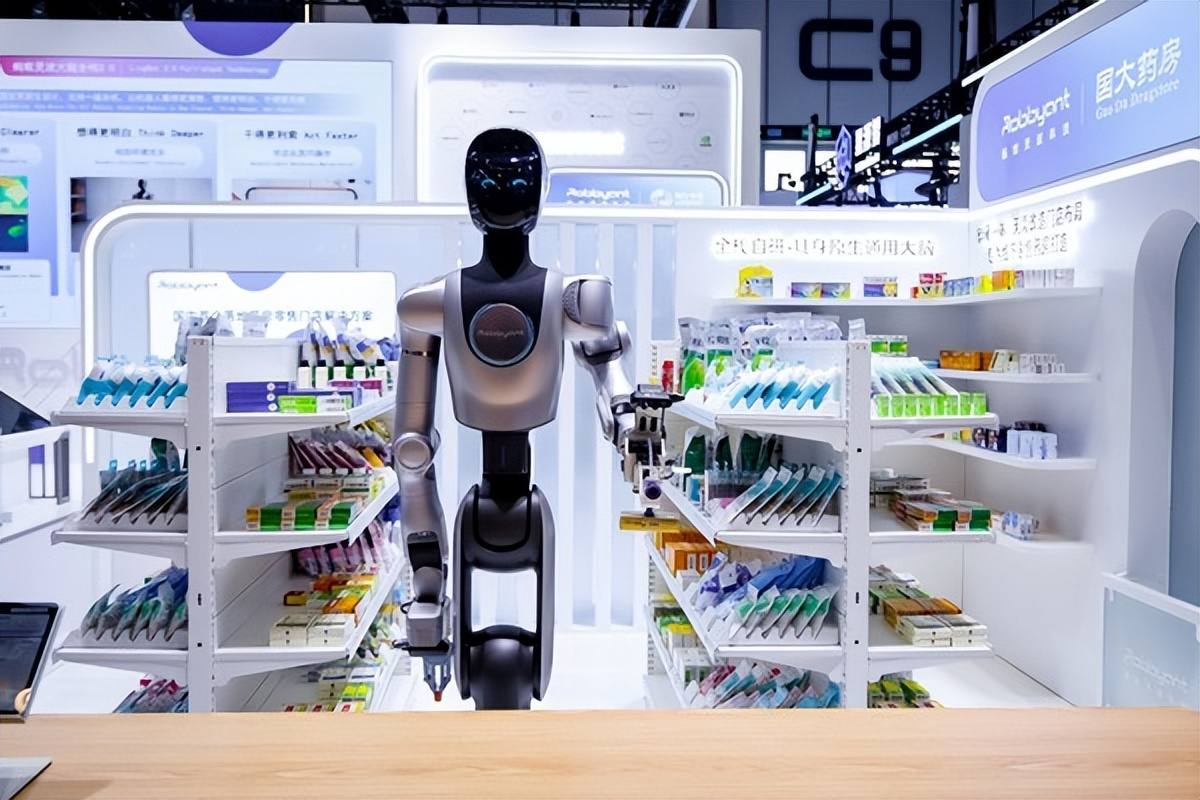
Figure 1: Ant Lingbo Robot in a Smart Pharmacy
Beyond seeing, hearing, and manipulating objects, robots need a foundational capability: simulating the future before taking action. “What happens if I do this?” This is the core purpose of a world model—projecting how the environment will evolve based on current states and actions. How these two paradigms divide labor, and whether they will eventually converge, remains an active area of industry exploration. In Zhangjiang, Shanghai, Vision-Language-Action (VLA) models have already been deployed at scale, while world models are entering pilot operations. A consensus is emerging: VLA handles execution, while world models ensure deliberation. Across Shanghai, multiple technical pathways are being validated side by side, accompanied by parallel progress in strategic planning, standard-setting, and evaluation frameworks.
1. VLA on the Floor: Deployed in Pharmacies and Workstations, Continuously Optimized
The capabilities of an “embodied brain” extend far beyond dispensing medicine—it can just as easily sort packages in warehouses or load and unload components on manufacturing lines. In January 2025, China’s first heterogeneous humanoid robot training ground opened in Zhangjiang. Jointly established by the National and Local Co-built Humanoid Robot Innovation Center and Huawei, this embodied AI training demonstration site focuses on developing VLA models powered by domestic Ascend compute, advancing the efficient training of both world models and VLA models in parallel. Under the same roof, two technological pathways are advancing hand in hand.
Capabilities honed in training must still withstand the test of real-world industrial environments. The Innovation Center’s “Linglong” series robots have been deployed at automotive parts supplier Yanfeng. They have completed real-world data collection and autonomous operational validation across workstations for flame treatment, kit sorting, and laser weakening, establishing a complete transfer pipeline from “training ground simulation to model iteration to on-site industrial deployment.”
Moving from a single scenario to broader deployments across stores and workstations requires overcoming the hurdle of capability generalization. Operating smoothly in one pharmacy does not guarantee reliable performance in another: shelf layouts, drug packaging, and stacking methods can vary significantly. In industrial settings, robots must adapt to diverse component geometries and operational protocols. Verifying whether a model can handle these variations, determining how much additional data and training are needed, and performing on-site calibration must all be tackled step by step. Assessing VLA progress requires evaluating not just whether it can complete the immediate task, but also the extent to which existing capabilities are reusable, and the marginal cost required to adapt to new environments.
2. Enter the World Model: Breakthroughs, Convergence, and Innovation
World models and VLA are not mutually exclusive; industry consensus centers on how best to combine them. Rather than debating model superiority, the focus is on clarifying the core competencies a robot actually requires. World models provide precisely the missing piece: “thinking a step ahead before acting.” As Academician Zheng Nanning of the Chinese Academy of Engineering noted, a world model system must build an internally simulatable environment to predict and project outcomes before taking action, thereby evaluating the potential consequences of different decisions.
In Zhangjiang AI Innovation Town, while some companies are deploying VLAs into pharmacies, others are doubling down on training world models. While adapting across multiple brands and pioneering service-sector deployment, Ant Lingbo unveiled the industry’s first natively embodied world-action model, LingBot-VA 2.0. Agibot, meanwhile, emphasizes the co-development of robot hardware and “brains”—its Genie G2 has already achieved continuous operation on factory lines. Yao Maoqing, co-founder of Agibot, noted that the world model’s most critical function “is accurately predicting the next state of the physical world.” In September, Agibot launched its world-action model, GE-Act 2.0, consolidating “future prediction” and “action generation” into a single architecture while expanding training data from 300 hours to 30,000 hours. In zero-shot direct evaluations featuring unfamiliar environments and novel objects without extra fine-tuning, one robot’s overall success rate leaped from 17.1% to 44.1%—a 2.6-fold improvement in novel scenarios.
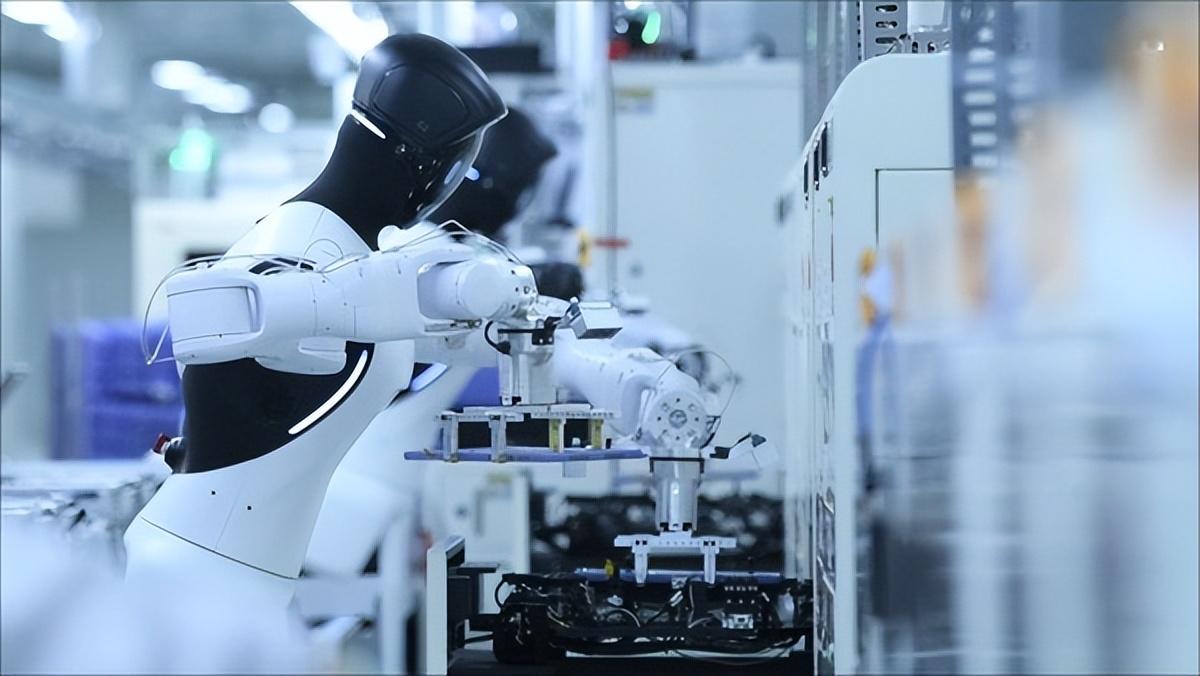
Figure 2: Agibot Genie G2 Robot Operating on a Factory Assembly Line
In terms of architectural integration, the embedded route is also attracting significant interest. Pudong-based Keenon Robotics embeds world models directly into VLAs, allowing robots to “think through the job before executing it.” As a result, its humanoid robots have shed their reliance on teleoperation, successfully completing complex, long-horizon tasks such as making coffee.
World models face critical technical challenges: high speed, physical fidelity, and data scale. Inference must remain fast: running on an RTX 5090, GE-Act 2.0 takes roughly 104 milliseconds to generate a continuous action chunk. Fidelity must be accurate: some models can render a visually realistic sequence of carrying water, yet the water in the cup remains unnaturally static. Data must be abundant: according to Dacheng Tao, Chief Scientist at Dexmate Robotics, and Wang Fei, head of Kaiwu World Model R&D, significant capability emergence may require “close to tens of millions of hours” of data.
3. A Flourishing Landscape: The Embodied AI Cohort in Shanghai
The distinct advantage of Shanghai’s embodied AI ecosystem lies in the concurrent exploration and deployment of diverse solutions to the same challenge.
Some teams focus on consumer-facing retail shelves. Dexmate Robotics directly powers its robots using its proprietary Kaiwu World Model 3.1. In September, its first pilot store—partnered with PetroChina Shanghai Sales Company—began trial operations at a gas station convenience store, where robots pick and pack online orders in aisles just 75 cm wide. Chairman Wang Xiaogang noted that during operation, “the world model predicts the future state approximately every 100 milliseconds.” In data acquisition and generalization, Noematrix has collected over 100,000 hours of real-world data across more than 50 cities nationwide, leveraging human motion data across both pre-training and post-training stages—a method substantially more cost-effective and scalable than collecting data purely via robots. Lingchu Intelligence translates human hand manipulations into robotic actions via proprietary world models, coupling this with on-site reinforcement learning for rapid iteration.
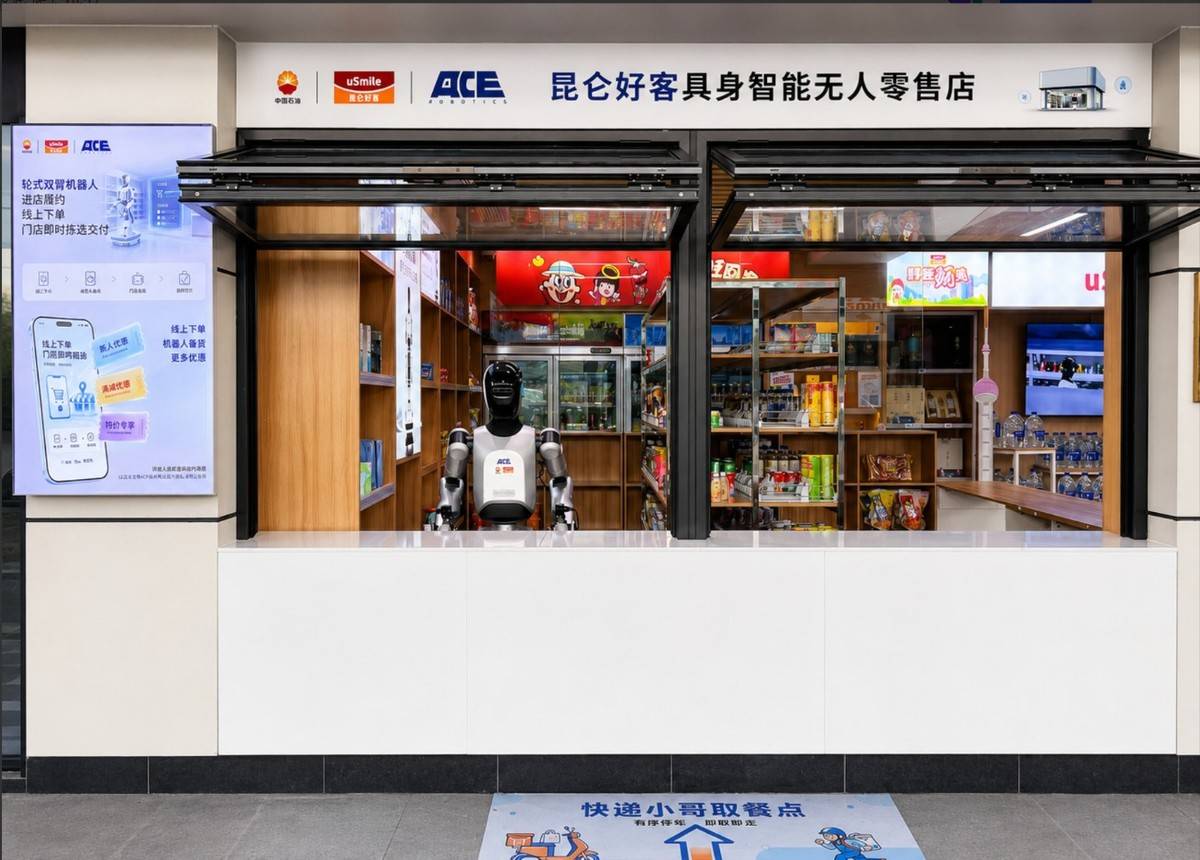
Figure 3: Dexmate Robot in a PetroChina Kunlun Hospitality Convenience Store
Other teams are tackling B2B industrial assembly lines. Tashi Zhihang’s next-generation model is already deployed on production lines for automotive wiring harness assembly. Founder and CEO Chen Yilun emphasized: “World models understand the world; physical AI changes it.” Still others started from AI for Science (AI4S) laboratories. Shanghai AI Laboratory released its world-action model research InternW0-Δ, unifying vision, force sensing, and tactile feedback into a single model to perform high-precision technical procedures such as laboratory pipetting, enabling the robot to perceive the force and physical feedback of each step in real time.
Many more technical paradigms are advancing simultaneously across Shanghai. Junao Panshi unveiled a brain-inspired cognitive world model capable of autonomous exploration, navigation, and fine-grained manipulation in unfamiliar environments without pre-built maps. Sudu Technology focuses on training exclusively in simulation before seamlessly transferring policies to physical hardware.
Yet there remains only one true benchmark for evaluating technology: whether it is dependable in the real physical world.
4. Acceleration in Strategic Planning, Standards, and Benchmarks
As technological paths proliferate, industrial standards and regulatory policies must quickly keep pace. The Pudong New Area 15th Five-Year Plan for Accelerating New Industrialization explicitly calls for prioritizing the fusion of “embodied foundation models + world models,” guiding models to develop a deep grasp of physical laws to achieve autonomous decision-making and precision execution.
Industry standard formulation is also accelerating. In the public consultation draft of the National Humanoid Robot Industry Standard System Construction Guidelines (2026 Edition) released by the Ministry of Industry and Information Technology (MIIT), world model standards have been officially incorporated. Similarly, the Shanghai Artificial Intelligence Standard System Construction Guidelines (2026–2028) lists “world model standards” as a critical technical priority, explicitly requiring the establishment of a multidimensional, comprehensive evaluation framework.
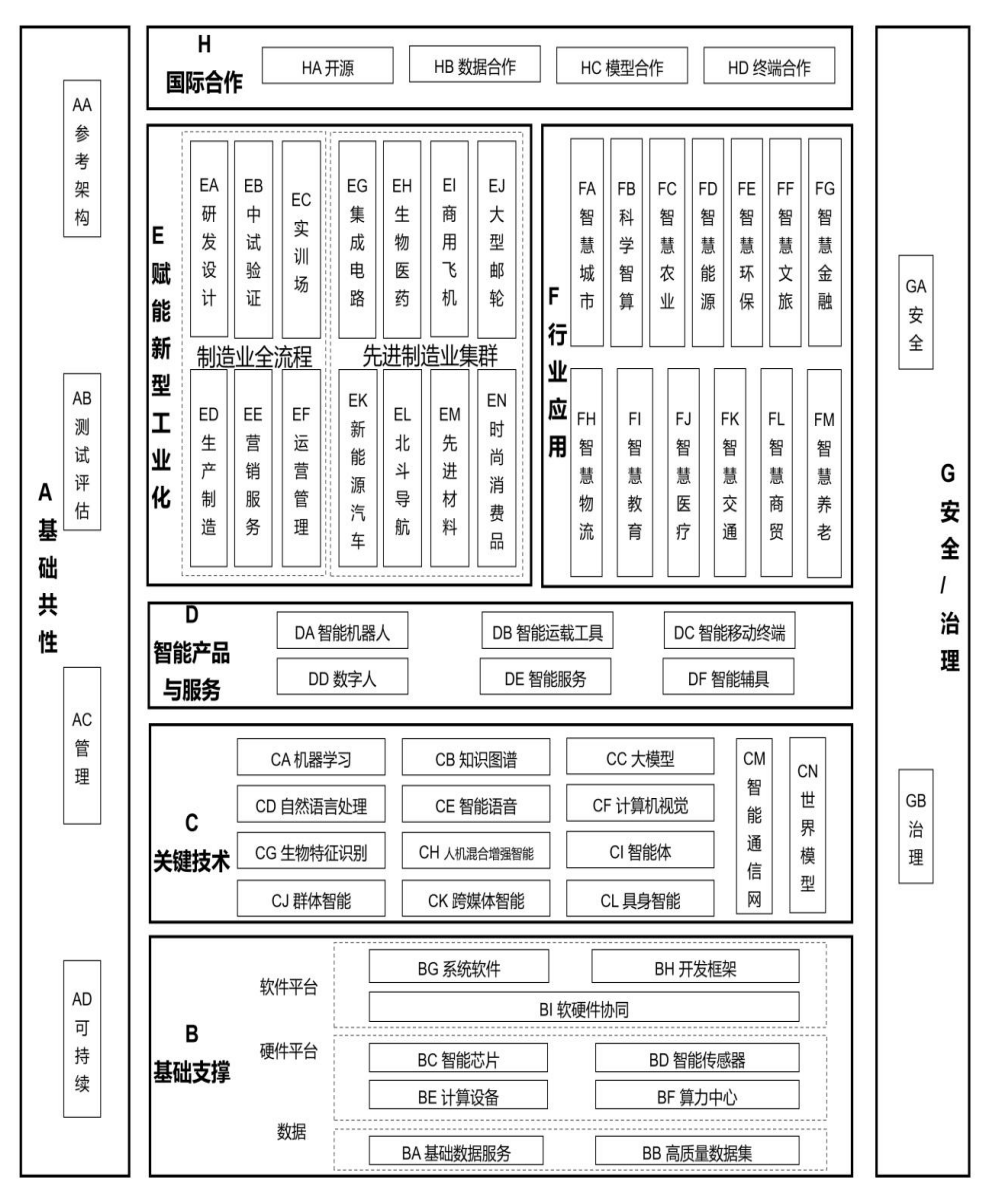
Figure 4: Structural Framework of Shanghai’s Artificial Intelligence Standard System
Back in that bustling pharmacy: the robot can clearly perceive medicine boxes, interpret customer orders, and reach out its gripper. But the next time it extends its arm, will it have a sharper anticipation of “what will happen once it touches the object”? And what kind of “brain” will be powering that intuition? The answer to that question will determine whether robots merely know “how to do the work,” or whether they can genuinely be trusted to do it reliably.
From “perceiving the world” to “simulating the next step,” the answers are continuously tested, verified, and brought to life across training grounds, workstations, laboratories, storefronts, and assembly lines throughout Shanghai.