
Setting the Benchmark for Enterprise Agents
Ting Yu reporting from Office Park
QbitAI | Official Account
Opening a 3D-printed shoe store used to take 30 days. Now, it takes just 7 days.
Liu Xianglong, an e-commerce veteran of nearly a decade, launched his new store this exact way.
He is among the first cohort of users of Qwen Workspace, delegating both pre-launch market research and product detail page creation to AI collaboration.
According to Liu, conducting market research previously meant purchasing services from consulting firms, while prepping a new launch required prototyping, sampling, and photoshoots—a workflow that easily ran up bills of tens of thousands of yuan.
This time, by using Qwen Workspace for upfront research and creative asset preparation, his token costs came out to just a few hundred yuan.
More crucially, anyone with retail experience knows that the real risk in business often boils down to: “You’ve stocked up on inventory, but the goods won’t move.”
Once a new product stalls, capital gets tied up in dead stock, cash flow grinds to a halt, and subsequent operational pacing takes a severe hit.

Today, Liu first uses Qwen Workspace to conduct research and generate product detail pages, enabling him to launch test runs on day one. Only after the validation data proves out does he decide which styles to manufacture and how many units to put into production.
(Product testing: small-scale testing of market response for a specific product)
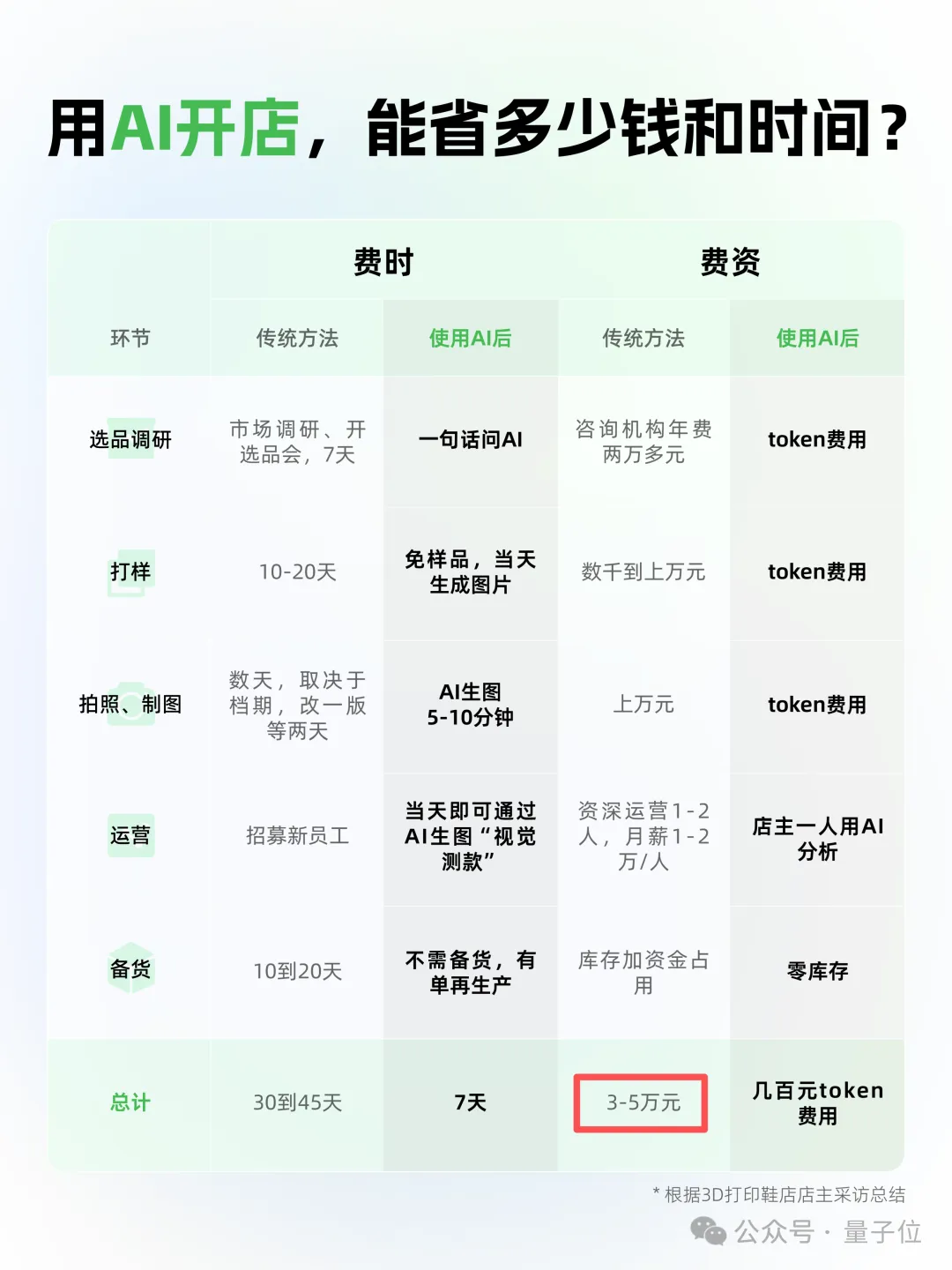
Liu readily admits that without Qwen Workspace, the new store would never have opened so quickly.
“If I had waited to launch later, someone else might have already validated the model and seized the first-mover advantage.”
When did Qwen Workspace acquire the ability to help merchants set up shop?
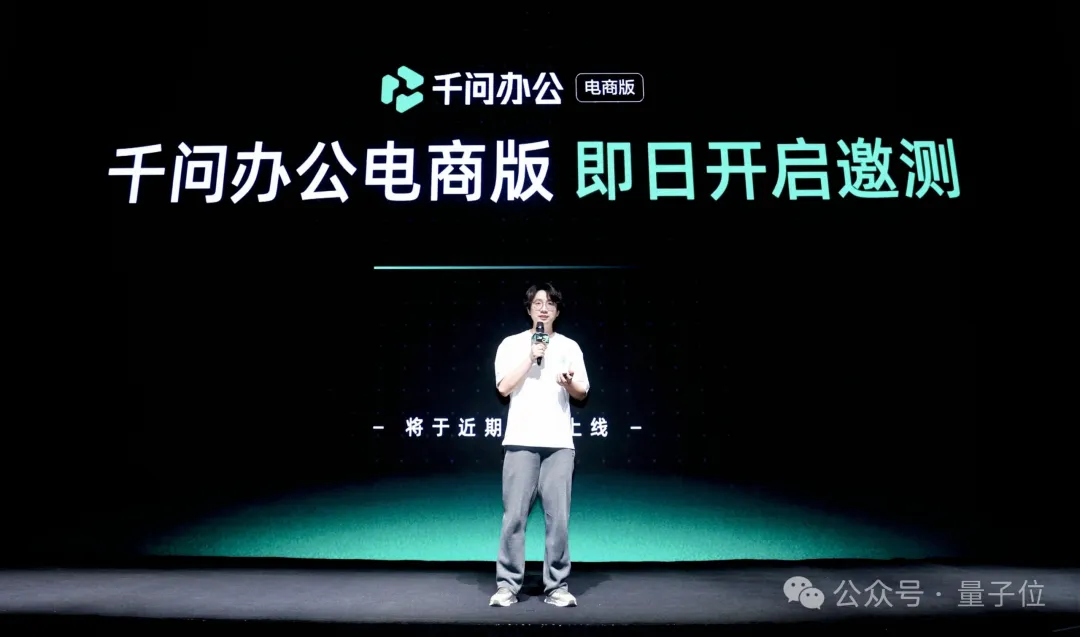
Just recently, Qwen Workspace officially launched its E-Commerce Edition, elevating what merchants previously had to piece together themselves—product selection, market research, asset creation, and business analysis—into standardized, enterprise-grade capabilities.
The hallmark of this edition is its deep alignment with the real-world operational needs of merchants.
Chen Yusen, CEO of Qwen Workspace, stated: “Qwen Workspace E-Commerce Edition is positioned as an independent, third-party e-commerce agent open to all e-commerce platforms and merchants across the web.”
Furthermore, Qwen Workspace revealed that it will subsequently integrate with more platform merchant tools and industry-specific vertical software.
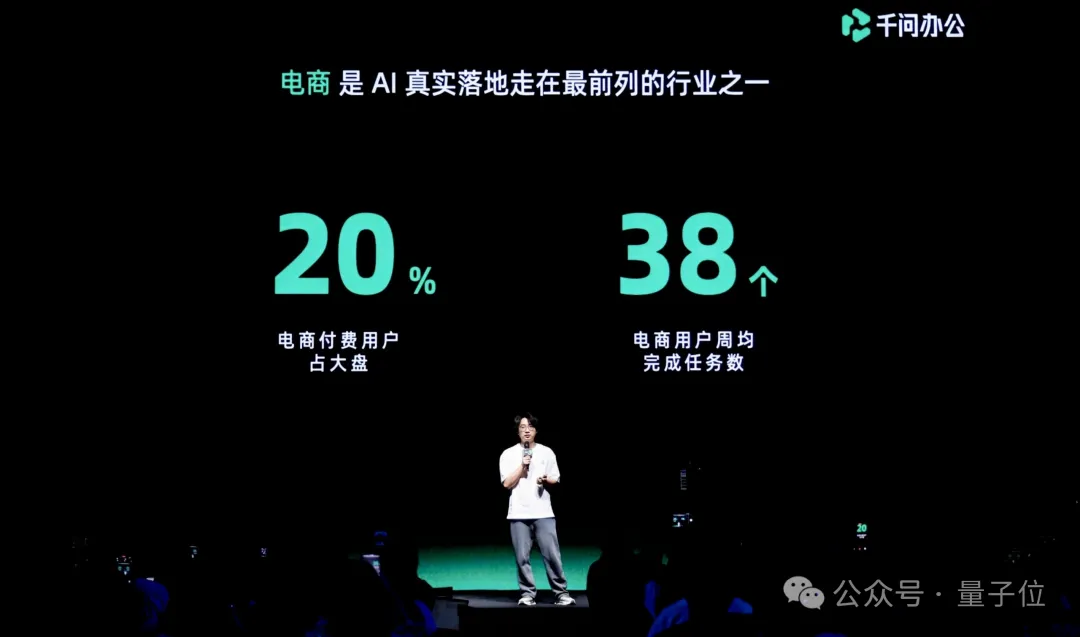
In practice, this deployment also answers a pivotal question regarding the industry’s evolution:
As AI agents transition from “personal assistants” to “enterprise productivity drivers,” what does their mature form actually look like?
Four Core Capabilities: Baking Industry Demands Directly into the Product
Liu Xianglong’s primary objective in using Qwen Workspace for market research was to evaluate the feasibility of a new business venture.
He needed to both gauge consumer intent and strictly control product testing costs, avoiding tying up working capital in inventory right at the starting line.
Such tasks clearly transcend the boundaries of everyday personal assistants.
Current personal agents on the market (such as Muse and others) primarily revolve around individual work habits and discrete, isolated tasks.
Sorting emails, managing schedules, handling routine chores—their product form is closer to a “dedicated personal secretary.”
However, when agents enter enterprise scenarios, they must understand and integrate into the concrete operational logic of the business.
For example, if an operations manager wants to evaluate whether to scale up ad spend on a particular product, they must consult financial calculations of cost and gross margin. For an agent to participate in this decision chain, it must possess enterprise-grade context.
Qwen Workspace previously integrated with the DingTalk ecosystem, allowing it to tap into relevant group chats and document information within enterprise-authorized scopes, gaining a clear view of the team’s ongoing work dynamics and business discussions.
Stepping into e-commerce, the agent must go a step further to comprehend core operating metrics across products, inventory, and ad spend.
Which core selling point should headline a new product? What brand visual identity guidelines must creative assets adhere to? How should traffic fluctuations be diagnosed and attributed? All of these require tailored workflows built around a merchant’s actual day-to-day operations.
The newly launched Qwen Workspace E-Commerce Edition systematically organizes four specialized capabilities around this end-to-end operational cycle:
Trend Insights & Selling Point Analysis
Before launching new products, merchants typically invest extensive time in market research.
This includes analyzing recent trending outfits and styles on platforms like Douyin and Xiaohongshu (RED) to uncover consumer pain points and latent demand—insights that directly dictate how selling points are framed and how content strategies are crafted.
The “Trend Insights & Selling Point Analysis” feature scrapes and analyzes trending keywords and viral content across major platforms, extracting actionable commercial signals to provide merchants with precise product seeding strategies and tactical guidance.
Batch Generation of High-Converting Creative Assets
Once the strategy is set, the next hurdle is material preparation.
The same core selling point often requires differentiated copy, images, or short videos tailored to diverse scenarios; when migrating across channels, presentation formats must also adapt in lockstep.
Moreover, bulk-generated assets must consistently adhere to the brand’s visual identity to prevent fragmented brand styling.
“Batch Generation of High-Converting Creative Assets” deeply couples brand palettes, visual style guides, and product selling points to generate high-quality creative assets in batches, customized across different product categories and sales channels.
Cross-Platform Command Center
Once products officially go live, merchants are frequently confronted with fragmented operational data scattered across multiple channels.
If sales suddenly spike in a store on one platform, can overall inventory sustain it? When external campaigns drive massive exposure, does the refund rate rise in tandem?
When operating multi-platform, multi-store setups, operations personnel historically had to log into multiple backends one by one, export disparate spreadsheets, and manually cross-reference them.
The “Cross-Platform Command Center” aggregates data across all channels into a single pane of glass, linking sales conversions with traffic trends while holistically integrating inventory fluctuations and refund anomalies into an operational panoramic dashboard. This helps merchants leave behind inefficient manual spreadsheet reconciliation, pinpoint anomalous metrics in one place, and swiftly recalibrate operational priorities.
Intelligent Cross-Platform ROI Optimization
Daily ad spend requires continuous, dynamic monitoring. Because advertising budgets burn by the minute, static, one-off analysis reports fail to keep pace with volatile market shifts.
“Intelligent Cross-Platform ROI Optimization” uses automated scheduled tasks to pull ad performance reports. The moment it detects an ROI dip or abnormal budget burn rate, it fires real-time alerts alongside targeted optimization recommendations, empowering merchants to make data-backed calls on whether to hold steady or immediately adjust ad creatives and budget allocations.
From early-stage product selection and positioning to downstream traffic acquisition, the four core capabilities of Qwen Workspace E-Commerce Edition embed seamlessly into merchants’ operational workflows, translating generic AI analysis and generation capabilities into concrete business utilities.
For an agent to deliver tangible business value in these workflows, it must first fundamentally grasp the underlying mechanics of commercial operations. This reinforces an emerging industry consensus: vertical specialization is the indispensable path to unlocking the value of enterprise-grade agents.
Only by deeply comprehending the end-to-end machinery of a business can an agent truly weave itself into workflows and genuinely unleash industrial productivity.
Plugging into Existing Software: 4 Months of Assets Prepared in 15 Days
At this point, many industry practitioners might wonder:
If a store has already deployed an ERP and purchased various operational management tools, how do disparate systems coordinate when introducing Qwen Workspace?
In daily operations, merchants typically check traffic and conversion data in platform-native tools like Business Advisor, while inventory and financial data reside across in-house or third-party ERP software. Accurately calculating unit economics frequently relies on repeatedly exporting and stitching together multiple spreadsheets by hand.
Addressing this friction point, Qwen Workspace E-Commerce Edition delivers a targeted solution:
Leveraging APIs and a connector ecosystem, Qwen Workspace flexibly orchestrates merchants’ existing software assets, restructuring data retrieval, data cleaning/normalization, and multidimensional analysis into automated workflows.
8-Bit Coffee is a lean team of just 17 people whose business spans over a dozen e-commerce channels. Originally, they relied primarily on DingTalk for routine approvals and financial collaboration.
After adopting Qwen Workspace, the team maintained their established software habits while using connectors to systematically pull authorized data into their automated workflows.
In the past, the team’s new product development relied heavily on the founder’s subjective palate and industry hearsay. Today, with Qwen Workspace, the team has built a structured Product Selection & Research Skill.
This system first diagnoses the performance of proprietary SKUs, filtering for high-impression but low-conversion potential winners, while simultaneously constructing a competitor database to refine comparative analysis across product detail pages.
Taking the development of a cold brew coffee as an example, the analysis report not only benchmarked competitor differences in processing methods and flavor profiles, but also factored in price-band performance, supplying the team with precise, quantified benchmarks to optimize their formulation.

8-Bit Coffee rarely used natural-processed beans in its cold brew blends before. However, through this Product Selection & Research Skill, the team discovered that across monitored best-selling competitor samples, “natural” processing ranked highest in statistical weight, whereas the team’s historical favorite—“washed” processing—only ranked third.
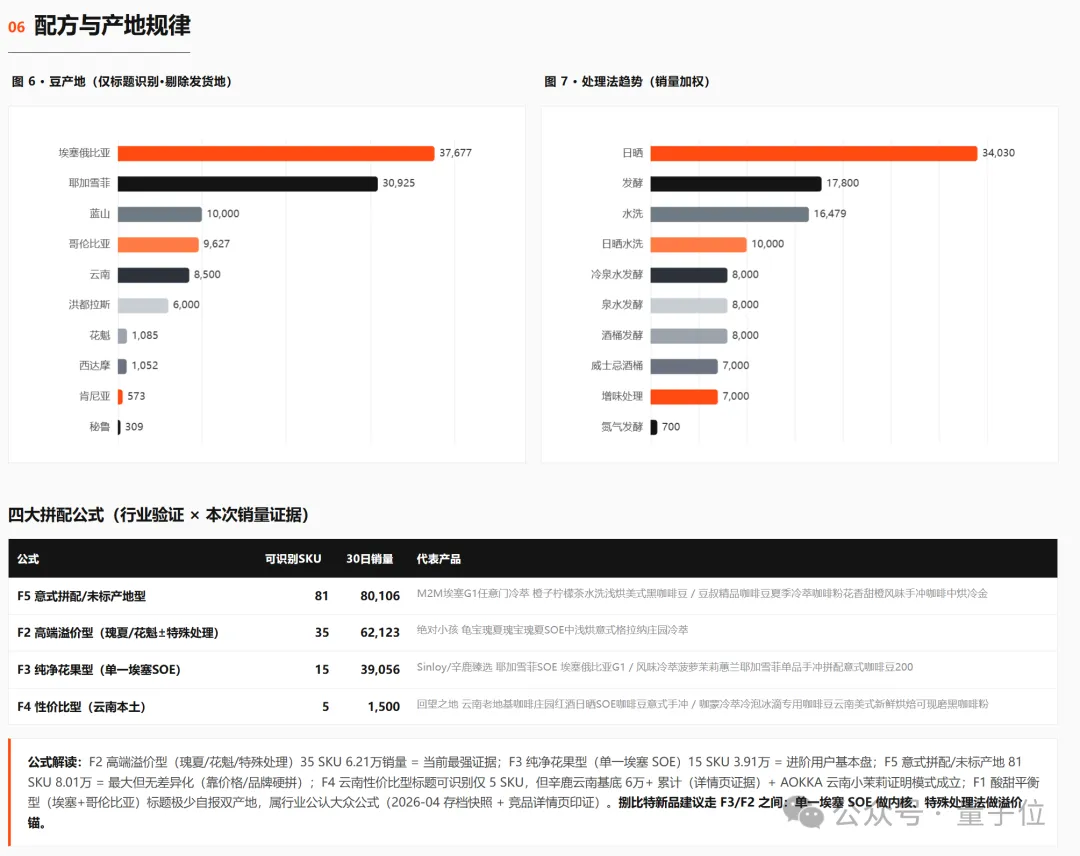
Working backward from this data, the team promptly adjusted the recipe structure. Combining existing supply chain capabilities with double-blind taste tests, they rolled out a new Geisha cold brew SKU.
The payoff was immediate: according to brand feedback, sales of this new product reached nearly 10 times that of their standard legacy products in the same category.
This operational paradigm was swiftly replicated across their weekly business report generation and profit calculation workflows:
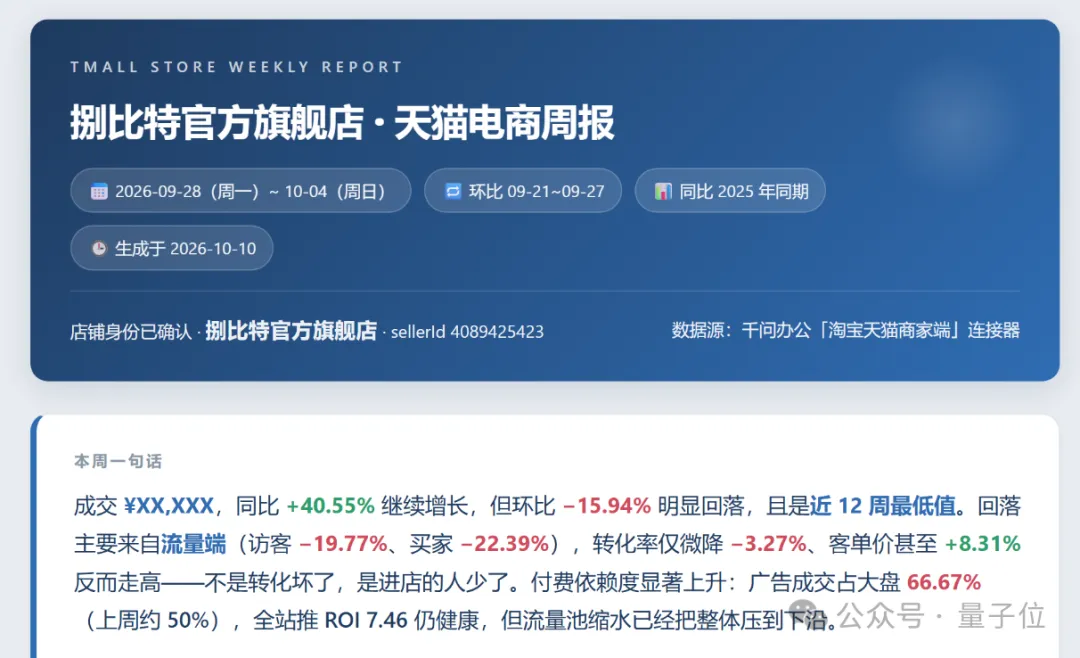
Data that previously required logging into administrative backends, manual exports, and ad-hoc consolidation is now automatically gathered and cleaned by Qwen Workspace on a preset schedule, then pushed directly to DingTalk group chats with one click. Once armed with the weekly report, the team can dive straight into root-cause discussions regarding operational variations, eliminating hours of tedious, mechanical desk work.
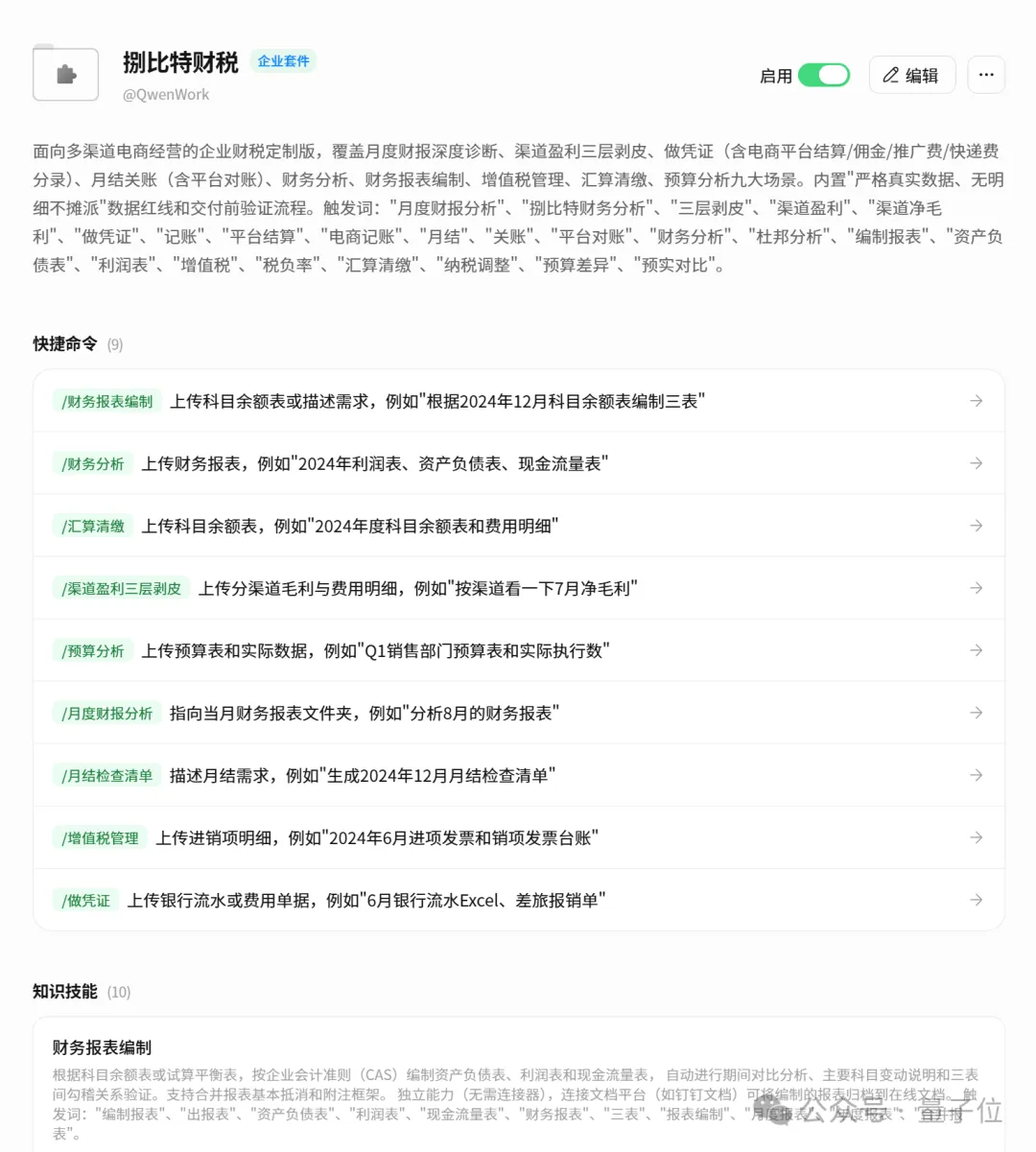
Additionally, 8-Bit Coffee utilized MCP connectors to bridge Jushuitan ERP and Business Advisor, tasking Qwen Workspace with automated data extraction and cleaning while integrating with DingTalk’s smart finance suite to build a custom analytical dashboard.
Multidimensional financial ledgers across disparate systems are unified and reconciled, granting the team real-time visibility into net gross margins across all channels.
Sandy’s lingerie startup serves as another textbook case. With just two core members running two distinct brands, the team needs to produce nearly 10,000 promotional seeding images for a single new collection launch season.
By integrating third-party AI image-generation tools into Qwen Workspace, the team had the agent orchestrate batch image generation and asset curation workflows. According to Sandy, the creative preparation cycle for their fall/winter launch season was slashed from four months to roughly 15 days.

Daily operational analytics were similarly automated. Qwen Workspace extracts and cleans data in real time across business systems and autonomously produces in-depth attribution reports, cutting the time required for a single ad performance review from about 3 hours to under 1 hour, radically boosting review and decision-making efficiency.
Across this integrated workflow, ERPs and specialized analytics tools continue to provide foundational value as specialized systems of record, while the agent acts as an “intelligent central hub.” Orchestrating tools across applications based on business intent, it knits previously fragmented, human-dependent tasks into a complete, cross-system closed loop.
Disparate data streams coalesce to inform product selection and profit modeling, liberating merchants entirely from the grueling grind of manual spreadsheet gymnastics.
Agents are evolving into a “new intelligent connectivity layer” atop legacy vertical software architectures. Rather than just activating existing SaaS assets, they unlock system-level incremental commercial value for legacy software. This collaborative synergy also outlines a viable path forward for the symbiotic evolution of AI agents and SaaS.
The Next Battleground for Enterprise Agents Lies Within Industries
Why did Qwen Workspace choose e-commerce as its first point of breakthrough?
The fundamental reason is that e-commerce makes it exceptionally easy to quantify outcomes.
From initial prototyping and listing promotion to final order fulfillment, the vast majority of business activities take place natively online. Operational data is granular and generated in real time, and vertical SaaS ecosystems are comparatively mature, providing fertile ground for agents to deeply intervene in core workflows.
Whether measured by the reduction in asset turnaround times or the person-days saved on weekly reports, merchants can quantify gains in clear, tangible metrics.
At the same time, micro, small, and medium-sized merchants face an especially acute demand for efficiency tools.
Take teams like 8-Bit Coffee: despite a lean headcount, their multi-platform presence is complex, making it impossible to assign dedicated specialists to every operational node. Tedious day-to-day firefighting consumes most of their bandwidth, leaving little time to track emerging market trends.
Even when they procure digital software suites, lacking dedicated technical staff prevents them from bridging siloed systems and waking up dormant data.
The core value of Qwen Workspace is precisely enabling resource-strapped, technically lean teams to fully activate their existing software stack and execute heavy operational tasks with high quality and efficiency.

At the underlying architectural level, by tapping into enterprise context accumulated in DingTalk, Qwen Workspace equips agents with ample business priors before execution, sparing employees from repeatedly aligning business logic or re-entering context.
In terms of execution mechanics, its proprietary agent orchestration framework breaks down complex composite requirements into multi-step chains, dynamically selecting and invoking the appropriate tools.
Take an in-depth operational report as an example: after multi-source data extraction, it demands intricate cleaning and cross-validation. The agent must consistently maintain the defined statistical window and core analytical goals, accurately tracking the status of each step across multiple cross-system invocations to drive the long-horizon task forward.
Qwen Workspace’s long-context compression and dynamic session recovery technologies are designed specifically for such long-duration, complex tasks: they durably retain critical execution fields to guarantee continuity across multiple tool calls, while offering checkpoint resumption and fault-tolerant recovery.
For merchants, this engineering robustness determines not only whether an individual report can be delivered strictly to specification, but also whether high-frequency, repetitive business processes can run reliably day in and day out—yielding dependable cost reductions and exponential efficiency gains.
In essence, Qwen Workspace E-Commerce Edition has established a definitive blueprint for enterprise-grade agent deployment:
Leveraging connectors to stay compatible with existing industry ecosystems, and tailoring interaction capabilities around the full lifecycle of real-world business, it allows a general-purpose workplace agent to take root in the front-line soil of real commerce.
As a neutral, independent third-party agent platform, it remains completely open to the broader industrial ecosystem and will continue integrating with an expanding roster of platforms and services.
The debut of this e-commerce edition signals a clear industry inflection point: the competition among enterprise agents is rapidly shifting from raw base-model parameter scale to the depth of domain understanding and ecosystem integration.
How much productivity an AI model can truly deliver must ultimately be put to the test in the demanding closed loops of real enterprise operations.
Whoever can truly stitch together vertical enterprise applications and deeply master industry logic will hold the initiative in defining the next generation of enterprise productivity and collaborative paradigms.
Reportedly, Qwen Workspace will continue expanding into diverse vertical industries, including finance, government affairs, and education.