
The era of Math 2.0 has arrived.
Just now, leading mathematician and Fields Medalist Terence Tao published a new statement:
AI is leading to a deluge of mathematical proofs; the era of Math 1.0, built upon “proof scarcity,” is drawing to a close.
Ever since OpenAI announced it had resolved the Navier–Stokes Millennium Prize Problem, mathematicians led by Terence Tao have met AI’s aggressive advances not only with frequent public skepticism, but with urgent calls for the industry to hit the brakes.
Yet the wheels of history roll forward, and the rapid rise of AI is evidently irreversible.
Rather than acting merely as an “AI decelerationist,” Tao has posed a deeper, more fundamental question to the mathematical community:
How can we ensure that the ever-growing volume of AI proofs brings deeper human understanding, better training, and more dependable real-world impact?
And looking ahead: What kind of mathematicians will we actually need?
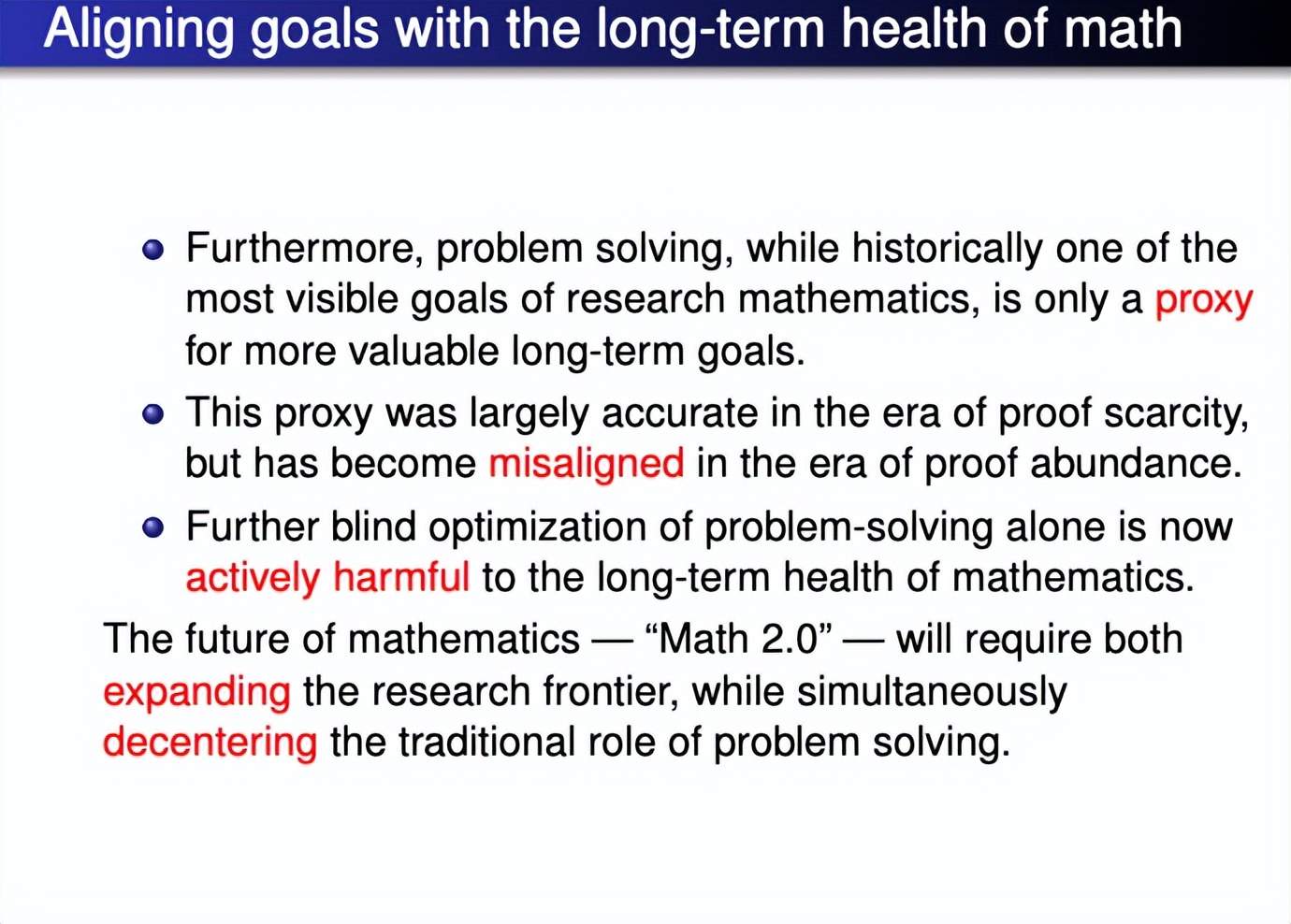
From “Proof Scarcity” to “Proof Abundance”: The Shift in the Foundations of Math 2.0
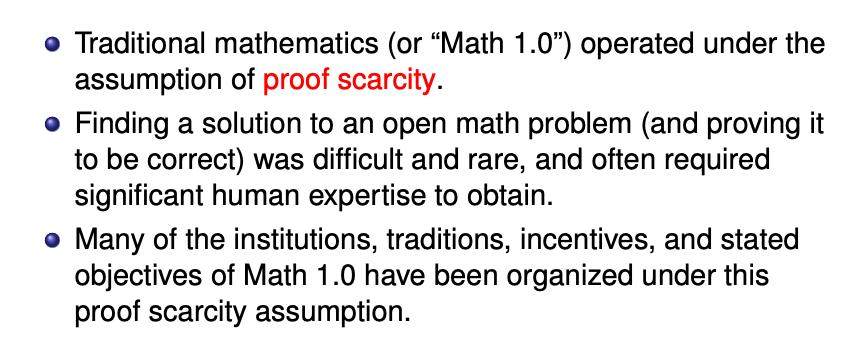
Tao argues that throughout the Math 1.0 era, traditional mathematical research operated in an environment of “proof scarcity.”
Tackling an open problem usually demanded decades of deep specialized expertise alongside immense investments of time and energy. As a result, “who solved what first” naturally became the definitive yardstick for measuring academic contribution in mathematics.
Today, however, AI is fundamentally upending this status quo.
Whether it is OpenAI dropping 722 math papers overnight—making sweeping incursions into monumental problems like the Quasi-Riemann Hypothesis, the Hodge Conjecture, and the BSD Conjecture;
(See details: https://mp.weixin.qq.com/s/P40M32TnTppU3jsDTvFGmg)
Or extending the 3D Kakeya conjecture, recently solved by Fields Medalist Hong Wang, into four dimensions;
(See details: https://mp.weixin.qq.com/s/CDfZGoors8TmTnzSl0rszQ)
All of this is radically altering the cadence of mathematical research, shaking the legacy evaluation framework of Math 1.0, and compelling mathematicians—beyond signing joint petitions—to confront an increasingly pressing question:
Beyond the proof itself, what is a mathematician’s true moat?
(See details: https://mp.weixin.qq.com/s/E-6A_HrJaj7P8j5TXpt_1w)
In his post, Tao acknowledged frankly:
The barrier to obtaining solutions has undeniably dropped.
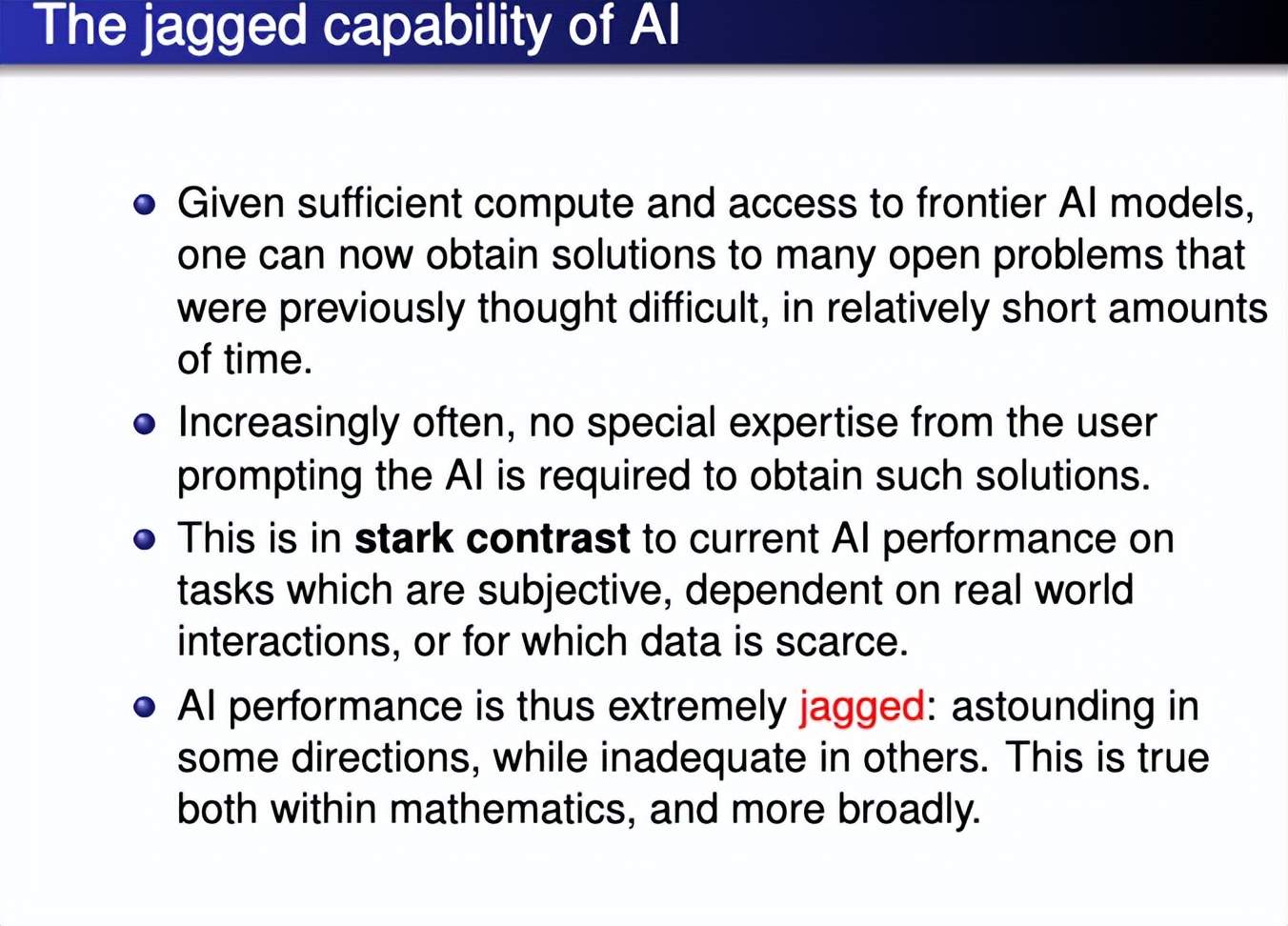
Given ample compute and access to frontier models, solutions to open problems long thought to be virtually intractable can now be produced in a relatively short window of time.
Yet evaluating whether a solution is genuinely rigorous, assessing the true depth of its academic contribution, and integrating it into existing theoretical frameworks still demand careful, diligent work.
Failing to do so risks a troubling disconnect—problems get solved, but human understanding does not increase alongside them.
Regarding why mathematics is so uniquely susceptible to AI disruption, Tao summarized three compounding factors:
1. Proofs can be objectively verified;
2. Mathematical objects and reasoning processes are highly digitizable;
3. An extensive corpus of high-quality research literature already exists in digital form.
These conditions, paired with heavy investments from frontier AI labs, have swiftly propelled mathematics to the forefront as the premier testing ground for rapid leaps in model capabilities.
At the same time, Tao pulled up the classic survivorship bias airplane diagram, cautioning against overlooking the broader picture:
The vast majority of problems on the mathematical frontier remain unsolved.
AI’s capabilities are unevenly distributed; it dazzles in certain domains while faltering in others.
What AI labs showcase to the public is almost always a curated selection of triumphs, while the countless failed attempts rarely see the light of day.
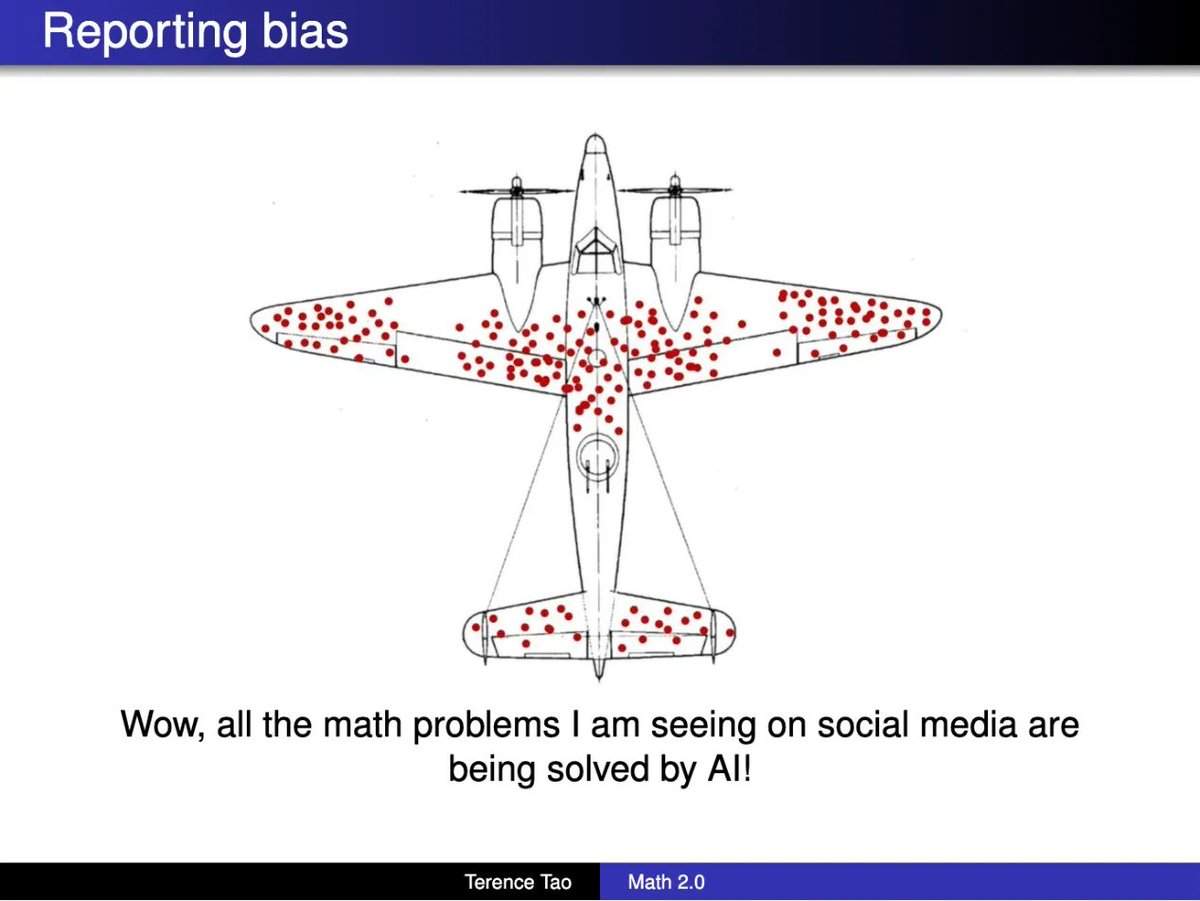
Counting only the successes makes it impossible to scientifically assess critical factors like success rates, resource consumption, and the degree of human intervention involved.
Tao therefore called for an urgent reform: We urgently need more transparent and rigorous benchmarking frameworks that document failures and compute costs alongside reported successes.
Yet, is it enough for AI to simply supply correct proofs while disclosing failures and compute overhead?
Tao clearly thinks not.
Blindly Optimizing for “Problem-Solving” Could Harm the Long-Term Health of Mathematics
When contemplating the true purpose of mathematical research, Tao offered an evocative analogy:
Open problems are like lighthouses.
They guide us as we explore the surrounding mathematical landscape; reaching the lighthouse does not mean the exploration is complete.
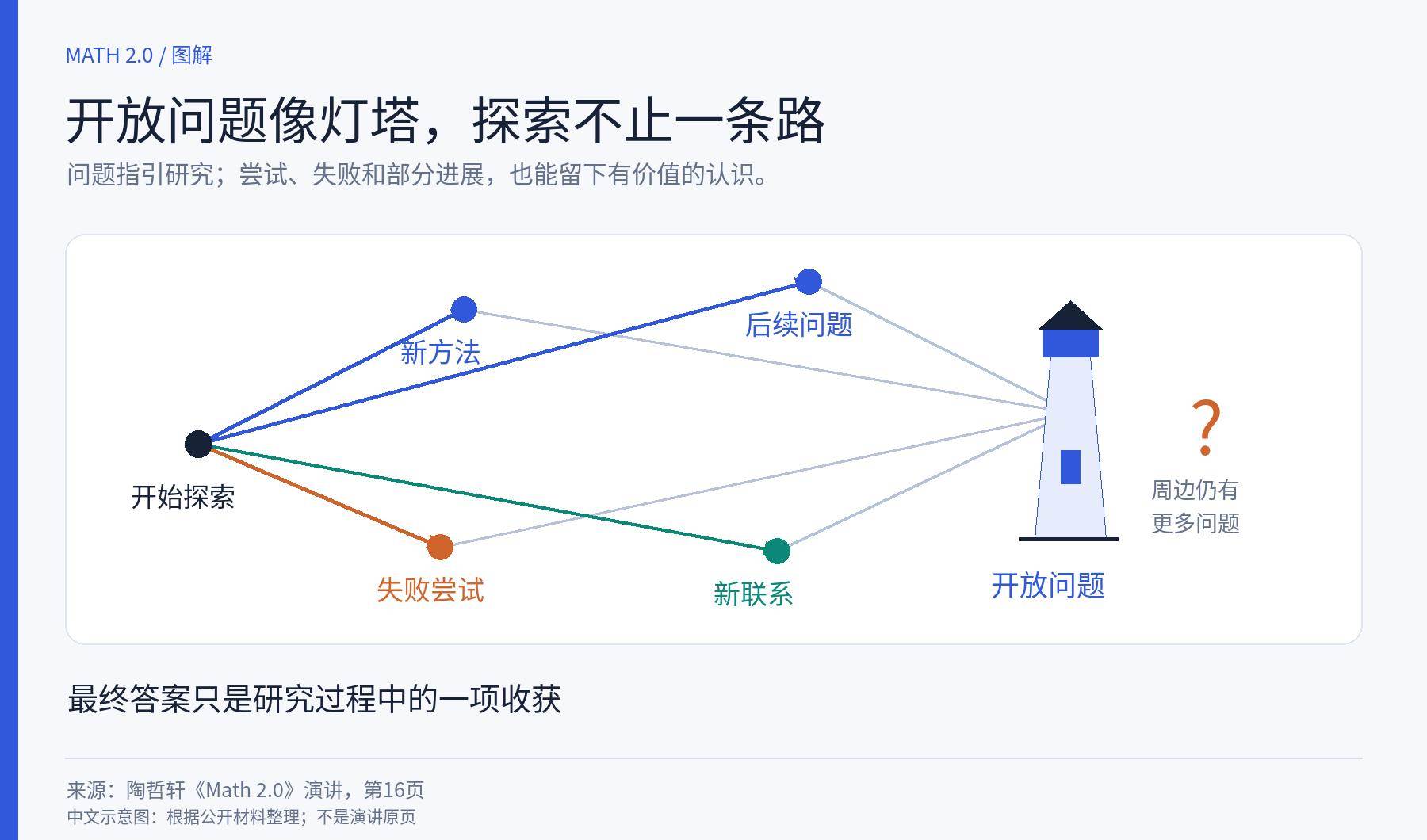
Tao believes that in the journey of tackling a problem—whether one succeeds, fails, or makes incremental headway—the insights gained along the way are often far more valuable than the final answer itself.
If automated tools deliver answers prematurely, and the incentive system exclusively rewards “problem solved,” the unexplored trails along the way risk losing all motivation to be investigated.
After all, the Millennium Prize Problems are finite in number; but in real mathematical research, the trails, insights, connections, and new questions spawned by a single problem are virtually limitless.
He warned accordingly:
Continuing to blindly optimize solely for “problem-solving” will jeopardize the long-term health of mathematics as a discipline!
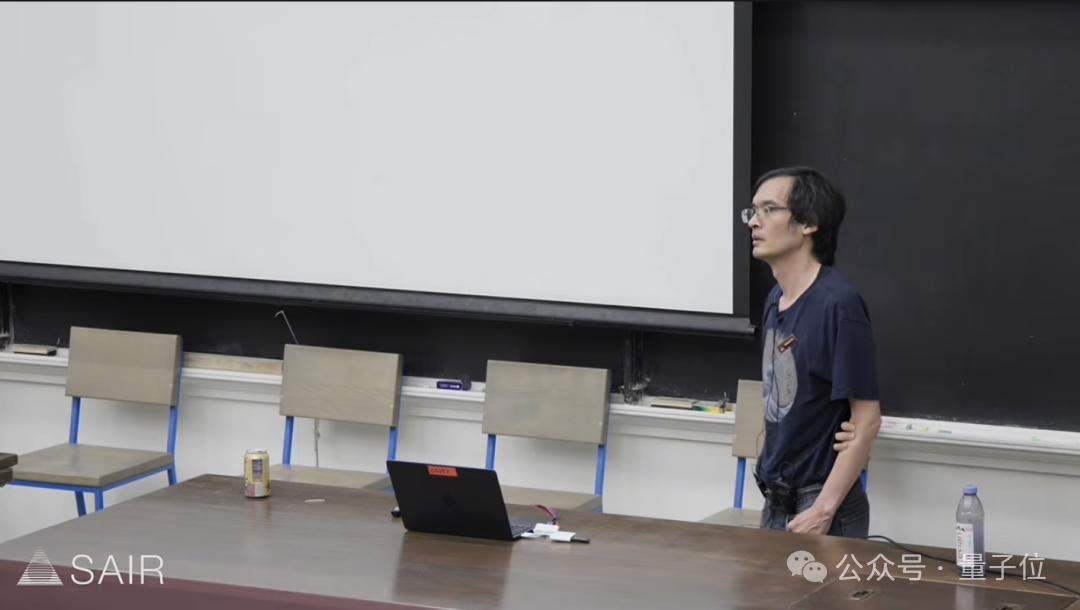
Looking through this lens makes it easy to understand why Tao leveled such sharp criticism at frontier model labs in his recent SAIR address:
It is mind-boggling how AI companies are charging ahead relentlessly without any inkling of what happens next.
We have to slow down. There is simply no reason to move this fast—none whatsoever!
(See details: https://mp.weixin.qq.com/s/s35QsObpRO2G6mS1CGoBHQ)
This concern had already surfaced in his earlier public remarks.
As early as September, Tao noted in a blog comment:
AI can serve as a powerful tool for mathematical research, but blindly chasing short-term milestones may come at the expense of the mathematical community’s long-term sustainability.
He worries that the latter scenario is unfolding rapidly: When answers become effortless to obtain, will researchers still be willing to slow down, truly understand them, and continue exploring the surrounding mathematical world?
In a telling twist, the shockwaves of AI’s relentless progress were felt in Tao’s own keynote.
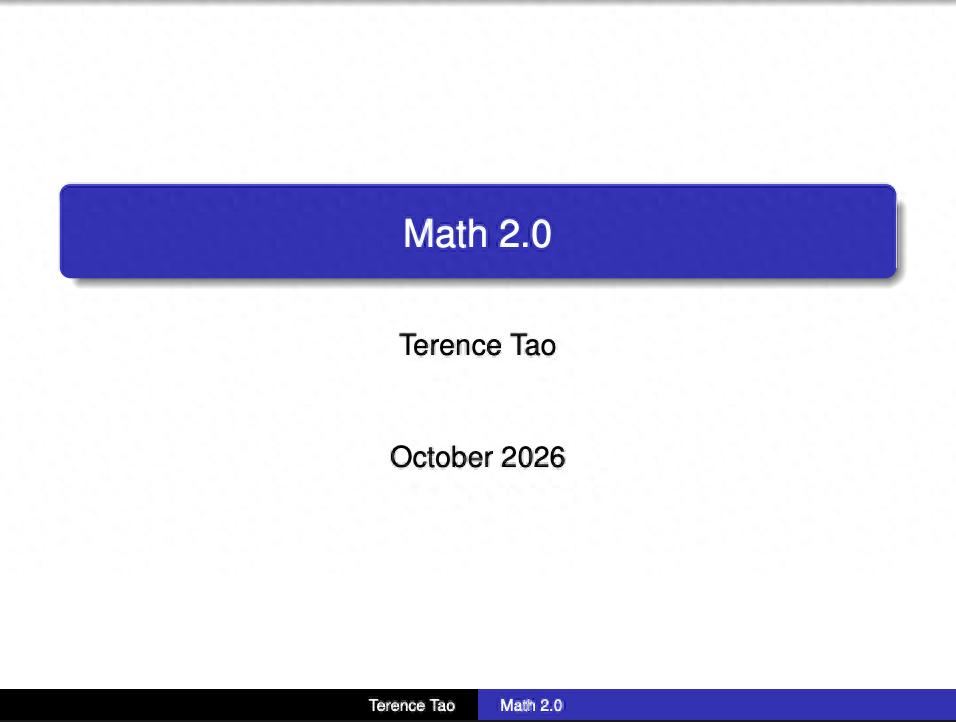
Tao revealed that his talk was originally titled “Machine-Assisted Proof”; but following the recent blitz of AI breakthroughs rattling the math world, he had to overhaul his deck, ultimately renaming it “Math 2.0.”
The dramatic irony was palpable.

So, as AI becomes increasingly adept at solving problems and deriving proofs, where does the human mathematician’s core moat truly lie?
The answer may reside in Tao’s “Cancer Therapy Thought Experiment.”
Beyond Proof: Understanding, Training, and the Real World
To illustrate why human understanding remains indispensable, Tao presented a compelling thought experiment during his talk:
Imagine asking an advanced AI to discover a cancer therapy that passes Phase III clinical trials.
After consuming astronomical amounts of compute, it outputs a cocktail of unknown chemical compounds: the model predicts it kills cancer cells, formal verification in Lean checks out, and Phase III trials succeed without a hitch;
Yet no one knows how it arrived at this formulation, and no one can say for sure whether the AI discovered an authentic cure or simply exploited an edge case in the trial protocol.
Before that needle enters your vein, wouldn’t you want at least one oncologist who understands its mechanism of action? One mathematician who grasps the underlying mathematical reasoning of the model? Or at least one scientist who understands the AI that found the cure in the first place?
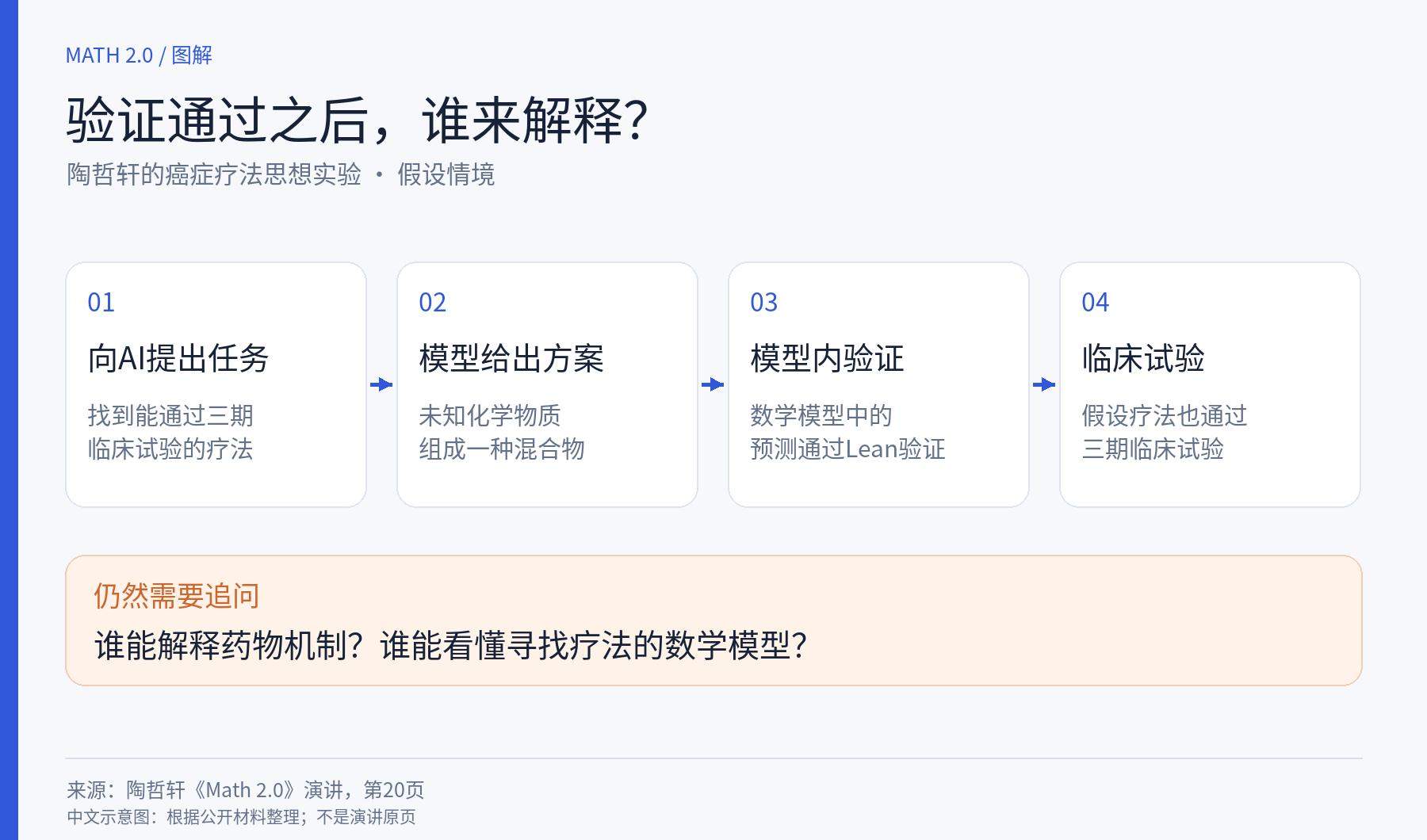
This thought experiment addresses objective specification, formal verification, and human understanding.
It grounds abstract mathematical debates in high-stakes reality: Even when a model’s internal conclusions are logically verified, human judgment is still essential to determine whether they truly align with real-world objectives.
This is precisely why human scientists cannot be displaced—models can generate answers, verify steps, and accelerate exploration, but they cannot serve as the ultimate stewards for humanity.
The value chain of mathematical proof must likewise extend in this direction.
In his earlier essay Mathematics in the Age of AI, Tao broke problem-solving down into five distinct stages:
- Generating a proof;
- Verifying its correctness;
- Explaining it clearly;
- Achieving understanding and acceptance within the academic community;
- Ultimately integrating it into the field’s standard theoretical canon.
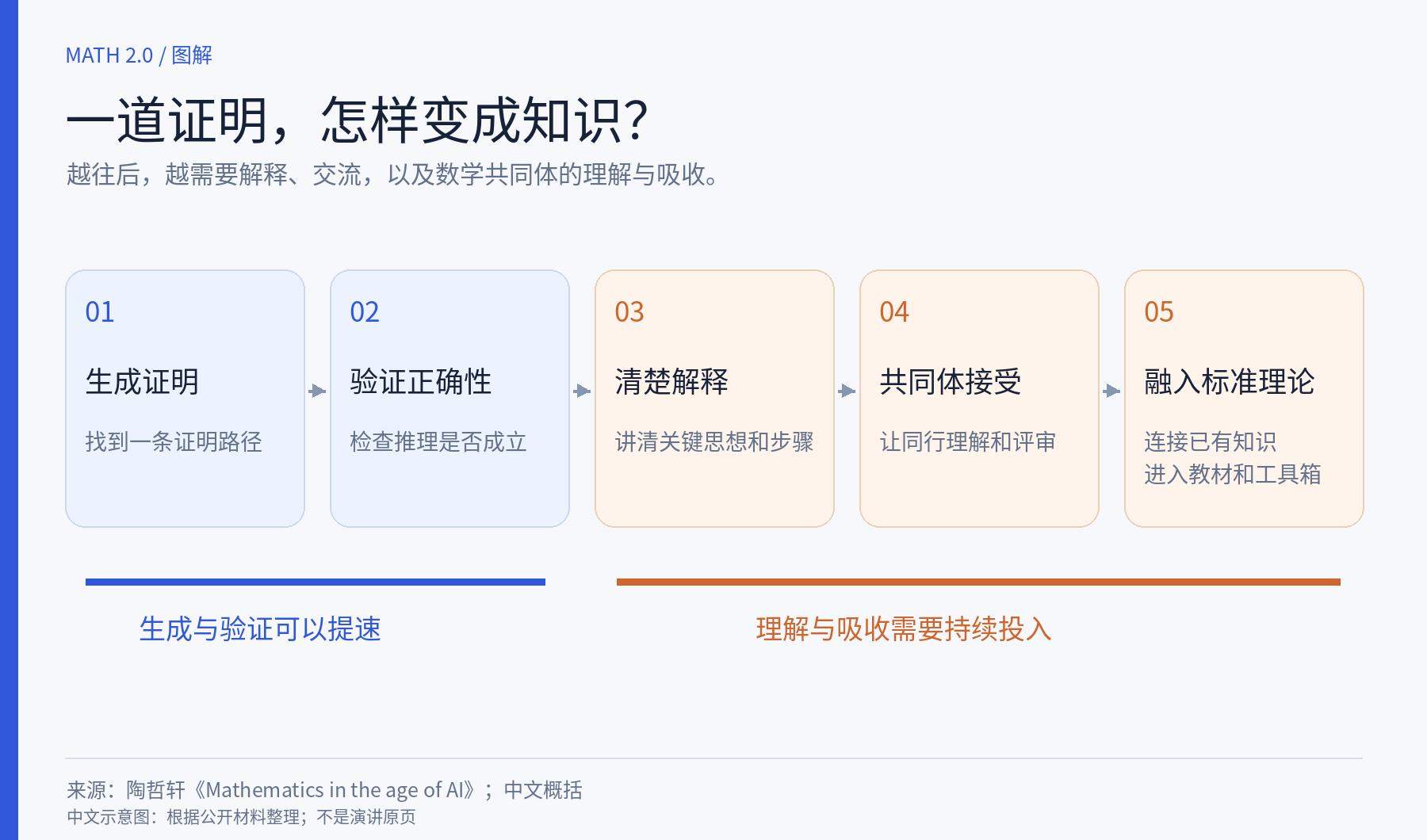
The final stage, in particular, is notoriously deliberate and slow:
Researchers must discover more natural formulations and more elegant proofs, bridging new conclusions with established knowledge, before a result can make its way into textbooks and become part of the toolkit for the next generation of mathematicians.
And this is precisely the stage AI struggles most to accelerate.
If AI rushes forward almost exclusively at the front end, the back end inevitably suffers from “proof indigestion.”
He therefore advocates:
Shifting focus away from the obsession with being the first to generate a proof, and redirecting it toward exposition, peer review, and knowledge synthesis.
The debate over “what comes after proof” escalated sharply in early October:
On October 7, OpenAI dropped 722 math papers in one fell swoop, thoroughly infuriating AI-decelerationist scholars led by Tao.
Shortly thereafter, Tao spearheaded the founding of the Association for Human Mathematics (AHM), issuing a hard-hitting joint declaration:
Dumping more than 700 papers at once is not scientific research; it is pure computational flex and posturing.
We strongly urge all mathematicians to halt collaborations with OpenAI and return to a scientific vision rooted in human understanding!
(See details: https://mp.weixin.qq.com/s/E-6A_HrJaj7P8j5TXpt_1w)
In Tao’s view, formal verification alone is far from sufficient; authors must also be able to explain their work clearly. Results stripped of expository clarity remain fundamentally incomplete.
This series of events has struck a nerve with early-career researchers, sparking their most existential anxiety:
If AI can generate papers in seconds, is there still any point in pursuing a master’s or PhD?
In the Era of AI, Does Getting a PhD in Math Still Make Sense?
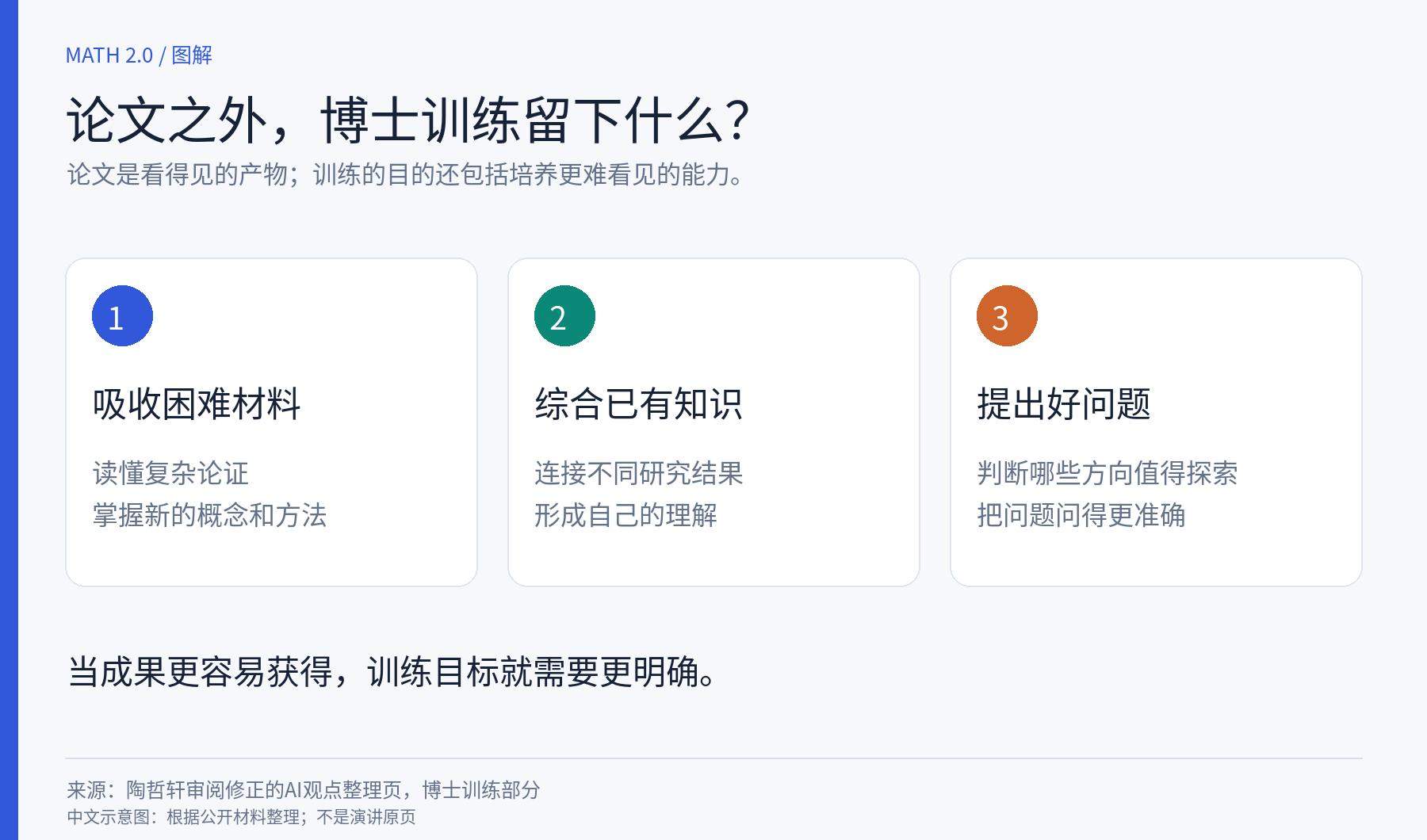
Tao argues that in the AI era, the value of pursuing a PhD is no longer about paper production, but about developing a systematic ability to digest challenging material, synthesize knowledge, and pose meaningful questions.
Drawing an analogy to diet and exercise, he remarked:
In the age of AI, if what you seek from a PhD is not merely another paper on your CV, but the discipline to tackle tough problems, synthesize broad ideas, and ask the right questions, then a PhD remains profoundly valuable.
But if your goal is solely to churn out outputs, its necessity is undeniably declining in the AI era.
Just as an abundance of food and modern transit requires us to deliberately exercise,
when answers are available at our fingertips, we must consciously cultivate our cognitive faculties and resist the temptation to bypass deep thinking. That, precisely, is the core purpose of doctoral training.
So, is there a constructive paradigm where AI and researchers co-evolve?
In his talk, Tao revealed that he is already pursuing practical initiatives:
For instance, the Open Math Models initiative launched by the SAIR Foundation, co-founded by Tao, focuses in its first phase on day-to-day research workflows—such as parsing dense arguments, verifying literature citations, searching for counterexamples, writing code, and formalizing proofs.
He also shared that these open math models will be officially released soon.
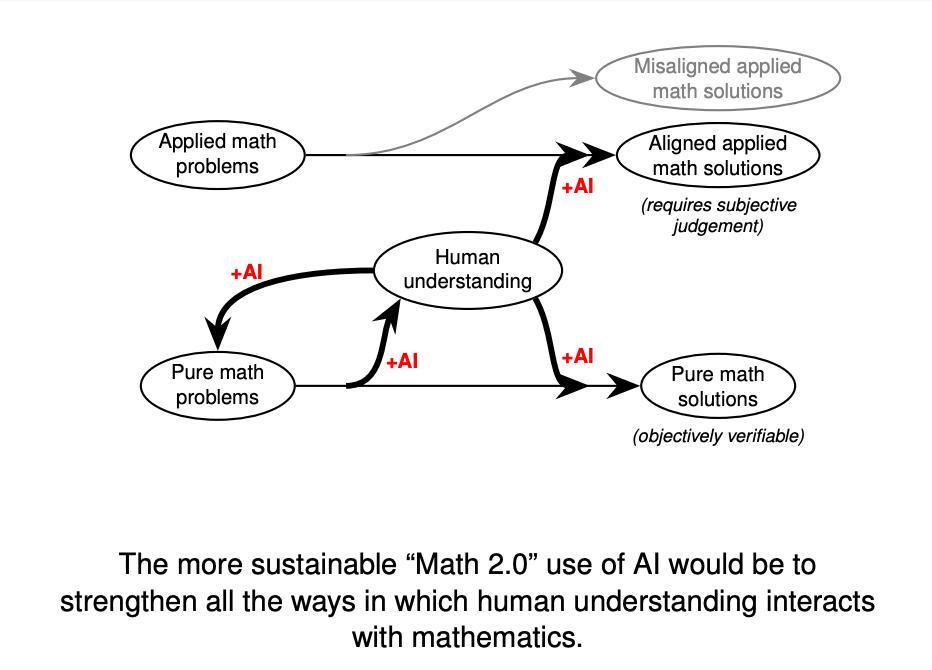
△ A more sustainable paradigm for AI in “Math 2.0,” presented by Terence Tao.
One More Thing
Closing his talk, Tao framed the primary bottleneck on the road to Math 2.0 as imagination.
In his view, the supply dynamics of proof are being rewritten, but how we harness this shift to advance human understanding, training, and exploration in lockstep remains a choice the mathematical community must make together.
Once a difficult problem is proven by AI, the forward-looking inquiry for mathematicians will mark a new departure:
What can we learn from this answer?
And where do we go from here?

Reference Links:
[1] https://teorth.github.io/tao-web/ai-views.html
[2] https://x.com/ns123abc/status/2109045309112250560
[3] https://teorth.github.io/tao-web/slides/math-2-0-caltech-2026.pdf?utm_source=chatgpt.com
[4] https://arxiv.org/html/2608.16753v1?utm_source=chatgpt.com