
Staying up late definitely paid off: Google’s “Banana” just got an update!
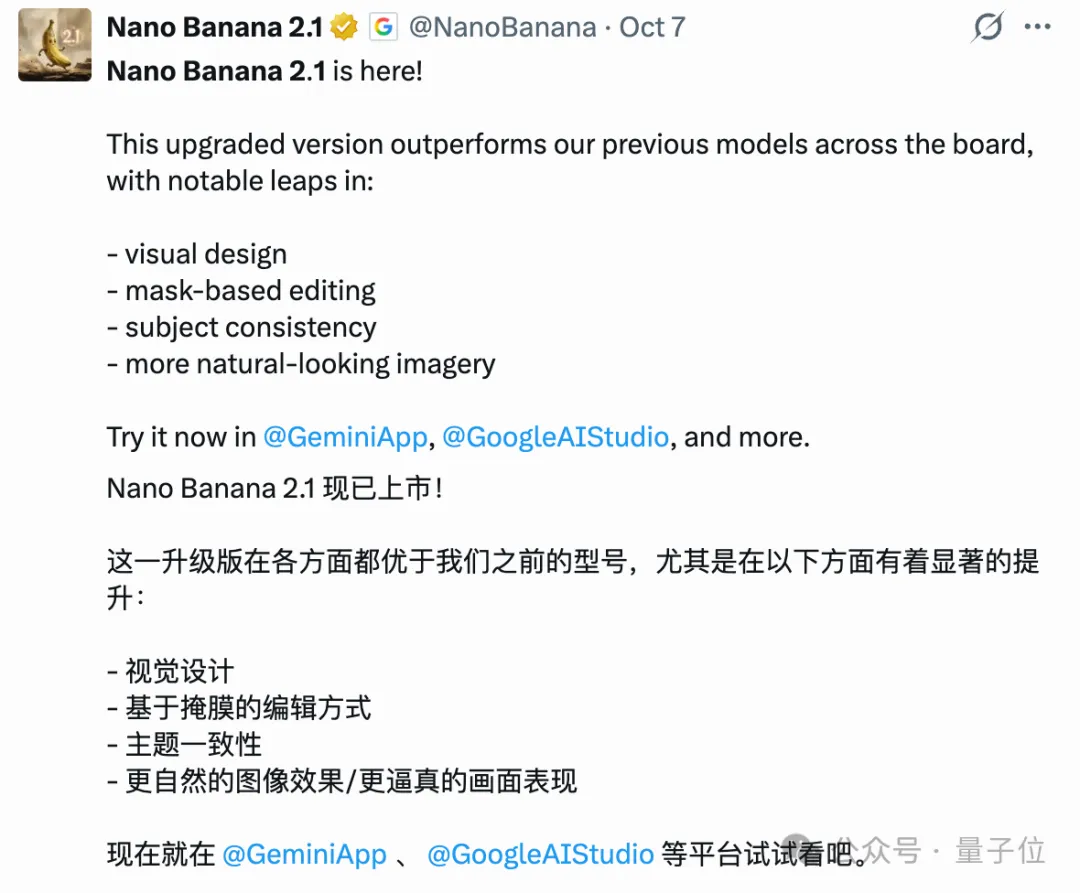
In the early morning hours, Google unexpectedly dropped its next-generation image generation model, Nano Banana 2.1, delivering comprehensive upgrades across visual design, mask editing, subject consistency, and lifelike realism.
Not only can it output native 4K photography-grade masterpieces right out of the box, but it also supports freehand editing and one-click background replacement, directly curing designers’ headache of endlessly revising graphics:
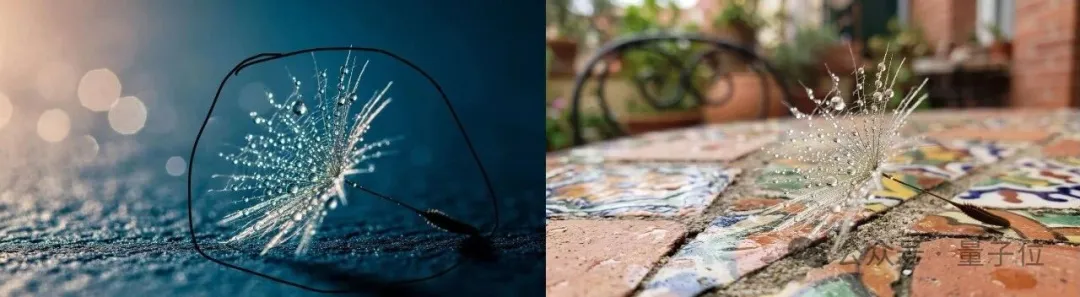 △ Circle the subject to preserve it and seamlessly swap the background
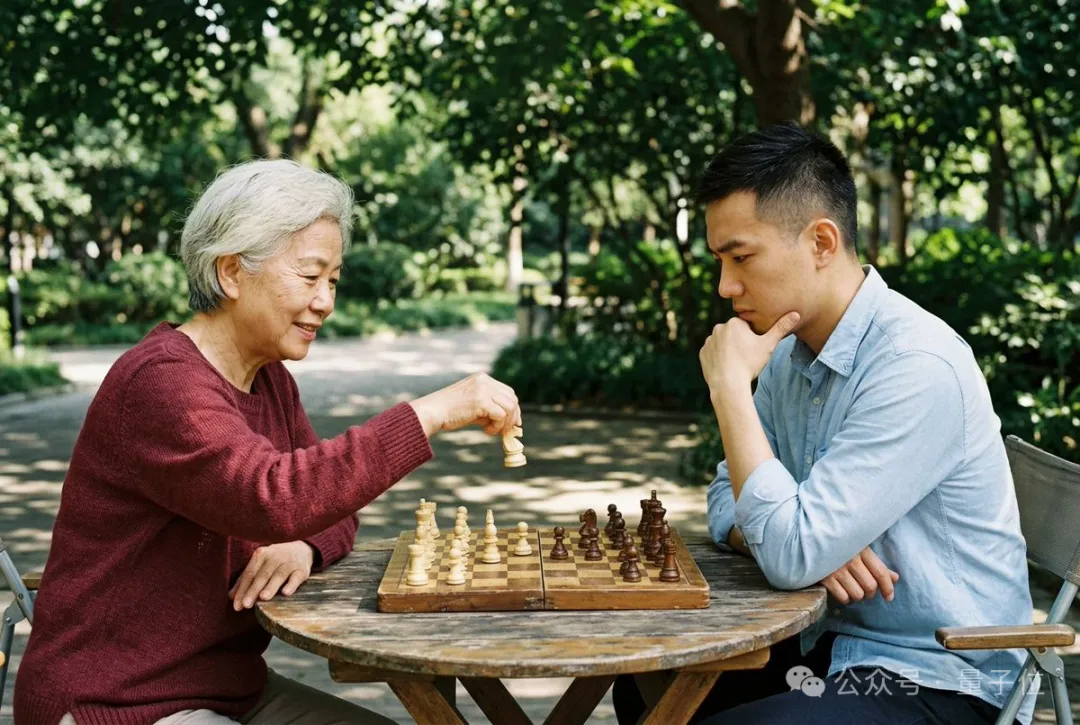 △ Playing chess, source: X (formerly Twitter) @Fries
The model’s benchmark performance is equally formidable.
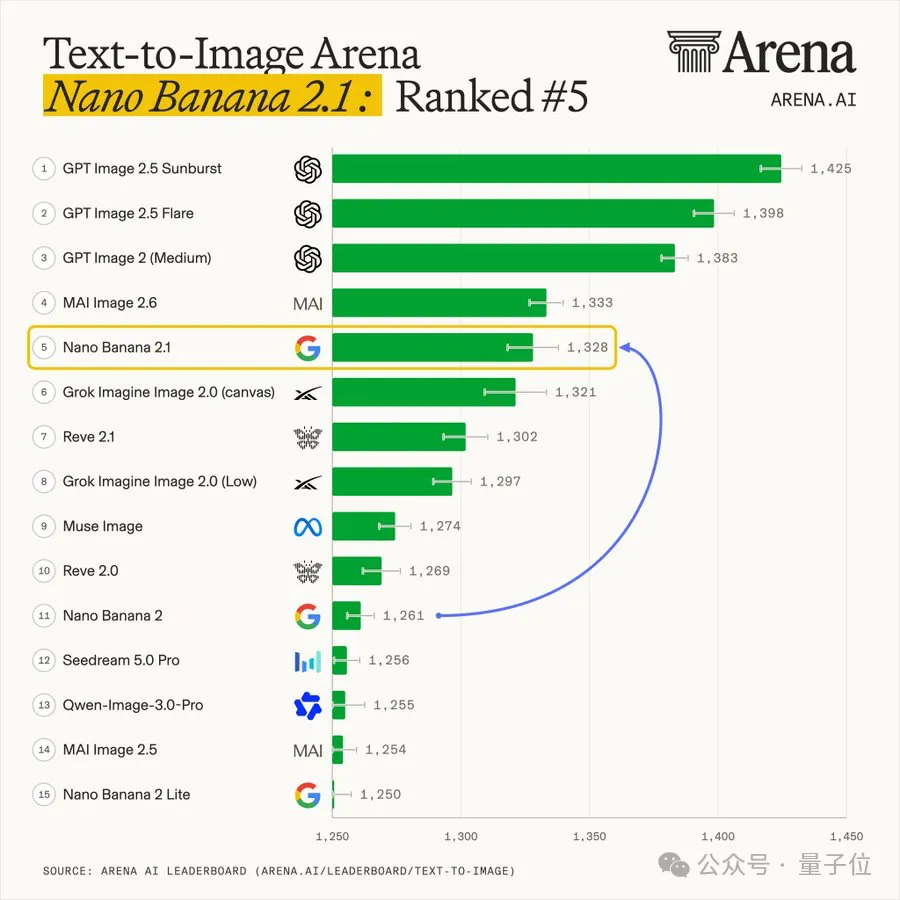
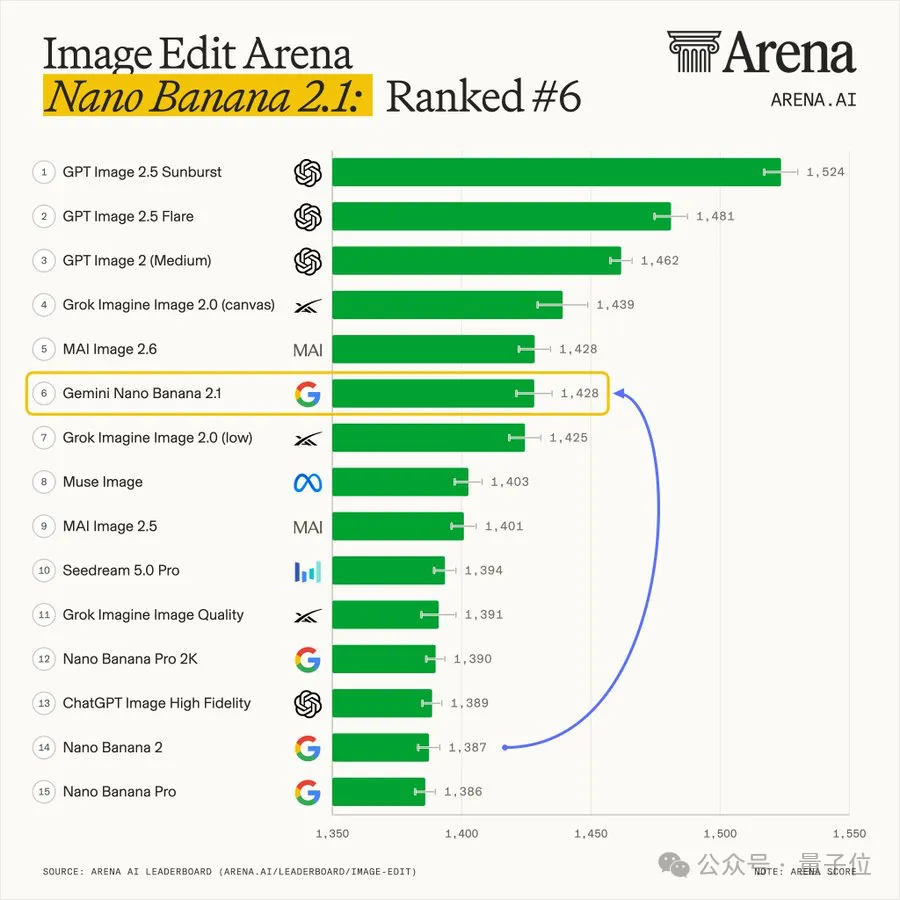
According to data from the renowned AI evaluation platform Arena, Nano Banana 2.1 gained an average of approximately 61.7 points over its predecessor, Nano Banana 2, across three categories: text-to-image, multi-image editing, and single-image editing.
Specifically, text-to-image ranked fourth, jumping 80 points compared to the previous generation and trailing only behind GPT;
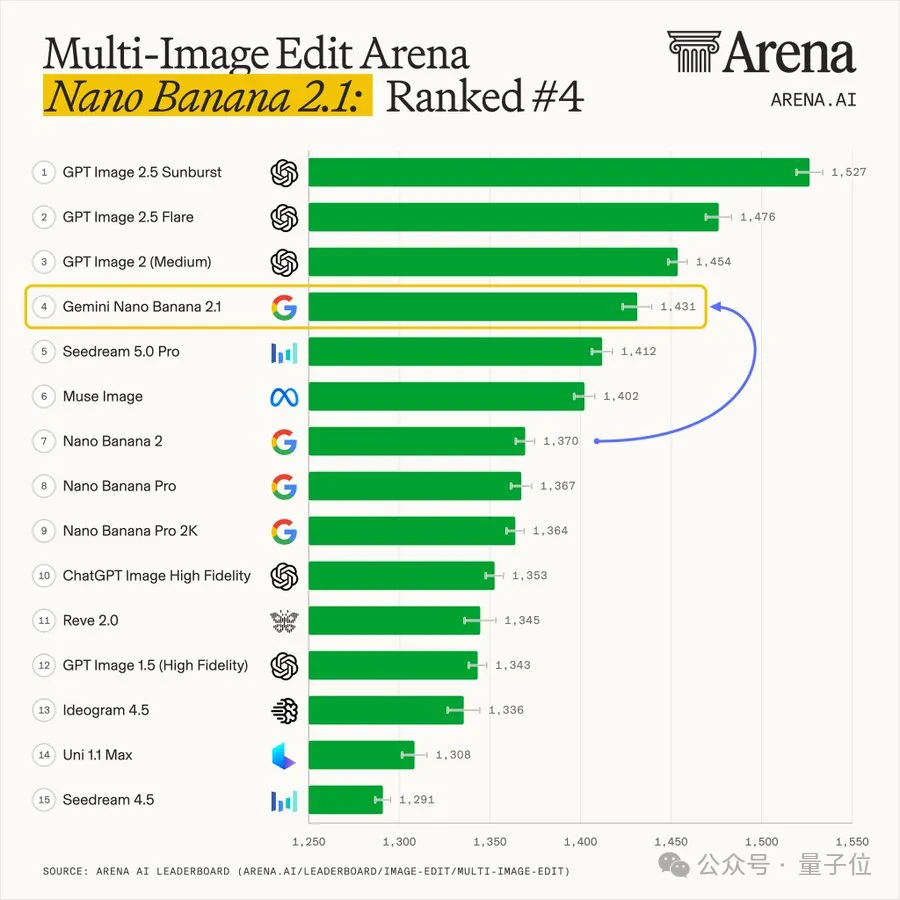
Multi-image editing ranked fifth, scoring 1,328 points—a 67-point increase;
Single-image editing ranked sixth, earning a total of 1,428 points, up by 38 points.
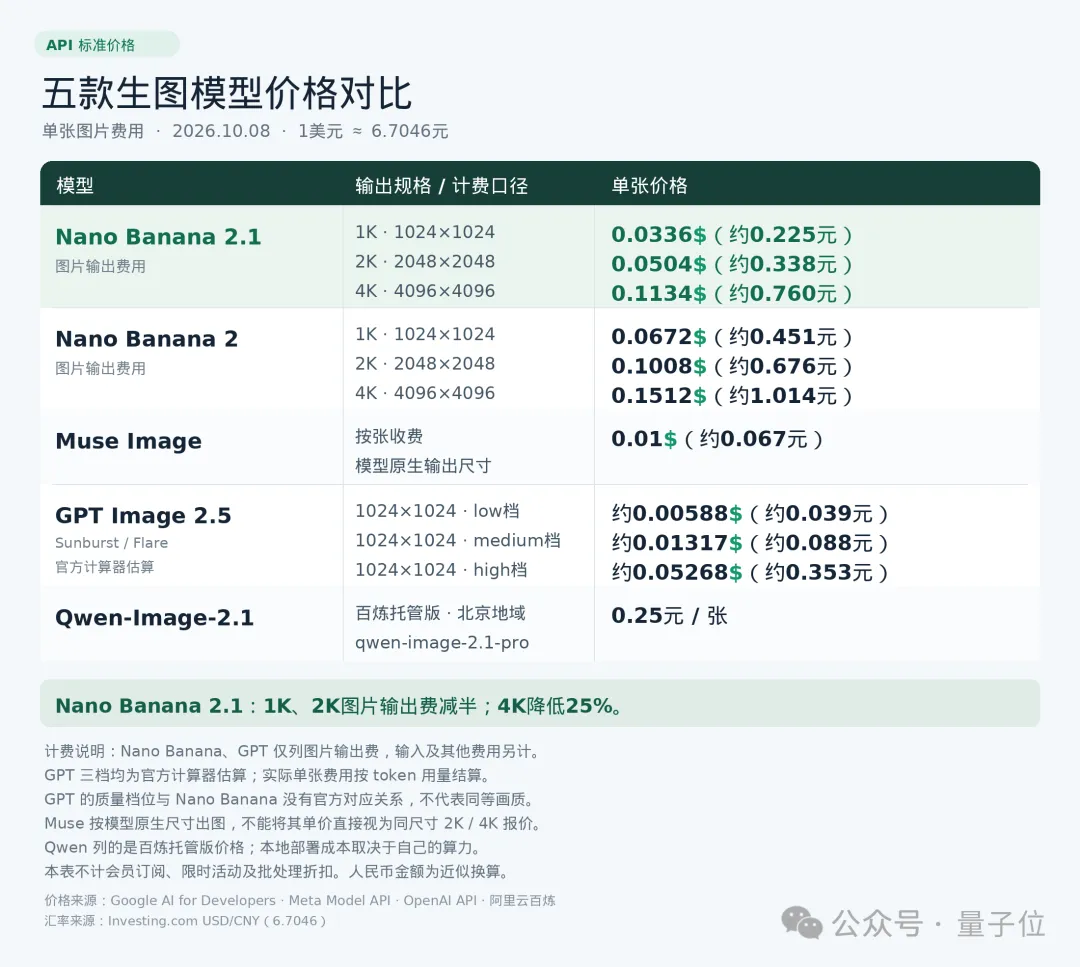
Even more compelling is its API pricing.
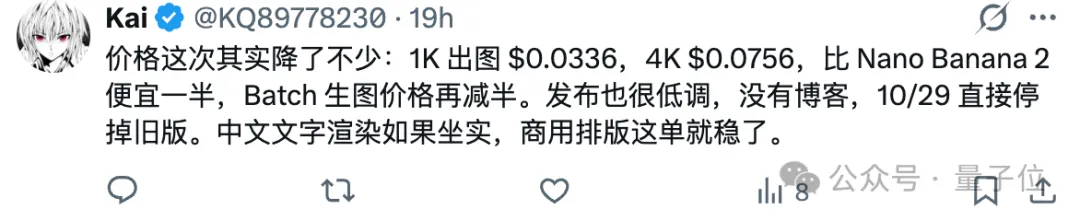
In a generous move, Google cut the pricing for generating 1K and 2K images with Nano Banana 2.1 right in half, while 4K generation is now roughly 25% cheaper.
 △ AI-generated
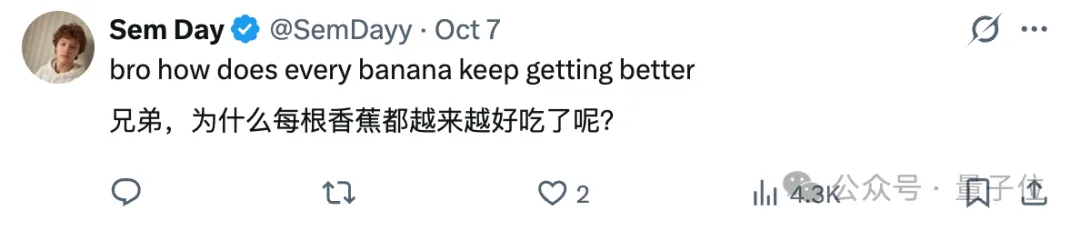
The community couldn’t help but joke: Google’s “Banana” is looking more appetizing by the day.
Native 4K Rivals DSLRs, Chinese Text Rendering Sees Massive Gains, Maximized Visual Fidelity
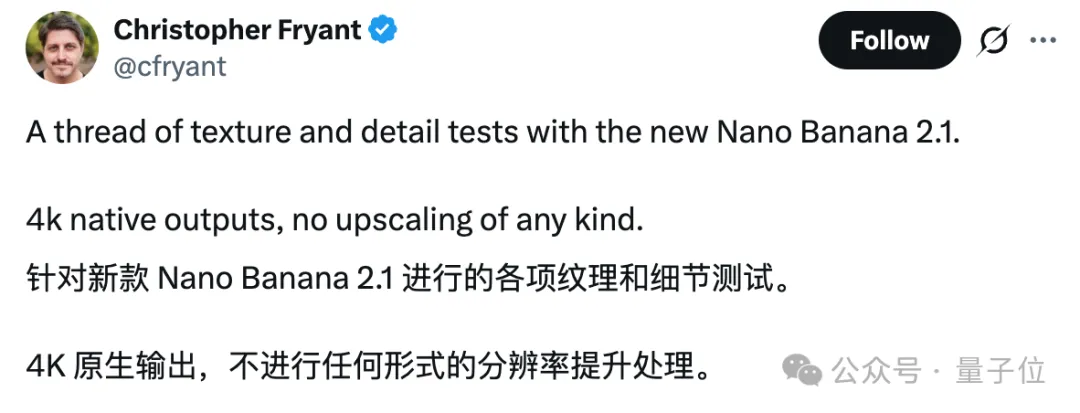
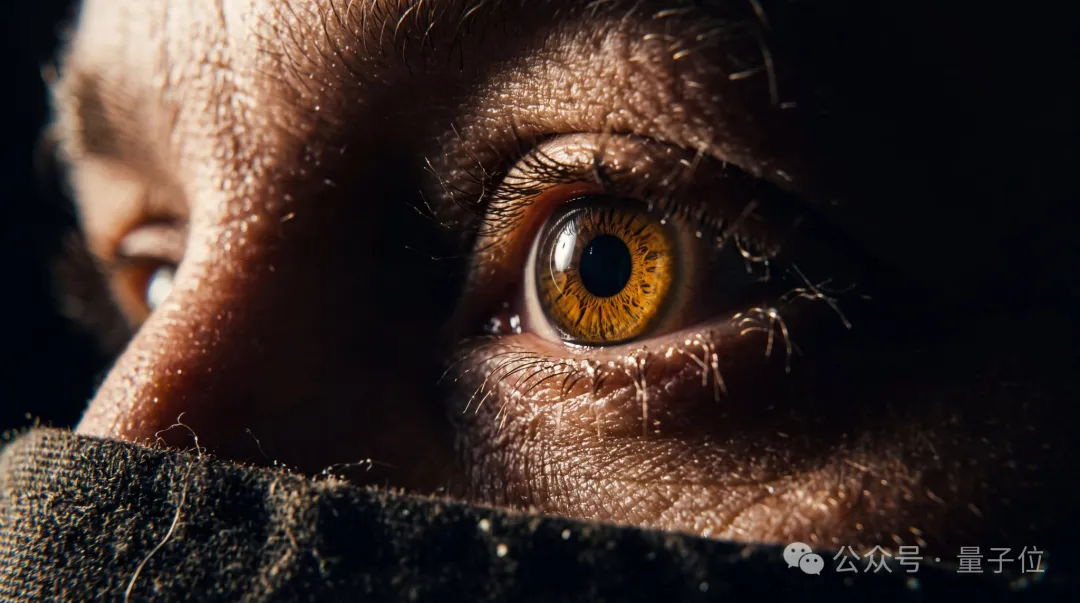
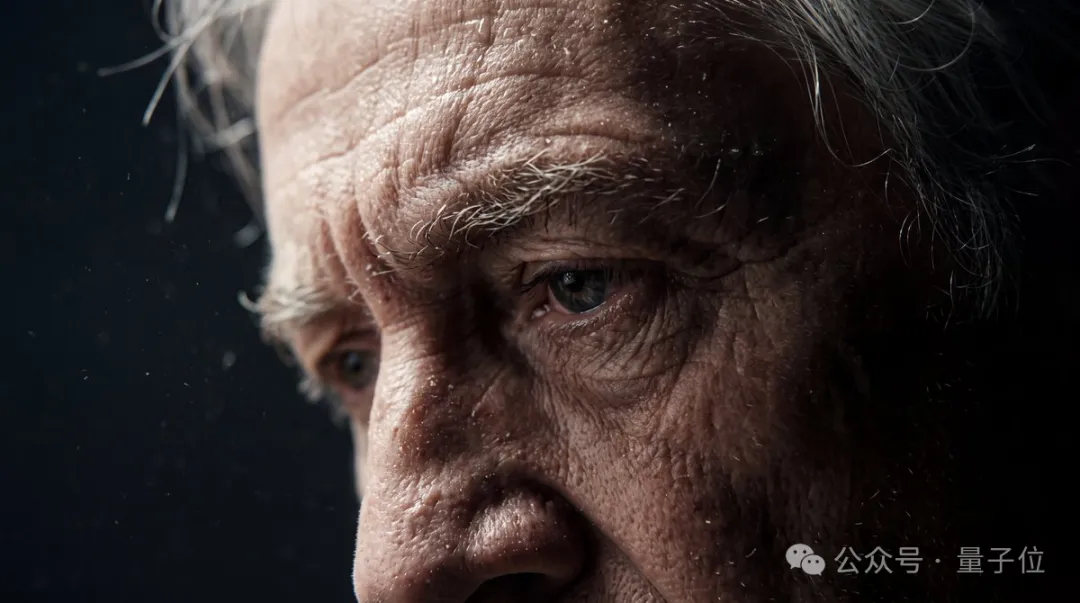
Let’s take a look through the “macro lens” of photography enthusiast Christopher Fryant to see the level of detail delivered straight from Nano Banana 2.1’s native 4K output:
In the pieces generated by Christopher Fryant, the color depth and curvature of the subjects’ amber irises transition naturally and realistically, while the subtle curl at the tips of their eyelashes and the surrounding highlights are sharply defined;
The lighting is no longer just a superficial overlay; instead, it delicately traces the uneven textures of the skin and even captures the subtle ridges between the brows when furrowed:
Even the interwoven, coarse textures of fabric stitching are rendered in minute detail:
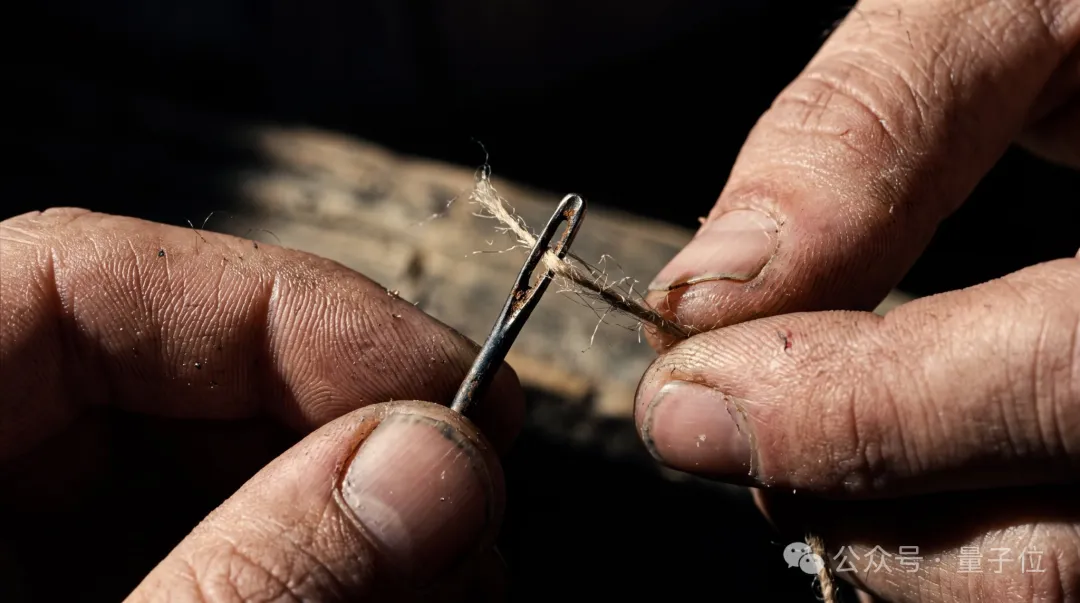
Christopher Fryant remarked:
It feels virtually identical to what comes out of my DSLR camera—the cinematic feel is off the charts!
Spectators online were equally amazed:
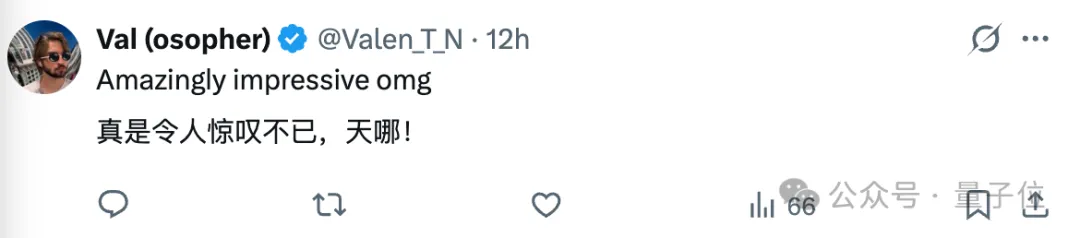
This is absolutely stunning!
Meanwhile, tests run by designer @Guizhang (@歸藏) on Chinese promotional posters were just as remarkable.
His core takeaway from hands-on testing was:
Rendering clarity for Chinese characters and typo issues have seen dramatic improvements!
There is none of the noise typically seen when text mixes with imagery, nor the fragmented artifacts characteristic of GPT. The layout is clean and structured, typography is well-balanced, the lotus motif looks elegant and refined, and it supports direct one-click native 4K output.
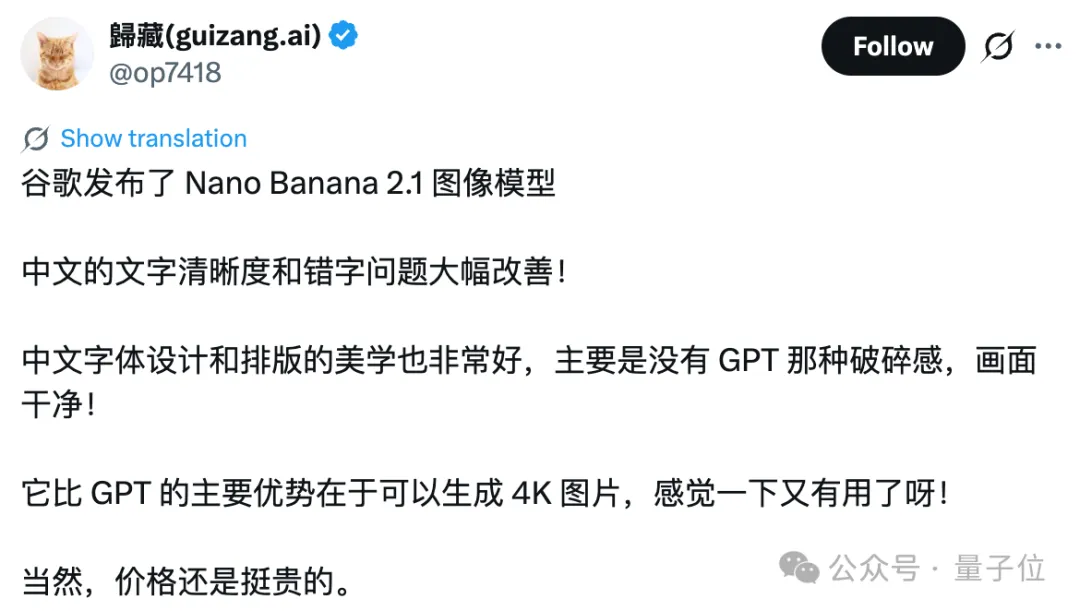
This indicates that Chinese typographic capabilities have finally reached true commercial viability. The combination of bolstered Chinese text rendering and price reductions means that domestic designers can now realistically integrate it into actual commercial design workflows.
Other creators have explored even newer workflow paradigms.
Heather Cooper fed static images generated by Nano Banana 2.1 into Veo 3.1 to generate motion, assembling them on the Google Flow platform into a vivid, lifelike ultra-high-definition short film:
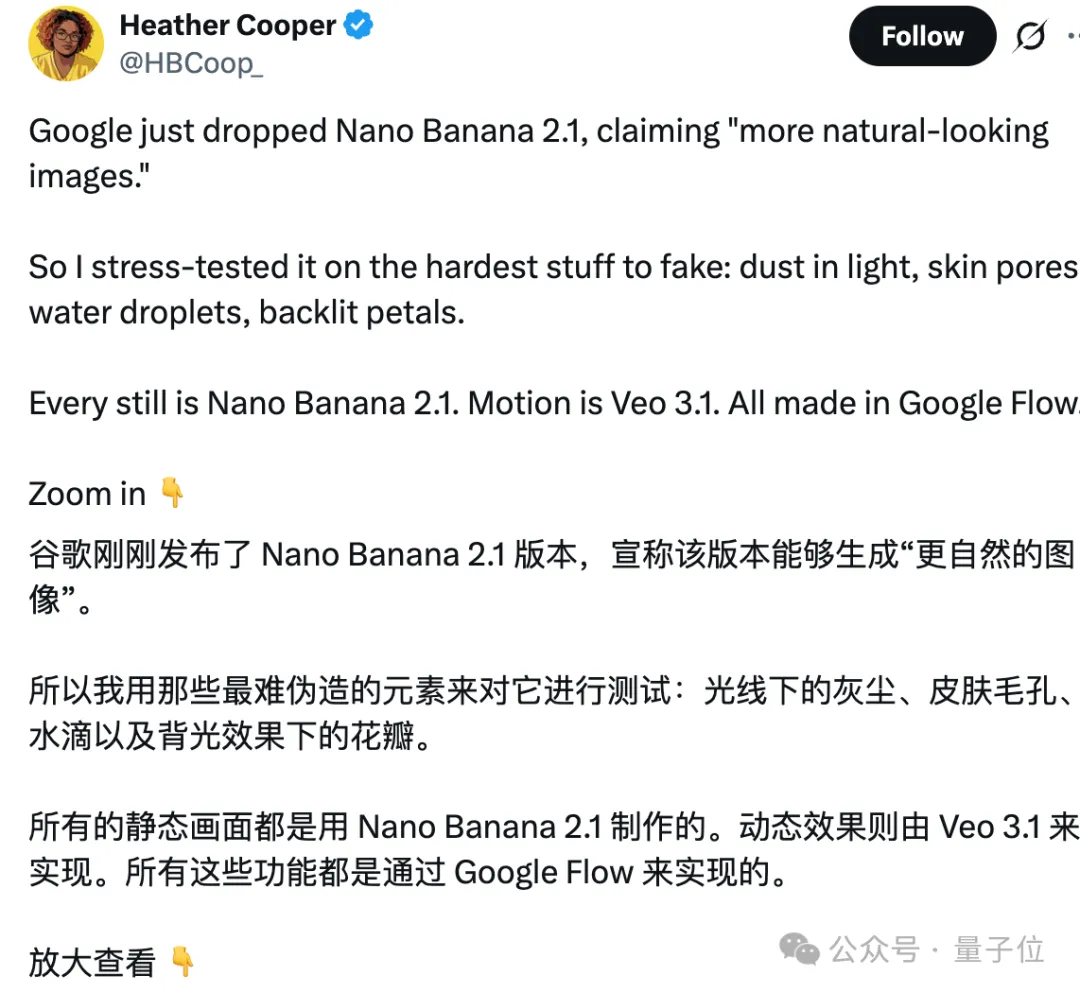
This marks a breakthrough where the entire pipeline—from keyframe generation and unified subject styling to generating coherent dynamic motion—can now collaborate efficiently within a single closed-loop ecosystem.
In light of these rapid upgrades, Adobe’s Creative Cloud suite in the hands of designers and video editors might be feeling the pressure once again.
Don’t rush to uninstall your productivity tools just yet, though—Nano Banana 2.1 still has technical shortcomings that need addressing.
Impressive Generation Speed, but Output Fidelity and Multi-Turn Editing Stability Still Have Room for Improvement
Following the launch of Nano Banana 2.1, head-to-head comparisons with GPT Image 2.5 naturally became the center of attention.
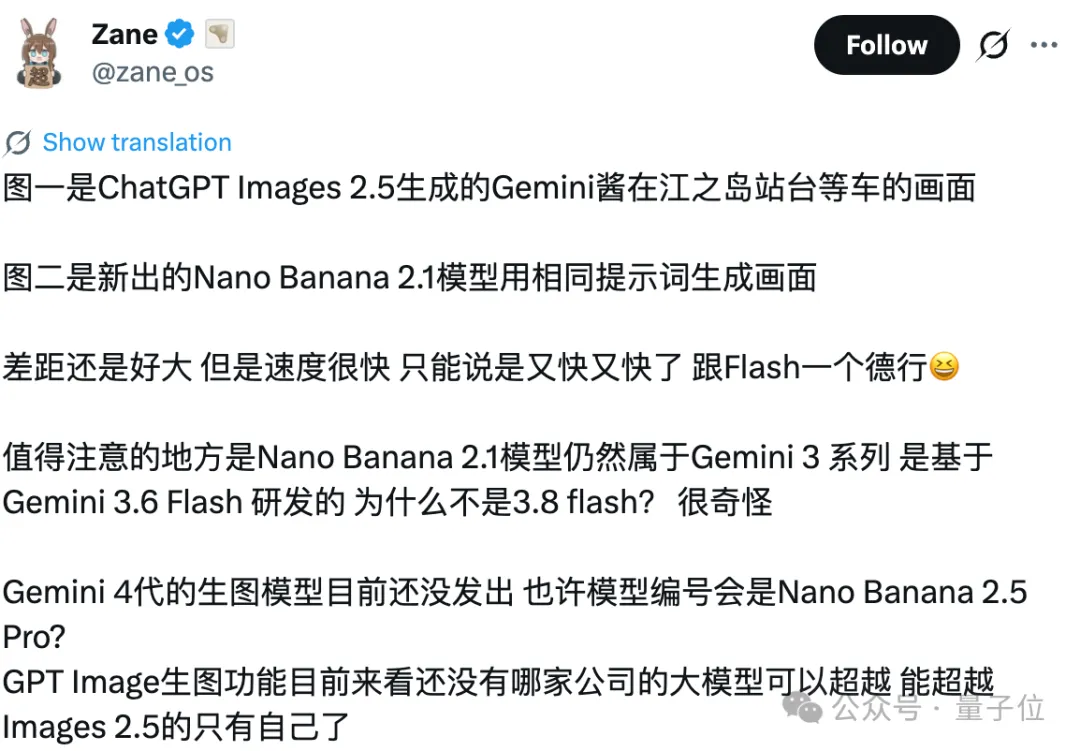
Through a comparative test generating “Gemini-chan on a train station platform,” user Zane pointed out:
While Nano Banana 2.1’s inference speed is indeed faster, there is still a noticeable gap compared to GPT when it comes to overall texture fidelity and image completeness.
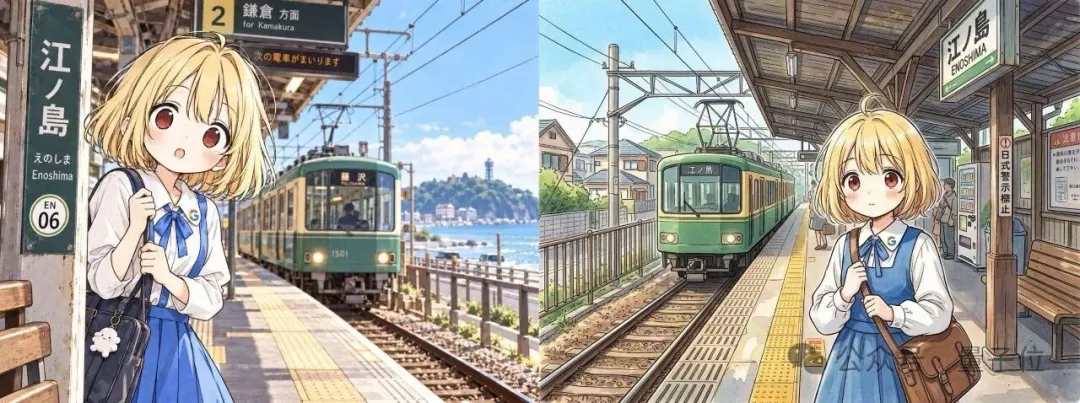 △ Left: GPT Image 2.5, Right: Nano Banana 2.1
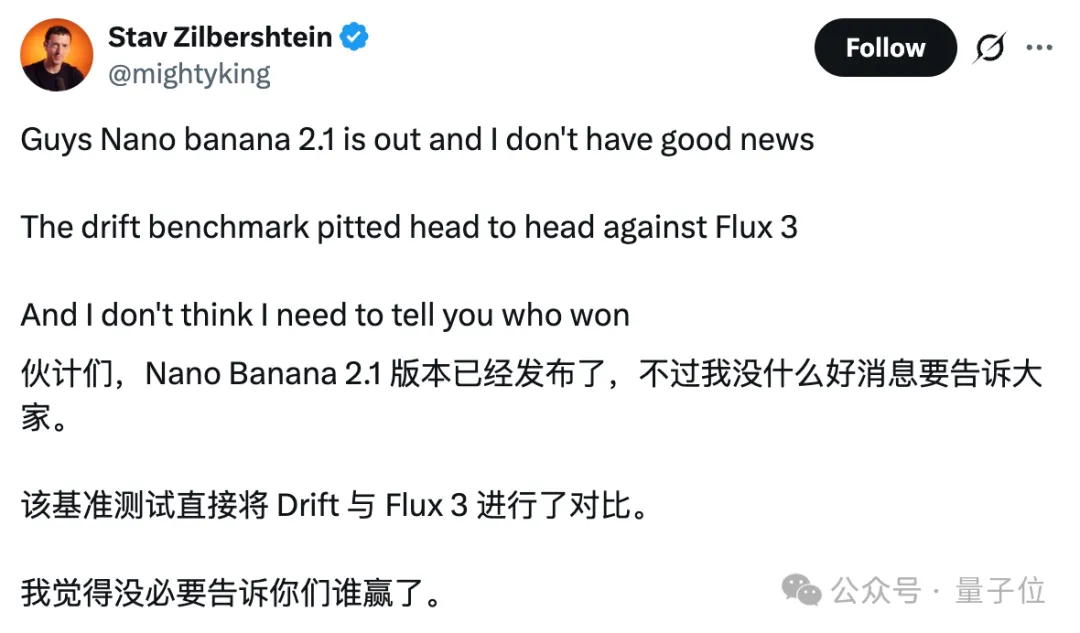
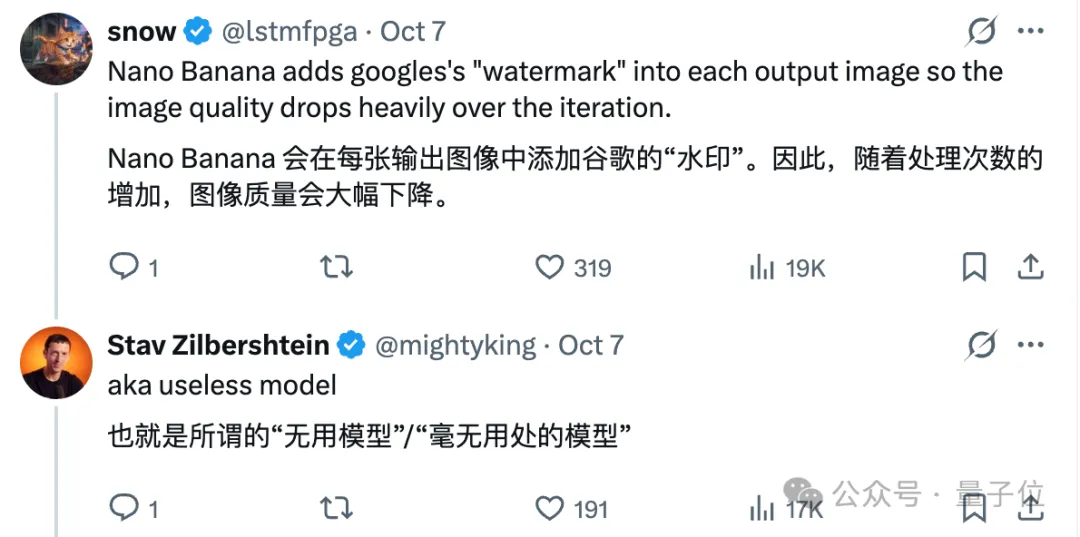
On another front, users Stav Zilbershtein and snow discovered what appears to be a watermark accumulation bug during hands-on testing.
As a result, while the model performs admirably on initial localized edits, it repeatedly stacks internal watermarks over successive revisions. The more editing iterations performed, the more pronounced the degradation becomes: areas untouched by the prompt begin showing increased noise, color drift, and texture distortion, causing quality to deteriorate rapidly across multi-turn workflows.
For creators who rely on multiple rounds of fine-tuning, this flaw urgently requires official patches and optimization.
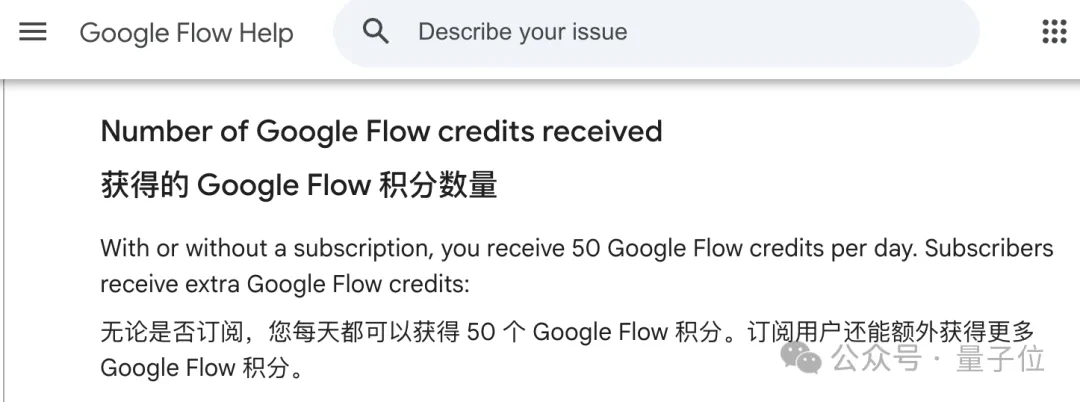
Currently, Nano Banana 2.1 is live on the Gemini App, Google AI Studio, and related platforms (powered under the hood by Gemini 3.6 Flash), offering 50 free daily credits for users to test it out.
For developers, Google has also made the paid API available under the model identifier gemini-nano-banana-2.1, offering complete support for text-to-image, image-to-image, poster generation, and 4K ultra-high-definition upscaling.