
Whoever can digitize this space at high quality will control the gateway to the next stage of machine intelligence.
Tian Yanlin reporting from Aofeisi
QbitAI | WeChat public account QbitAI
As physical AI has evolved to this point, all players have been pushing in the same direction:
to enable robots to “understand” the physical environment they are in.
This is not only the key to helping embodied intelligence players pull ahead, but also determines whether robots can eventually enter real-world scenarios and create commercial value.
When humans see a table, they know where it is, what material it is made of, and whether it can be moved. When they see a door handle, they naturally judge that it can be turned. When a person suddenly appears, they immediately adjust their actions.
But for robots, making these seemingly simple judgments is far from easy.
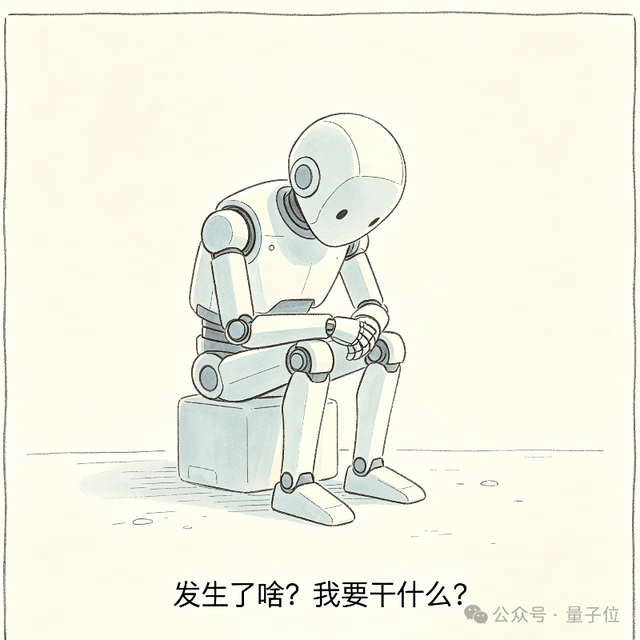
△AI-generated
Because what it faces is not a single image, but a constantly changing three-dimensional world.
To give robots a true “brain” that can understand the physical world, you cannot rely only on larger foundation models.
Robot brains need massive amounts of real physical interaction data as training fuel.
And high-quality visual perception is precisely the core entry point that turns the real environment into machine-readable information and continuously produces training data.
Stronger visual perception keeps supplying real-world data, continuously iterating and upgrading the robot’s brain for the physical world.
Recently listed on the main board of the Hong Kong Stock Exchange, Leadrive Robotics has spent the past decade betting on exactly this path.
From robot vacuum cleaners and logistics warehouse robots, to contactless service robots in hotels and restaurants, and now to emerging tracks such as humanoid robots and robot dogs, Leadrive has continued to build around one foundational question:
How do robots perceive space and understand their environment?
This has also allowed it to gradually accumulate an early-mover advantage in “spatial perception technology” through multiple waves of development in the robotics industry.
But after going public, the market is not only focused on the company’s past achievements.
What everyone wants to know more is: in the era of physical AI, where every robot must learn to “understand the world,” how should the underlying foundation of intelligence be built?
The robotics race has changed focus
When it comes to the future universal, underlying must-have in the robotics industry, the answer comes down to one thing: environmental perception capability.
The logic behind this is easy to understand.
No matter where a robot ultimately lands — home, hotel, restaurant, warehouse, factory, or humanoid robots that will eventually be deployed commercially at scale — it must first be able to answer:
- Where am I?
- What do I see?
- What do the things in front of me mean?
- What should I do next?
Without an understanding of the environment, robots can only remain at the level of automated equipment with fixed scenarios and fixed actions.
Just like traditional industrial robotic arms: they can precisely perform repetitive tasks such as welding and handling, but they do not truly “know” what they are facing.
In the past, competition in the robotics industry has always revolved around one word: mobility.
Who can walk? Who can avoid obstacles? Who can grasp objects? Who can perform complex motions?
But as embodied intelligence enters real-world applications, this evaluation framework is starting to fail.
The next generation of robots must enter the real world and face a large number of open environments and long-tail situations:
a randomly placed object, a half-open door, a person moving suddenly, or even a change in lighting can cause the system to fail.
The uncertainty brought by spatial changes requires robots to have the ability to continuously understand the world.
And the prerequisite for understanding the world is perception.
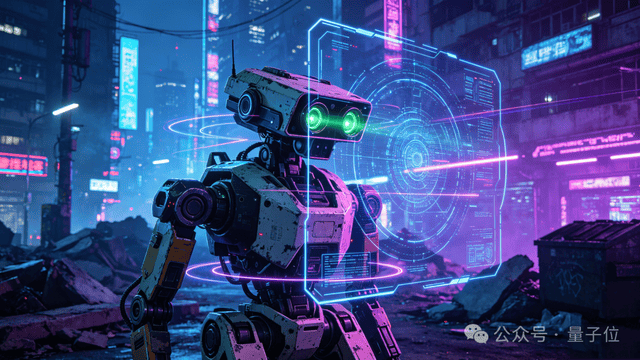
△AI-generated
Especially in the physical AI era, perception is the essential gateway connecting the real world and AI models.
It is responsible for converting the complex physical world into data that AI can understand, and then handing it over to the model for cognition and decision-making.
In a sense, the upper limit of a robot’s intelligence depends on how deeply it perceives the world.
All spatial intelligence ultimately depends on the same thing: a continuous supply of real-world data.
Without data, even the strongest model is just static capability.
Once the data supply is cut off, so-called generalization ability collapses quickly.
That is why the industry’s competitive focus is shifting: from “whose model is smarter” to “who can continuously produce the real world.”
At its core, that is a much more industrialized task: turning the physical world into a data stream.
This is also where perception has been redefined.
It is no longer just a module of the robot, but the entry point to the entire system.
An entry point that determines the ceiling of all subsequent intelligence.
From sensors to a “data refinery”
But turning the physical world into data that AI can understand is not simple.
Data from the real world is inherently messy.
It is like crude oil freshly extracted from a mine. Valuable, but not directly usable.
What truly determines a robot’s intelligence level is not merely whether it has sensors, but whether it can process that raw information into “fuel” that the model can understand.
That has also been Leadrive Robotics’ focus over the past decade.
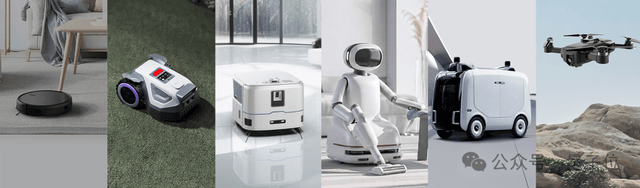
When the company was founded, the team made a judgment:
No matter whether robots eventually enter homes, hotels, restaurants, warehouses, or factories, the most fundamental common need will always be understanding the environment.
Leadrive Robotics chairman Zhou Wei told QbitAI that “perception” can be divided into two layers:
The first layer is sensing, which collects environmental data through sensors;
the second layer is knowing, which uses algorithms and models to turn data into a robot’s understanding of the environment, space, and objects.
This means perception has never been a standalone hardware issue. Sensors are only the entry point.
The real competition lies in who can further process the data collected at the entry point into spatial intelligence.
That is also why Leadrive did not stop at being a hardware company.
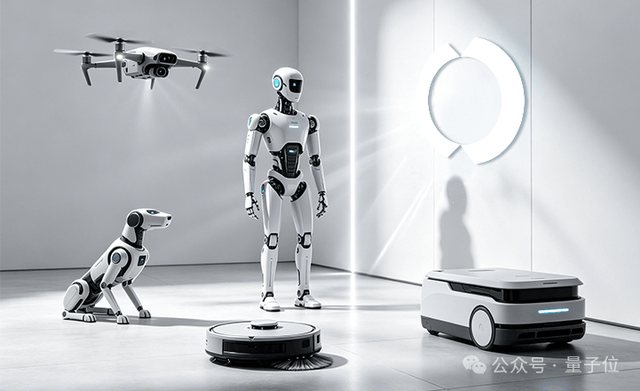
Over the years, the robotics industry has gone through multiple cycles:
- 2017–2018: robot vacuums were rapidly adopted;
- 2019: logistics and warehouse robots rose;
- 2020–2021: contactless service robots entered hotels and restaurants;
- 2023–2024: lawn-mowing robots began to take off.
Today, new directions such as humanoid robots, robot dogs, and autonomous carts are emerging all at once.
Every wave of robotics eventually returns to the same question: how do robots understand the world they are in?
That is exactly the long-term, unchanged underlying need Leadrive has tapped into.
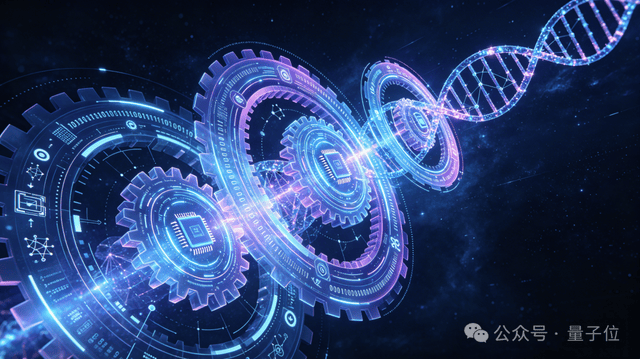
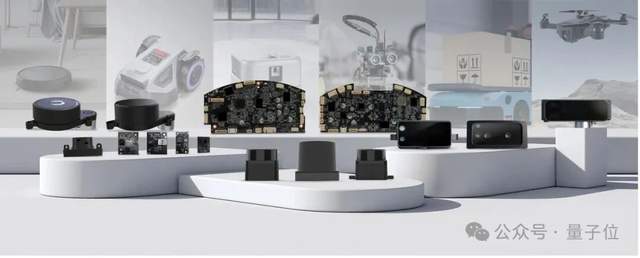
To give robots the best possible ability to understand the real world, Leadrive’s “perception products” have gone through multiple rounds of technological iteration.
△AI-generated
Let’s start with the sensors.
In the era of single sensors, vision handled semantic understanding, while LiDAR handled spatial positioning.
But single-capability systems always have shortcomings.
LiDAR knows distance, but not what something is; vision knows what an object is, but not necessarily its precise spatial position.
And for robots in the physical world, the questions they need to answer simultaneously are: What is this thing? Where is it? Can I move it? How should I act?
So Zhou Wei believes the trend for future sensor hardware will inevitably move toward multimodal fusion.
Different data sources such as vision, LiDAR, depth information, and IMUs (inertial measurement units) need to be understood in a unified way.
Now look at the algorithmic model.
In its early days, Leadrive also relied on engineers writing code manually.
But the problem with that approach was obvious: not only was it inefficient, but even if engineers could write 100 rules, they could hardly cover the 101st situation in the real world.
That changed once AI entered robotics. The company completed a paradigm shift from manually coded rule-based algorithms to end-to-end AI models, allowing AI to autonomously learn and perceive the environment.
In Zhou Wei’s view, hardware collects the world, while models understand the world.
Only by combining the two can true spatial intelligence emerge.

How can data from all these different sources be turned into a language that robots can learn?
Leadrive independently developed LD-SenseWorld, a foundation model for physical spatial interaction.
It is not a general-purpose foundation model, but one focused on physical spatial intelligence. Its sole core goal is to help robots truly understand space.
Its first capability is data preprocessing and multimodal fusion.
Real-world data comes through multiple channels such as vision, LiDAR, and IMUs, but this information is naturally unsynchronized and structurally different.
Without unified processing, it is essentially just noise piled on top of noise.
Through alignment, cleaning, and fusion, LD-SenseWorld brings multi-source data back to the same temporal and spatial reference frame, forming usable world input.
The second capability is feature extraction and spatial tokenization.
The continuously changing physical world must be transformed into discrete representations that machines can learn from.
The system compresses information such as position, distance, object relationships, and motion states into spatial tokens.
This is equivalent to giving robots a basic language for describing reality, making space itself readable and computable.

The third capability is semanticization and physical-consistency injection.
Robots are not ultimately built for recognition, but for action.
Structure alone is not enough; robots also need to understand rules: what can be moved, what will fall, and under what circumstances a person will change direction.
By introducing physical constraints and semantic understanding, the data is no longer just coordinates and point clouds, but cognitive input with causality and behavioral logic.
In essence, what LD-SenseWorld does is not “modeling,” but processing chaotic, unordered data into learnable world “fuel.”
That is also the core of Leadrive as a “data refinery.”
One million devices power the data flywheel of physical AI
For physical AI, the model is only the beginning.
What truly determines whether robots can enter the real world is the data supply behind the model.
That is also the biggest challenge facing the robotics industry today.
Zhou Wei pointed out that the industry’s data sources mainly come in three forms:
simulation data, laboratory or data-factory data, and real-world deployment data.
The biggest problem is that the first two are very hard to cover the large number of unknown situations in the real world.
That is why more and more robotics companies are realizing that what is truly scarce is not the method for training models, but the raw material for training them.
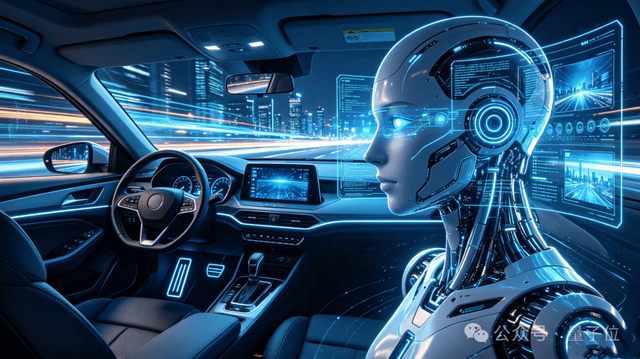
The advantage of Tesla FSD fundamentally comes from its massive accumulation of real driving data.
△AI-generated
Robots are no different.
Without real devices running continuously, there is no continuous source of data for evolution.
Leadrive’s approach is to build a “three-layer core architecture for physical AI” to provide foundational support for model deployment.
- Hardware perception layer
- Responsible for collecting massive amounts of raw data from the real world through multimodal sensors.
- Model layer
- The spatial interaction foundation model enables robots to understand the real world and builds a data refinery for the physical world.
- Data layer
- Unlike simulation data, data is continuously collected from real devices and processed by self-developed foundation models to output a continuous stream of structured, semantically rich, physically consistent spatial tokens that can be directly fed into world model training.
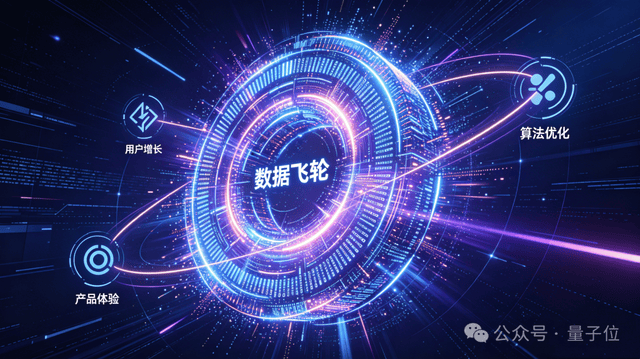
In the end, this creates a data flywheel that goes from hardware data collection, to data training the model, to the model in turn redefining the hardware.
That is also the difference between Leadrive and traditional hardware companies.
The logic of a traditional hardware company is: produce devices — sell devices — end the transaction.
But in the era of physical AI, Leadrive uses more devices to collect richer data.
“The richer the data, the stronger the model. The stronger the model, the better the product experience. The better the experience, the more likely it is to push more devices into real-world scenarios,” Zhou Wei said.
It is a cycle that keeps accelerating.
△AI-generated
Leadrive has already built a scale foundation on this path.
In 2025, shipments of its core DTOF LiDAR product exceeded 4 million units.
But what Leadrive has is not just sensor shipment volume; it is a continuously running entry point to real-world data.
It is reported that the number of devices equipped with Leadrive’s visual perception technology has surpassed 20 million units.
In Leadrive’s financial reports, lawn-mowing robots are the company’s second growth engine. Its products are currently sold mainly in high-potential smart garden-care markets such as Europe, the United States, and Australia.
According to third-party statistics, by 2030 the global smart lawn-mower robot market is expected to grow to between US$6.25 billion and US$10 billion.
What does that mean? It means there will be more and more real-world scenario data waiting to be collected by Leadrive.
That is the foundation for a “data refinery” to exist, and the prerequisite for a data flywheel to take off rapidly.
Zhou Wei’s “intuition” built over 20 years in robotics
Looking back at Leadrive’s path, it becomes clear that this was not a sudden bet on a hot trend, but a long accumulation spanning two decades.
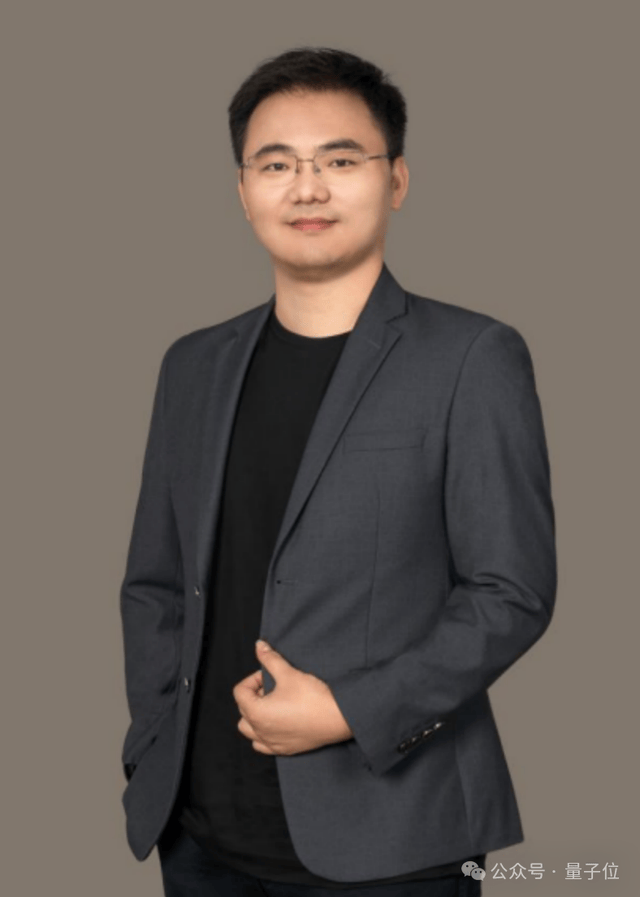
Born in 1986, Zhou Wei is a typical young veteran in the robotics industry.
Back in college, he won the China Robot Soccer Championship.
△Zhou Wei, Chairman of Leadrive Robotics
After graduating in 2012, Zhou Wei co-founded Lexin Tianxia in Shenzhen with Huazhong University senior Guo Guihua.
When they first chose the balancing scooter business, their goal was not merely to make a means of transportation, but to create a more convenient and expressive intelligent mobility robot that reflected personal freedom.
In the autumn of 2013, the first Lexin smart self-balancing scooter was launched, making Lexin one of the pioneers in China’s balancing-scooter sector.
In 2014, Lexin Tianxia completed a RMB 100 million Series B financing round. In 2015, Zhou Wei was selected for the “Forbes China 30 Under 30 Entrepreneurs” list and became a cover figure.
In 2017, Zhou Wei and Guo Guihua set off on another entrepreneurial journey, and Leadrive Robotics was founded.
From Lexin Tianxia to Leadrive Robotics, Zhou Wei accumulated extensive experience in the robotics industry.
So even years after founding the company, when it faced difficulties, he could still retain the sharp instincts of a technologist.
Around 2022, amid a weak macroeconomic environment at home and abroad and a sluggish capital market, Leadrive Robotics’ operating situation was not optimistic.
With high R&D spending, long commercialization cycles, and limited order scale, investors began urging Zhou Wei to reduce R&D investment and prioritize business stability.
But the real question was: short-term cash flow, or long-term technological barriers? This is a classic dilemma for technology startups.
Under investor pressure, Zhou Wei decided to go all in on perception technology.
The reason was simple. He believed perception was not a stage-specific need, but a foundational capability that all future robots would require.
As it turned out, that judgment eventually received an industry payoff.
From 2024 to 2025, the robotics industry entered a new wave of explosive growth, and Leadrive’s early technology investments began to unlock value.
When speaking publicly, Zhou Wei often half-jokingly says that the decision back then came from intuition.
But so-called intuition is really instinct formed by long-term understanding. Without two decades of expertise in robotics, it would probably be hard to make that kind of trade-off.
One more thing
The biggest difference between traditional AI and physical AI is that the latter faces a complex, continuous, and constantly changing real-world space.
Whoever can digitize that space at high quality will control the gateway to the next stage of machine intelligence.
From this perspective, what Leadrive is doing is no longer just providing perception hardware; it is more like building a data processing system for the physical world.
Let robots understand the world, let models understand the world, and then let robots continuously evolve based on the real world.
From a sensor product company to a perception infrastructure platform for physical AI, Leadrive is undergoing an identity transformation.