What! You’re Saying William Hu Is Also Deeply Into Vibe Coding
Vibe Coding is still way too powerful, vibe
Mengyao, reporting from Aofeisi
QbitAI | WeChat public account QbitAI
Help, did I even wake up??

The Vibe Coding trend has already blown from programmers’ desks all the way into the literary and entertainment worlds!?
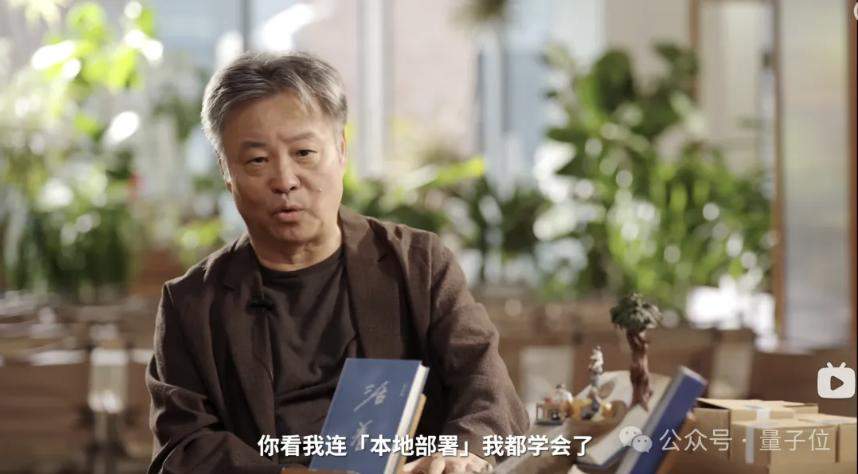
On one side, the author of the acclaimed novel To Live, Yu Hua, looked into the camera with pride and said:
“Look, I’ve even learned ‘local deployment’!”

△Source: Bilibili program Yingshi Tempest
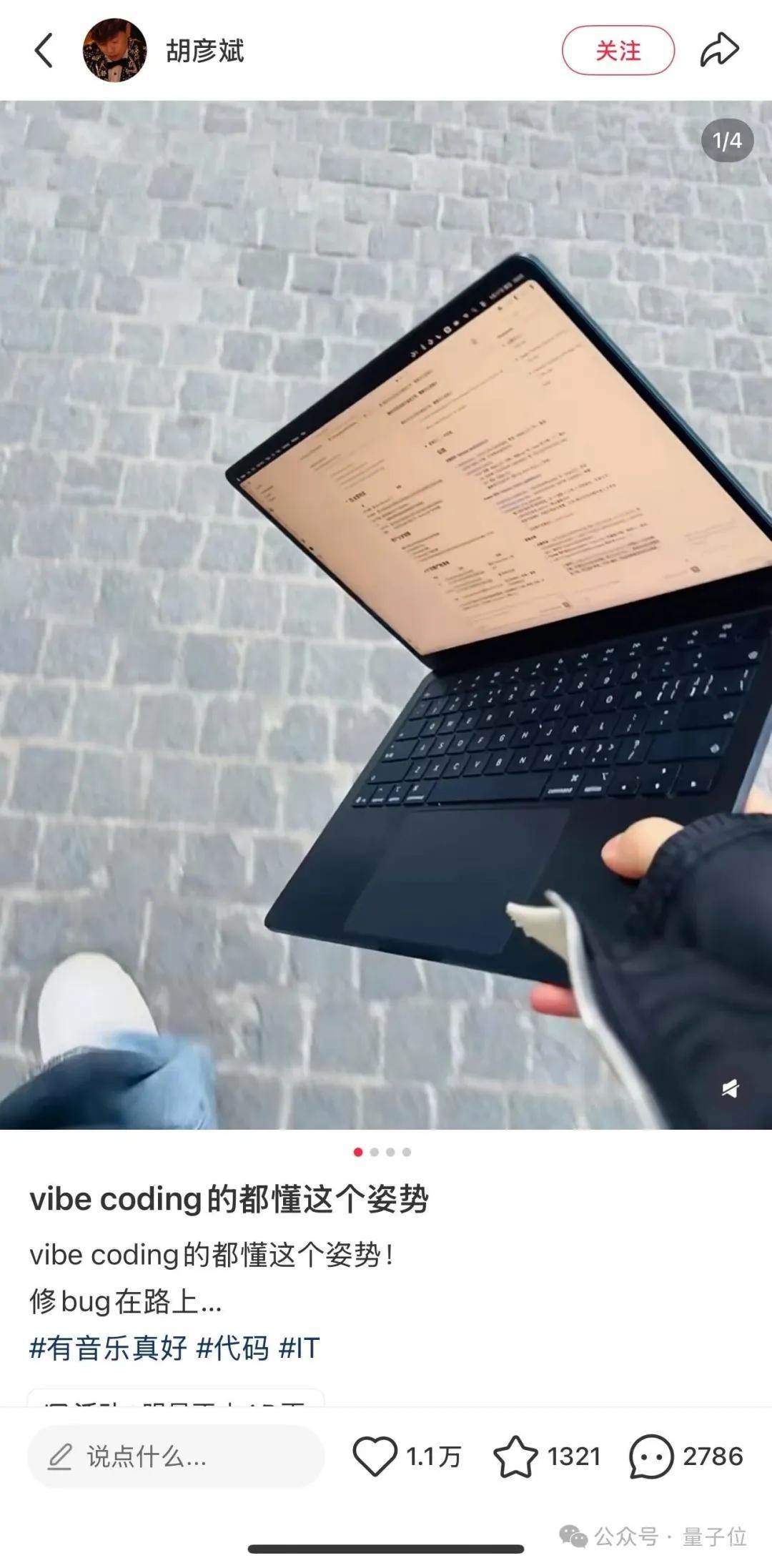
On the other side, Hu Yanbin, the original singer of You Take Everything You Want and a well-known singer, posted an image and captioned it on social media:
Anyone who does Vibe Coding gets this pose! I’m on my way to fix bugs…
Even more outrageous, the comments section instantly turned You Take Everything You Want into an AI-circles-only remix:
You take all the tokens you want, turn the memory into nothing, don’t care about the model, leave some context behind~
(What’s going on? A 2018 lyric had to wait until 2026 to get its own fan-made spin-off track…)
I can only say: Vibe Coding is just too wild.
Even the literary and entertainment worlds can cross over in a dream collaboration—if Karpathy saw this, he’d probably have to say, “How marvelous…”
Yu Hua and Hu Yanbin Have Also Started Vibe Coding
As expected, in the AI era, nothing really seems impossible.
The author of the famous novels To Live, Chronicle of a Blood Merchant, and Brothers—
Professor Yu Hua, recipient of international awards such as Italy’s Grinzane Cavour Prize and France’s Order of Arts and Letters.
A literary figure who writes about suffering with knife-edge precision, yet brings his own dry humor to every interview.
He’s also recently started talking about AI, and even Vibe Coding.

This whole thing mainly started a few days ago, when Yu Hua appeared on an episode of Yingshi Tempest.
What’s interesting is that on the show, Yu Hua happened to be asked a sharp question that’s both highly relevant and very “AI”:
Professor Yu Hua, what do you think about students using AI to remake their teachers’ works? (pretty sharp, right?)
And Yu Hua was extremely calm about it, embodying the relaxed, open-minded vibe of a literary figure embracing new technology and a new era:
I don’t really have much of an opinion. It’s normal. This is a big trend—AI is also a form of creation~

△Source: Bilibili program Yingshi Tempest
But the most worth savoring part came in the next line—
“Look, I’ve even learned ‘local deployment’! Umm… although I don’t know exactly how to execute it, at least I’ve learned the term.”
(If you’ve even learned the term “local deployment,” then Vibe Coding probably isn’t far off, right?)
△Source: Bilibili program Yingshi Tempest
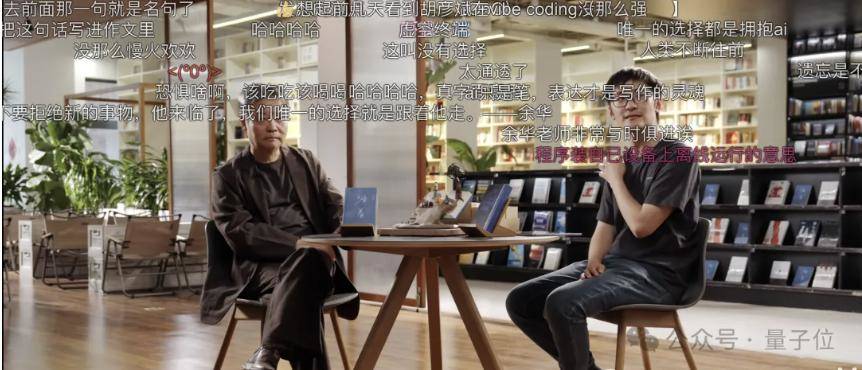
The moment he said that, I immediately opened the bullet comments, and sure enough, people were totally unable to sit still:
Netizen A: Professor Yu Hua is really keeping up with the times!
Netizen B: AI is just the pen; expression is the soul of writing!
Me: Support! Seconded! Who says literary creation and AI have to stand on opposite sides?
△Source: Bilibili program Yingshi Tempest
Yu Hua talking about AI was already surreal enough.
But it gets even more surreal, because the Vibe Coding trend has also blown into the e!n!t!e!r!t!a!i!n!m!e!n!t! world!
This time, the star is none other than the very familiar Hu Yanbin.
A singer-songwriter in the Chinese music scene, the kind of artist whose songs like Red Face and You Take Everything You Want can instantly stir up a lot of people’s teenage DNA.
Who could have guessed that before those emotions fully settled, he had already started having fun with Vibe Coding on social media…
He personally posted this caption with an image:
Anyone who does Vibe Coding gets this pose, fixing bugs on the way!!
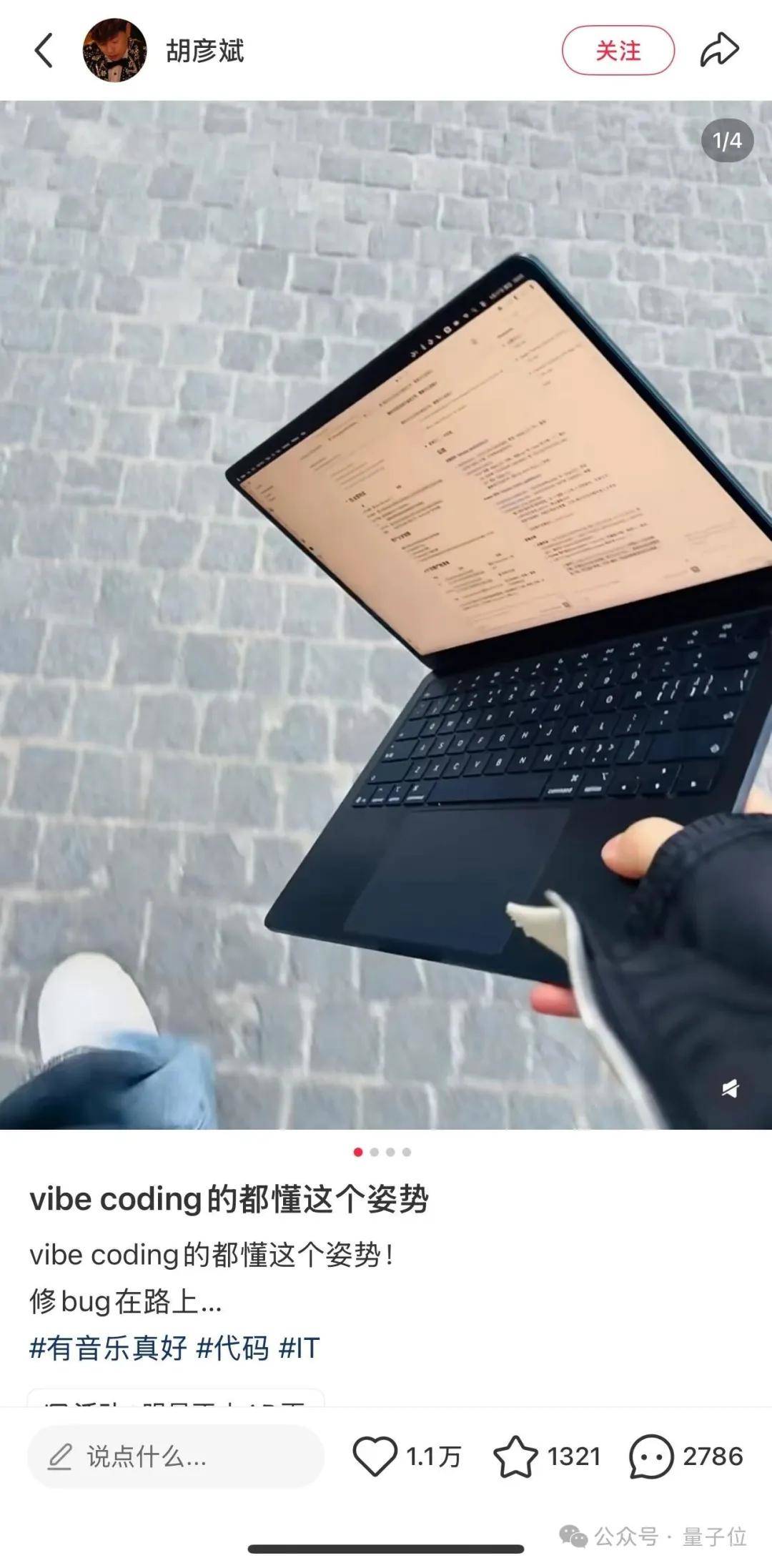
Driven by curiosity, I zoomed in on the picture.
I looked at what was on Hu Yanbin’s computer screen—
The words Query Tencent…Connect Claude with Mac St… were glaringly right in front of me.
(Seems like Yanbin really has been coding a lot lately…)
Then came the real scene-stealer.
I opened the comments under the post and stared at them for a solid ten minutes.
All I can say is: netizens are still the absolute masters of chaos:
Netizen A: You take all the tokens you want, turn the memory into nothing, don’t care about the model, leave some context behind, what you once said is included as a skill bonus~
Netizen B: Are singers here to steal programmers’ jobs now!?
Netizen C: Saw the third picture: Hu Yanbin?! Saw the name: Hu Yanbin?! (a 1:1 recreation of my inner monologue)

Even more worth mentioning is that Hu Yanbin’s software development had some “latest progress”—
Just the other day on Singer, Hu Yanbin himself casually said that he plays with Vibe Coding in the office every day.
He also bluntly said that after grinding away at code for a whole month, he then… just… vibe-coded his own fan community app, “Yanhuo.”
(He built his own fan platform himself—this is seriously impressive!)
Then I kept digging following the netizens’ comments.
In another show he appeared on over on Bilibili, I found something even more surreal—
Turns out he didn’t even start Vibe Coding this year. As early as 2024, Hu Yanbin was already obsessed with watching software tutorial videos:

△Source: Bilibili creator “Yuge Daochu Pao”’s program
Back then, he had already started learning how to write code???
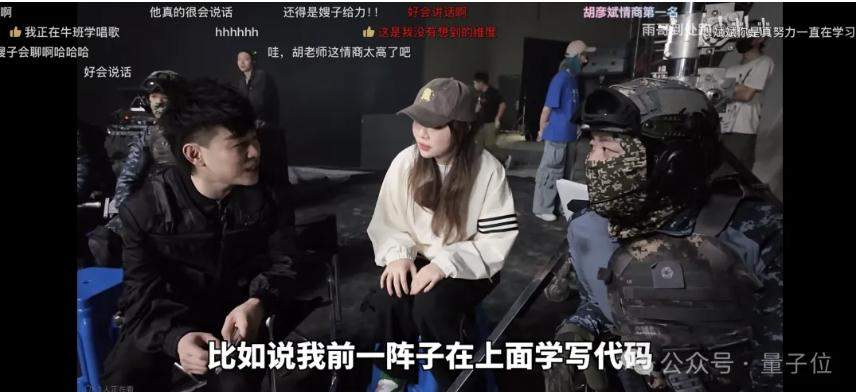
△Source: Bilibili creator “Yuge Daochu Pao”’s program
(And keep in mind, Karpathy coined “Vibe Coding” in 2025… good heavens…)
I can only say: everybody is just too impressive.
Who says the singer circle and the literary circle can’t get into the Vibe Coding scene? Vibe Coding’s big stage is open to anyone with a dream!

Since we’re already talking about this, we have to mention an even more powerful outsider Vibe Coding player.
She’s also very familiar to everyone—
It’s the well-known actress Milla Jovovich, who played Alice in the Resident Evil series.
This April, she teamed up with a programmer friend and Claude to build an AI memory system: MemPalace.
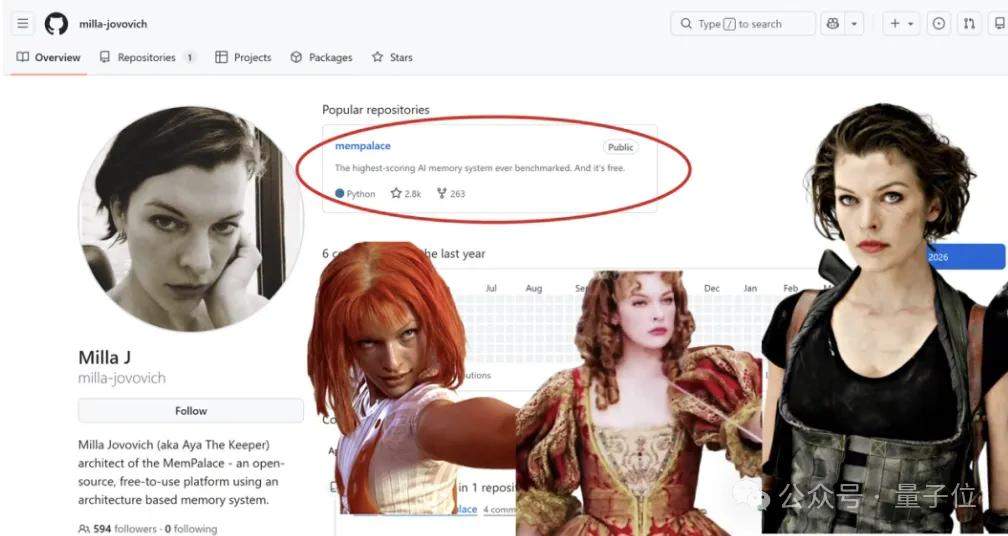
More specifically, the project draws inspiration from the “memory palace” method commonly used by ancient Greek orators, allowing AI to organize memory through spatial locations.
To retrieve something, it’s like walking through a room and opening one door after another.
Thanks to this memory structure, MemPalace improved retrieval efficiency by about 34% compared with global random search.
It’s worth noting that after months of refinement, the system debuted and scored an all-time public-high 96.6 on the long-term memory benchmark LongMemEval.
It has also racked up 52.6k stars on GitHub…
I can only say: I was the narrow-minded one.
Vibe Coding’s heavy hitters really are everywhere, both inside and outside the industry.
Literary figures are learning local deployment, singers are fixing bugs on the way, and the heroine from Resident Evil is already using Claude to build an AI memory system.
This world is still way too surreal…
Vibe Coding Is Still Just Too Powerful
I’m sure a lot of people seeing this will wonder:
What exactly is this Vibe Coding thing that everyone in the entertainment, literary, and film worlds is playing with?
Here’s a quick explainer.
The term Vibe Coding was first popularized in 2025 by the AI world’s famous heavyweight Karpathy.
It refers to a new way of “writing code by feel.”
You don’t need to type out every line from scratch, and you don’t necessarily need to fully understand every technical detail.
You just tell the AI what you want to build, what the page should look like, how the feature should work, what’s wrong, and what needs to be changed.
Then the AI handles code generation, bug fixing, feature additions, interface tweaks, and delivers the result.
So the beauty of it is: whether or not you know how to program, you can still build your own little projects and products~
So… that’s exactly what makes Vibe Coding so addictive.
Vibe Coding gives “creating software” a more accessible entry point for the general public.
AI didn’t suddenly turn everyone into programmers.
But it has given more and more people who were once far from code their first chance to take part in the software-creation process.
That’s why we’re now seeing more and more Vibe Coding projects from all kinds of backgrounds.
Some make productivity tools for themselves, some build apps for their fans, some create AI memory systems.
And some people just have a small idea flash into their heads, then go back and forth with AI a few rounds, and end up turning it into a little product that can actually be clicked, run, and shared.
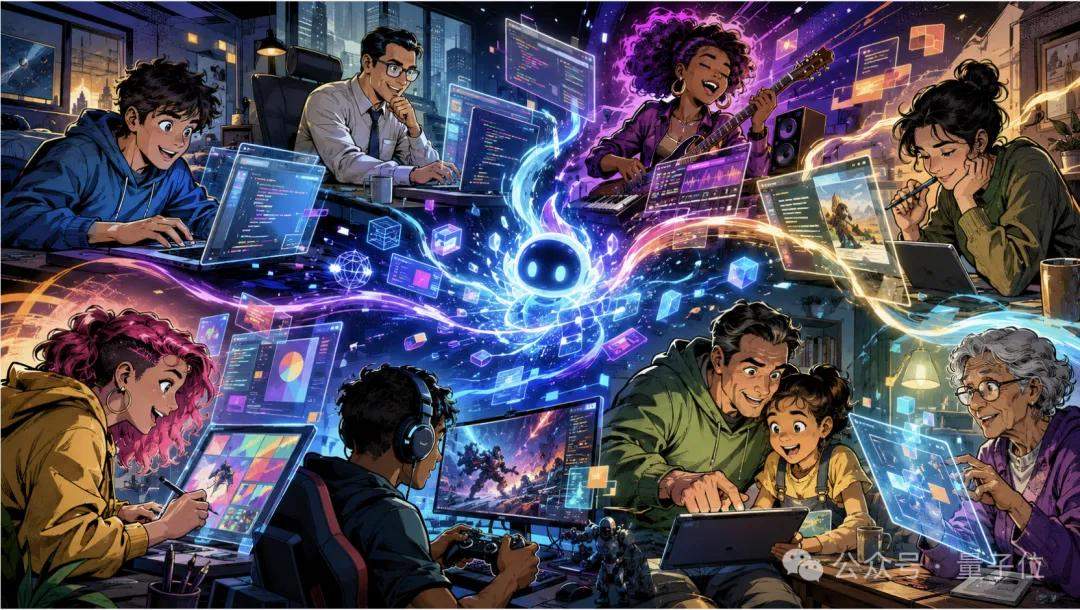
△AI-generated
How should I put it.
The story of “everyone is a developer” has been told at least four times over the past thirty years.
In the 1990s, Dreamweaver let everyone make websites.
In the 2010s, Wix and Squarespace let everyone build websites.
Around 2015, low-code/no-code tools let everyone make apps.
When GPT first came out in 2022, “natural language programming” had its own wave of hype too.
And now we can see that Vibe Coding really isn’t just a tool for writing code.
After all, in the AI era, nobody can say which circle the next person to sit down at a computer and ask AI to make something will come from. (doge)
And who knows whether the next breakout project will emerge from a casual whim of an ordinary person.
Whatever you say, “Vibe Coding’s big stage is open to anyone with a dream” really is worth its weight in gold.
Reference links:
[1]https://www.bilibili.com/video/BV14XLq64EQf/?vd_source=136e3c5bbdfbd0b461f1052ba3eb0e63
[2]https://www.bilibili.com/video/BV1D4421Q7hx/?buvid=YF4E57F603B5C5DA497E9247C6E8FCE07191