
Take part in the 2026 AI Engineering Survey to receive more than $2,000 in credits and AIE WF tickets!
This recording was made before Railway was hit by a major GCP outage on May 19; although its architecture is a mesh ring spanning multiple AZs and multiple regions, with highly available fiber interconnects between Metal <> GCP <> AWS, it was still affected because workload discoverability had inadvertently remained tied to GCP. All issues were resolved in a postmortem.
Railway was not originally an AI infrastructure company.
Founded in 2020, back when agents were still far from the default way people thought about deploying software, it was started by Jake Cooper, who previously worked at Bloomberg and Uber, with a simple idea: getting anything into production should cost almost nothing. Push code, get a URL, iterate. No Dockerfiles, no Kubernetes manifests, no layers upon layers of Ansible scripts.
For years, it was slow, grinding work. Railway manually brought in its first 100 users over the first 18 months, and Jake would personally welcome every new user who signed up through Discord from a second monitor.
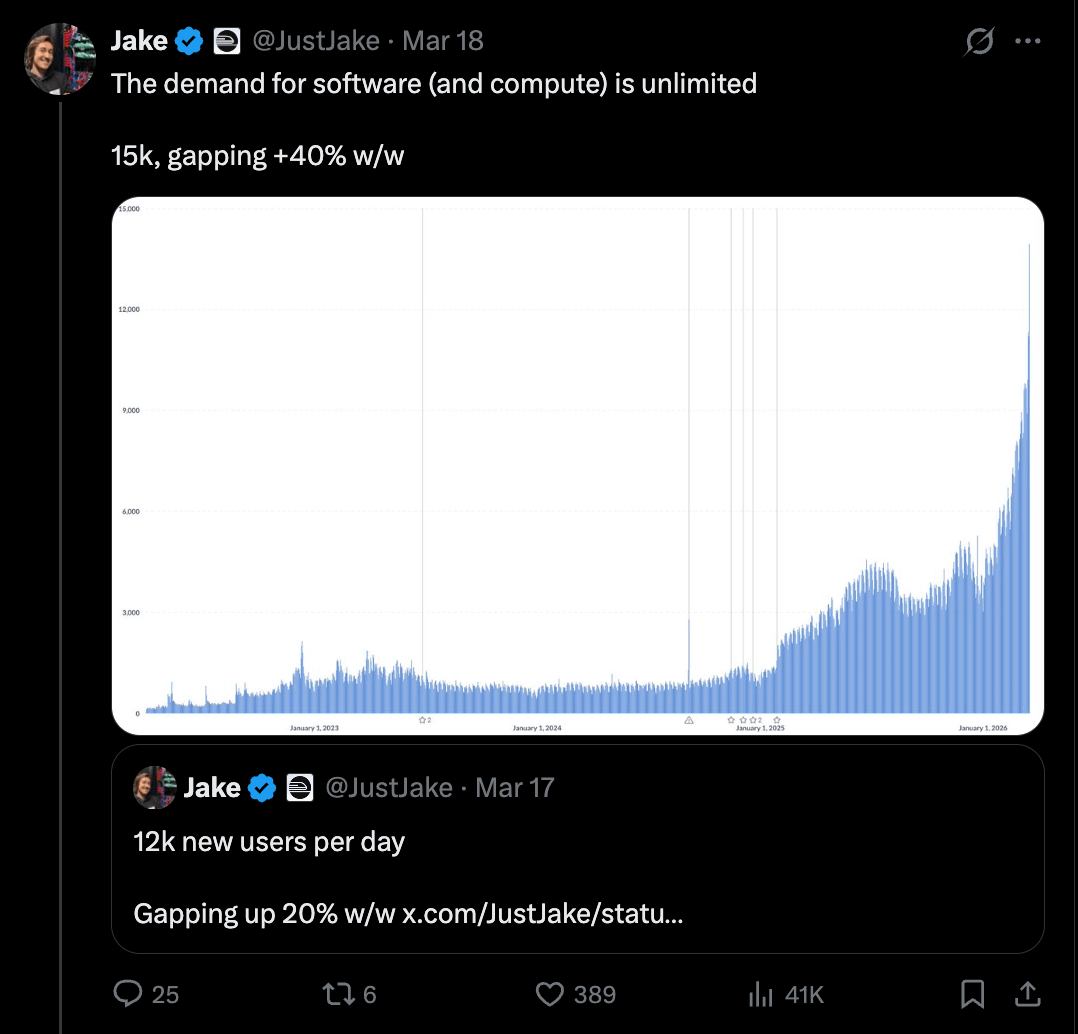
Today, Railway has raised $124 million and is growing fast. A 35-person team serves 3 million users, with about 100,000 new signups each week. Their bare-metal datacenter pays for itself in three months compared with renting cloud services, and it funds aggressive cloud-based scaling when needed with a 70% gross margin. As memory prices rise, the value of their owned servers is actually going up too, which effectively means their hardware is now worth more than the total capital they’ve raised.
From rebuilding Railway’s network layer over a single weekend to migrating most workloads onto its own bare-metal datacenter, Jake Cooper is trying to build a new cloud platform for an agent-native world. In this episode, Railway’s founder and “dispatcher” joins swyx and Alessio to break down why the next era of software infrastructure is not just “a more modern Heroku”, but…